Tokyo Metropolitan University (TMU)
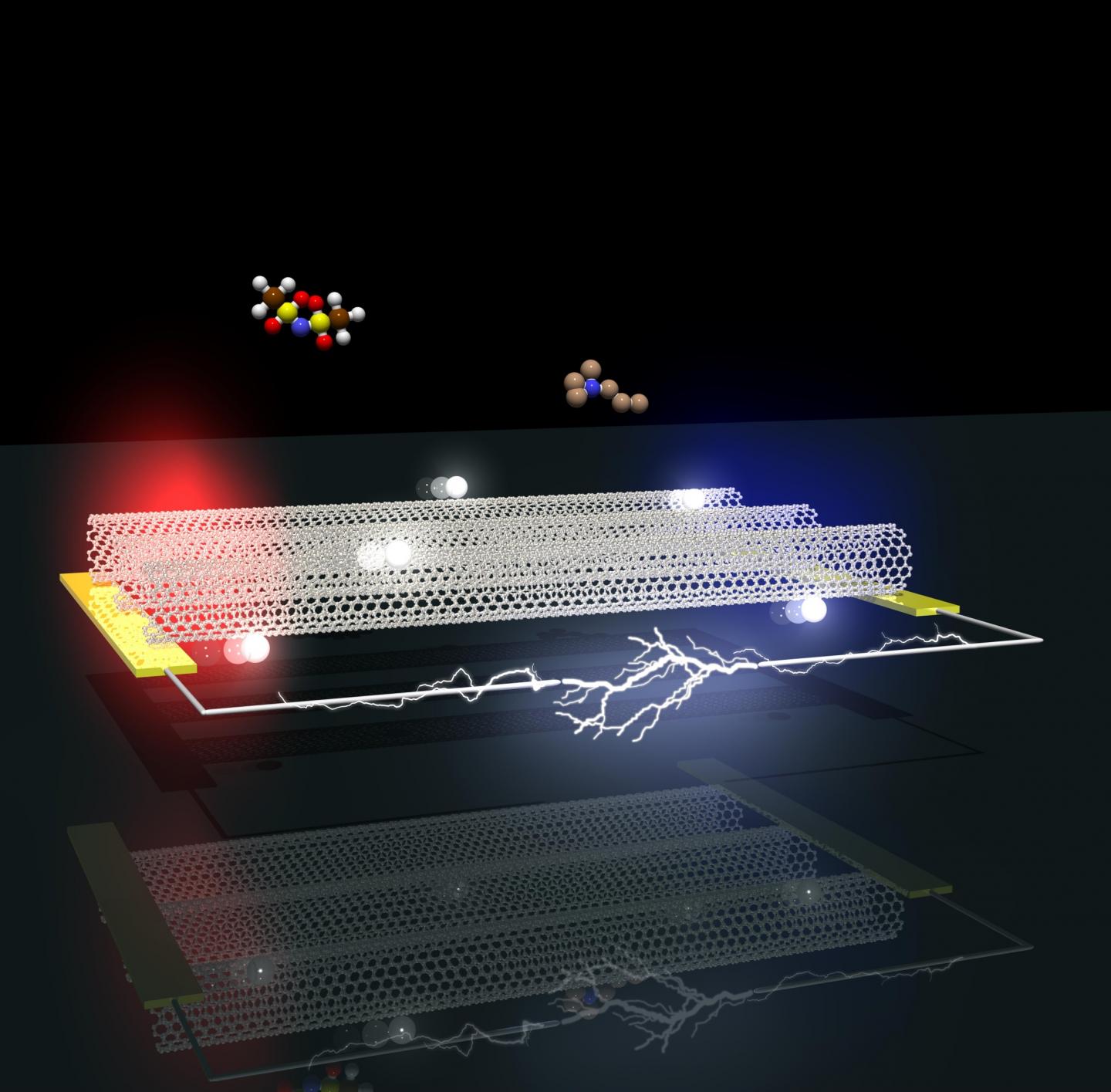
Scientists from Tokyo Metropolitan University have used aligned "metallic" carbon nanotubes to create a device which converts heat to electrical energy (a thermoelectric device) with a higher power output than pure semiconducting carbon nanotubes (CNTs) in random networks. The new device bypasses the troublesome trade-off in semiconductors between conductivity and electrical voltage, significantly outperforming its counterpart. High power thermoelectric devices may pave the way for more efficient use of waste heat, like wearable electronics.
Thermoelectric devices can directly convert heat to electricity. When we think about the amount of wasted heat in our environment like in air conditioning exhausts, vehicle engines or even body heat, it would be revolutionary if we could somehow scavenge this energy back from our surroundings and put it to good use. This goes some way to powering the thought behind wearable electronics and photonics, devices which could be worn on the skin and powered by body heat. Limited applications are already available in the form of body heat powered lights and smartwatches.
The power extracted from a thermoelectric device when a temperature gradient is formed is affected by the conductivity of the device and the Seebeck coefficient, a number indicating how much electrical voltage is generated with a certain difference in temperature. The problem is that there is a trade-off between the Seebeck coefficient and conductivity: the Seebeck coefficient drops when the device is made more conductive. To generate more power, we ideally want to improve both.
Semiconducting materials are generally considered superior candidates for high-performance thermoelectric devices. However, a team led by Prof. Kazuhiro Yanagi of Tokyo Metropolitan University met an unlikely hero in the form of "metallic" CNTs. Unlike purely semiconducting CNTs, they found that they could simultaneously enhance both the conductivity and Seebeck coefficient of metallic CNTs, breaking the trade-off between these two key quantities. The team went on to show that these unique characteristics arose from the one-dimensional metallic electronic structure of the material. Furthermore, they were able to align the orientation of the metallic CNTs, achieving an output which was nearly five times that of films of randomly oriented pure semiconducting CNTs.
Not only will high-performance thermoelectric elements let us use body heat to power our smartphones, the potential biomedical applications will ensure that they play an important role in everyday applications in the future.
Solving the Thermoelectric Trade-Off Problem with Metallic Carbon Nanotubes
Yota Ichinose, Akari Yoshida, Kanako Horiuchi, Kengo Fukuhara, Natsumi Komatsu, Weilu Gao, Yohei Yomogida, Manaho Matsubara, Takahiro Yamamoto, Junichiro Kono, Kazuhiro Yanagi
Nano Letters (2019) 19, 10, 7370-7376
DOI: 10.1021/acs.nanolett.9b03022
Contact information:
Kazuhiro Yanagi
TMU Professor of Physics
yanagi_kazuhiro@tmu.ac.jp
Phone: +81-42-677-3253
Teledyne DALSA has launched the Rad-icon 2329HS X-ray detector, featuring a 27 Mp CMOS sensor, 10X faster frame rate and 3X higher sensitivity than the previous model. It was shown at the NDTMA conference.
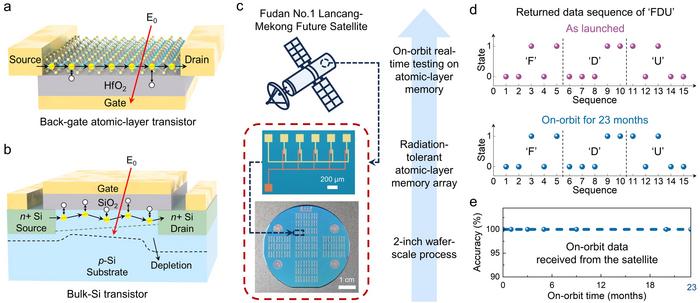
A monolayer MoS2 memory array fabricated at wafer scale on the Fudan No.1 satellite has returned stored data with 100% accuracy after 23 months in low Earth orbit, marking the first on-orbit real-time test of atomic-layer memory. Ground Co-60 gamma irradiation up to 20 Mrad left on/off current ratios stable across roughly eight orders of magnitude and preserved low-noise readout at picoampere levels.
GE HealthCare expanded global clinical and research collaborations to evaluate Photonova Spectra, its photon-counting CT system, across institutions in North America, Europe and Asia.
This week in nanotech
$18.9M raised
4 funding rounds · 31 deals tracked
New products
 Nion-compatible In Situ STEM Holders for Electrical BiasingHummingbird Scientific Featured
 Orion Sputtering Deposition SystemsAJA International Featured
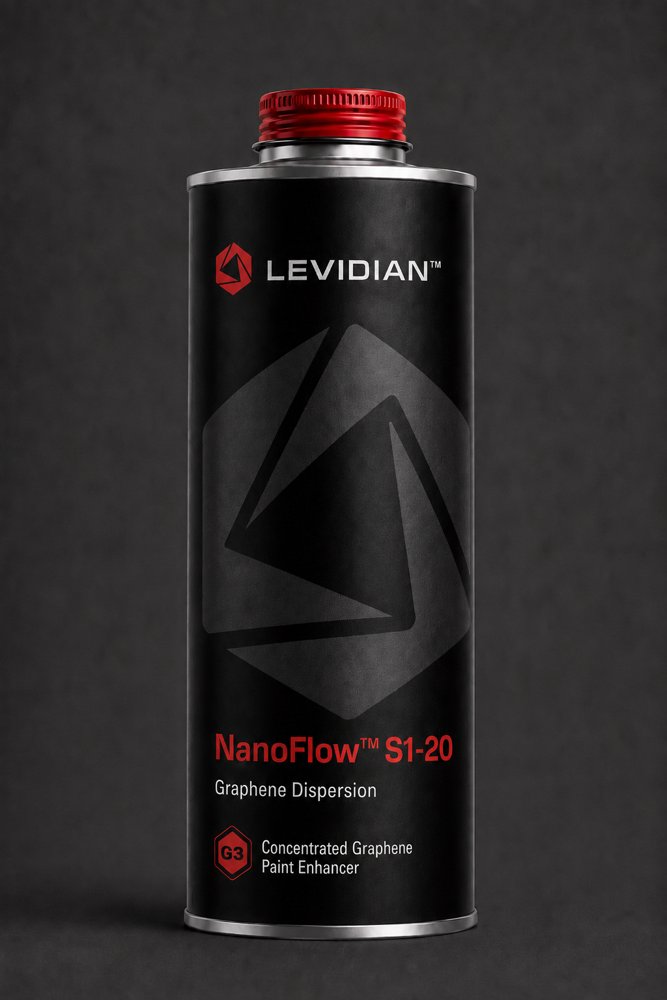 NanoFlow® S1-20Levidian
Market insights
Last 30 days: Semiconductors & Electronics was the busiest vertical: 52 of 170 events (31%).
Money raised per month
Behind the deal
Who led Eindhoven University of Technology’s $1.1M Grant?
See the investors with Insights Pro →