Korea Institute of Civil Engineering and Building Technology
Over the past decade, fine dust conditions in Korea have worsened, as perceived by the general public, with an increase in the number of days per year featuring high-concentration fine dust. Additionally, the previous maximum fine-dust concentration level has been surpassed. In response, the Korean government has expanded its financial investment in efforts aimed at addressing fine-dust issues.
Fine dust consists of particles that are too small to be seen with the naked eye. When these particles enter the human body through the skin and respiratory system, they can cause various diseases. According to a survey conducted by the Korea Environment Institute, three in ten people in Korea have experienced fine dust-induced diseases. Notably, NO2 and NO, among the main components of exhaust gas, are known as sources of fine dust.
Against this backdrop, the Korea Institute of Civil Engineering and Building Technology (KICT, President Kim Byung-suk) has developed a material for key components that can absorb NOx and SOx in an eco-friendly and efficient manner.
Currently, selective catalytic reduction (SCR) and flue gas desulfurization (FGD), based on oxidation-reduction reactions, are among the most widely used methods to remove NOx and SOx in the field. These techniques, however, require large amounts of thermal energy and high temperatures. Simply put, they are high-energy-consuming methods.
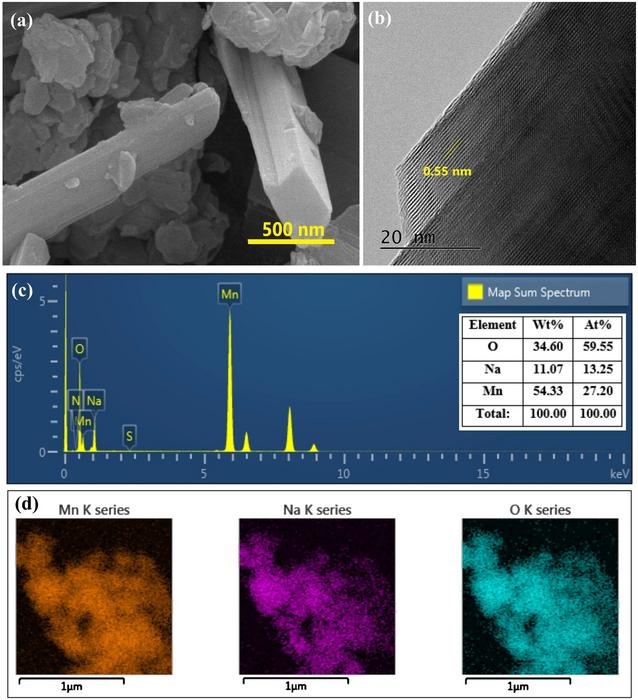
As an alternative, the ‘Environmental Nanomaterials Laboratory’ under the KICT's Department of Environmental Research has recently developed a material that can immediately mineralize pollutants via a complex mechanism in which SOx and NOx is easily adsorbed and oxidized at room temperature. Another advantage of the state-of-the-art nanocomposite material developed by a research team led by Dr. Jiyeol Bae is that it can be regenerated for recycling through simple chemical treatments, so that it can be repeatedly reused.
This ceramic nanomaterial, composed of sodium-manganese oxides, is a hybrid material that combines adsorption and oxidation reactions, which chemically absorbs SOx and NOx while immediately mineralizing them into sulfate ions and nitrite ions. The research team published the world's first paper on materials capable of mineralizing acid gases at room temperature. They will continue their study to make the developed material more widely applicable as an energy-efficient and eco-friendly solution for efficiently reducing SOx and NOx gases.
Dr. Jiyeol Bae, who led this project, said, “With the development of this novel nanomaterial, it is now possible to implement a system that can reduce fine-dust precursors from urban environments in an eco-friendly and cost-effective manner. All these efforts will help the general public enjoy clean and healthy air.”
Reference
Novel application of sodium manganese oxide in removing acidic gases in ambient conditions
Nishesh Kumar Gupta, Srungarpu N. Achary, Herlys Viltres, Jiyeol Bae & Kwang Soo Kim
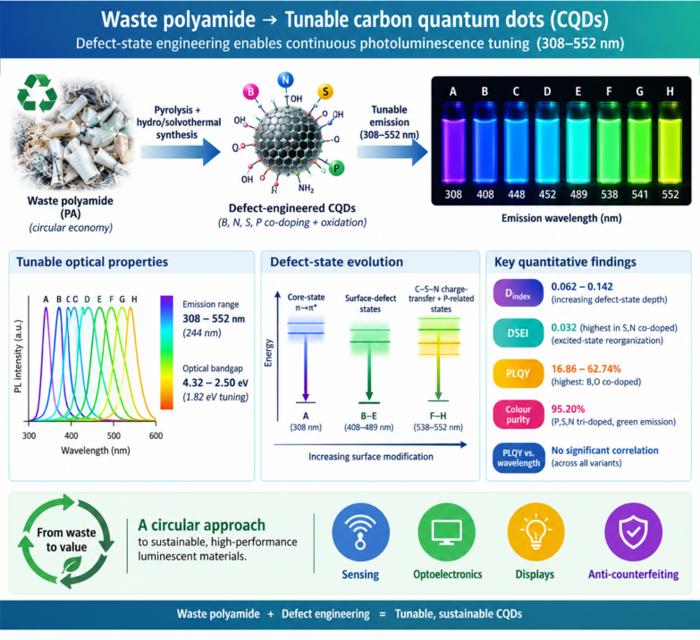
Waste polyamide-derived CQDs show continuous photoluminescence tuning from 308 to 552 nm through sequential defect-state engineering, with optical transition energies decreasing from 4.32 to 2.50 eV. @Christian Ebere Enyoh from Saitama University Carbon quantum dots (CQDs) are fluorescent carbon nanomaterials with potential applications in sensing, optoelectronics, displays, anti-counterfeiting, and environmental technologies. Their optical properties can be adjusted by modifying the carbon...
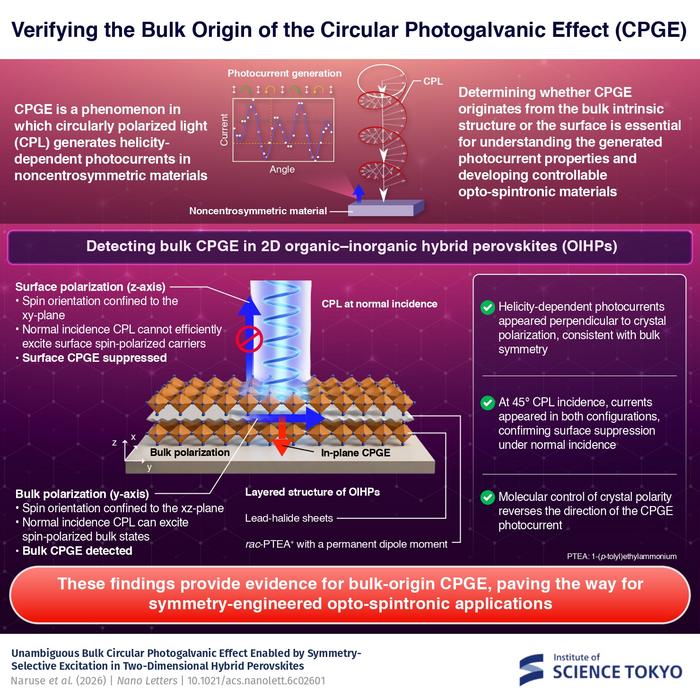
The researchers used circularly polarized light at normal incidence and found that helicity-dependent photocurrents appeared perpendicular to the crystal’s polarization but vanished when measured parallel to it, supporting a bulk origin of CPGE. @Institute of Science Tokyo The circular photogalvanic effect (CPGE), a phenomenon that generates helicity-dependent photocurrents in noncentrosymmetric materials, can originate purely from a crystal's internal structure without contribution from the...
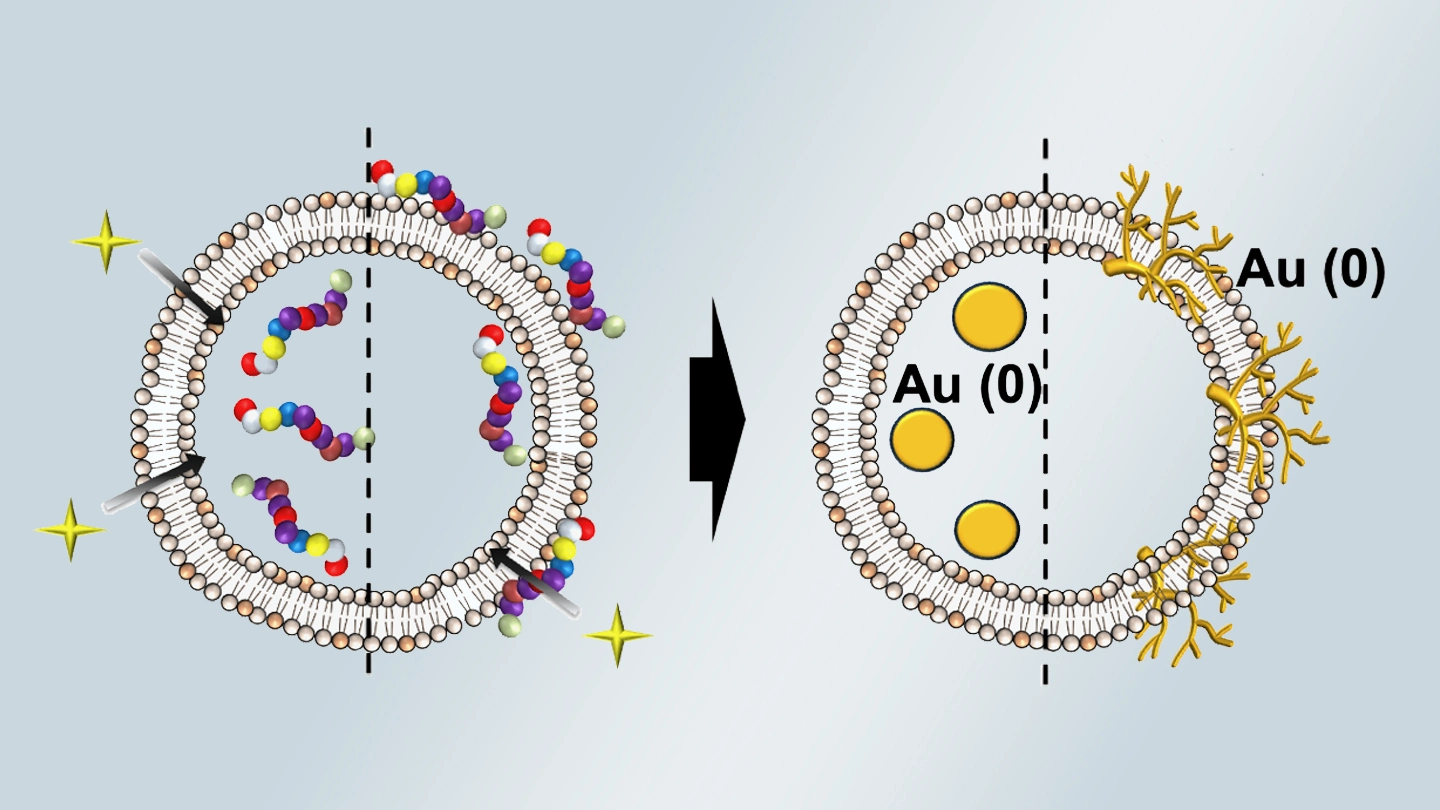
Summary of gold nanoparticle growth programming in liposome based on localization of biomineralization peptide The position of biomineralization peptides within liposomes can influence how gold nanoparticles grow, reports a research team from Institute of Science Tokyo. Peptides localized at the membrane interface promote branched structures, while those confined to the liposome interior favor spherical nanoparticles. The findings offer a new strategy for controlling nanoscale reaction...
