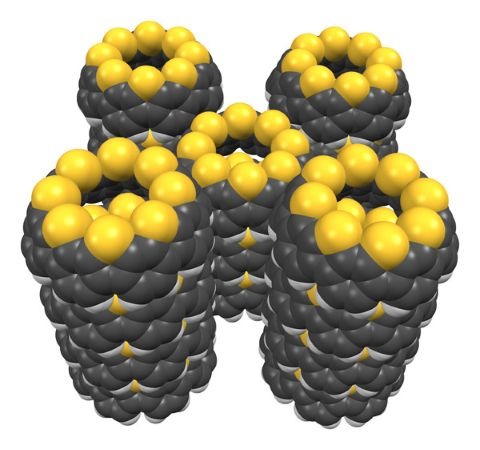
RIKEN chemists have hit upon a fast and easy way to combine so-called nanobelts of carbon with sulfur-containing functional groups. This new material has intriguing properties that make it promising for use in novel optoelectronic devices.
Ever since their discovery in 1991, carbon nanotubes—tiny hollow cylinders made entirely from carbon atoms—have been attracting a lot of interest, being used in applications ranging from electronics to medicine.
Carbon nanobelts are cross-sectional slices of carbon nanotubes. They could be used in electronic and optoelectronic devices and as building blocks for carbon nanotubes. Despite attempts starting as far back as the 1950s, they weren’t synthesized until 2017 by a team led by Kenichiro Itami, now of the RIKEN Molecule Creation Laboratory.
That achievement has sparked a flurry of activity to create similar nanobelts. “People realized that it’s not a dream molecule, that it is possible to synthesize it,” says Itami. “Therefore, many research groups in the world are now making a lot of different kinds of nanobelts after our demonstration.”
Itami and his team have also been attempting to make new molecules based on carbon nanobelts. Now, they have combined carbon nanobelts with thiophene—a ring-shaped compound made up of one sulfur atom and four carbon atoms.
The motivation for combining thiophene and carbon nanobelts is that thiophene is a function-rich material with interesting semiconducting and fluorescence properties.
The new molecule turned out to be surprisingly easy to make. “It’s amazingly simple,” says Itami. “It’s just a single-shot reaction.”
Even Itami was taken aback by how easy it was. “Hiroki Shudo, the first author of this paper, proposed the idea to me after reading a paper, saying, ‘I think we can do this’”, recalls Itami. “And then boom, it worked! That was a big surprise to me.”
Another surprise was that all the nanobelts aligned with their sulfur sides up on a copper surface, but with their sulfur sides down on a gold surface. “That was really unexpected,” notes Itami. “We’re now seeking to understand why it happens.”
The thiophene-fused nanobelts are more than just interesting chemistry curiosities though—they could find applications in optoelectronic devices and polar materials.
“Several research groups in other countries are extremely excited about using our molecule in devices and are looking to collaborate with us,” says Itami. “So we’re now sending the molecule to them to initiate international collaborations.”
The same synthesis strategy used to make the thiophene-fused nanobelts could also be used to create other varieties of carbon nanobelts. Itami and his team are currently seeing what other molecules they can make with it.
Reference
Thiophene-fused aromatic belts
Hiroki Shudo, Philipp Wiesener, Elena Kolodzeiski, Kiichi Mizukami, Daiki Imoto, Harry Mönig, Saeed Amirjalayer, Hirotoshi Sakamoto, Henning Klaasen, Bart Jan Ravoo, Nobuo Kimizuka, Akiko Yagi & Kenichiro Itami
https://www.nature.com/articles/s41467-025-55896-w
RIKEN

To date, superlubricity has always been isotropic: the friction is cancelled in all directions equally. Now, with this new discovery, a new form of superlubricity is achieved, where the friction is zero in one direction only, and has conventional friction in other directions.
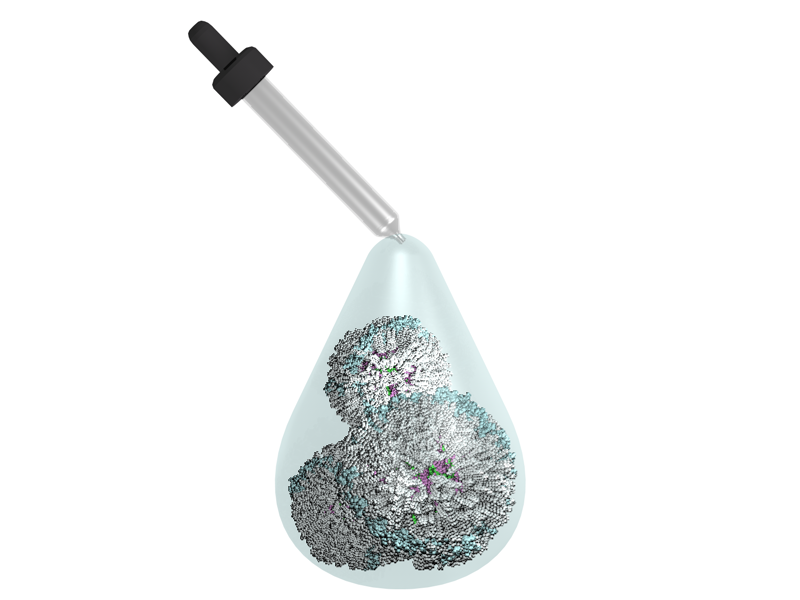
Northwestern Medicine investigators have developed first-of-its-kind eyedrops that use synthetic nanoparticles to help the eye regenerate cells that have been damaged by mustard keratopathy, or exposure to mustard gas, and other inflammatory eye diseases, detailed in a recent study published in the journal NPJ Regenerative Medicine.
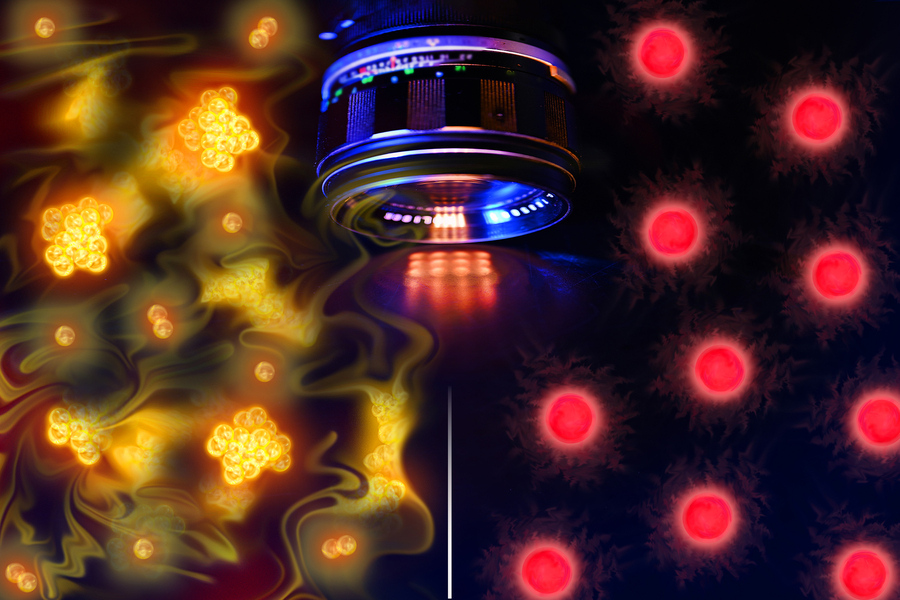
MIT physicists have captured the first images of individual atoms freely interacting in space. The pictures reveal correlations among the “free-range” particles that until now were predicted but never directly observed. Their findings, appearing in the journal Physical Review Letters, will help scientists visualize never-before-seen quantum phenomena in real space.
This week in nanotech
$816M raised
7 funding rounds · 34 deals tracked
New products
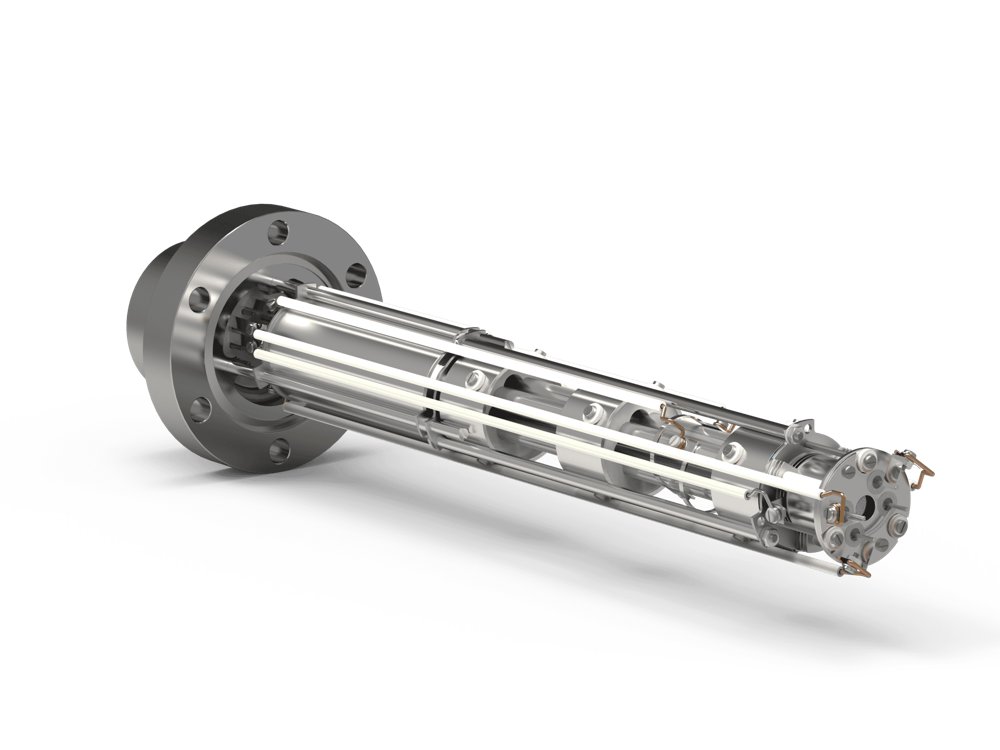 DLS-1 Mass Spectrometer for Fusion Gas AnalysisHiden Analytical Featured
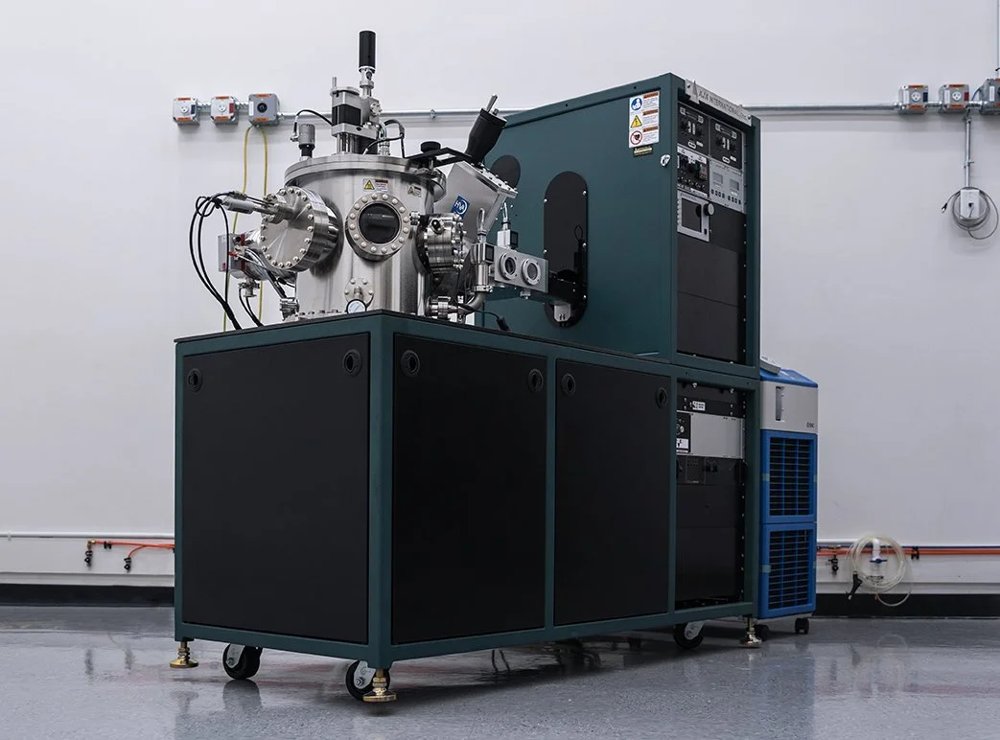 Orion Sputtering Deposition SystemsAJA International Featured
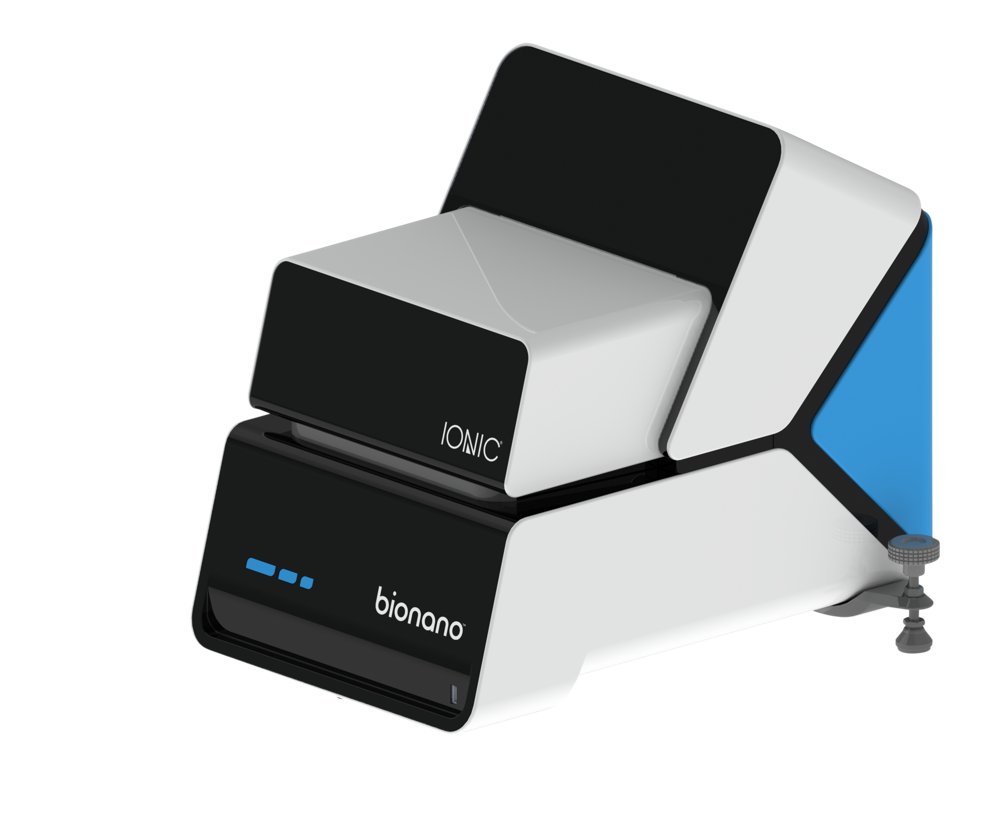 Ionic® Purification SystemBionano Genomics, Inc.
Market insights
Last 30 days: Quantum Technologies drew the most money: $3.17B.
Money raised per month
Behind the deal
Who invested in Vertical Semiconductor’s $73M Grant?
See the investors with Insights Pro →