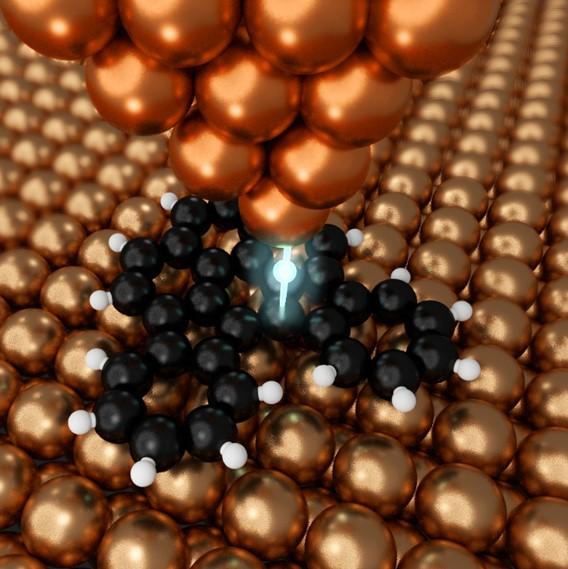
Nanographene is a material that is anticipated to radically improve solar cells, fuel cells, LEDs and more. Typically the synthesis of this material has been imprecise and difficult to control. For the first time, researchers have discovered a simple way to gain precise control over the fabrication of nanographene. In doing so, they have shed light on the previously unclear chemical processes involved in nanographene production.
You have probably heard of graphene, one-atom-thick sheets of carbon molecules, that are supposed to revolutionize technology. Units of graphene are known as nanographene; these are tailored to specific functions and as such their fabrication process is more complicated than that of generic graphene. Nanographene is made by selectively removing hydrogen atoms from organic molecules of carbon and hydrogen, a process called dehydrogenation.
"Dehydrogenation takes place on a metal surface such as that of silver, gold or copper, which acts as a catalyst, a material that enables or speeds up a reaction," said Assistant Professor Akitoshi Shiotari from the Department of Advanced Materials Science. "However, this surface is large relative to the target organic molecules. This contributes to the difficulty in crafting specific nanographene formations. We needed a better understanding of the catalytic process and a more precise way to control it."
Shiotari and his team, through exploring various ways to perform nanographene synthesis, came up with a method that offers the precise control necessary and is also very efficient. They used a specialized kind of microscope called an atomic force microscope (AFM), which measures details of molecules with a nanoscopic needlelike probe. This probe can be used not only to detect certain characteristics of individual atoms, but also to manipulate them.
"We discovered that the metal probe of the AFM could break carbon-hydrogen bonds in organic molecules," said Shiotari. "It could do so very precisely given its tip is so minute, and it could break bonds without the need for thermal energy. This means we can now fabricate nanographene components in a more controlled way than ever before."
To verify what they were seeing, the team repeated the process with a variety of organic compounds, in particular two molecules with very different structures called benzonoids and nonbenzonoids. This demonstrates the AFM probe in question is able to pull hydrogen atoms from different kinds of materials. Such a detail is important if this method is to be scaled up into a commercial means of production.
"I envisage this technique could be the ultimate way to create functional nanomolecules from the bottom up," said Shiotari. "We can use an AFM to apply other stimuli to target molecules, such as injecting electrons, electronic fields or repulsive forces. It is thrilling to be able to see, control and manipulate structures on such an incredibly miniscule scale."
Contact
Akitoshi Shiotari
Department of Advanced Materials Science
The University of Tokyo
shiotari@k.u-tokyo.ac.jp
Reference
Manipulable Metal Catalyst for Nanographene Synthesis
Akitoshi Shiotari, Ikutaro Hamada, Takahiro Nakae, Shigeki Mori, Tetsuo Okujima, Hidemitsu Uno, Hiroshi Sakaguchi, Yuji Hamamoto, Yoshitada Morikawa, and Yoshiaki Sugimoto
IMB-CNM-CSIC is a partner in POLARIS, an EIC Pathfinder Open 2026 project led by ICN2 to develop graphene-based brain implants. Researcher Anton Guimerà leads the institute's contribution.
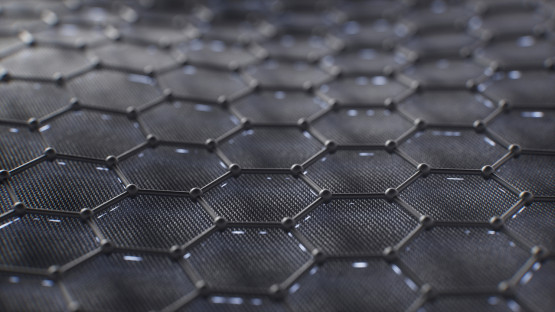
Cornell researchers found that applying voltage to a four-layer graphene stack slides the layers between atomic stacking arrangements, reversibly switching the material between nonmagnetic and magnetic states. The effect, reported in Nature Nanotechnology, exploits weak van der Waals bonds rather than breaking chemical bonds, and the resulting state persists after voltage is removed.
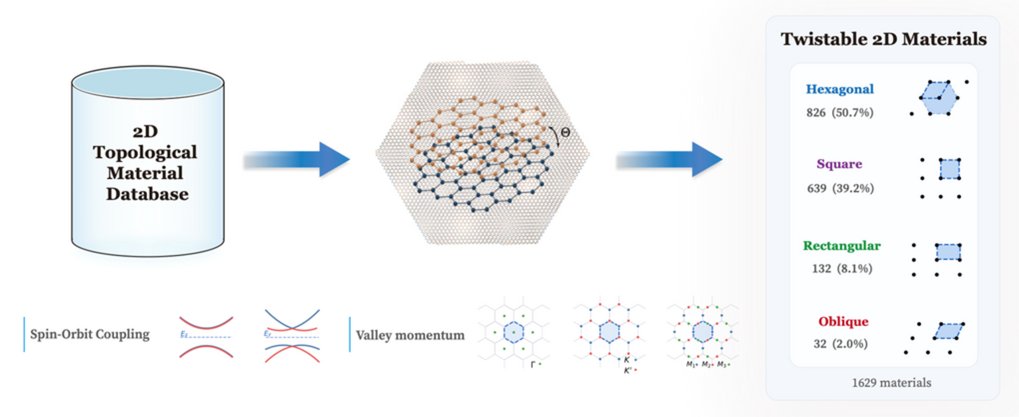
Two new studies catalog nearly 9,000 two-dimensional materials and identify 61 semimetals and 1,568 insulators suited to twistronics, the stacking and rotating of atomically thin layers to engineer narrow electronic bands. The work maps topological electronic structures, predicts promising twisted bilayers such as tin diselenide and hafnium disulfide, and confirms several candidates can be grown in bulk and exfoliated into working devices, giving researchers a systematic route to designer…
This week in nanotech
$271M raised
6 funding rounds · 26 deals tracked
New products
 Nion-compatible In Situ STEM Holders for Electrical BiasingHummingbird Scientific Featured
 Ti-WCMBN Nanomaterialia Featured
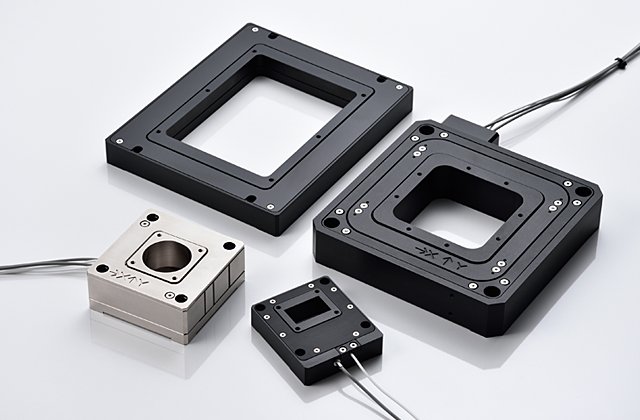 PKVH / PKVL ZAxis With an opening modelTHK PRECISION CO.,LTD.
Market insights
Last 30 days: Quantum Technologies drew the most money: $3.17B.
Money raised per month
Behind the deal
Who led Xanadu Quantum Technologies Limited’s $10M Grant?
See the investors with Insights Pro →