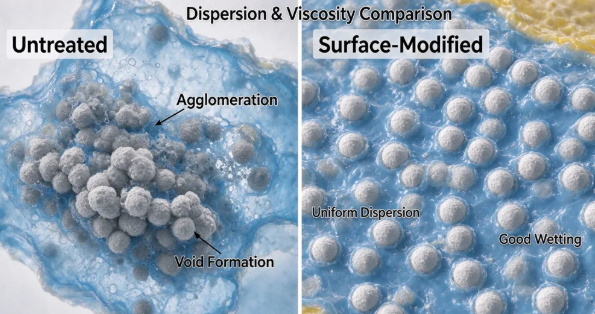
TRUNNANO has released a surface-modified spherical alumina powder for highly filled thermally conductive potting compounds used in power electronics, LED modules and battery packs. The company says the treated grades allow higher filler loading at a given viscosity, or a viscosity reduction at a given loading, compared with untreated spherical alumina.
According to the company, surface-modified grades can reach 2 to 5 wt% higher loading than untreated powder at the same viscosity, or reduce viscosity by 20 to 40% at the same loading. In an IGBT module encapsulation example, a silicone compound filled with the modified alumina reached 90 wt% loading at a viscosity suitable for gravity casting, against 86 wt% for an untreated filler. The company reports no interfacial delamination after 1000 cycles from -40°C to 150°C.
The modification uses silane coupling agents or polymer-compatible grafts. Silane types are matched to the matrix: vinyl or alkyl silane for silicone, epoxy-functional silane for epoxy, amino or isocyanate-functional silane for polyurethane, and methacrylate-functional silane for acrylate systems. The company states that the modifier chemistry must be treated as a formulation variable, since a treatment suited to one matrix may not perform in another.
Typical specifications given for the surface-modified spherical alumina include Al2O3 content of at least 99.5%, D50 particle size of 1 to 100 μm depending on grade, sphericity of 0.9, specific surface area of 0.1 to 2 m²/g, moisture content of 0.1% and ionic content (Na+, Cl-) of 10 ppm for electronic grade. Thermal conductivity of the alpha-alumina filler is quoted at approximately 30 W/m·K.
The company's product line covers vinyl-silane grades for silicone potting compounds, epoxy-functional grades for power electronics encapsulation and isocyanate-functional grades for polyurethane battery pack potting. TRUNNANO advises formulators to start with bimodal or trimodal blends, commonly at a 10:1 ratio of large to small particles, and to apply surface modification to both fractions.
Source: nanotrun.com
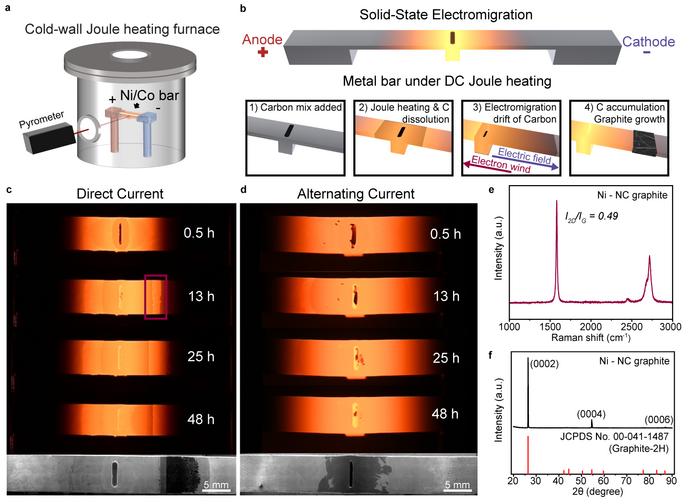
Researchers at the Institute for Basic Science have turned electromigration, long a cause of circuit failure, into a tool for materials growth. Applying direct current to cobalt and nickel guided dissolved carbon through the solid metals, precipitating graphite 8 to 10 millimeters away at the cathode. Alternating current produced deposits roughly 300 to 450 times thinner.
Levidian has launched NanoFlow R1-10, a 10 wt.% G3 graphene concentrate pre-dispersed in bisphenol A-based epoxy resin for two-part epoxy systems. It is available for customer evaluation and product development.
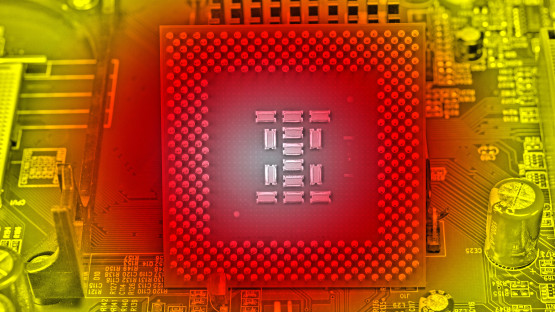
Cornell researchers combined density functional theory with nonequilibrium Green's function methods to show that an applied electric field can raise or lower the cross-plane thermal conductivity of aluminum nitride depending on field direction relative to crystal polarity, predicting about 334 watts per meter-kelvin at zero field. Complementary experiments on hexagonal boron nitride measured thermal resistance drops of up to 25 percent under strong fields.
This week in nanotech
25 deals tracked
New products
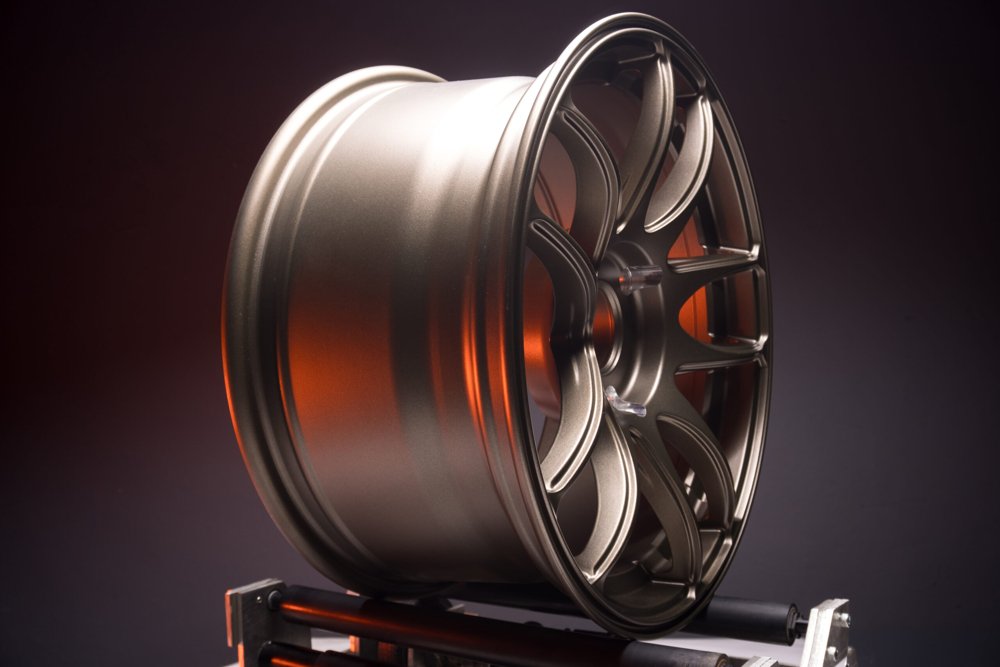 Ti-WCMBN Nanomaterialia Featured
 DLS-1 Mass Spectrometer for Fusion Gas AnalysisHiden Analytical Featured
 Discover Mapping SuiteOnto Innovation
Market insights
Last 30 days: Semiconductors & Electronics was the busiest vertical: 55 of 176 events (31%).
Money raised per month