European XFEL
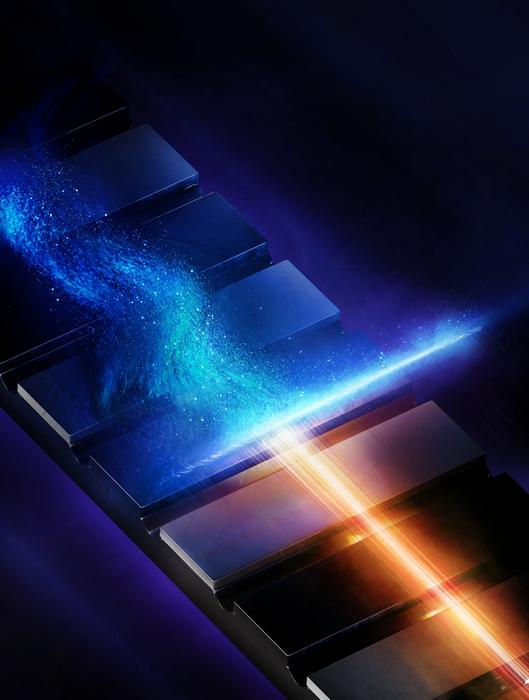
Researchers used the European XFEL to create X-ray flashes that were not only extremely short, but also reached record intensity for this type of pulses. The researchers focused the X-rays to an area roughly 100 000 times smaller than the cross-section of a typical human hair. This concentrated the X-ray light into a tiny but extremely powerful spot. The method could enable detailed studies of how electrons behave in atoms and molecules and in the long term could even allow to control electrons during chemical reactions. The team now published the results of the experiment, carried out in April 2026, in the journal Optica.
“This is a world record in intensity and fluence for a hard-X-ray attosecond pulse,” says Ichiro Inoue from the University of Tokyo, first author of the publication. Hard X-rays are light waves with a particularly short wavelength. Fluence measures how much energy this light delivers to a certain area. Intensity also takes into account how quickly that energy arrives. The pulses used in the experiment lasted an estimated 300 attoseconds (an attosecond is a billionth of a billionth of a second). They passed through a set of two extremely precise mirrors, known as an advanced Kirkpatrick–Baez, or AKB, optical system. Each X-ray flash reflected four times in total: one mirror focused the pulse vertically and the other horizontally. This resulted in a focal spot of just 180 × 330 nanometres (a nanometre is a billionth of a metre).
“A few years ago, we demonstrated terawatt-scale hard X-ray attosecond pulses at the European XFEL,” says DESY scientist Jiawei Yan, one of the corresponding authors of the study. “But generating powerful pulses is only the first step. For experiments, what really matters is what we can deliver to the sample. With this advance, we can now use attosecond X-rays to explore highly nonlinear interactions between X-rays and matter.”
The researchers independently verified that they reached a peak intensity of more than 1020 watts per square centimetre by shining the pulses onto a copper foil. The X-rays removed electrons from deep inner shells of the copper atoms, leaving behind ‘holes’. When other electrons filled these holes, they emitted X-ray light. At very high intensities, this light can stimulate other excited copper atoms to emit more X-ray light in the same direction, amplifying the signal. This process is called amplified spontaneous emission, or ASE.
“It is almost magical to see this happening,” says Anders Madsen, group leader at the MID instrument, where the study was conducted. “Normal fluorescence goes in all directions, regardless of the direction of the incoming beam. But when the ASE threshold is crossed, you see the light cone starting to condense into the forward direction.”
The researchers observed that the ASE signal initially increased rapidly as the pulse energy rose, but then levelled off, or saturated, at higher energies. This behaviour is expected only at extremely high X-ray intensities and provided independent confirmation of the intensity estimated from the pulse energy, duration and focal-spot size.
The advanced Kirkpatrick–Baez mirror system used in the experiment was brought in from Japan. European XFEL expects delivery of its own AKB system in early 2027. The new system is funded through a collaboration with the University of Hamburg and support from the Federal Ministry of Research, Technology and Space (BMFTR). Once installed and commissioned, it is intended to give researchers from around the world using the MID instrument access to X-ray flashes that are both short and intense enough to capture information about electrons before the X-rays can cause substantial changes in a sample.
Reference
Generation of high-fluence and high-intensity hard X-ray attosecond pulses at the European XFEL
Ichiro Inoue, Ulrike Boesenberg, Rustam Rysov, Takahiro Sato, Ichika Harima, Chenzhi Xu, Jia Liu, Thomas Linker, Zain Abhari, Andrei Benediktovitch, Uwe Bergmann, Ye Chen, Cao Lu, WINFRIED DECKING, Gianluca Geloni, Marc Guetg, Trey Guest, Alex Halavanau, Jörg Hallmann, Takashi Kimura, Naresh Kujala, leonau Aliaksandr, shan liu, Tianyun Long, Johannes Moeller, Taito Osaka, Jan-Etienne Pudell, Weilun Qin, Nina Rohringer, Angel Rodriguez-Fernandez, Daniele Ronchetti, Yasuhisa Sano, MATTHIAS SCHOLZ, Roman Shayduk, Jergus Strucka, Yanwen Sun, James Wrigley, Kazuto Yamauchi, Diling Zhu, Alexey Zozulya, Makina Yabashi, Anders Madsen, Jumpei Yamada, and JIAWEI YAN
Physicists at Auburn University used laser pulses to bring order to polar nanoregions in a modified strontium titanate crystal, resolving a decades-old debate over whether these charged islands pre-exist or form as atoms shift together. Sensitive optical measurements show the regions are already present before aligning on cooling. Brief light pulses aligned them for about a picosecond, showing light can both create and read the pattern.
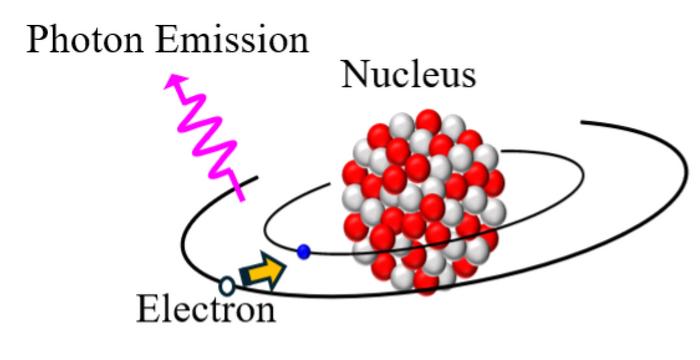
Extreme ultraviolet spectroscopy of highly charged lutetium and ytterbium ions, generated in an electron beam ion trap, has resolved a long-standing anomaly in rare-earth nuclear charge radii. Converting emission line energy shifts into radius differences shows the lutetium nucleus is slightly smaller than ytterbium's, restoring the expected odd-even staggering.
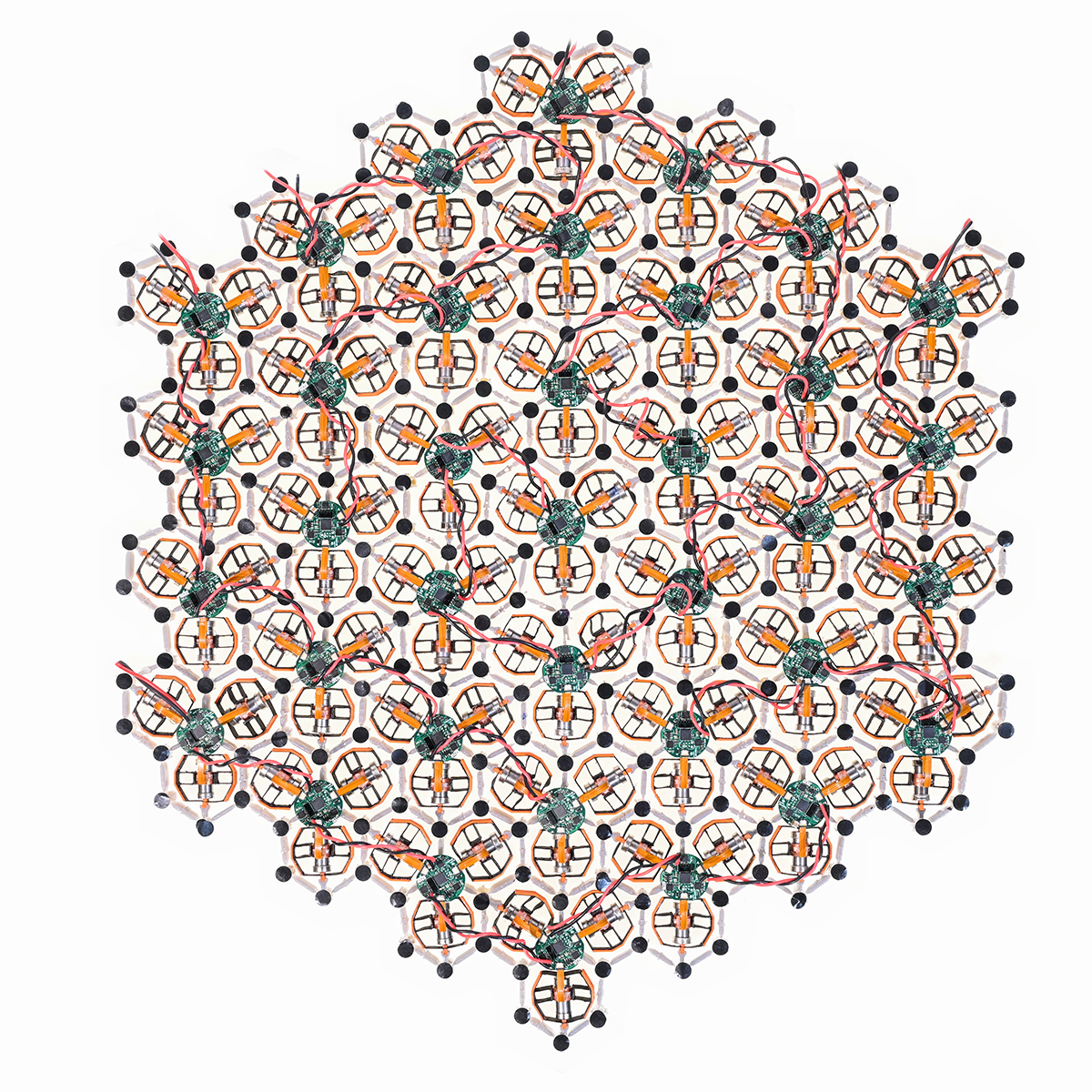
Physicists have built mechatronic metamaterials whose connected robotic elements oscillate autonomously, forming time crystals that repeat patterns in both space and time. Fabricated as a one-dimensional ring and a two-dimensional surface, the active elastic structures show wave coarsening that drives spontaneous time-crystallization, and their order survives small random perturbations.