HEP Data Cooperation Journals
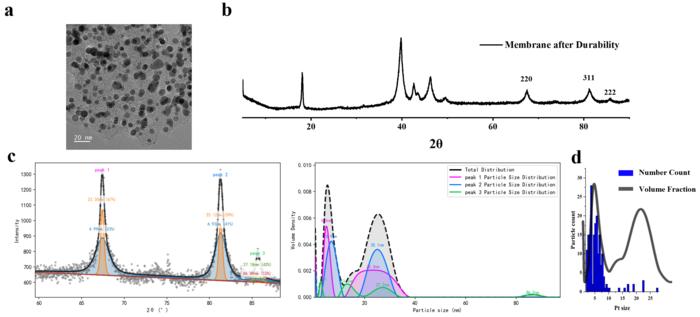
Platinum nanoparticles supported on carbon are central to the performance of proton exchange membrane fuel cells. Their size distribution affects how much catalytically active surface is available and how the catalyst changes during long-term operation. Yet widely used characterization methods provide only part of the picture. Transmission electron microscopy (TEM) directly images particles but samples a limited area and requires destructive preparation for aged membrane electrodes. The Scherrer equation, commonly applied to X-ray diffraction (XRD), reports only an average crystallite size and cannot reveal whether a catalyst contains one population, a broad tail, or several distinct size groups.
Researchers at Shanghai Hydrogen Propulsion Technology Co., Ltd. have developed a numerical framework that recovers a volume-weighted crystallite size distribution directly from XRD line profiles without assuming that the distribution follows a predefined mathematical shape. For each possible crystallite diameter, the method calculates a Pearson VII diffraction profile whose width follows the Scherrer relation. These profiles form a dictionary matrix, and their non-negative weights are recovered using Tikhonov-regularized least squares. An L-curve procedure selects the regularization parameter automatically, balancing agreement with the measured data against suppression of noise-driven oscillations.
Instead of relying on a single reflection, the framework jointly analyzes three high-angle platinum peaks: Pt (220), (311), and (222). These peaks are separated from the strongest carbon-support background and from the platinum-oxide region that can complicate lower-angle reflections. Requiring one distribution to reproduce all three peaks adds independent constraints and provides an internal consistency check.
The researchers tested the method on commercial Pt/C catalysts with platinum loadings of 40–60 wt%. For each reference sample, at least 300 nanoparticles were measured from multiple TEM images. After the TEM number-weighted histograms were converted to a volume-weighted basis, the XRD-derived distributions showed good quantitative agreement. The inversion distinguished narrow, nearly single-size catalysts from broad or multimodal materials and detected large-particle tails that may be missed in a limited TEM survey.
The method was then applied directly to an aged catalyst-coated membrane after a fuel-cell durability test, without solvent extraction or preparation of the catalyst on a TEM grid. The recovered distribution contained a population near 5 nm, accounting for about 65% of the crystallite volume, and a second population near 25 nm, accounting for about 30%. The smaller population is consistent with electrochemical Ostwald ripening, in which dissolved platinum redeposits on larger neighboring particles. The larger population is consistent with particle migration and coalescence on the carbon support. Post-mortem measurements of 327 particles from multiple TEM images reproduced the two populations and supported the XRD interpretation.
The approach provides a non-destructive and statistically representative complement to microscopy for catalyst quality screening and durability diagnosis. The authors have released an open-source Python implementation that imports raw Rigaku and Bruker diffraction data, selects the regularization parameter, performs multi-peak joint inversion, and plots the recovered distributions. Future work will explore operando XRD for real-time tracking of crystallite growth and extensions that separate crystallite-size broadening from microstrain.
The work titled “Regularization-Based Crystallite Size Distribution Analysis of Pt/C Catalysts from X-Ray Diffraction” was formally published in Journal of Electrochemistry on October 28, 2026.
Reference
Regularization-Based Crystallite Size Distribution Analysis of Pt/C Catalysts from X-Ray Diffraction
Cheng-Long Ma, Wei-Yu Shi, and Zhong-Jun Hou
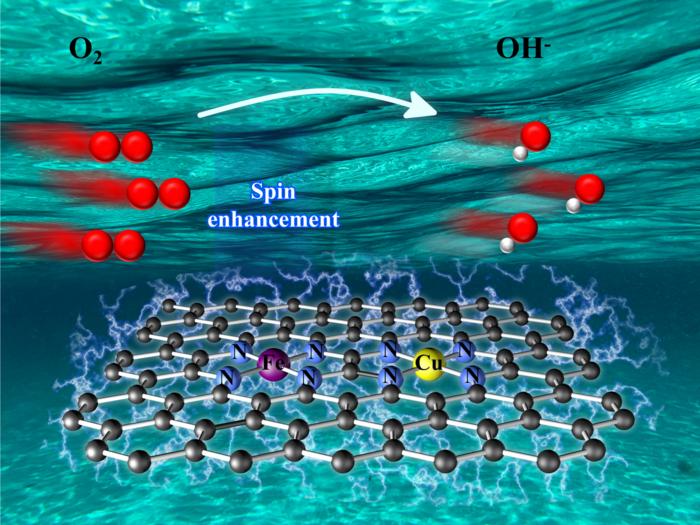
Researchers have developed an FeCu dual-single-atom catalyst in which spatially adjacent CuN4 sites tune the spin state of neighboring FeN4 centers, boosting oxygen adsorption and activation for the oxygen reduction reaction. The catalyst achieved a half-wave potential of 0.88 V versus RHE and outperformed commercial Pt/C in zinc-air battery tests.
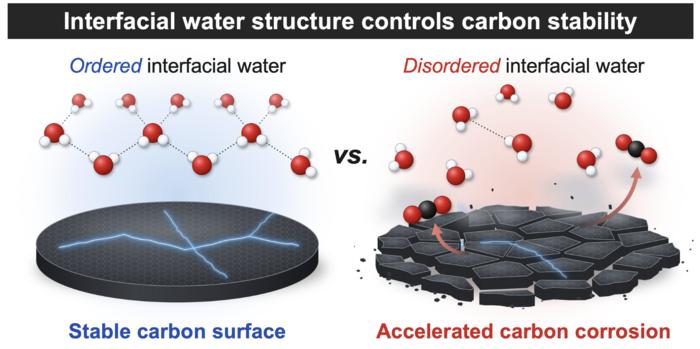
Carbon electrodes corrode under strongly oxidizing conditions, and researchers at the University of Osaka have traced part of that degradation to interfacial water. Monitoring corrosion and water structure during operation showed that weakly connected water networks were preferentially involved in oxidizing carbon to carbon dioxide, and disrupting the network increased corrosion. Reorganizing surface water with the ionomer Sustainion cut corrosion by about 51% versus Nafion.
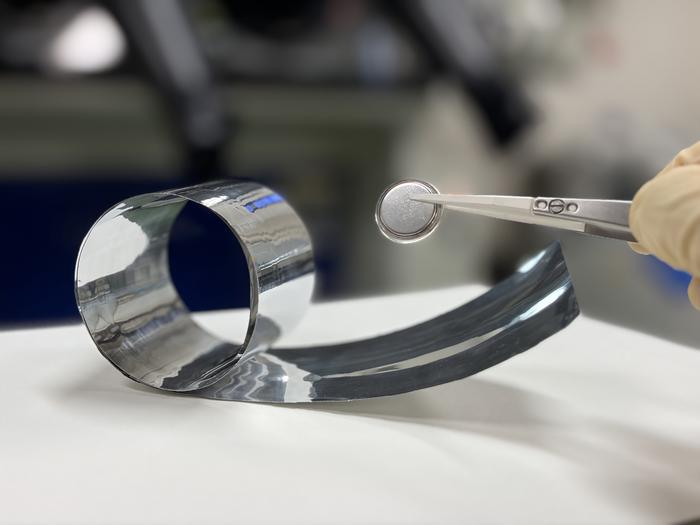
Adding a trace amount of manganese to aluminum foil anodes could make next-generation lithium-ion batteries lighter, cheaper and more sustainable. Researchers at Tohoku University and UACJ Corporation found that dissolving manganese into aluminum slows lithium transport and promotes a fine internal boundary network, letting lithium be removed more completely while the electrode stays dense and stable.
This week in nanotech
25 deals tracked
New products
 Nion-compatible In Situ STEM Holders for Electrical BiasingHummingbird Scientific Featured
 Ti-WCMBN Nanomaterialia Featured
 GHK-CuPeoples Peps
Market insights
Last 30 days: Semiconductors & Electronics was the busiest vertical: 55 of 176 events (31%).
Money raised per month