Nanoelectromechanical systems (NEMS), small brothers of microelectromechanical systems (MEMS), are entering mainstream technology through sensors and actuators in platforms as common as inkjet printers, accelerometers, displays, and optical switches. Worth several tens of billions USD, the MEMS and NEMS market is one that cannot be ignored.
NEMS relies on small vibrating membranes, which are sensitive to tiny forces. The membranes need to be lightweight and stiff, with a high Young's modulus - all parameters which graphene is known for. For example, the Young's modulus of graphene is about five times larger than that of silicon, the flagship material for MEMS. As such, graphene is among the most promising candidates for applications that require ultrathin membranes with excellent mechanical properties.
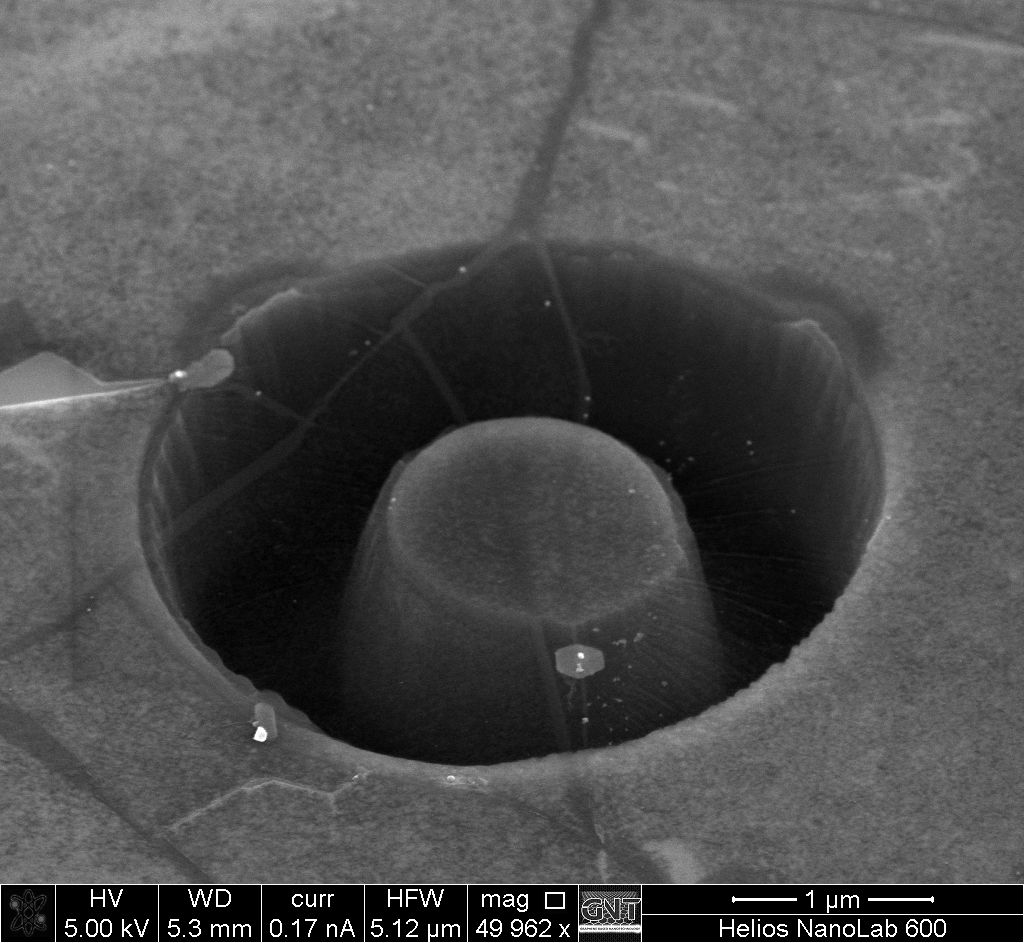
Already in 2013, the sensitivity of graphene NEMS was shown to overshadow silicon MEMS by up to an order of magnitude. The success of graphene NEMS ignited follow-up research across the world, with industrial interest closely following. In order to serve the growing field, Graphenea enhanced their product catalog with the addition of suspended monolayer graphene on cavities. Because all NEMS are different, the idea is that the customer makes their own cavities (tiny holes) in a substrate, and Graphenea uses a novel transfer method to cover the holes with high quality CVD graphene. This is an arrangement that has proven to be successful, as exemplified by publications that Graphenea shares with world-leading graphene NEMS research groups.
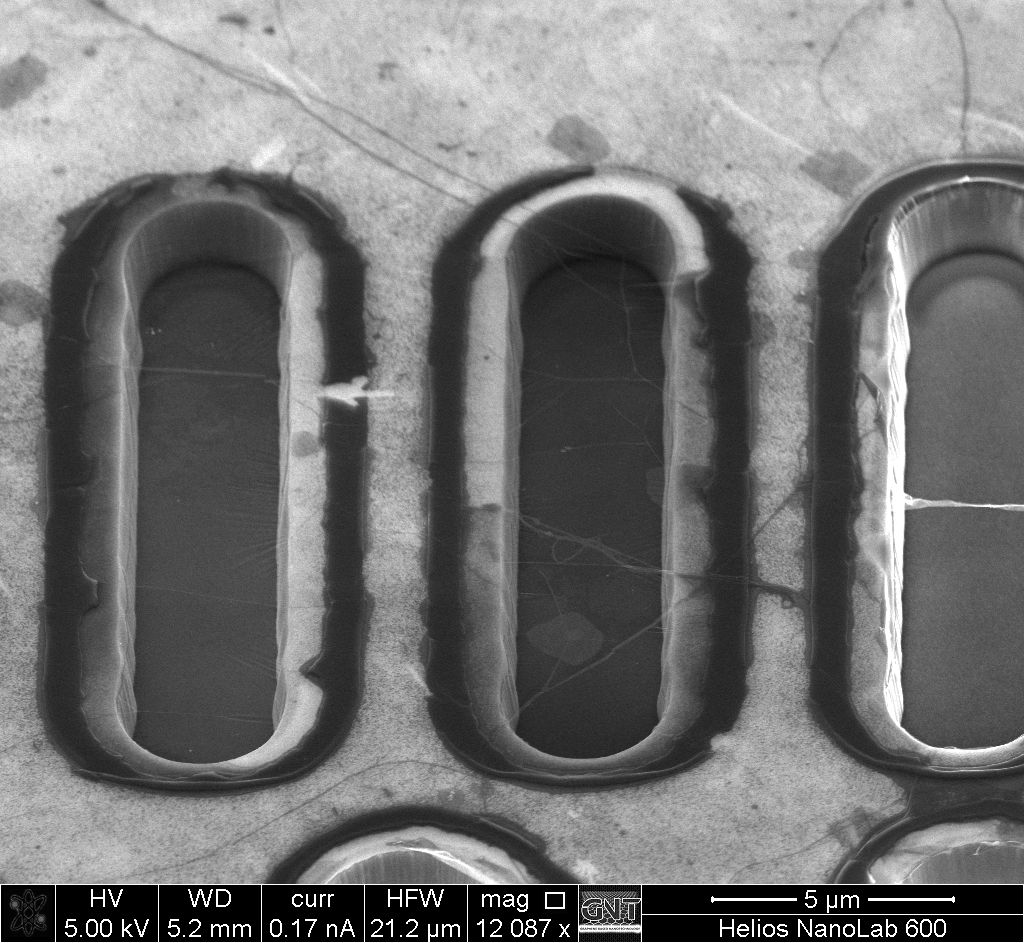
Graphenea is engaged in research of graphene NEMS within the EU FET Graphene Flagship initiative and also through the project GRAFOL. Suspended graphene membranes have other uses than NEMS, for example in optomechanical systems. Details of the substrate requirements and graphene film quality for this product are available in the Graphenea catalog.
Source: http://www.graphenea.com/blogs/graphene-news/30446721-suspended-monolayer-graphene-on-cavities
#Graphene
SPECS reports on work at the LMA microscopy lab, where Dr. David Serrate's team used the JT-STM to study graphene nanoribbons on MgO/Ag(001) and the Aarhus 150 to monitor nanostructure growth.
Nanologica's board has resolved on a rights issue of units of appx. SEK 110.5 million, with an oversubscription option of up to SEK 10 million. Commitments and a guarantee intention cover appx. SEK 85.7 million.
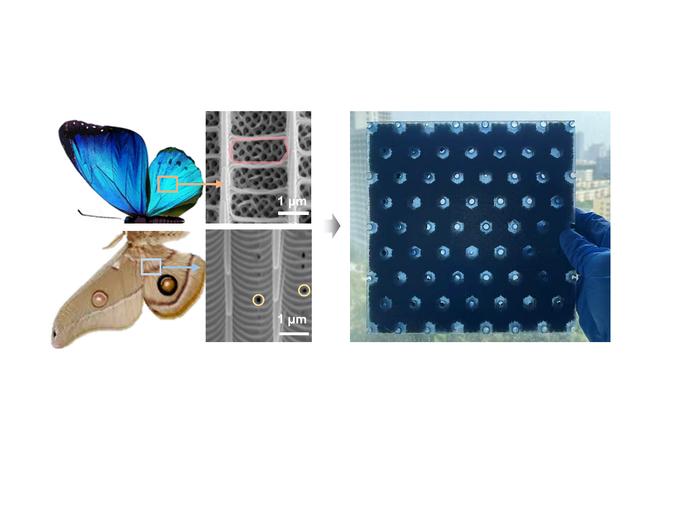
Researchers at Harbin Institute of Technology have printed a 24 mm metamaterial that absorbs impact, shields microwaves and damps low-frequency noise at once. Inspired by butterfly wing scales, it nests a gyroid lattice inside a hexagonal honeycomb, absorbing 21.9 times more impact energy than an equal-weight honeycomb and capturing over 90% of 2-40 GHz radiation and 600-900 Hz sound.
This week in nanotech
$108.5M raised
8 funding rounds · 44 deals tracked
New products
 Nion-compatible In Situ STEM Holders for Electrical BiasingHummingbird Scientific Featured
 Ti-WCMBN Nanomaterialia Featured
 GiiiGii
Market insights
Last 30 days: Quantum Technologies drew the most money: $3.17B.
Money raised per month