
BRUSSELS, Belgium, Feb. 22, 2016 — The European Commission’s Photonics Public Private Partnership (PPP) has launched three advanced pilot lines to help subject matter experts move photonics technologies from the lab into markets. Focused on health applications, flexible organic LEDs, and sensors for the detection of chemicals in gas and liquids, the pilot lines will support the scaling and validation of products for commercial production.
The Commission has invested €35 million in the projects with the goal of boosting Europe's industrial competitiveness. The pilot lines are one element of the Commission's €700 million investment in the Photonics PPP (launched in 2013) over the seven years of Horizon 2020, its framework program for research and innovation.
The three manufacturing pilot lines are PIX4LIFE, MIRPHAB and PI-SCALE.
PIX4Life is a pilot for a photonics platform for health applications. Recently, a promising silicon nitride photonic integrated circuit technology was researched to make compact, low-cost detection and imaging systems in the visible range, which led to the development of the TriPleXTM and BioPIX platforms. PIX4Life aims to scale up these platforms to bring silicon nitride-based systems towards commercial production and industrialization. The technology could open a multibillion market of products including biosensors, cytometers, DNA sequencers, gas sensors, microscopes, medical imagers and more.
The PIX4Life pilot line will drive European leadership in health applications by making this technology accessible to industrial and academic customers together with the necessary design, packaging and test services. The project brings together 15 leading organizations from seven European countries and is coordinated by research institution imec in Heverlee, Belgium. For more information, visit http://pix4life.eu.
PI-SCALE is a pilot line providing open access services to a range of external users in order to accelerate the commercial adoption of flexible organic LEDs (OLEDs). The large-area, energy-efficient light sources are ultrathin, flexible, lightweight films which can be made or cut to any shape or size, allowing new opportunities to create high value-added products in myriad application areas, such as architectural lighting, automotive, aerospace, consumer electronics and the built environment.
PI-SCALE will offer pilot production services for customized, flexible OLEDs. It will enable companies to quickly and cost-effectively test and scale up their flexible OLED lighting concepts, and turn them into market-ready products. PI-SCALE involves 14 expert partners from five European countries and is coordinated by the Holst Centre in Eindhoven, Netherlands, an independent R&D firm. For more information, visit www.pi-scale.eu.
MIRPHAB is a pilot line for prototyping and production of innovative sources and sensors in the mid-infrared (MIR) range, for the detection of chemicals in gas and liquids. MIRPHAB platform is based on miniaturized laser systems and will allow the manufacturing of compact, low-cost and low-power consumption sensing devices which can be used for safety, security and environmental applications.
The industry partners involved in MIRPHAB seek to deploy new products in the market, and achieve prompt take up in the environmental and chemical sensing areas. The project brings together 18 organizations from nine European countries and is coordinated by CEA-Leti in Grenoble, France. For more information, visit www.mirphab.eu.
The Photonics PPP links together the European industry, researchers, academia and the European Commission to cooperate in research and innovation in the photonics domain and define strategic roadmaps in sectors which can shape the future digital economy of the EU and revolutionize the industrial landscape.
European Commission
#Photonics
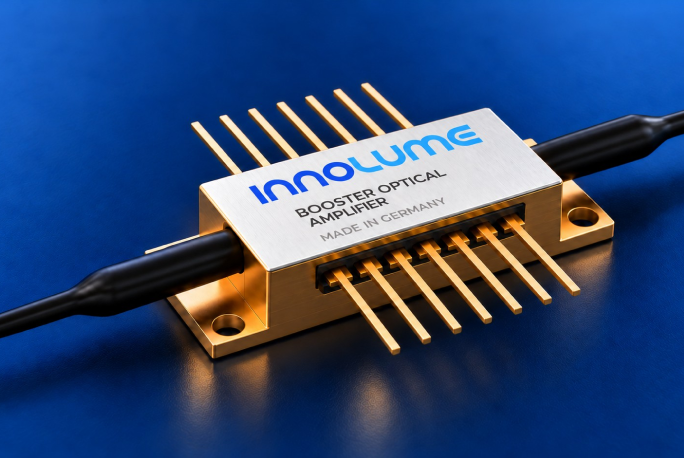
Innolume has introduced the BOA1310070YY850MXXXX, an O-band booster optical amplifier delivering 850 mW CW ex-fiber at 1310 nm with a 70 nm 3-dB gain bandwidth in a 14-pin butterfly package.
PsiQuantum unveiled an 8×8-radix optical circuit switch demonstration vehicle built on its silicon photonics platform. Lab tests showed 1.2 dB insertion loss, 40 dB cross talk and under 3 ms reconfiguration time.
Palomino Laboratories has received its first purchase order from a strategic hyperscaler customer, including a statement of work for GaN MicroLED chips for optical interconnects in AI infrastructure.
This week in nanotech
$558.4M raised
5 funding rounds · 35 deals tracked
New products
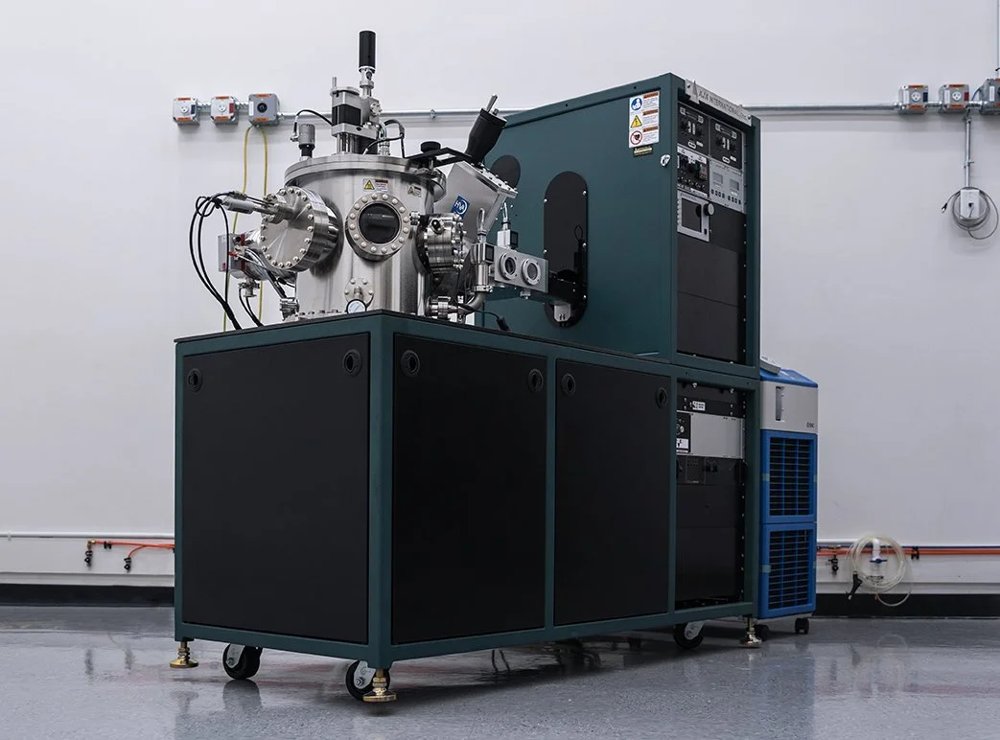 Orion Sputtering Deposition SystemsAJA International Featured
 Nion-compatible In Situ STEM Holders for Electrical BiasingHummingbird Scientific Featured
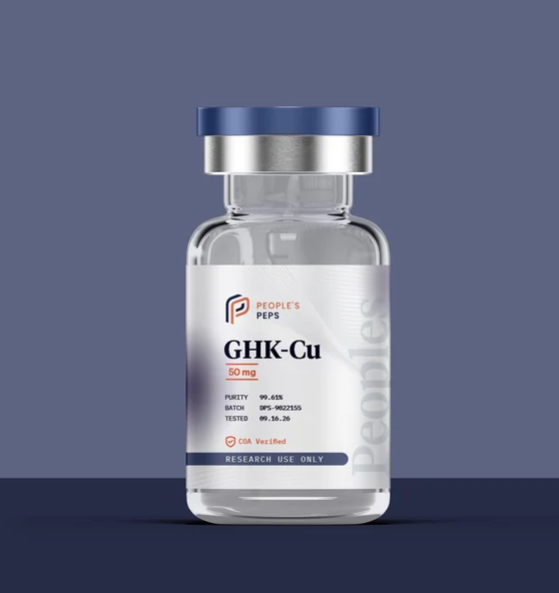 GHK-CuPeoples Peps
Market insights
Last 30 days: Quantum Technologies drew the most money: $2.15B.
Money raised per month