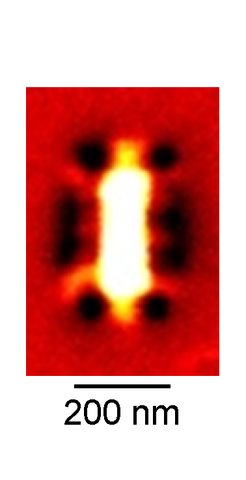
Researchers from CIC nanoGUNE, in collaboration with ICFO and Graphenea, have demonstrated how infrared light can be captured by nanostructures made of graphene. This happens when light couples to charge oscillations in the graphene. The resulting mixture of light and charge oscillations – called plasmon - can be squeezed into record-small volumes – millions times smaller than in conventional dielectric optical cavities. This process has been visualized by the researchers now, for the first time, with the help of a state-of the-art near-field microscope and explained by theory.
Particularly, the researchers identified two types of plasmons - edge and sheet modes - propagating either along the sheet or along the sheet edges. The edge plasmons are unique for their ability to channel electromagnetic energy in one dimension. The work - funded by the EC Graphene Flagship and reported in Nature Photonics - opens new opportunities for ultra-small and efficient photodetectors, sensors and other photonic and optoelectronic nanodevices.
Graphene-based technologies enable extremely small optical nanodevices. The wavelength of light captured by a graphene sheet – a monolayer sheet of carbon atoms can be shortened by a factor of 100 compared to light propagating in free space. As a consequence, this light propagating along the graphene sheet - called graphene plasmon - requires much less space. For that reason, photonic devices can be made much smaller. The plasmonic field concentration can be further enhanced by fabricating graphene nanostructures acting as nanoresonators for the plasmons. The enhanced field have been already applied for enhanced infrared and terahertz photodetection or infrared vibrational sensing of molecules, among others.
“The development of efficient devices based on plasmonic graphene nanoresonators will critically depend on precise understanding and control of the plasmonic modes inside them” says Dr. Pablo Alonso-Gonzalez, (now at Oviedo University) who performed the real-space imaging of the graphene nanoresonators (disks and rectangles) with a near-field microscope. “We have been strongly impressed by the diversity of plasmonic contrasts observed in the near-field images” continues Dr. Alexey Nikitin, Ikerbasque Research Fellow at nanoGUNE, who developed the theory to identify the individual plasmon modes.
The research team has disentangled the individual plasmonic modes and separated them into two different classes. The first class of plasmons – “sheet plasmons” - can exist ”inside” graphene nanostructures, extending over the whole area of graphene. Conversely, the second class of plasmons – “edge plasmons” –can exclusively propagate along the edges of graphene nanostructures, leading to whispering gallery modes in disk-shaped nanoresonators or Fabry-Perot resonances in graphene nanorectangles due to reflection at their corners. The edge plasmons are much better confined than the sheet plasmons and, most importantly, transfer the energy only in one dimension. The real-space images reveal dipolar edge modes with a mode volume that is 100 million times smaller that a cube of the free-space wavelength. The researchers also measured the dispersion (energy as a function of momentum) of the edge plasmons based on their near-field images, highlighting the shortened wavelength of edge plasmons compared to sheet plasmons.
Thanks to their unique properties, edge plasmons could be a promising platform for coupling quantum dots or single molecules in future quantum opto-electronic devices.
“Our results also provide novel insights into the physics of near-field microscopy of graphene plasmons, which could be very useful for interpreting near-field images of other light-matter interactions in two-dimensional materials”, adds Ikerbasque Research Professor Rainer Hillenbrand who led the project.
Original publication
A. Y. Nikitin, P. Alonso-González, S. Vélez, S. Mastel, A. Centeno, A. Pesquera, A. Zurutuza, F. Casanova, L. E. Hueso, F. H. L. Koppens, and R. Hillenbrand “Real-space mapping of tailored sheet and edge plasmons in graphene nanoresonators”Nature Photonics (2016), DOI: 10.1038/nphoton.2016.44
CIC nanoGUNE
#Plasmonics #Graphene #Photonics
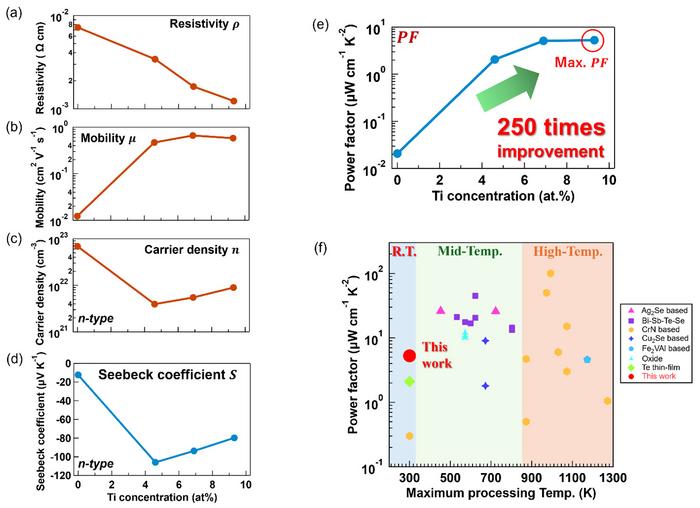
Researchers at Tohoku University have raised the power factor of chromium nitride thin films 250-fold by doping them with small amounts of titanium, reaching 5.26 µW cm⁻¹ K⁻². Titanium's stronger affinity for nitrogen suppresses nitrogen vacancies, cutting carrier concentration while boosting electron mobility by roughly two orders of magnitude.
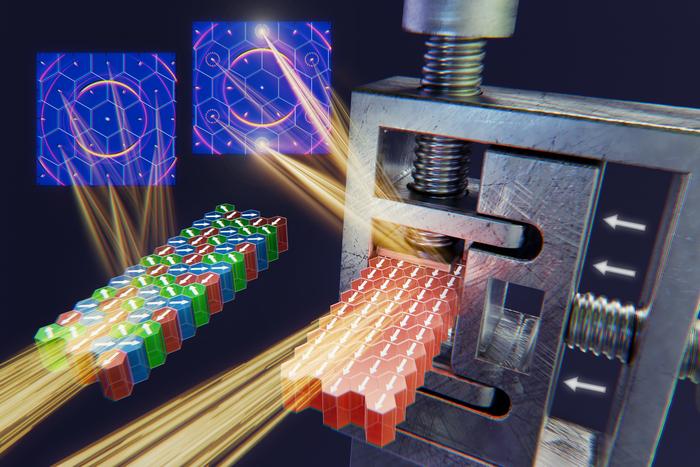
Neutron diffraction at Oak Ridge National Laboratory has shown that a modest mechanical squeeze can substantially reshape the magnetic behavior of altermagnets, a class of materials under investigation for spintronics. Squeezing manganese telluride and iron sulfide crystals between titanium plates altered their magnetic domain populations and changed the anomalous Hall effect, which governs electron transport.
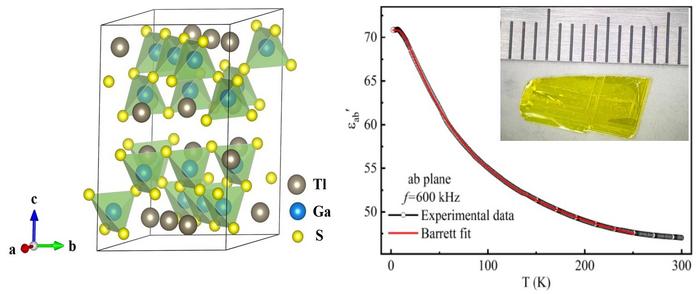
TlGaS2 single crystals show both in-plane and out-of-plane polarization, a rare combination in two-dimensional ferroelectrics that could widen options for ferroelectric transistors and non-volatile memory. Infrared spectroscopy revealed a soft phonon mode below 75 K, a signature tied to quantum ferroelectricity, along with weak structural changes across temperatures that lack clear heat-capacity signals, hinting at local rearrangements rather than conventional phase transitions.
This week in nanotech
$558.4M raised
5 funding rounds · 35 deals tracked
New products
 Ti-WCMBN Nanomaterialia Featured
 Nion-compatible In Situ STEM Holders for Electrical BiasingHummingbird Scientific Featured
 NanoFlow® S1-20Levidian
Market insights
Last 30 days: Quantum Technologies drew the most money: $2.15B.
Money raised per month