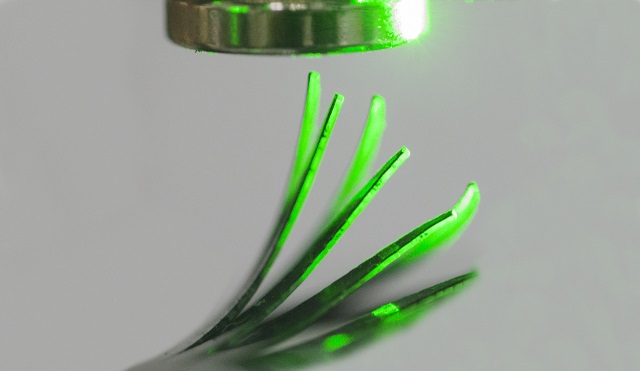
Researchers at Tufts University School of Engineering have developed magnetic elastomeric composites that move in different ways when exposed to light, raising the possibility that these materials could enable a wide range of products that perform simple to complex movements, from tiny engines and valves to solar arrays that bend toward the sunlight.
In biology, there are many examples where light induces movement or change - think of flowers and leaves turning toward sunlight. The light actuated materials created in this study are based on the principle of the Curie temperature - the temperature above which certain materials will change their magnetic properties. By heating and cooling a magnetic material, one can turn its magnetism off and on. Biopolymers and elastomers doped with ferromagnetic CrO2 will heat up when exposed to laser or sunlight, temporarily losing their magnetic properties until they cool down again. The basic movements of the material, shaped into films, sponges, and hydrogels, are induced by nearby permanent or electromagnets and can exhibit as bending, twisting, and expansion.
"We could combine these simple movements into more complex motion, like crawling, walking, or swimming," said Fiorenzo Omenetto, Ph.D., corresponding author of the study and the Frank C. Doble Professor of Engineering in the School of Engineering at Tufts. "And these movements can be triggered and controlled wirelessly, using light."
Omenetto's team demonstrated some of these complex movements by constructing soft grippers that capture and release objects in response to light illumination. "One of the advantages of these materials is that we can selectively activate portions of a structure and control them using localized or focused light," said Meng Li, the first author of the paper, "And unlike other light actuated materials based on liquid crystals, these materials can be fashioned to move either toward, or away from the direction of the light. All of these features add up to the ability to make objects large and small with complex, coordinated movements."
To demonstrate this versatility, the researchers constructed a simple "Curie engine". A light actuated film was shaped into a ring and mounted on a needle post. Placed near a permanent magnet, when a laser was focused onto a fixed spot on the ring, it locally demagnetizes that portion of the ring, creating an unbalanced net force that causes the ring to turn. As it turns, the demagnetized spot regains its magnetization and a new spot is illuminated and demagnetized, causing the engine to continuously rotate.
Materials used to create the light actuated materials include polydimethylsoloxane (PDMS), which is a widely used transparent elastomer often shaped into flexible films, and silk fibroin, which is a versatile biocompatible material with excellent optical properties that can be shaped into a wide range of forms - from films to gels, threads, blocks and sponges.
"With additional material patterning, light patterning and magnetic field control, we could theoretically achieve even more complicated and fine-tuned movements, such as folding and unfolding, microfluidic valve switching, micro and nano-sized engines and more," said Omenetto.
Flexible magnetic composites for light-controlled actuation and interfaces
Meng Li, Yu Wang, Aiping Chen, Arin Naidu, Bradley S. Napier, Wenyi Li, Carlos Lopez Rodriguez, Scott A. Crooker, and Fiorenzo G. Omenetto
PNAS July 23, 2018.
DOI: https://doi.org/10.1073/pnas.1805832115
Contact information
Prof. Fiorenzo Omenetto
Tufts University, School of Engineering
fiorenzo.omenetto@tufts.edu
Tel: 617-627-4972
Fax: 617-627-3231
Tufts University
#MaterialScience #Light #Magnetism
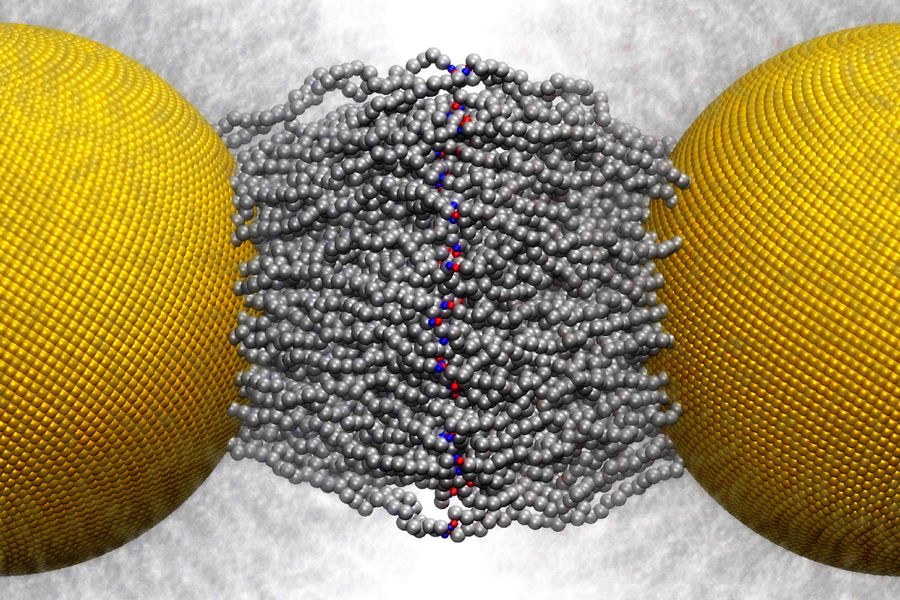
Researchers have shown that super-flexible connector molecules, rather than rigid ones, can tune how nanoparticles pack into larger structures. By varying ligand chain length, particle size and electric charge, the team assembled nanoparticles into crystal lattices never seen before and controlled the number of bonds each particle forms.
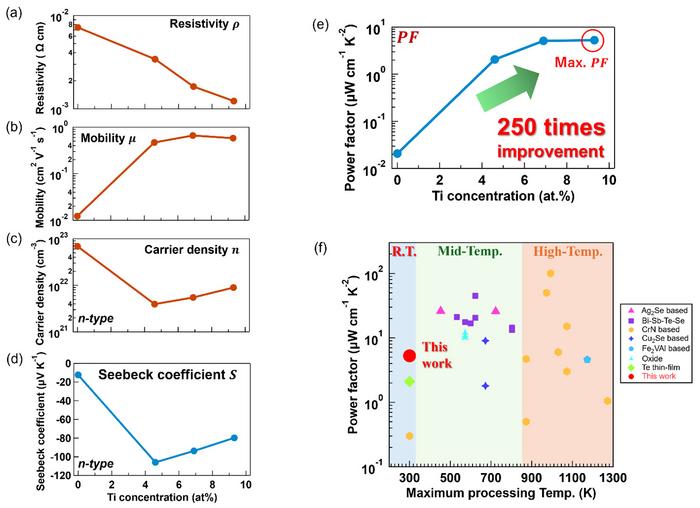
Researchers at Tohoku University have raised the power factor of chromium nitride thin films 250-fold by doping them with small amounts of titanium, reaching 5.26 µW cm⁻¹ K⁻². Titanium's stronger affinity for nitrogen suppresses nitrogen vacancies, cutting carrier concentration while boosting electron mobility by roughly two orders of magnitude.

Neutron diffraction at Oak Ridge National Laboratory has shown that a modest mechanical squeeze can substantially reshape the magnetic behavior of altermagnets, a class of materials under investigation for spintronics. Squeezing manganese telluride and iron sulfide crystals between titanium plates altered their magnetic domain populations and changed the anomalous Hall effect, which governs electron transport.
This week in nanotech
$548.4M raised
2 funding rounds · 19 deals tracked
New products
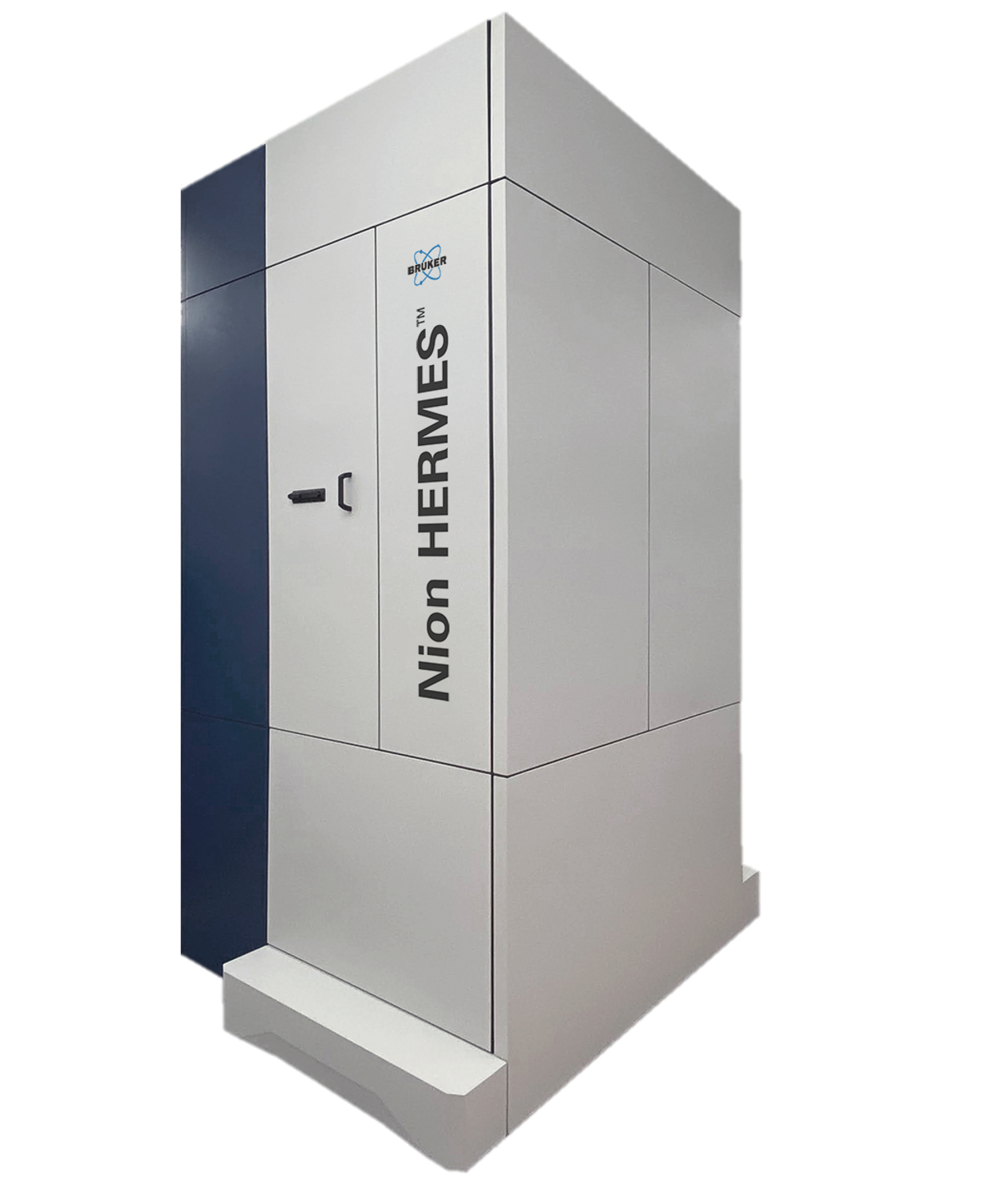 Nion-compatible In Situ STEM Holders for Electrical BiasingHummingbird Scientific Featured
 DLS-1 Mass Spectrometer for Fusion Gas AnalysisHiden Analytical Featured
 Ionic® Purification SystemBionano Genomics, Inc.
Market insights
Last 30 days: Quantum Technologies drew the most money: $2.15B.
Money raised per month