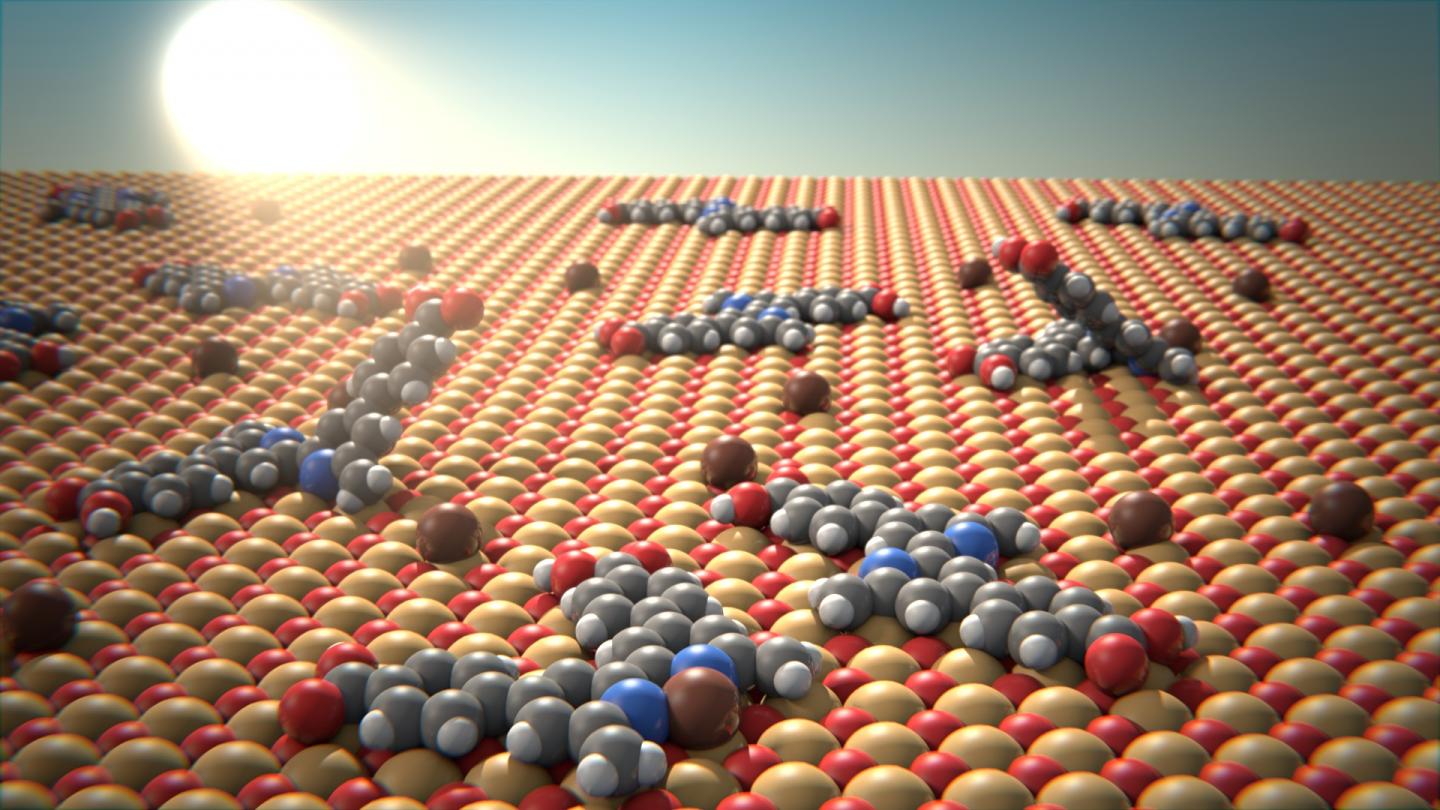
Scientists at the University of Basel have found a way to change the spatial arrangement of bipyridine molecules on a surface. These potential components of dye-sensitized solar cells form complexes with metals and thereby alter their chemical conformation. The results of this interdisciplinary collaboration between chemists and physicists from Basel were recently published in the scientific journal ACS Omega.
Dye-sensitized solar cells have been considered a sustainable alternative to conventional solar cells for many years, even if their energy yield is not yet fully satisfactory. The efficiency can be increased with the use of tandem solar cells, where the dye-sensitized solar cells are stacked on top of each other.
The way in which the dye, which absorbs sunlight, is anchored to the semiconductor plays a crucial role in the effectiveness of these solar cells. However, the anchoring of the dyes on nickel oxide surfaces - which are particularly suitable for tandem dye-sensitized cells - is not yet sufficiently understood.
Binding on surfaces
Over the course of an interdisciplinary collaboration, scientists from the Swiss Nanoscience Institute and the Departments of Physics and Chemistry at the University of Basel investigated how single bipyridine molecules bind to nickel oxide and gold surfaces.
Bipyridine crystals served as an anchor molecule for dye-sensitized cells on a semiconductor surface. This anchor binds the metal complexes, which in turn can then be used to bind the various dyes.
With the aid of scanning probe microscopes, the investigation determined that initially the bipyridine molecules bind flat to the surface in their trans configuration. The addition of iron atoms and an increase in temperature cause a rotation around a carbon atom in the bipyridine molecule and thus leads to the formation of the cis configuration.
"The chemical composition of the cis and trans configuration is the same, but their spatial arrangement is very different. "The change in configuration can be clearly distinguished on the basis of scanning probe microscope measurements," confirms experimental physicist Professor Ernst Meyer.

Metal complexes in a modified configuration
This change in spatial arrangement is the result of formation of a metal complex, as confirmed by the scientists through their examination of the bipyridine on a gold surface.
During the preparation of the dye-sensitized solar cells, these reactions take place in a solution. However, the examination of individual molecules and their behavior is only possible with the use of scanning probe microscopes in vacuum.
"This study allowed us to observe for the first time how molecules that are firmly bound to a surface change their configuration," summarizes Meyer. "This enables us to better understand how anchor molecules behave on nickel oxide surfaces."
Transoid-to-Cisoid Conformation Changes of Single Molecules on Surfaces Triggered by Metal Coordination
Sara Freund, Rémy Pawlak, Lucas Moser, Antoine Hinaut, Roland Steiner, Nathalie Marinakis, Edwin C. Constable, Ernst Meyer, Catherine E. Housecroft, and Thilo Glatzel
ACS Omega, 2018, 3 (10), pp 12851–12856
Publication Date (Web): October 9, 2018 (Article)
DOI: 10.1021/acsomega.8b01792
University of Basel
#RenewableEnergy #Solar #Semiconductors
onsemi announced that Sungrow has adopted its latest EliteSiC SiC hybrid power module technology for the PowerTitan 3.0 energy storage platform. The architecture improves inverter-level efficiency by 0.4% versus the previous generation.
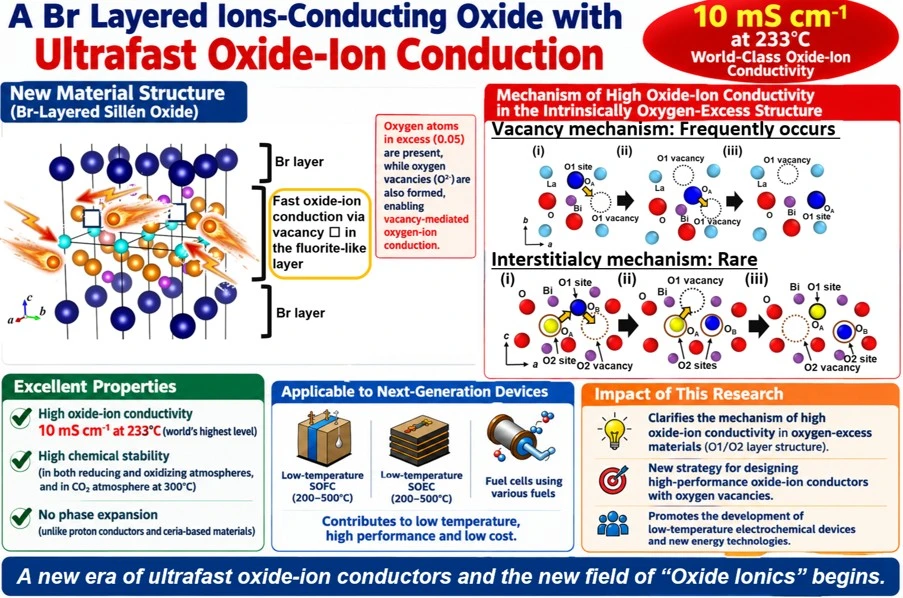
Researchers at Institute of Science Tokyo have discovered a Sillén oxybromide, Bi1.9Te0.1LaO4.05Br, that conducts oxide ions at 0.01 S cm⁻¹ at 233 °C, closing part of the "Norby gap" where practical electrolytes are scarce. The material remains chemically stable in oxidizing, reducing, wet, and CO2 atmospheres and shows negligible chemical expansion.
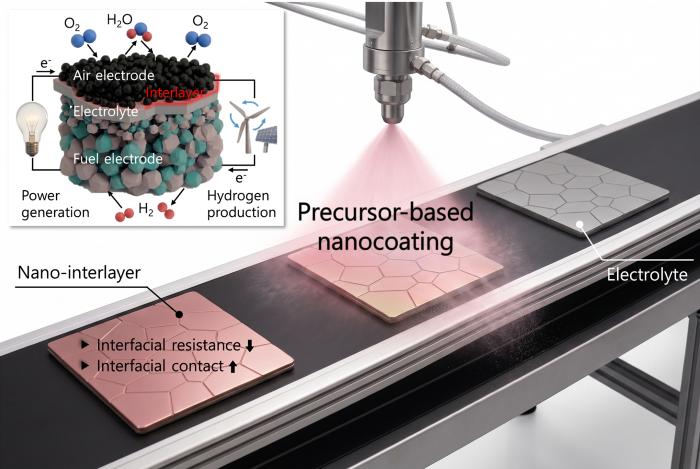
A Sungkyunkwan University team led by Professor Wonyoung Lee has tackled interfacial contact resistance in protonic ceramic electrochemical cells by quantifying how contact coverage between electrolyte and electrode governs performance. Using electrostatic spray deposition to add a dense nanometer-scale interlayer, the cells achieved higher efficiency and durability in both power generation and hydrogen production, remained stable under rapid temperature changes, and operated directly on…
This week in nanotech
$741.8M raised
4 funding rounds · 26 deals tracked
New products
 Ti-WCMBN Nanomaterialia Featured
 Nion-compatible In Situ STEM Holders for Electrical BiasingHummingbird Scientific Featured
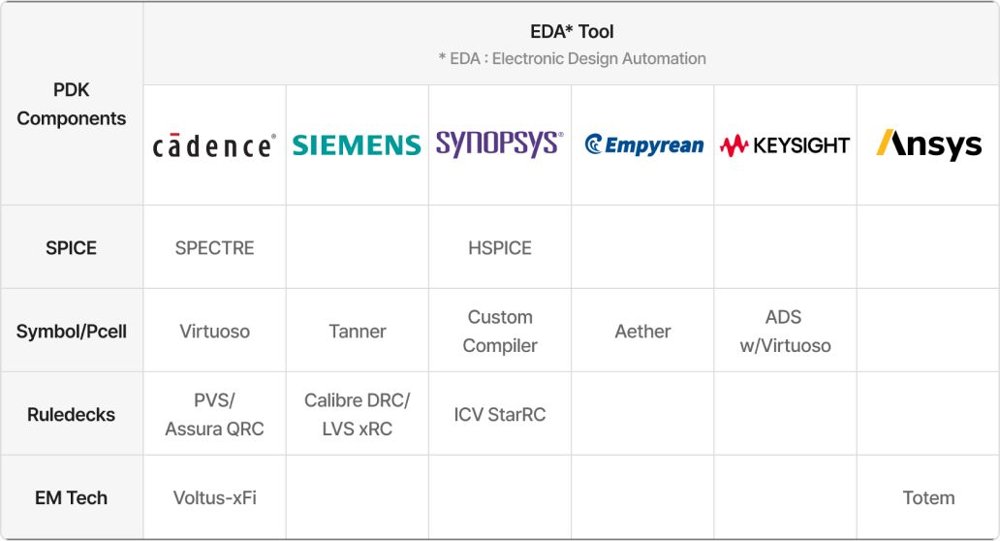 PDK (Process Design Kit)DB HiTek
Market insights
Last 30 days: Quantum Technologies drew the most money: $3.17B.
Money raised per month
Behind the deal
Who invested in Vertical Semiconductor’s $73M Grant?
See the investors with Insights Pro →