Osaka University
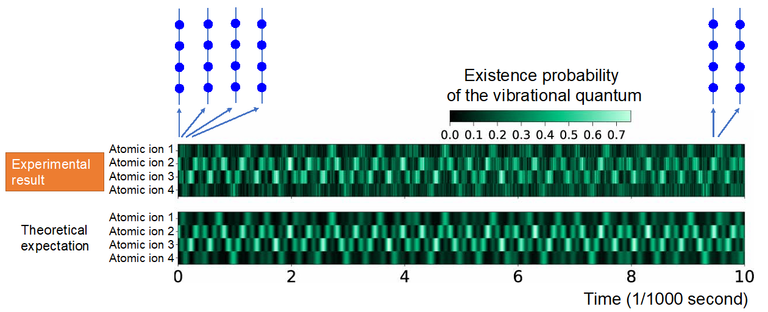
Researchers at the Center for Quantum Information and Quantum Biology at Osaka University used trapped ions to demonstrate the spreading of vibrational quanta as part of a quantum random walk. This work relies on their exquisite control of individual ions using lasers, and can lead to new quantum simulations of biological systems.
Here's a simple game you can play with a group of friends. Everyone lines up shoulder to shoulder, and then each person flips a coin to decide weather to take a step forward or backwards. After a few rounds of flips, you will find that your neat line will have spread out randomly. While this game sounds very simplistic, scientists have found that these "random walks" are incredibly useful for explaining diverse phenomena from molecular diffusion to problems in statistics and probability.
Among the very weird features of quantum mechanics--the laws of physics that govern the behavior of small objects like individual atoms--is the surprising mix of randomness and predictability. In particular, while the probability of finding a particle at a certain location spreads out predictably over time, like ripples in pond, when you actually make a measurement there is inherent uncertainty. This makes quantum random walks fundamentally different from their conventional counterparts. Unlike gas molecules spreading out in a room, the waves of a quantum random walk can interfere with itself, creating a distinct oscillation pattern.
The scientists at Osaka University started by creating an artificial crystal by trapping a row of four calcium ions with lasers. The ions could still influence each other with their electric charge. Then, the team showed that they could start one ion vibrating by shining a separate laser on it.
This minimum possible vibration, called a phonon, acted like a packet of energy that could be passed to a neighboring ion. As first author Masaya Tamura explains, "By employing the capability to prepare and observe a localized phonon, its propagation in a four-ion linear crystal can be observed with single-site resolution." By waiting for various lengths of time up to 10 milliseconds, the phonon locations measured matched the theoretical predictions.
"Our system using phonons offers a platform for realizing quantum simulations for studying open questions in chemistry and biology," says senior author Kenji Toyoda. "For example, it has been hypothesized that the incredible 95% efficiency of photosynthesis depends, at least in part, on the fact that quantum random walks act differently compared with classical randomness. The system shown here may be able to resolve these and other important issues."
Quantum walks of a phonon in trapped ions
Masaya Tamura, Takashi Mukaiyama, and Kenji Toyoda
Physical Review Letters Vol. 124, Iss. 20 (22 May 2020)
Contact information:
Kenji Toyoda
Associate Professor, Institute for Open and Transdisciplinary Research Initiatives, Osaka University
toyoda@qiqb.otri.osaka-u.ac.jp
Rhombohedral hexalayer graphene, in which six carbon sheets are stacked with a slight lateral offset like staircase steps, hosts both superconductivity and electrically controllable orbital magnetism, researchers report in Nature Physics. The arrangement yields a rich collection of quantum states in a simple carbon-based material, positioning rhombohedral multilayer graphene as a platform for probing the fundamental mechanisms of superconductivity and magnetism and potentially for new ways of…
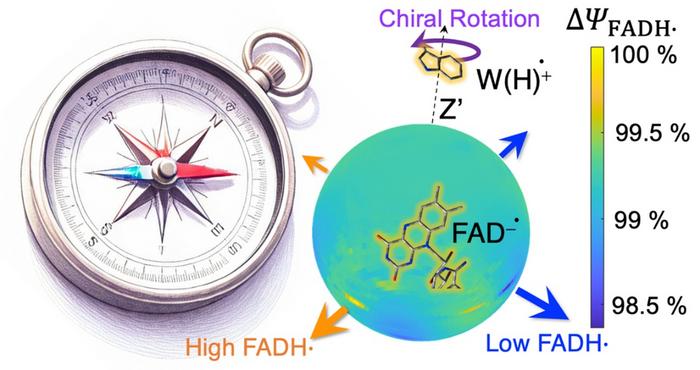
Time-resolved electron paramagnetic resonance spectroscopy of Xenopus cryptochrome-DASH reveals that chiral rotation of an oxidized tryptophan residue can drive chirality-induced spin selectivity, estimated at 8% in one charge-separated state, and shape electron-spin polarization in radical pairs.
Cornell researchers have redrawn the phase diagram of uranium ditelluride, showing the material can host two distinct flavors of superconductivity at once and that the two coexist and interact under pressure. The work settles years of uncertainty and positions uranium ditelluride as the leading candidate for a topological superconductor, a long-sought material that could unlock advances in quantum computing.
This week in nanotech
$10.2M raised
2 funding rounds · 18 deals tracked
New products
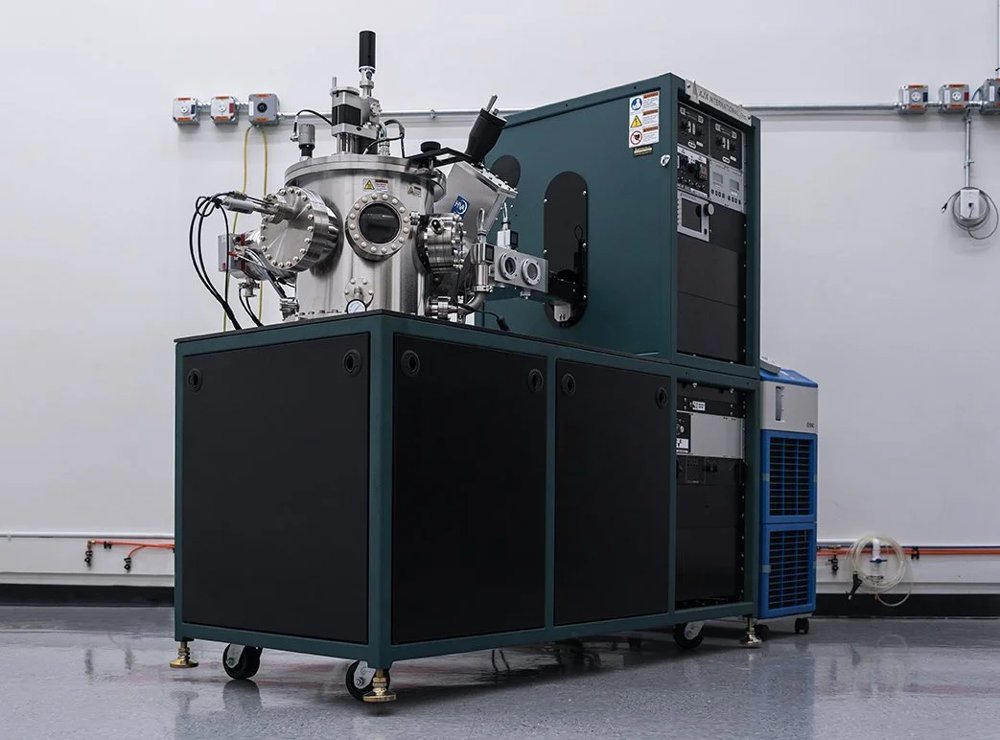 Orion Sputtering Deposition SystemsAJA International Featured
 Ti-WCMBN Nanomaterialia Featured
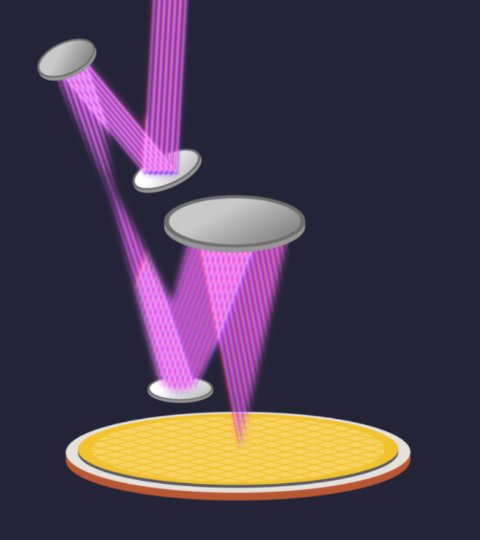 Aether®Lam Research
Market insights
Last 30 days: Quantum Technologies was the busiest vertical: 52 of 174 events (30%).
Money raised per month