
Spintronics, or spin-electronics, is a revolutionary approach to information processing that utilizes the intrinsic angular momentum (spin) of electrons, rather than solely relying on electric charge flow. This technology promises faster, more energy-efficient data storage and logic devices. A central challenge in fully realizing spintronics has been the development of materials that can precisely control electron spin direction.
In a groundbreaking development for spin-nanotechnology, researchers led by Professor Young Keun Kim of Korea University and Professor Ki Tae Nam of Seoul National University have successfully created magnetic nanohelices that can control electron spin. This technology, which utilizes chiral magnetic materials to regulate electron spin at room temperature, has been published in Science.
“These nanohelices achieve spin polarization exceeding ~80% — just by their geometry and magnetism,” stated Professor Young Keun Kim of Korea University, a co-corresponding author of the study. He further emphasized, “This is a rare combination of structural chirality and intrinsic ferromagnetism, enabling spin filtering at room temperature without complex magnetic circuitry or cryogenics, and provides a new way to engineer electron behavior using structural design”.
The research team successfully fabricated left- and right-handed chiral magnetic nanohelices by electrochemically controlling the metal crystallization process. A critical innovation involved introducing trace amounts of chiral organic molecules, such as cinchonine or cinchonidine, which guided the formation of helices with precisely defined handedness—a feat rarely achieved in inorganic systems. Also, the team experimentally demonstrated that when these nanohelices exhibit a right-handedness, they preferentially allow one direction of spin to pass, while the opposite spin cannot. The above marks the discovery of a 3D inorganic helical nanostructure capable of electron spin control.
“Chirality is well-understood in organic molecules, where the handedness of a structure often determines its biological or chemical function,” noted Professor Ki Tae Nam of Seoul National University, also a co-corresponding author. “But in metals and inorganic materials, controlling chirality during synthesis is extremely difficult, especially at the nanoscale. The fact that we could program the direction of inorganic helices simply by adding chiral molecules is a breakthrough in materials chemistry.”
To confirm the chirality of nanohelices, the researchers developed an electromotive force (emf)-based chirality evaluation method and measured the emf generated by the helices under rotating magnetic fields. The left- and right-handed helices produced opposite emf signals, allowing for quantitative verification of chirality even in materials that do not strongly interact with light.
The research team also found that the magnetic material itself, through its inherent magnetization (spin alignment), enables long-distance spin transport at room temperature. This effect, maintained by strong exchange energy, is constant regardless of the angle between the chiral axis and the spin injection direction, and was not observed in non-magnetic nanohelices of the same scale. The above marks the first measurement of asymmetric spin transport in a relatively macro-scaled chiral body. The team also demonstrated a solid-state device that showed chirality-dependent conduction signals, paving the way for practical spintronic applications.
Professor Kim highlighted the potential impact: “We believe this system could become a platform for chiral spintronics and architecture of chiral magnetic nanostructures”. This work represents a powerful convergence of geometry, magnetism, and spin transport, built from scalable, inorganic materials. The ability to control the handedness (left/right) and even the number of strands (double, multiple helices) using this versatile electrochemical method is expected to contribute significantly to new application areas.
Reference
Spin-selective transport through chiral ferromagnetic nanohelices
Yoo Sang Jeon, Eunjin Jeong, Sang Won Im, Min Jun Ko, Jin Seo Lee, Jun Hwan Moon, Min Hyeok Lee, Jeong Kyu Lee, Sung Jong Yoo, Ki Tae Nam, Young Keun Kim
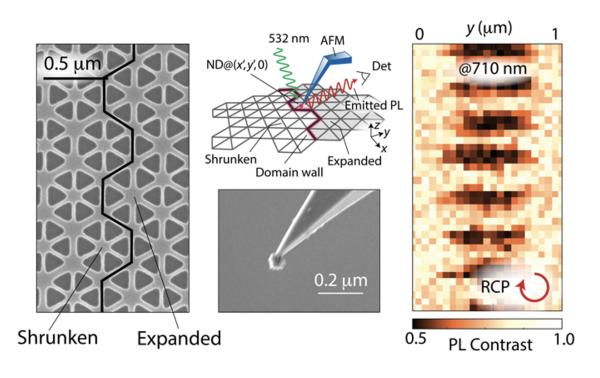
Researchers at The City College of New York have shown how a quantum emitter, the nitrogen-vacancy (NV) center in diamond, interacts in unexpected ways with a specially engineered photonic structure when moved around with a scanning tip. The study, led by Carlos A. Meriles, Martin and Michele Cohen Professor of Physics in the Division of Science and entitled “Emission of Nitrogen–Vacancy Centres in Diamond Shaped by Topological Photonic Waveguide Modes,” appears in the journal Nature Nanotech...
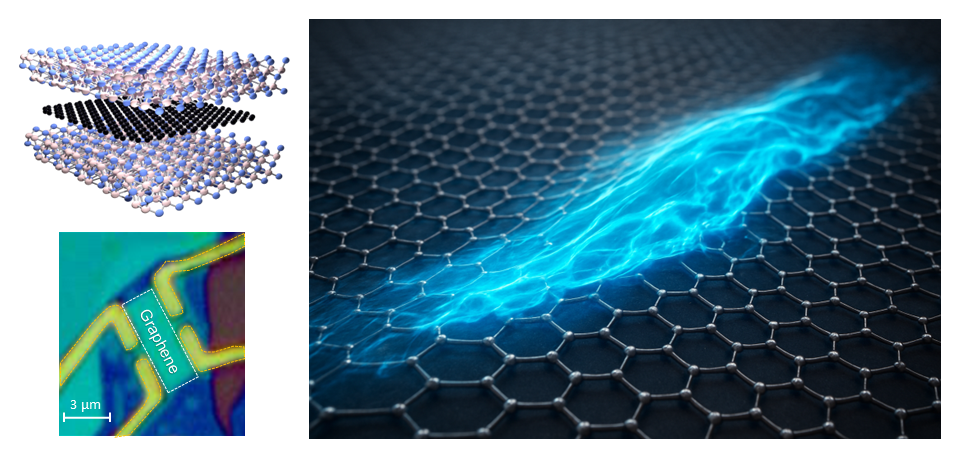
For several decades, a central puzzle in quantum physics has remained unsolved: Could electrons behave like a perfect, frictionless fluid with electrical properties described by a universal quantum number? This unique property of electrons has been extremely difficult to detect in any material so far because of the presence of atomic defects, impurities, and imperfections in the material. Researchers at the Department of Physics, Indian Institute of Science (IISc), along with collaborators fr...

Researchers from Delft University of Technology in The Netherlands have been able to see the magnetic nucleus of an atom switch back and forth in real time. They read out the nuclear ‘spin’ via the electrons in the same atom through the needle of a scanning tunneling microscope. To their surprise, the spin remained stable for several seconds, offering prospects for enhanced control of the magnetic nucleus. The research, published in Nature Communications, is a step forward for quantum sensing...
This week in nanotech
$18.9M raised
4 funding rounds · 36 deals tracked
New products
 Orion Sputtering Deposition SystemsAJA International Featured
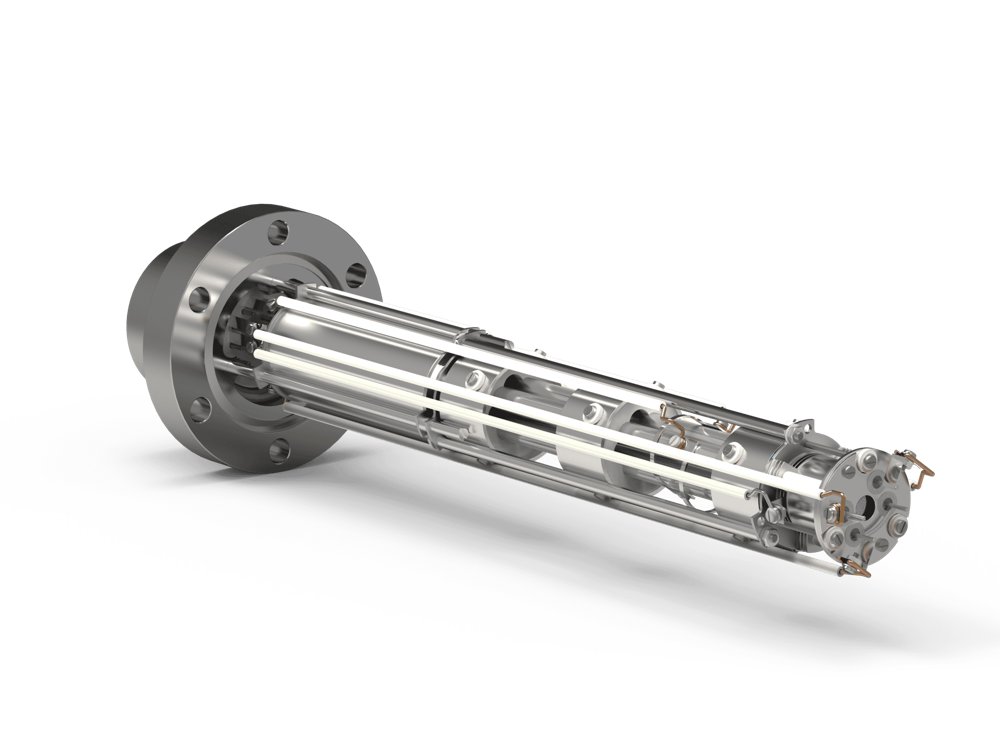 DLS-1 Mass Spectrometer for Fusion Gas AnalysisHiden Analytical Featured
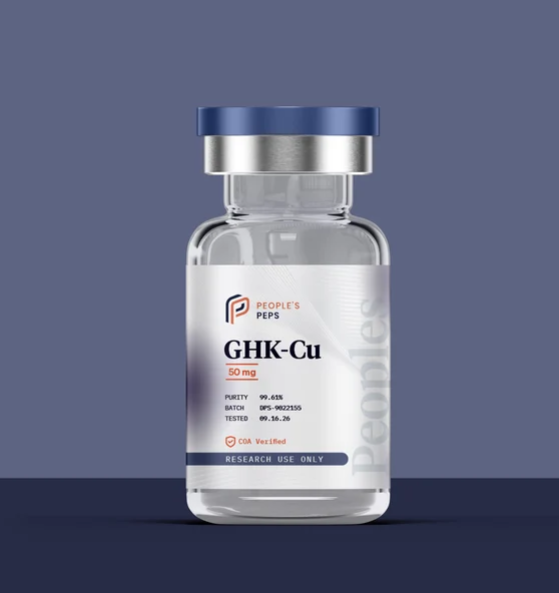 GHK-CuPeoples Peps
Market insights
Last 30 days: Semiconductors & Electronics was the busiest vertical: 52 of 170 events (31%).
Money raised per month