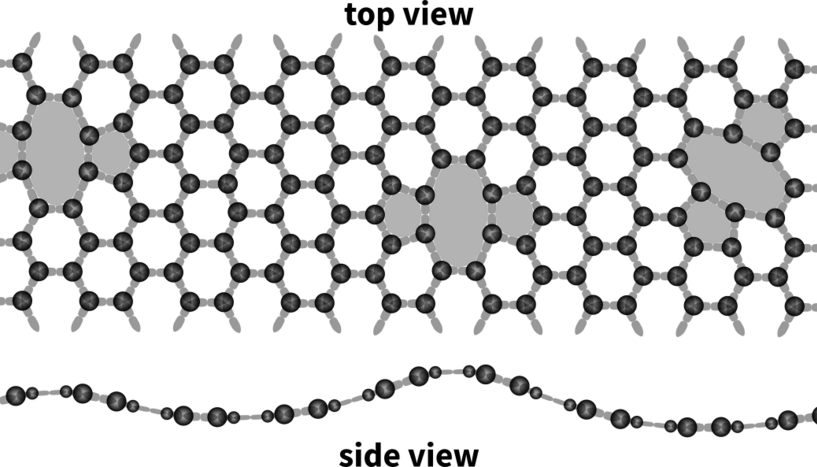
Graphene is a "miracle material": mechanically extremely strong and electrically highly conductive, ideal for related applications. Using a worldwide unique method physicists at the University of Vienna led by Jani Kotakoski have for the first time made graphene drastically more stretchable by rippling it like an accordion. This paves the way for new applications in which certain stretchability is required (e.g. wearable electronics). In a collaboration with the Vienna University of Technology the exact mechanism of this phenomenon has been revealed and published in the journal Physical Review Letters.
The first experimental evidence of graphene in 2004 established a completely new class of materials, the so-called two-dimensional (2D) solids. Their name stems from the fact that they are only a single layer of atoms thick, giving rise to exotic material properties that could benefit various areas of application. Graphene for example stands out with its enormous electrical conductivity, but it is also very stiff. This extreme stiffness is a result of the honeycomb-shaped arrangement of the atoms in the material. Intuitively, the removal of some atoms from the material alongside their bonds should lead to a reduction in stiffness. However, scientific studies have reported both a slight reduction as well as a significant increase.
These contradictions have now been clarified through new measurements conducted by researchers of the group led by Jani Kotakoski at the University of Vienna. The experiments were carried out with state-of-the-art devices all sharing the same ultra-clean airless environment. This allows transporting samples between the different devices without ever being exposed to ambient air. "This unique system we have developed in the University of Vienna allows us to examine 2D materials without interference," explains Jani Kotakoski. Wael Joudi, first author of the study adds: "For the first time this kind of experiment has been carried out with the graphene fully isolated from ambient air and the foreign particles it contains. Without this separation, these particles would quickly settle on the surface affecting the experiment procedure and measurements."
In fact, the focus on meticulous cleanliness of the material surface led to the discovery of the so-called accordion effect with regard to the stiffness of graphene: already the removal of two neighbouring atoms leads to discernible bulging of the initially flat material. Several bulges together result in a corrugation of the material: "You can imagine it like an accordion. When pulled apart, the waved material now gets flattened, which requires much less force than stretching the flat material and therefore it becomes more stretchable," explains Wael Joudi. Simulations carried out by the theoretical physicists Rika Saskia Windisch and Florian Libisch from the Vienna University of Technology confirm both the formation of waves and the resulting stretchability.
The experiments also showed that foreign particles on the material surface not only supress this effect, but lead to the opposite result. Specifically, their influence makes the material appear stiffer, which also explains contradictions of the past. "This shows the importance of the measurement environment when dealing with 2D materials. The results open up a way to regulate the stiffness of graphene and thus pave the way for potential applications," concludes Wael Joudi.
Reference
Corrugation-Dominated Mechanical Softening of Defect-Engineered Graphene
Wael Joudi, Rika Saskia Windisch, Alberto Trentino, Diana Propst, Jacob Madsen, Toma Susi, Clemens Mangler, Kimmo Mustonen, Florian Libisch
https://journals.aps.org/prl/abstract/10.1103/PhysRevLett.134.166102
University of Vienna
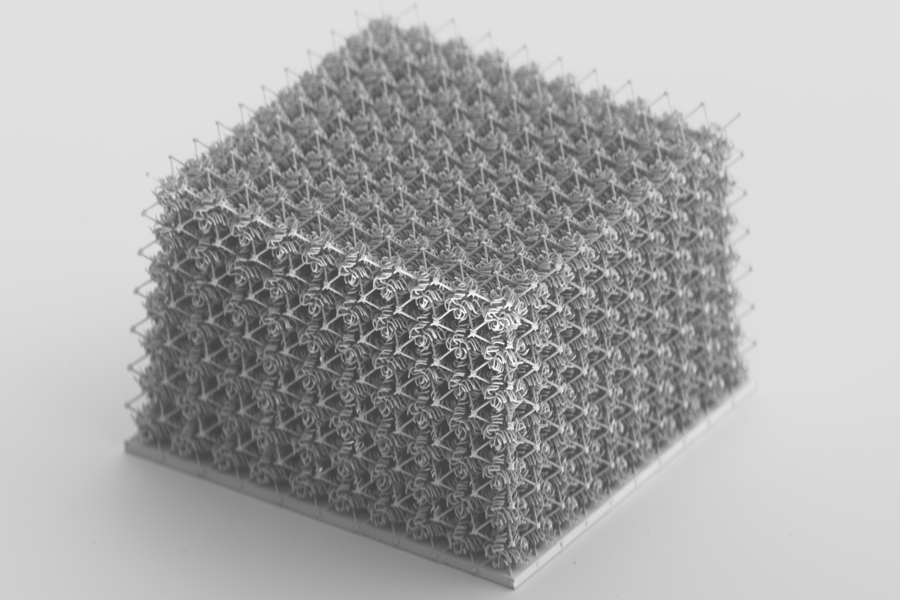
MIT engineers have found a way to fabricate a metamaterial that is both strong and stretchy. The base material is typically highly rigid and brittle, but it is printed in precise, intricate patterns that form a structure that is both strong and flexible.

The new device involves a tiny silicon beam that vibrates at 5 gigahertz and couples to a microwave resonator—essentially a nanoscale box in which photons bounce around, also at 5 GHz. Using a technique called electrostatic actuation, developed previously by the Mirhosseini lab for quantum applications, a microwave photon gets converted within that box to a mechanical vibration of the beam, and that mechanical oscillation, with the help of laser light, gets converted by the resonator into an...

Physicists in the Harvard John A. Paulson School of Engineering and Applied Sciences (SEAS) have created a compact laser that emits extremely bright, short pulses of light in a useful but difficult-to-achieve wavelength range, packing the performance of larger photonic devices onto a single chip.
This week in nanotech
$281.1M raised
6 funding rounds · 36 deals tracked
New products
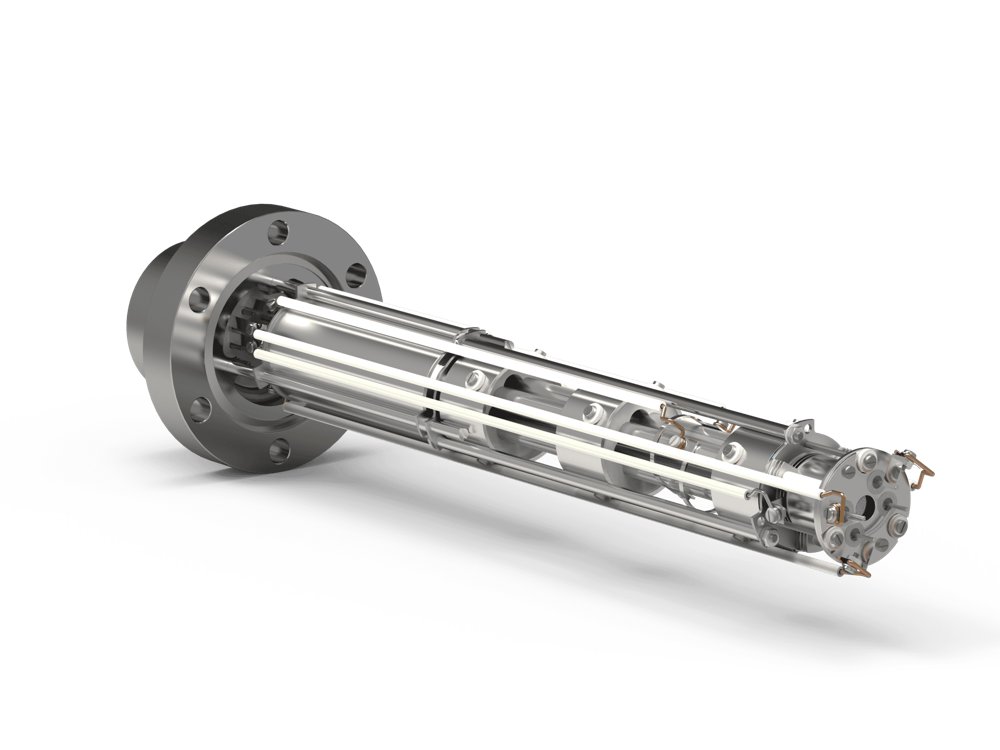 DLS-1 Mass Spectrometer for Fusion Gas AnalysisHiden Analytical Featured
 Ti-WCMBN Nanomaterialia Featured
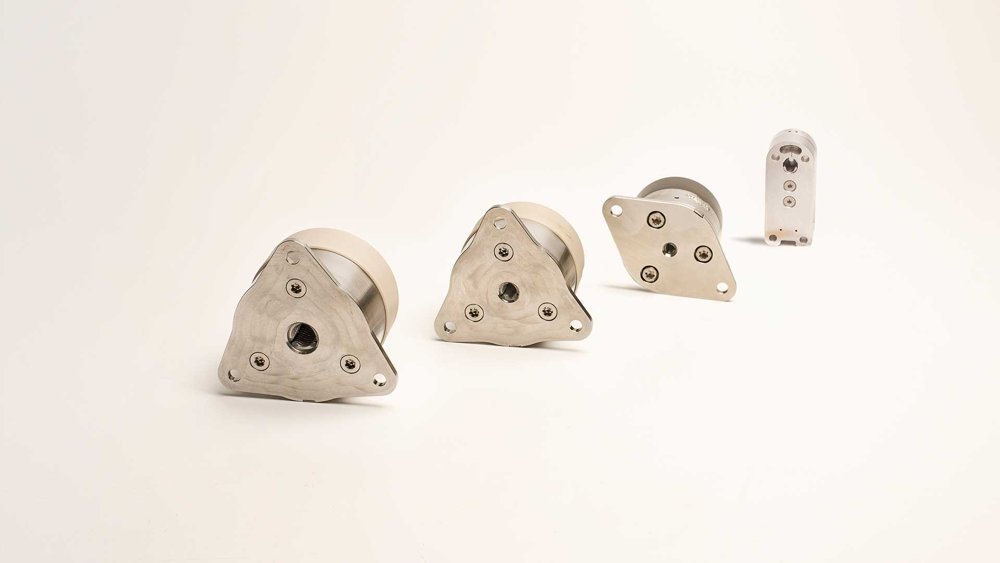 Hold Down & Release Mechanisms (HDRM) REACT – 5KN, 15KN and 35KN space qualified resettable mechanismsARQUIMEA
Market insights
Last 30 days: Quantum Technologies drew the most money: $3.17B.
Money raised per month