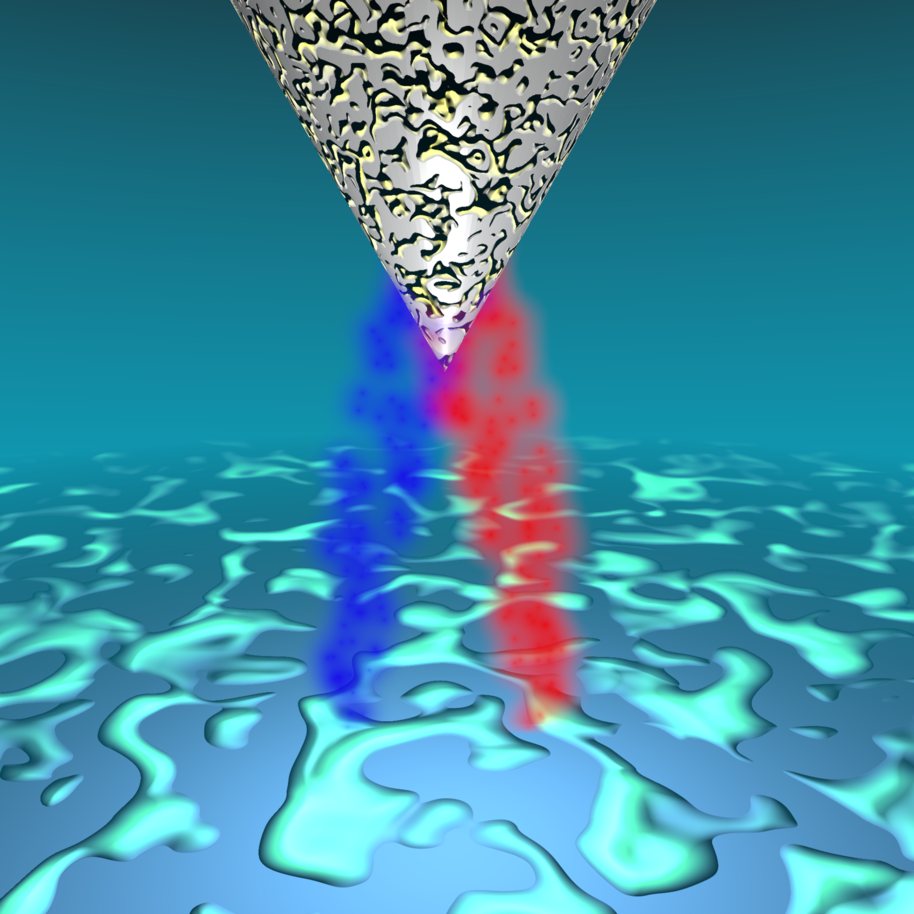
Superconductors are materials with no electrical resistance whatsoever, commonly requiring extremely low temperatures. They are used in a wide range of domains, from medical applications to a central role in quantum computers. Superconductivity is caused by specially linked pairs of electrons known as Cooper pairs. So far, the occurrence of Cooper pairs has been measured indirectly macroscopically in bulk, but a new technique developed by researchers at Aalto University and Oak Ridge National Laboratories in the US can detect their occurrence with atomic precision.
The experiments were carried out by Wonhee Ko and Petro Maksymovych at Oak Ridge National Laboratory, with the theoretical support of Professor Jose Lado of Aalto University. Electrons can “quantum tunnel” across energy barriers, jumping from one system to another through space in a way that cannot be explained with classical physics. For example, if an electron pairs with another electron right at the point where a metal and superconductor meet, it could form a Cooper pair that enters the superconductor while also “kicking back” another kind of particle into the metal in a process known as Andreev reflection. The researchers looked for these Andreev reflections to detect Cooper pairs.
To do this, they measured the electrical current between an atomically sharp metallic tip and a superconductor, as well as how the current depended on the separation between the tip and the superconductor. This enabled them to detect the amount of Andreev reflection going back to the superconductor, while maintaining an imaging resolution comparable to individual atoms. The results of the experiment corresponded exactly to Lado’s theoretical model.
This experimental detection of Cooper pairs at the atomic scale provides an entirely new method for understanding quantum materials. For the first time, researchers can uniquely determine how the wavefunctions of Cooper pairs are reconstructed at the atomic scale and how they interact with atomic-scale impurities and other obstacles.
'This technique establishes a critical new methodology for understanding the internal quantum structure of exotic types of superconductors known as unconventional superconductors, potentially allowing us to tackle a variety of open problems in quantum materials,' Lado says. Unconventional superconductors are a potential fundamental building block for quantum computers and could provide a platform to realise superconductivity at room temperature. Cooper pairs have unique internal structures in unconventional superconductors which so far have been challenging to understand.
This discovery allows for the direct probing of the state of Cooper pairs in unconventional superconductors, establishing a critical new technique for a whole family of quantum materials. It represents a major step forward in our understanding of quantum materials and helps push forward the work of developing quantum technologies.
Reference
Noncontact Andreev Reflection as a Direct Probe of Superconductivity on the Atomic Scale
Wonhee Ko, Jose L. Lado, and Petro Maksymovych
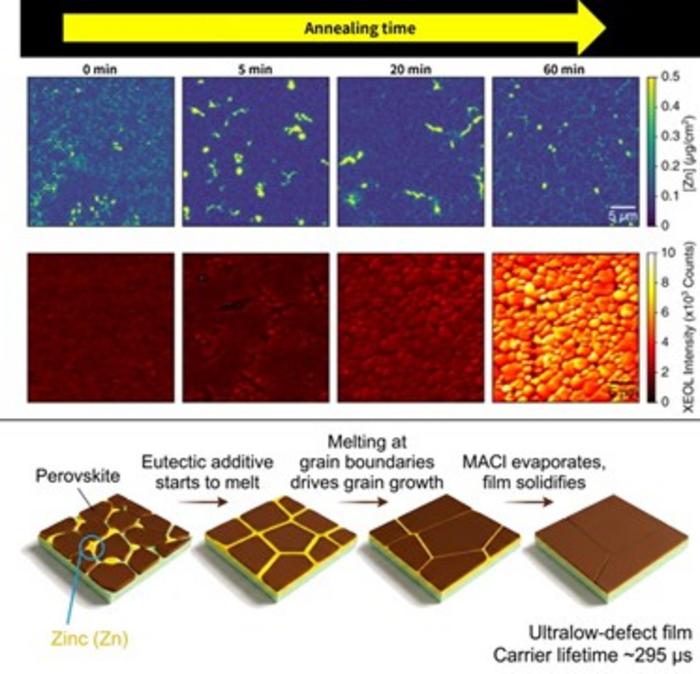
A eutectic mixture of methylammonium chloride and a zinc halide melts at about 100 degrees Celsius, forming a transient liquid layer at perovskite grain boundaries that lets crystals merge into larger, cleaner grains. The resulting films reached a carrier lifetime of roughly 295 microseconds and a surface recombination velocity of 0.3 cm/s, the lowest reported for lead halide perovskites.
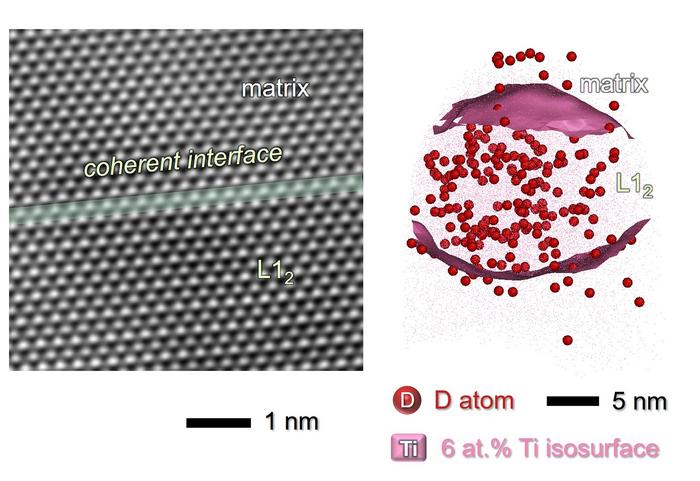
Researchers at the University of Sydney have directly observed hydrogen dissolved in the interstitial spaces between metal atoms in alloys, a world first. Using cryogenic atom probe tomography with deuterium tracers, electron microscopy and theoretical calculations, the team showed hydrogen occupies sites between atoms rather than only collecting at defects, and that local atomic arrangement and chemistry dictate where it prefers to reside.
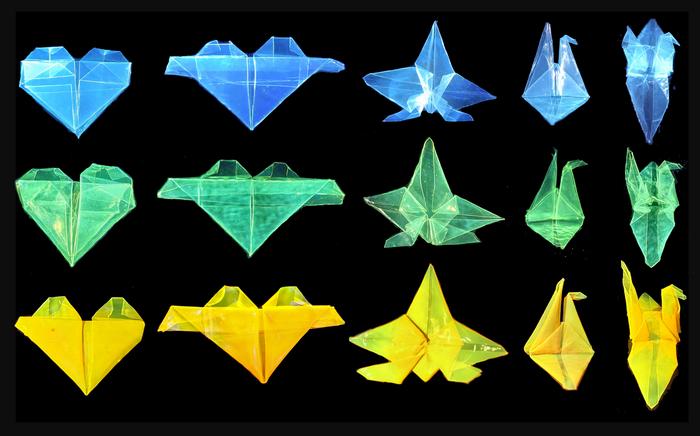
Researchers have developed carbon dots whose fluorescence shifts across the visible spectrum, from blue to red, depending on concentration, liquid environment and acidity. By tuning the particles' surfaces, the team produced versions that change color reversibly as pH shifts, then incorporated them into polymer powders, molded shapes and flexible films.
This week in nanotech
$10.2M raised
2 funding rounds · 18 deals tracked
New products
 Ti-WCMBN Nanomaterialia Featured
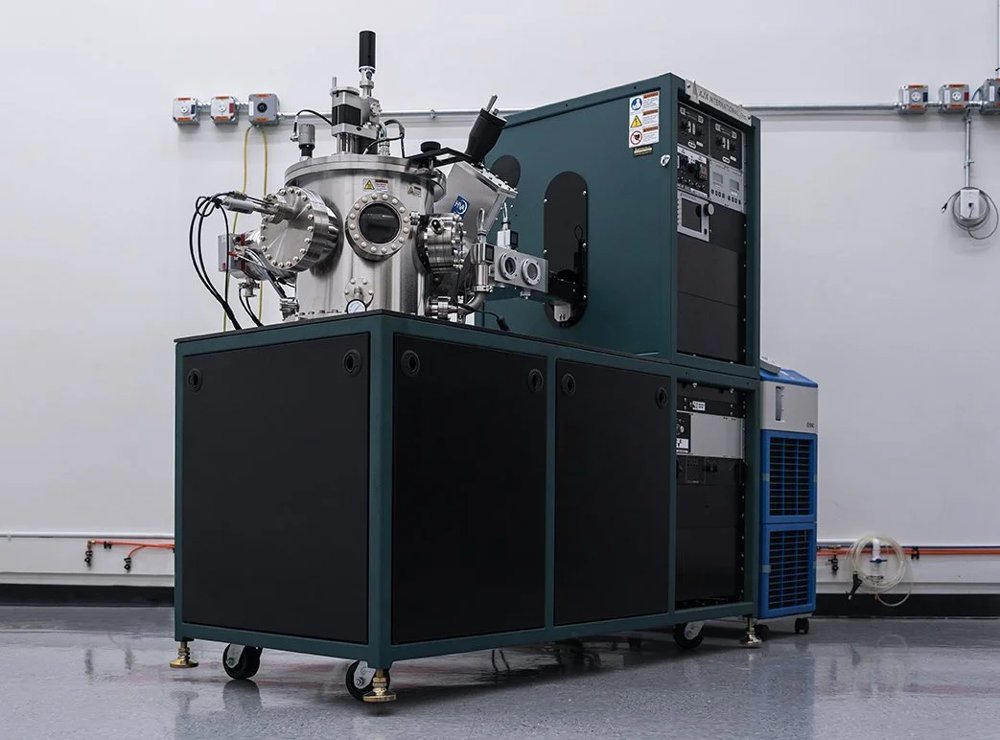 Orion Sputtering Deposition SystemsAJA International Featured
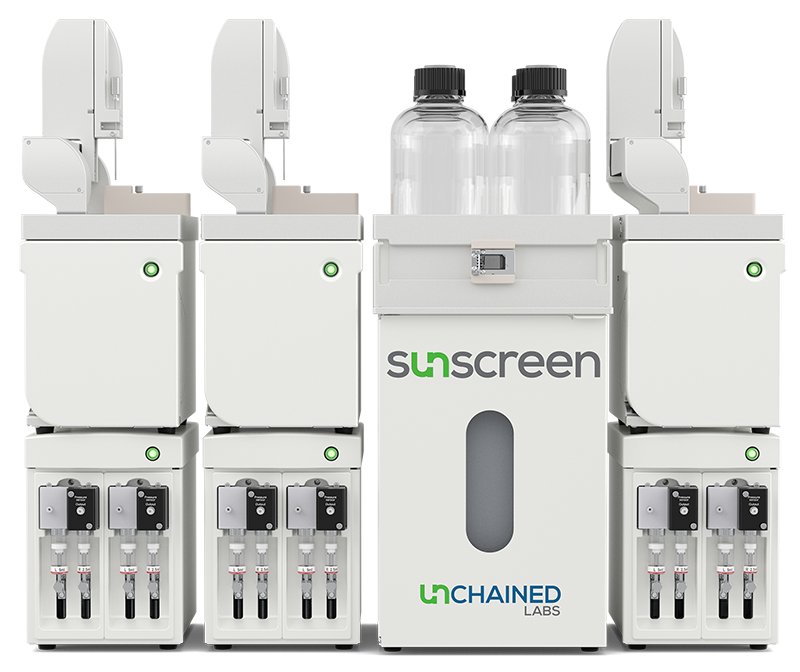 SunscreenUnchained Labs
Market insights
Last 30 days: Quantum Technologies was the busiest vertical: 52 of 174 events (30%).
Money raised per month
Behind the deal
Who led Sandia National Laboratories’s $3.4M Grant?
See the investors with Insights Pro →