University of Sydney
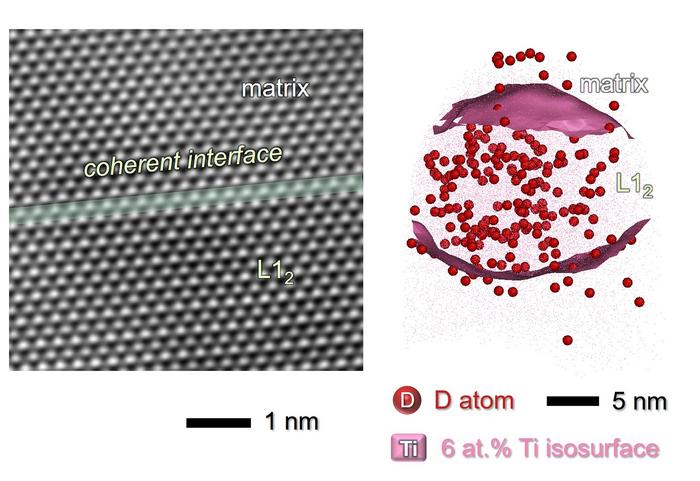
University of Sydney researchers have made a breakthrough by directly observing hydrogen in the tiny spaces between the atoms in metal alloys. The world-first observation of hydrogen dissolving in these ‘metal crystal lattices’ offers fresh insights into why hydrogen can weaken metals and how more hydrogen-resistant materials might be developed.
Hydrogen’s role in a cleaner energy future is well known, but storing and transporting it safely remains a challenge. Hydrogen can enter metal pipelines and storage equipment, sometimes making otherwise strong metals prone to unexpected cracking. This is known as hydrogen embrittlement.
To understand and reduce this risk, scientists need to know how much hydrogen enters a metal, where it goes, and how it interacts with the metal from within. But hydrogen atoms are tiny and very mobile, and so observing where they lie within alloys is a holy grail for metallurgy researchers.
Led by Professor Julie Cairney, the research team has made new observations of hydrogen between metal atoms, instead of observing them accumulating at imperfections in metal. The researchers also found that the arrangement and chemical makeup of hydrogen atoms influence where hydrogen prefers to reside.
Published in Nature today, these insights will help scientists understand how hydrogen moves through metals, where it collects, and how it may contribute to damage. This knowledge could guide the development of stronger, more hydrogen-resistant alloys.
From seeing hydrogen to understanding its behaviour
Hydrogen can exist in metals in three main forms: as compounds known as hydrides; trapped within defects; or dissolved in the tiny spaces between metal atoms. The first two have been experimentally observed before but the third, while understood theoretically, has been extremely difficult to observe directly.
The research team used cryogenic atom probe tomography (cryo-APT) to investigate the three-dimensional distribution of hydrogen by swapping it out for deuterium, a heavier form of hydrogen, in several metallic alloys. This allowed them to track hydrogen introduced during experiments while minimising its loss during sample preparation, making its distribution inside metals easier to study.
They found that the deuterium accumulated preferentially in certain regions, revealing how the arrangement and chemical composition of metal atoms influence where hydrogen resides within metal. With the addition of electron microscopy and theoretical calculations, the team verified that hydrogen is present between metal atoms, known as an interstitial state, rather than only being trapped at defects.
Building the foundations for future hydrogen technologies
Professor Cairney, from the School of Aerospace, Mechanical and Mechatronic Engineering (AMME) and the Australian Centre for Microscopy and Microanalysis (ACMM), said the findings mark an important step towards understanding the fundamental physics of hydrogen in metals.
“By identifying not only where hydrogen accumulates, but also why it prefers particular atomic environments, we can gain a deeper understanding of its fundamental behaviours in metals,” Professor Cairney said.
“This understanding is essential for developing safer and more reliable materials for hydrogen storage and transport, helping to lay the scientific foundations for future hydrogen energy technologies.”
The long road to understanding hydrogen
The study’s first author Dr Chao Huang, a postdoctoral researcher who recently completed his PhD in the Faculty of Engineering, said the discovery builds on years of research in Professor Cairney’s team.
“This work studies how hydrogen exists in metals and how its various states affect its performance,” Dr Huang said.
“Our next step is to understand how hydrogen inside metals affect the way metals deform and perform under stress. We are already pursuing this goal through our research on ultra-high-strength steels. Ultimately, we hope to use these insights to develop stronger, more hydrogen-resistant steels for real-world engineering applications.”
The research highlights the University of Sydney’s strengths in materials science and advanced characterisation, bringing together expertise from AMME with the specialised microscopy capabilities and technical support of ACMM and Sydney Microscopy and Microanalysis.
It also demonstrates how long-term investment in advanced research infrastructure can enable discoveries that address fundamental challenges in emerging energy technologies.
"As hydrogen becomes increasingly important to Australia’s clean energy transition, understanding its behaviours at the atomic scale will be essential for developing materials capable of performing safely and reliably in hydrogen-rich environments," Professor Cairney said.
Reference
Toward observing interstitial hydrogen in solution in metal lattices
Chao Huang, Saiyu Liu, Wenting Lv, Chun Chen, Shangkun Shen, Ranming Niu, Zhao Xu, Yanqi Tu, Siwen Shen, Cheng-Yun Wu, Pang-Yu Liu, Kewei Gao, Yu Yang, Hung-Wei Yen, Xinping Mao, Engang Fu, Julie Cairney, Xiaolu Pang, Rongjian Shi, and Eason Yi-Sheng Chen
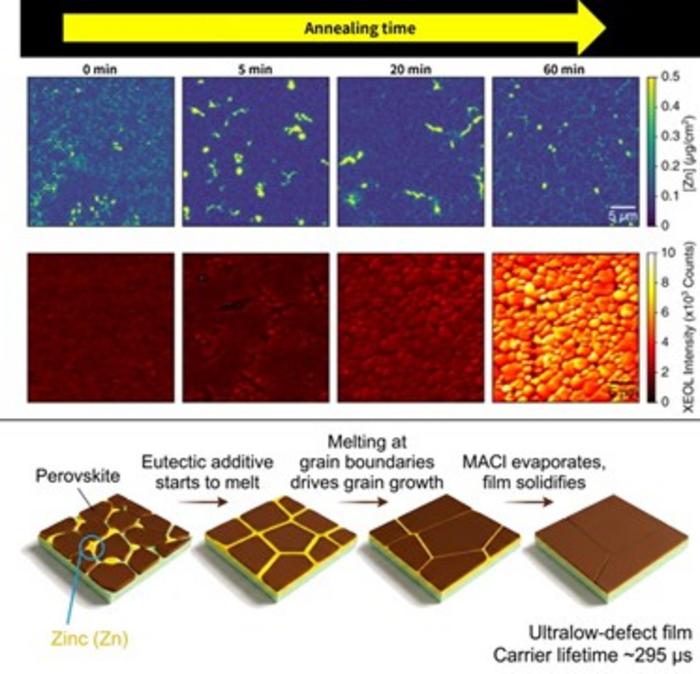
A eutectic mixture of methylammonium chloride and a zinc halide melts at about 100 degrees Celsius, forming a transient liquid layer at perovskite grain boundaries that lets crystals merge into larger, cleaner grains. The resulting films reached a carrier lifetime of roughly 295 microseconds and a surface recombination velocity of 0.3 cm/s, the lowest reported for lead halide perovskites.
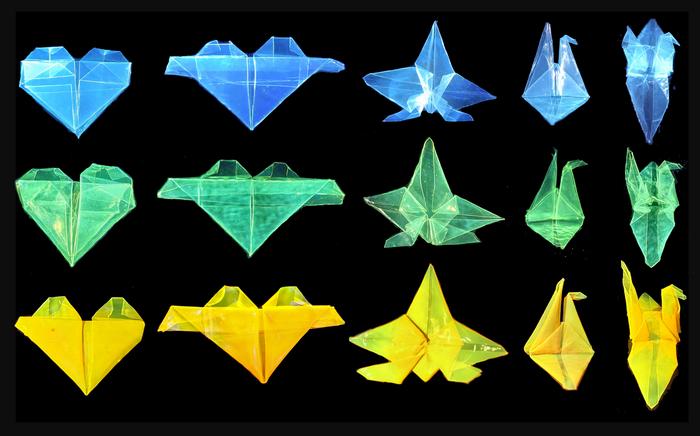
Researchers have developed carbon dots whose fluorescence shifts across the visible spectrum, from blue to red, depending on concentration, liquid environment and acidity. By tuning the particles' surfaces, the team produced versions that change color reversibly as pH shifts, then incorporated them into polymer powders, molded shapes and flexible films.
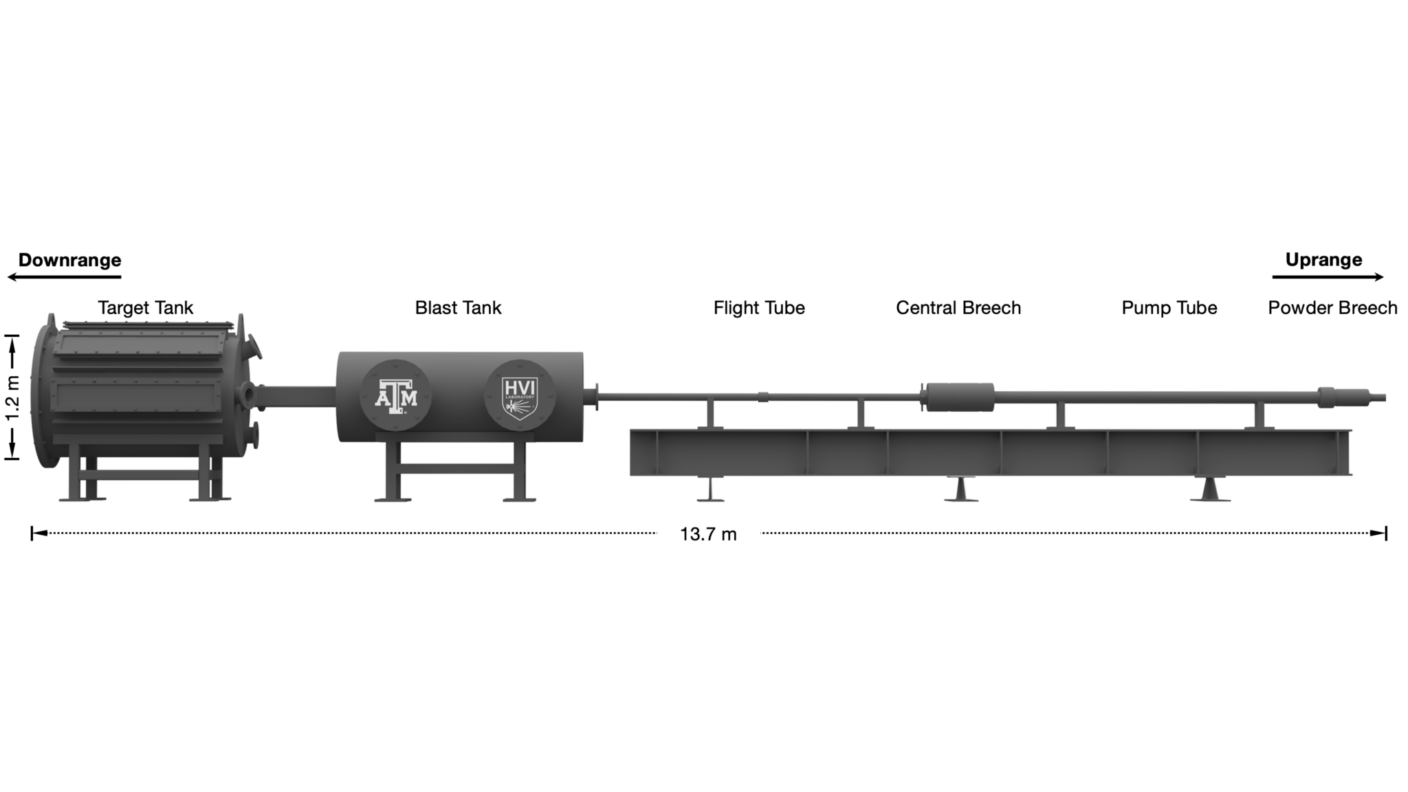
Researchers at Texas A&M and Rice University fired aluminum projectiles at a spark plasma sintered diamond composite at hypersonic speeds above Mach 8, using a two-stage light gas gun and high-speed diagnostics. Within microseconds, portions of the diamond converted to graphite, a softer carbon phase that absorbed and dissipated impact energy.
This week in nanotech
$13.6M raised
3 funding rounds · 20 deals tracked
New products
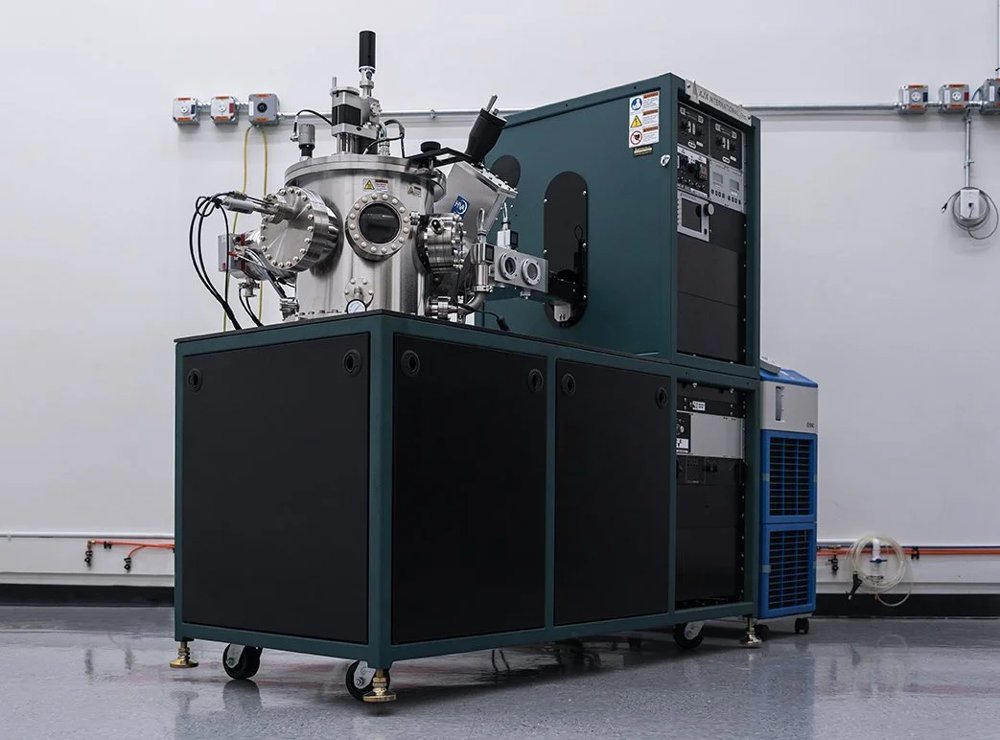 Orion Sputtering Deposition SystemsAJA International Featured
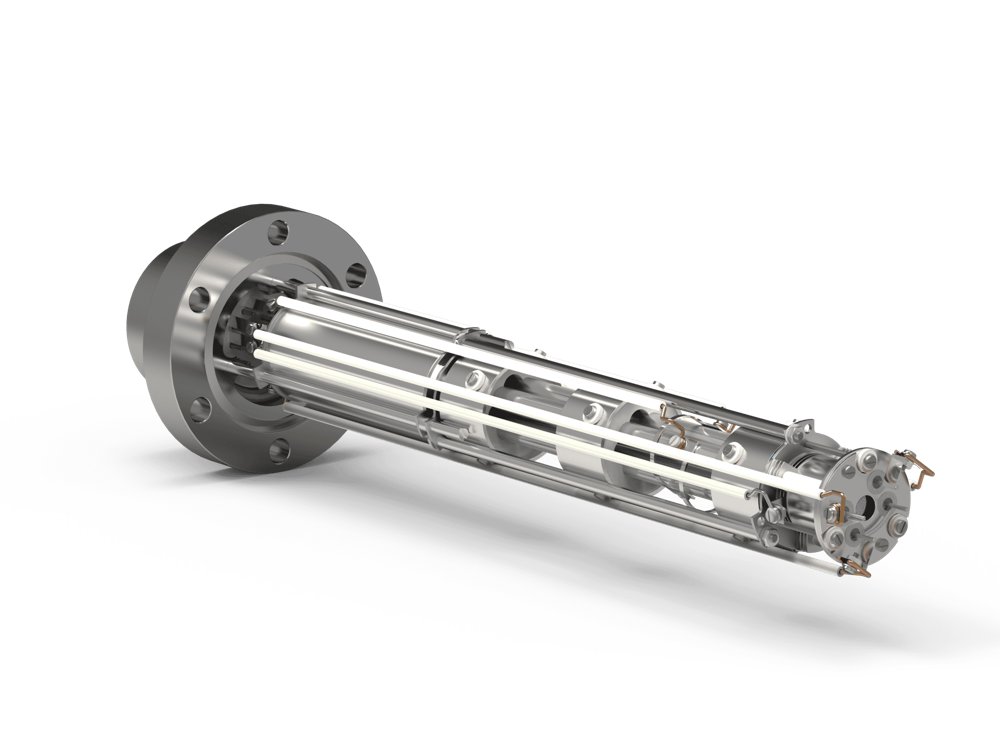 DLS-1 Mass Spectrometer for Fusion Gas AnalysisHiden Analytical Featured
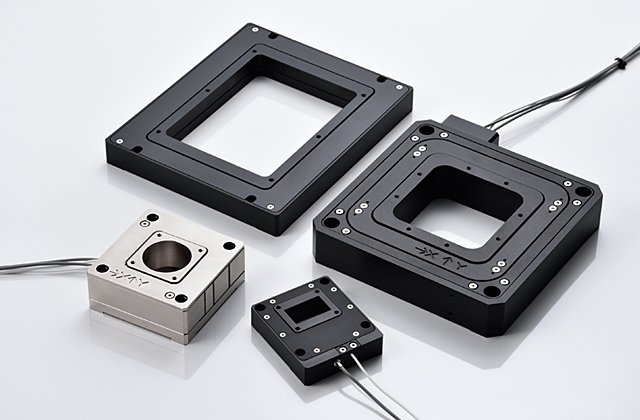 PKVH / PKVL ZAxis With an opening modelTHK PRECISION CO.,LTD.
Market insights
Last 30 days: Quantum Technologies was the busiest vertical: 61 of 192 events (32%).
Money raised per month