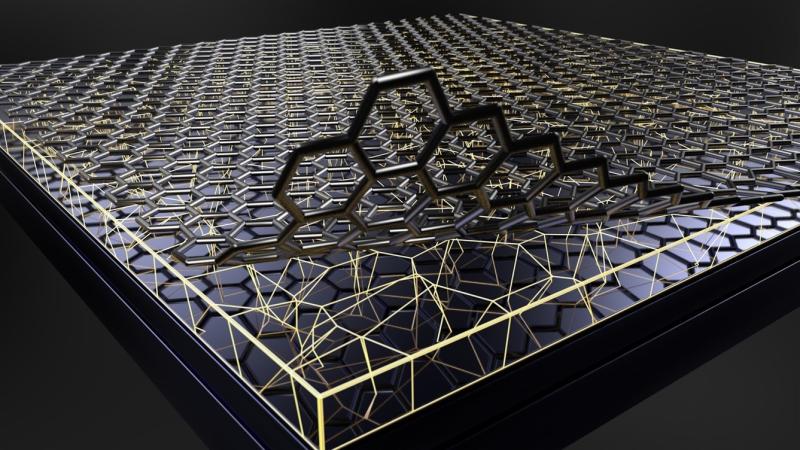
Researchers demonstrated that stainless steel and other metal alloys coated with hexagonal boron nitride, or hBN, exhibit non-stick or low-friction qualities along with improved long-term protection against harsh corrosion and high-temperature oxidation in air.
Metal alloys — mixtures of two or more metals — are created to be strong, durable and resistant to corrosion or oxidation. By adding coatings, or “armor,” to make those materials even tougher, scientists could enhance existing products and enable the creation of new, innovative ones.
For example, armoring may boost the ability of solar panels to conduct heat and resist environmental factors. Additionally, it allows semiconductors to maintain proper operating temperature, and aerospace turbine blades to guard against wear, reduce friction and withstand hot conditions.
The hBN coatings are produced from a combination of solid boron sources and molecular nitrogen by using a process called atmospheric pressure chemical vapor deposition.
“This synthesis technique addresses scalability issues such as cost and process safety in applications where those aspects have been problematic,” said ORNL’s Ivan Vlassiouk, who led the study. “Besides providing a versatile protective layer for steels and metals, using this process to synthesize single- and few-layer hBN for emerging two-dimensional electronic and photonic devices could improve their performance.”
Reference
Armor for Steel: Facile Synthesis of Hexagonal Boron Nitride Films on Various Substrates
Ivan Vlassiouk, Sergei Smirnov, Alexander Puretzky, Olugbenga Olunloyo, David B. Geohegan, Ondrej Dyck, Andrew R. Lupini, Raymond R. Unocic, Harry M. Meyer III, Kai Xiao, Dayrl Briggs, Nickolay Lavrik, Jong Keum, Ercan Cakmak, Sumner B. Harris, Marti Checa, Liam Collins, John Lasseter, Reece Emery, John Rayle, Philip D. Rack, Yijing Stehle, Pavan Chaturvedi, Piran R. Kidambi, Gong Gu, Ilia Ivanov
https://onlinelibrary.wiley.com/doi/full/10.1002/admi.202300704
Kopin Corporation has secured an $18.6 million sole source award from the Office of the Secretary of War through the U.S. Army Contracting Command under the IBAS program. The award brings Kopin's total IBAS funding to $34 million.
Emerson has integrated NevadaNano's MPS 6.0 technology into the Rosemount 628MP Combustible Gas Sensor for use with the Rosemount 928 Wireless Gas Monitor. MPS 6.0 consumes 1.35 mW and needs no field calibration.
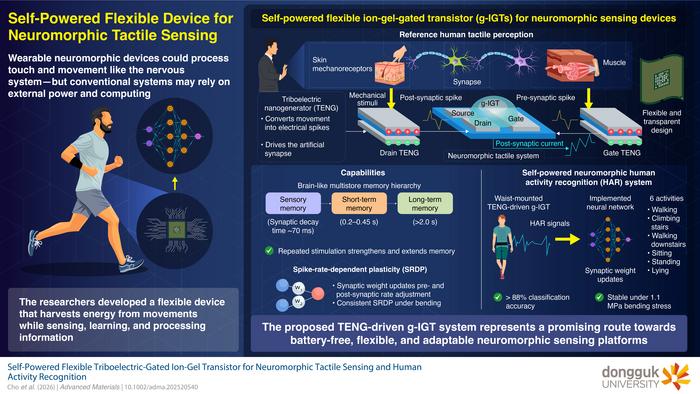
The proposed TENG-driven g-IGT is a flexible, self-powered neuromorphic device capable of reproducing multiple memory states and spike-rate-dependent learning Neuromorphic devices, which are designed to emulate aspects of biological neural networks, are promising candidates for developing low-power and intelligent sensing technologies, including wearable applications. Among the device architectures explored for neuromorphic computing, graphene-channel ion-gel-gated transistors (g-IGTs) are...
This week in nanotech
$10.2M raised
2 funding rounds · 19 deals tracked
New products
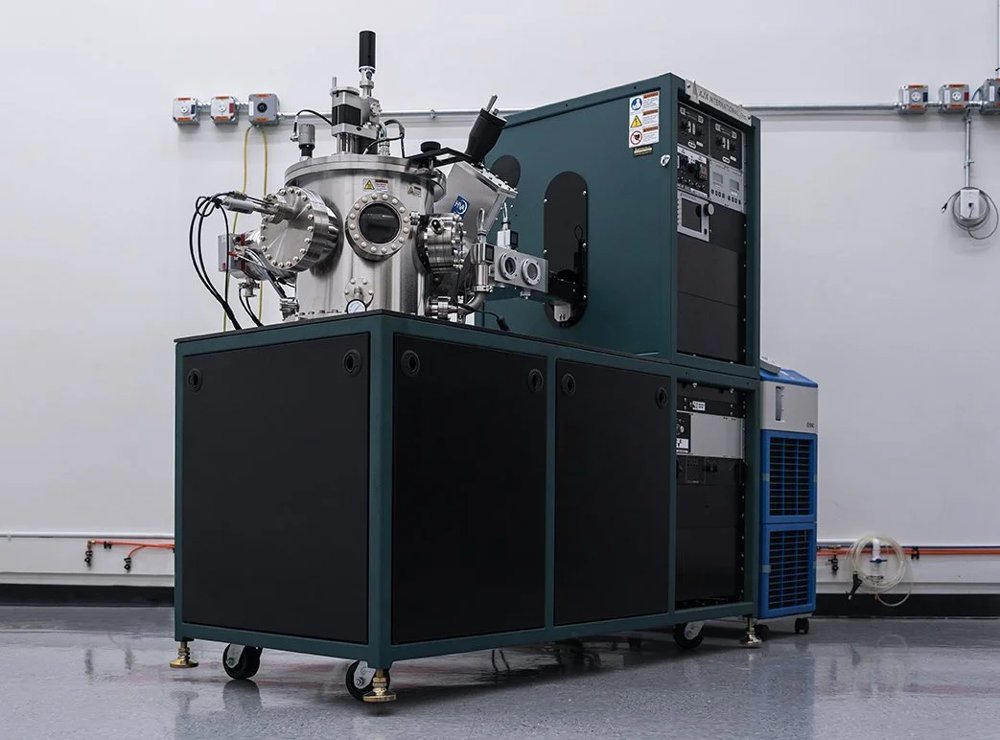 Orion Sputtering Deposition SystemsAJA International Featured
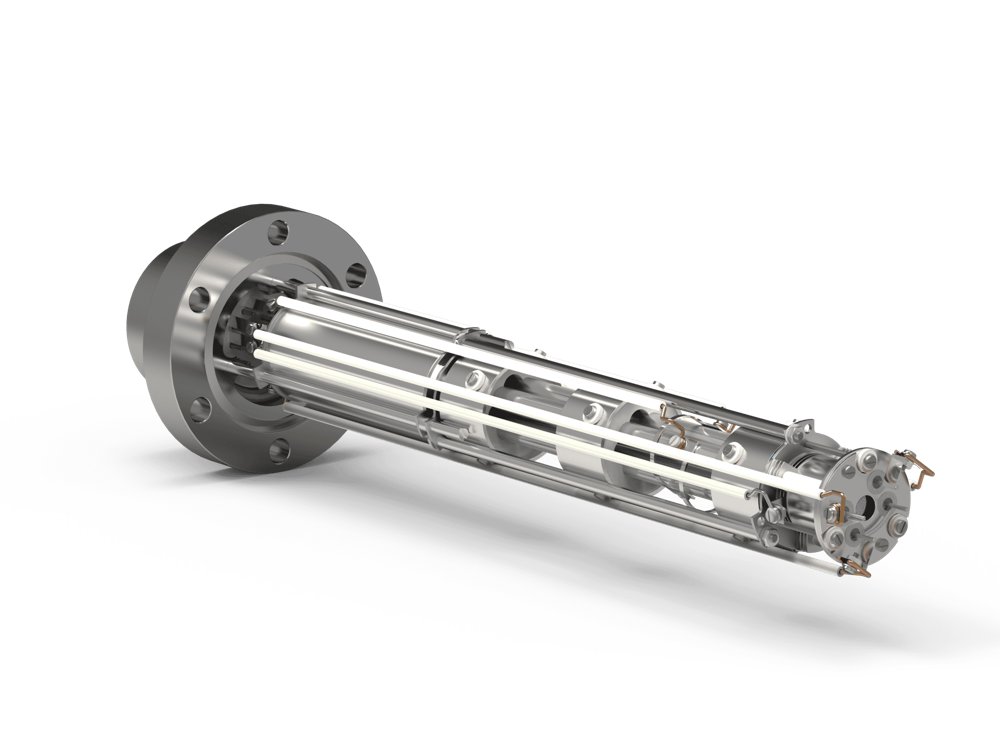 DLS-1 Mass Spectrometer for Fusion Gas AnalysisHiden Analytical Featured
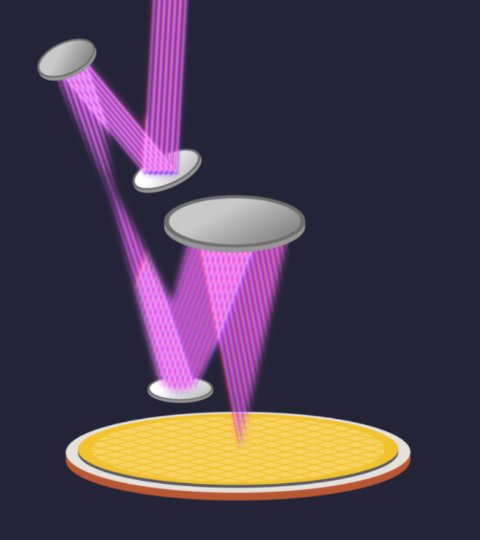 Aether®Lam Research
Market insights
Last 30 days: Quantum Technologies was the busiest vertical: 56 of 183 events (31%).
Money raised per month
Behind the deal
Who led Sandia National Laboratories’s $3.4M Grant?
See the investors with Insights Pro →