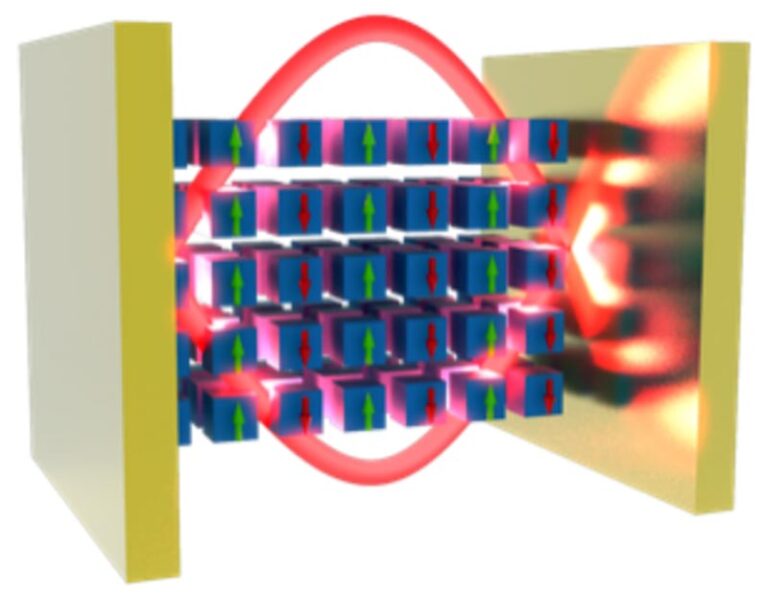
From The City College of New York’s Center for Discovery and Innovation and the Physics Department comes news of a new type of magnetic quasiparticle created by coupling light to a stack of ultrathin two-dimensional magnets. This achievement sprouting from a collaboration with the University of Texas at Austin lays the foundation for an emergent strategy to artificially design materials by ensuring their strong interaction with light.
“Implementing our approach with magnetic materials is a promising path towards efficient magneto-optical effects,” said CCNY physicist Vinod M. Menon, whose group led the study. “Achieving this goal can enable their use for applications in everyday devices like lasers, or for digital data storage.”
Dr. Florian Dirnberger, the lead author of the study, believes that their work exposed a largely unexplored realm of strong interactions between light and magnetic crystals. “Research in recent years brought forth a number of atomically flat magnets that are exceptionally well-suited to be studied by our approach,” he noted.
Looking ahead, the team plans to extend these investigations to understand the role of the quantum electrodynamical vacuum when quantum materials are placed into optical cavities. “Our work paves the way for the stabilization of novel quantum phases of matter that have no counterpart in thermodynamic equilibrium,” commented Edoardo Baldini, assistant professor at The University of Texas at Austin.
Reference
Spin-correlated exciton–polaritons in a van der Waals magnet
Florian Dirnberger, Rezlind Bushati, Biswajit Datta, Ajesh Kumar, Allan H. MacDonald, Edoardo Baldini & Vinod M. Menon
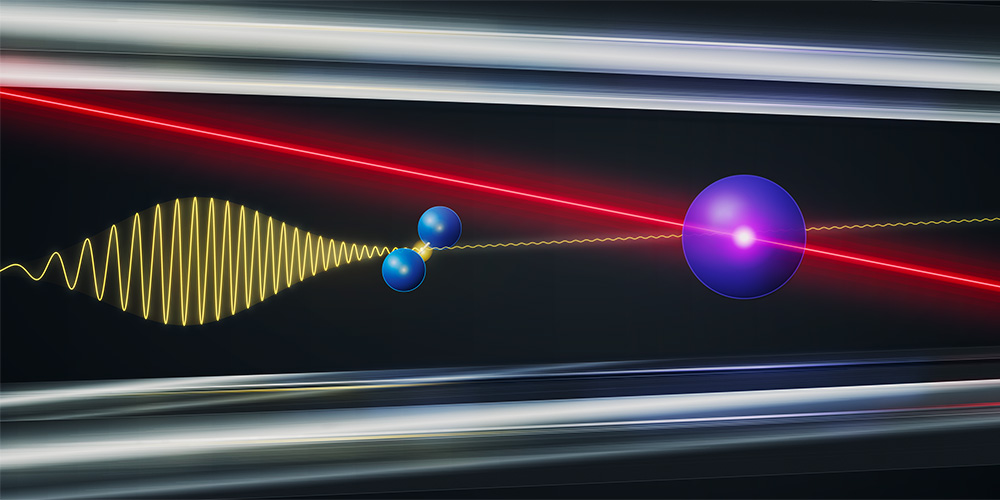
Researchers at the University of Basel have identified and coherently controlled so called forbidden vibrational transitions in individual trapped nitrogen molecular ions without destroying them. Using quantum logic spectroscopy, a single calcium ion served as messenger, letting the team probe the molecule repeatedly and determine its fundamental vibrational frequency ten times more precisely than before.
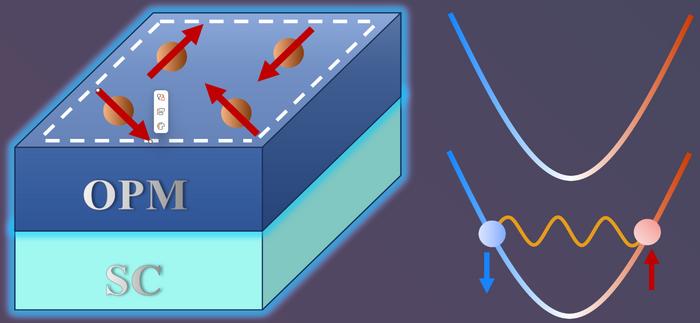
Odd-parity magnets host an intrinsic hidden Zeeman field that lifts Kramers degeneracy without any applied field, researchers report. Using an f-wave magnet model on a triangular lattice, the team shows how non-relativistic spin splitting and this hidden field combine to stabilize s-wave superconductivity far beyond the Pauli limit.
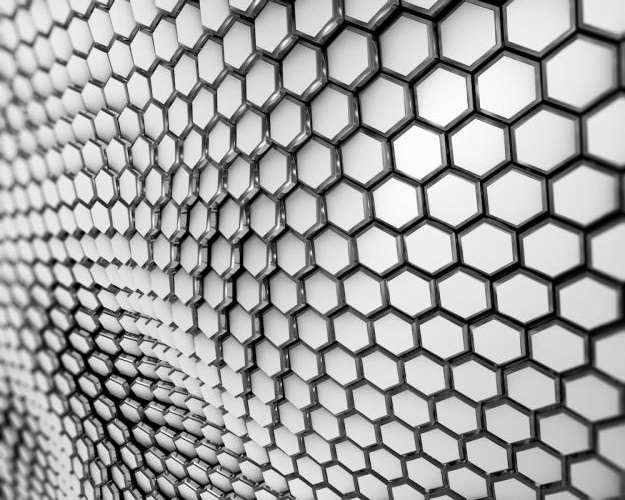
Rhombohedral hexalayer graphene, in which six carbon sheets are stacked with a slight lateral offset like staircase steps, hosts both superconductivity and electrically controllable orbital magnetism, researchers report in Nature Physics. The arrangement yields a rich collection of quantum states in a simple carbon-based material, positioning rhombohedral multilayer graphene as a platform for probing the fundamental mechanisms of superconductivity and magnetism and potentially for new ways of…
This week in nanotech
9 deals tracked
New products
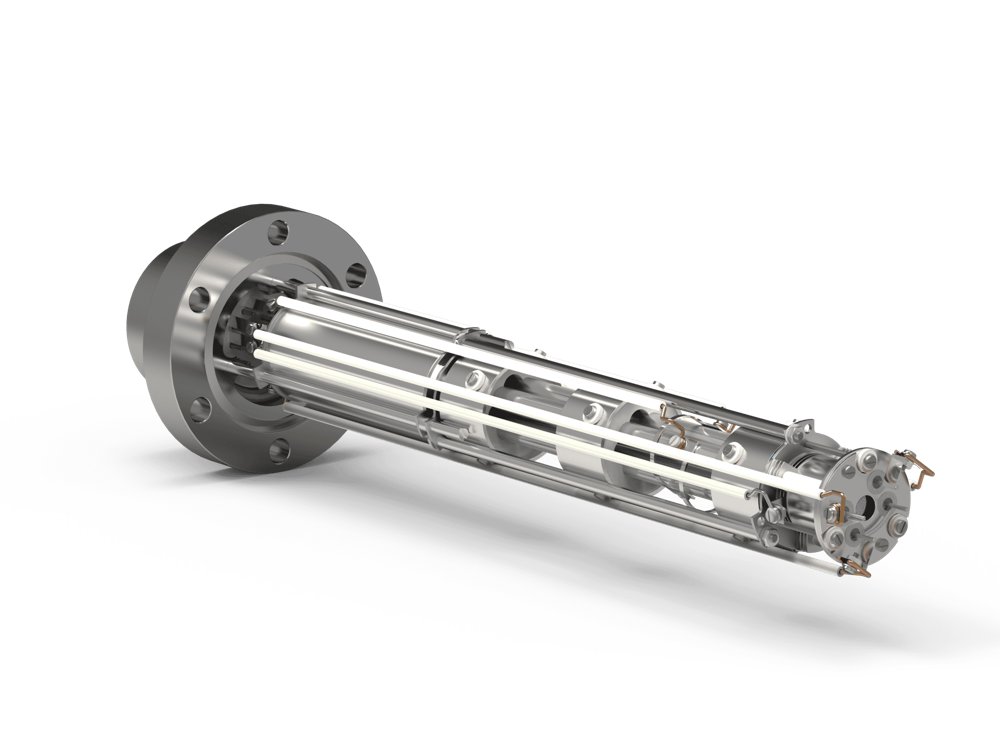 DLS-1 Mass Spectrometer for Fusion Gas AnalysisHiden Analytical Featured
 Ti-WCMBN Nanomaterialia Featured
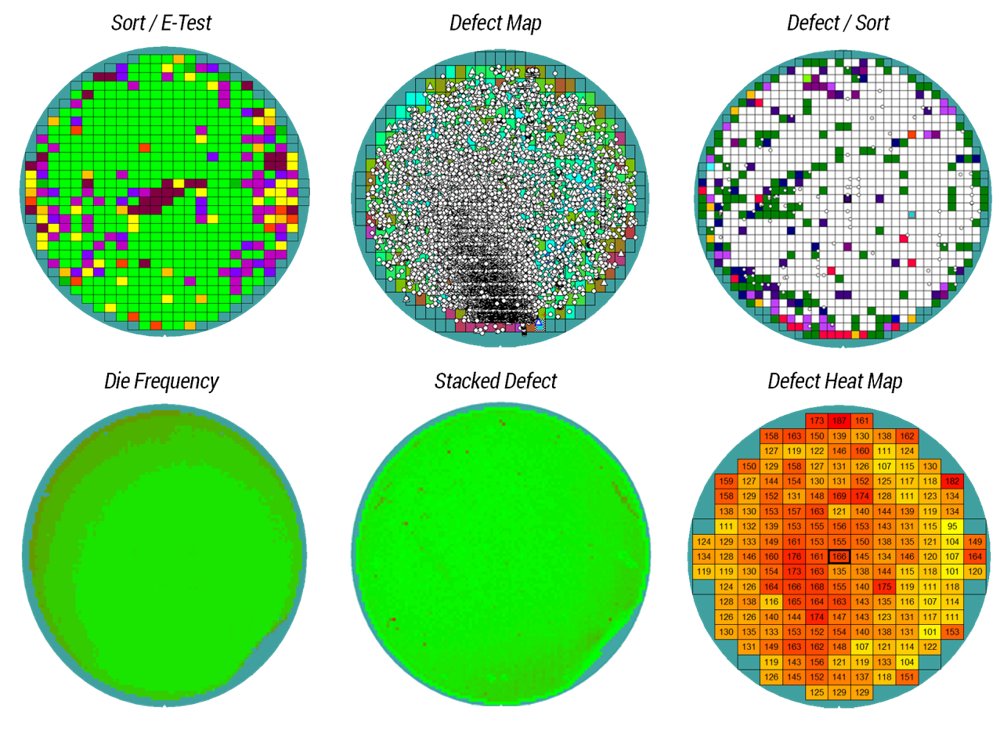 Discover Mapping SuiteOnto Innovation
Market insights
Last 30 days: Semiconductors & Electronics drew the most money: $545M.
Money raised per month