
“Work smarter, not harder!” This principle apparently also applies to controlling quantum materials with light. Many of their fascinating properties depend on how the atoms are arranged in the crystal. Ultrashort laser pulses can be used to alter these structures in a targeted way: the light first excites electrons, whose changed energy and dynamics exert forces on the atomic nuclei and can thereby set the atoms in motion. Such processes unfold within femtoseconds, a millionth of a billionth of a second.
In a study now published in Nature Physics, researchers from the Universities of Würzburg and Rostock and from ETH Zurich investigated this mechanism in WTe₂, a so-called sliding ferroelectric. In such materials, neighbouring atomic layers can slide against each other, much like two palms pressed together. “What makes this particularly exciting is that the relative motion of the atomic layers can influence a range of material properties, such as ferroelectricity and topology,” explains Gerrit Horstmann, first author of the study and head of an Emmy Noether junior research group at the University of Würzburg.
More light does not always mean more motion
To shift the atomic layers further, the obvious approach would be to simply increase the energy of the laser pulse. However, the researchers show that this strategy has its limits. “Under very strong excitation, electrons are promoted into high-energy states that counteract the directed motion of the atoms. The additional light energy then no longer produces a correspondingly larger displacement of the atomic layers; instead, it effectively slows them down,” explains Gerrit Horstmann.
Rather than increasing the intensity further, the researchers therefore took a different approach: they split the light energy into two weaker pulses separated in time. After the first pulse, the electronic system has time to partially relax before the second pulse arrives. By carefully choosing the time delay, the sliding motion can be driven like a child on a swing, overcoming the limitations of single-pulse excitation. “Timing opens up an additional way to make optimal use of the interaction between electrons and atomic motion,” says Horstmann. Instead of delivering as much energy as possible all at once, the excitation is tailored to the material’s own dynamics.
New possibilities for controlling quantum materials
In the long term, the results could help to switch technologically relevant properties such as ferroelectric polarization in an energy-efficient way. The approach is particularly promising for ultrathin materials such as WTe₂, which consist of only a few atomic layers and open up new prospects for compact electronic devices.
The study thus highlights a fundamental principle of light-based control: it is not necessarily more energy, but better-tuned excitation that can be decisive in achieving the desired properties of a material. Or, to put it another way: “Work smarter, not harder!”
Reference
Coherent phonon control beyond amplitude saturation in a sliding ferroelectric
Jan Gerrit Horstmann, Christoph Emeis, Andrin Caviezel, Quintin N. Meier, Nicolas Wyler, Thomas Lottermoser, Fabio Caruso, and Manfred Fiebig

Rhombohedral hexalayer graphene, in which six carbon sheets are stacked with a slight lateral offset like staircase steps, hosts both superconductivity and electrically controllable orbital magnetism, researchers report in Nature Physics. The arrangement yields a rich collection of quantum states in a simple carbon-based material, positioning rhombohedral multilayer graphene as a platform for probing the fundamental mechanisms of superconductivity and magnetism and potentially for new ways of…
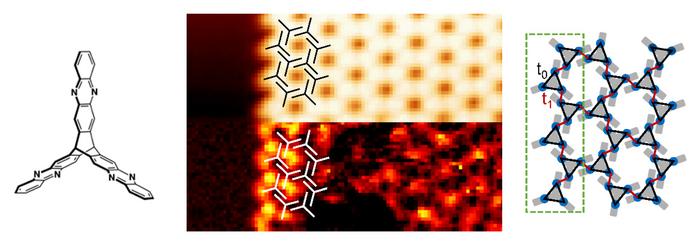
Researchers have assembled a triptycene-derived organic molecule into a two-dimensional diatomic Kagome lattice, a hybrid of honeycomb and Kagome geometries, and observed topological edge states confined to its boundaries. Strong electronic coupling between the propeller-shaped molecules, confirmed by scanning tunneling microscopy and theoretical analysis, shows that supramolecular assemblies can host quantum behavior once thought to require inorganic crystals.
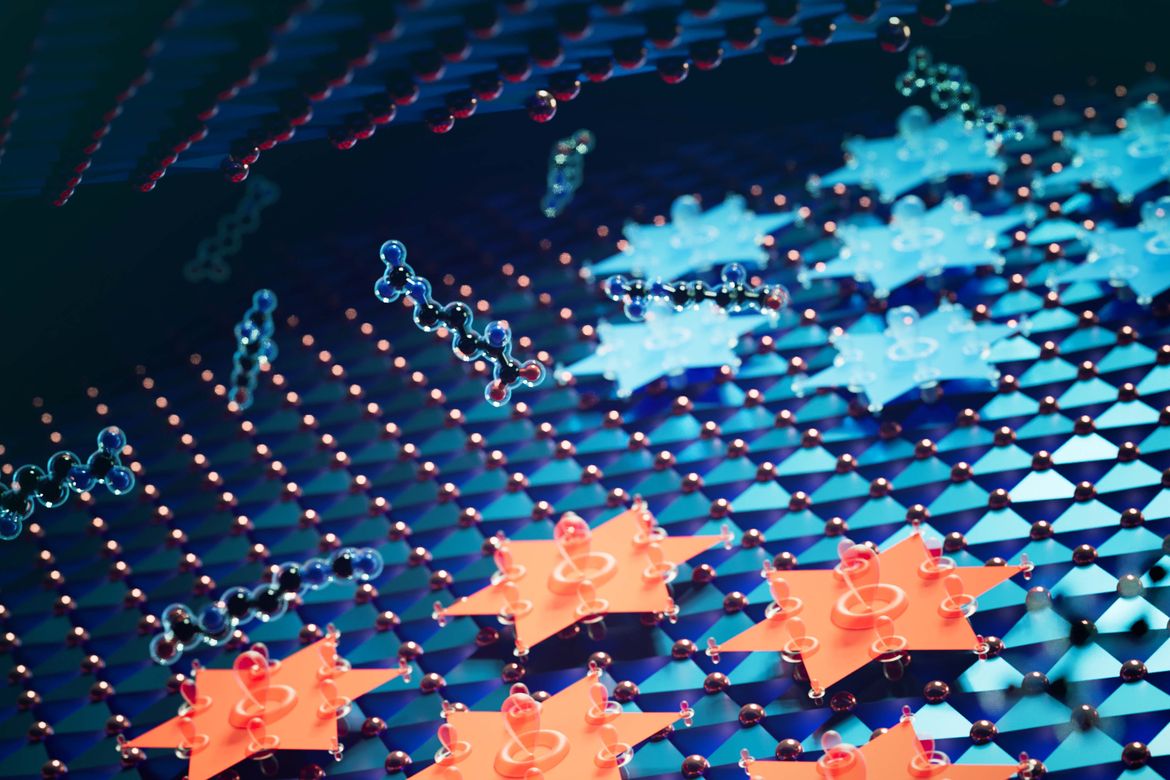
A UCLA-led team has extended a quantum phenomenon called the commensurate charge density wave in tantalum disulfide from cryogenic temperatures to roughly 135 F by interleaving layers of the amino acid arginine between ultrathin sheets. Two other amino acids failed to produce the effect, and simulations suggest arginine fits the crystal lattice almost perfectly. The work points to molecule-guided design of quantum materials and possible energy-efficient memory.
This week in nanotech
$13.6M raised
3 funding rounds · 20 deals tracked
New products
 DLS-1 Mass Spectrometer for Fusion Gas AnalysisHiden Analytical Featured
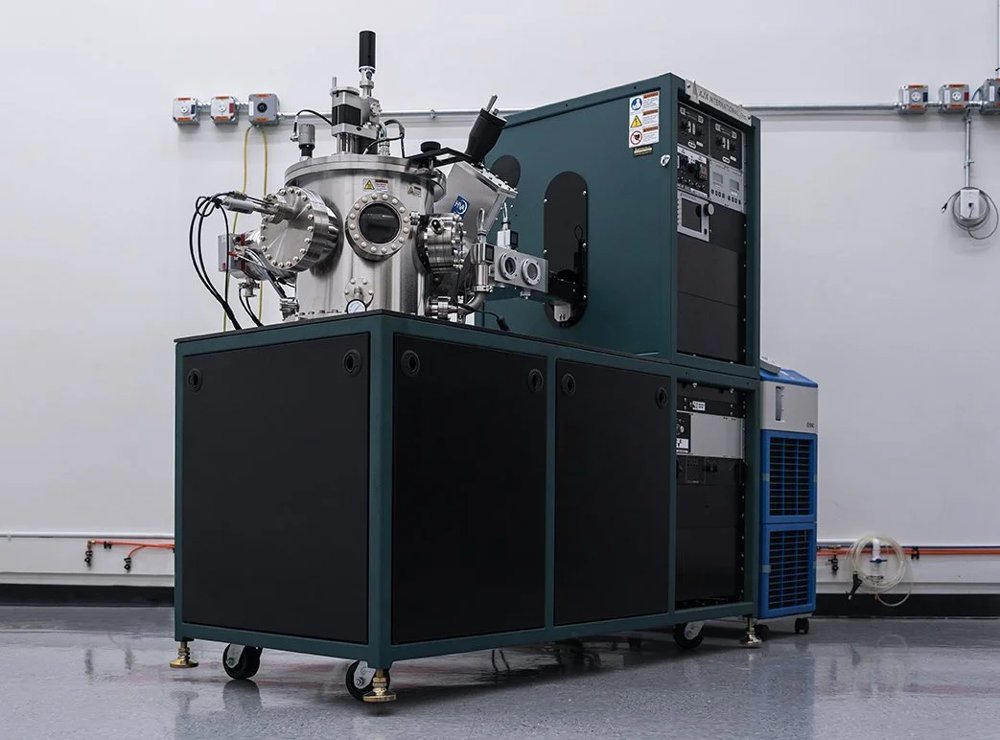 Orion Sputtering Deposition SystemsAJA International Featured
 SunscreenUnchained Labs
Market insights
Last 30 days: Quantum Technologies was the busiest vertical: 61 of 192 events (32%).
Money raised per month