In physics, it is essential to be able to show a theoretical assumption in actual, physical experiments. For more than a hundred years, physicists have been aware of the link between the concepts of disorder in a system, and information obtained by measurement. However, a clean experimental assessment of this link in common monitored systems, that is systems which are continuously measured over time, was missing so far.
But now, using a "quantum drum", a vibrating, mechanical membrane, researchers have realized an experimental setup that shows the physical interplay between the disorder and the outcomes of a measurement. A collaboration of experimentalists from the Niels Bohr Institute, University of Copenhagen and theorists at Queen's University Belfast, and the University of Sao Palo, could show how to extract order from this largely disordered system, providing a general tool to engineer the state of the system, essential for future quantum technologies, like quantum computers. The result is now published in as an Editors' Suggestion in Physical Review Letters.
Measurements will always introduce a level of disturbance of any system it measures. In the ordinary, physical world, this is usually not relevant, because it is perfectly possible for us to measure, say, the length of a table without noticing that disturbance. But on the quantum scale, the consequences of the disturbance made by measurements are huge. These large disturbances increase the entropy, or disorder, of the underlying system, and apparently preclude to extract any order from the measurement. But before explaining how the recent experiment realized this, the concepts of entropy and thermodynamics need a few words.
Breaking an egg is thermodynamics
The law of thermodynamics covers extremely complicated processes. The classic example is that if an egg falls off of a table, it breaks on the floor. In the collision, heat is produced - among many other physical processes - and if you imagine you could control all of these complicated processes, there is nothing in the physical laws that say you can't reverse the process. In other words, the egg could actually assemble itself and fly up to the table surface again, if we could control the behavior of every single atom, and reverse the process. It is theoretically possible. You can also think of an egg as an ordered system, and if it breaks, it becomes extremely disordered. Physicists say that the entropy, the amount of disorder, has increased. The laws of thermodynamics tell us that the disorder will in fact always increase, not the other way round: So eggs do not generally jump off floors, assemble and land on tables in the real world.
Correct quantum system readouts are essential - and notoriously difficult to obtain
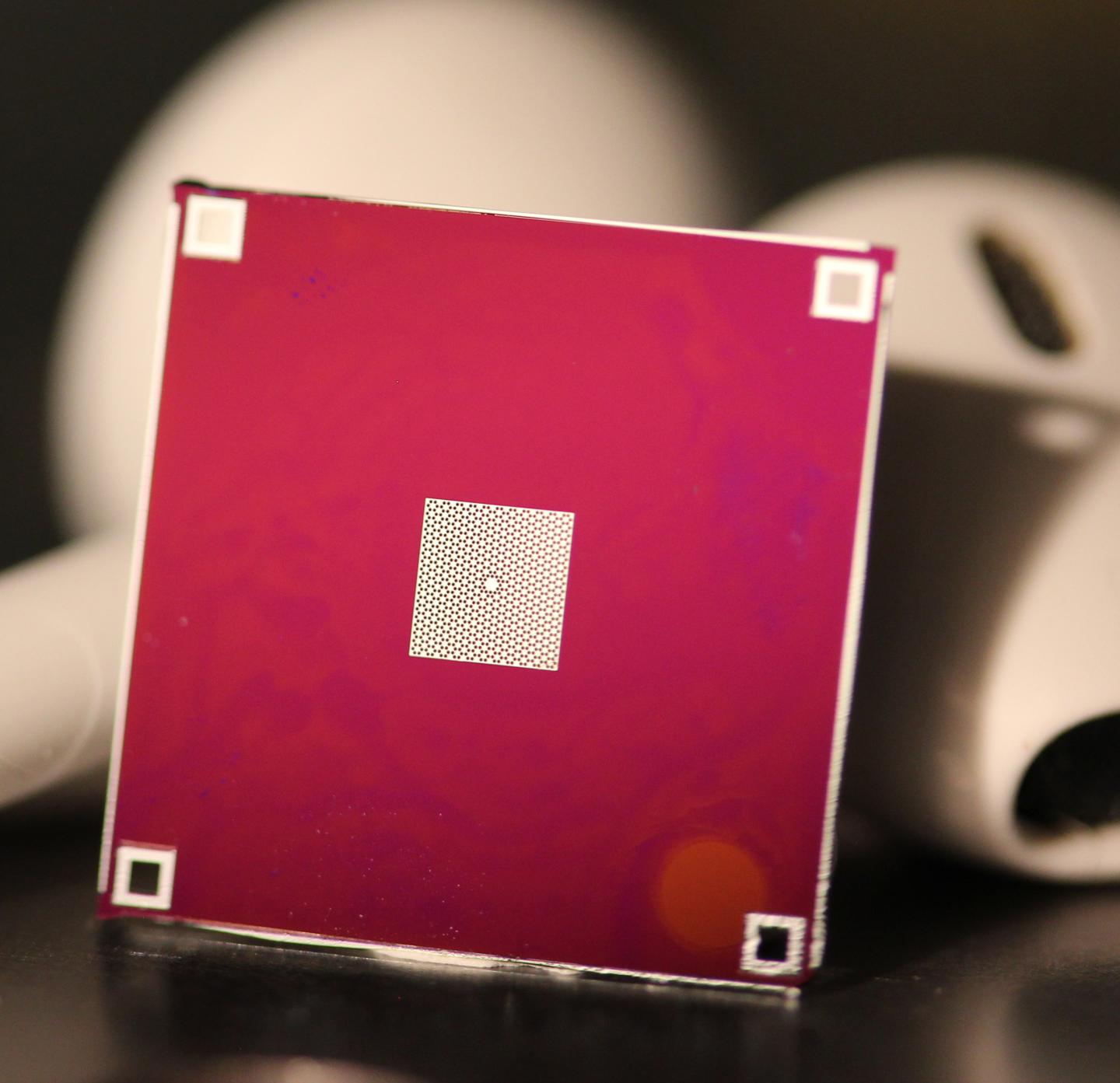
If we turn to quantum mechanics, the world looks rather different, and yet the same. If we continuously measure the displacement of a mechanical, moving system like the "membrane-drum" (illustration 1) with a precision only limited by the quantum laws, this measurement disturbs the movement profoundly. So you will end up measuring a displacement which is disturbed during the measurement process itself, and the readout of the original displacement will be spoiled - unless you can measure the introduced disorder as well. In this case, you can use the information about the disorder to reduce the entropy produced by the measurement and generate order from it - comparable to controlling the disorder in the shattered egg-system. But this time we have the information on the displacement as well, so we have learnt something about the entire system along the way, and, crucially, we have access to the original vibration of the membrane, i.e. the correct readout. Alessio Belenchia, the study's senior author, and his colleagues from Belfast and Sao Paolo have established a powerful formal framework for this kind of analysis.
A generalized framework for understanding entropy in quantum systems
"The connection between thermodynamics and quantum measurements has been known for more than a century. However, an experimental assessment of this link was missing so far, in the context of continuous measurements. That is exactly what we have done with this study. It is absolutely essential that we understand how measurements produce entropy and disorder in quantum systems, and how we use it in order to have control over the readouts we shall have in the future from, say, a quantum system like a quantum computer. If we are not able to control the disturbances, we basically won't be able to understand the readouts - and the quantum computer readouts will be illegible, and useless, of course", says Massimiliano Rossi, PhD student and first author on the scientific article. "This framework is important in order to create a generalized basic foundation for our understanding of entropy producing systems on the quantum scale. That's basically where this study fits into the grander scale of things in physics".
Reference:
Experimental Assessment of Entropy Production in a Continuously Measured Mechanical Resonator
Massimiliano Rossi, Luca Mancino, Gabriel T. Landi, Mauro Paternostro, Albert Schliesser, and Alessio Belenchia
Phys. Rev. Lett. 125, 080601 – Published 19 August 2020
http://dx.doi.org/10.1103/PhysRevLett.125.080601
Contact:
Albert Schliesser
Professor
The Danish Center for Quantum Optics (QUANTOP)
albert.schliesser@nbi.ku.dk

Billions of ytterbium ions in a yttrium orthovanadate crystal, coupled to a superconducting microwave resonator, synchronize through superradiance and pulse in a regular rhythm, forming a superradiant frequency comb. Unlike mirror-based combs, the spacing comes from atom-to-atom interference and the emission pairs microwaves with infrared light in step. The scheme could yield more stable combs and a microwave-optical link for connecting superconducting quantum circuits to fiber networks.
QuiX Quantum, Artilux and Brillink have received TechBridge funding for QSPAD, a 36-month project starting January 2027 to develop near-room-temperature GeSi single-photon detectors for photonic quantum computing.
Qluster, a Paris-based spin-off from Laboratoire Kastler Brossel, has raised €4.7 million in a pre-seed round led by Quantonation. The company is developing continuous-variable photonic quantum computers.
This week in nanotech
$18.9M raised
4 funding rounds · 36 deals tracked
New products
 DLS-1 Mass Spectrometer for Fusion Gas AnalysisHiden Analytical Featured
 Nion-compatible In Situ STEM Holders for Electrical BiasingHummingbird Scientific Featured
 Ionic® Purification SystemBionano Genomics, Inc.
Market insights
Last 30 days: Semiconductors & Electronics was the busiest vertical: 52 of 170 events (31%).
Money raised per month