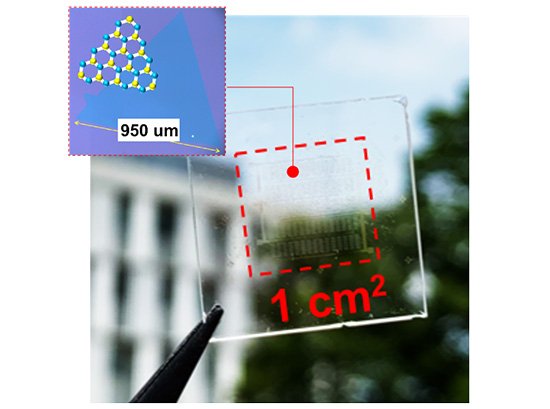
Solar panels often get a bad rap for spoiling the appearance of homes and businesses. Yet, this may be about to change.
A research group has fabricated a highly transparent solar cell with a 2D atomic sheet. These near-invisible solar cells achieved an average visible transparency of 79%, meaning they can, in theory, be placed everywhere - building windows, the front panel of cars, and even human skin.
Scientists have long sought to develop transparent solar cells, but the suitable materials have not existed thus far.
To make the solar cell, the team controlled the contact barriers between indium tin oxide (ITO), one of the most widely used transparent conducting oxides, and a monolayer tungsten disulfide. They coated various thin metals onto the ITO and inserted a thin layer of Tungsten Oxide between the coated ITO and the tungsten disulfide.
"The way in which we formed the solar cell resulted in a power conversion efficiency over 1000 times that of a device using a normal ITO electrode," pointed out Toshiaki Kato, corresponding author of the paper and associate professor at Tohoku University's Graduate School of Engineering.
The group's efforts did not stop there. They also explored how their solar cell can be expanded for use in an actual solar panel.
"We discovered the appropriate design modifications needed to avoid an unexpected voltage drop that accompanies increasing the device area," said Kato.
Reference
Fabrication of near-invisible solar cell with monolayer WS2
Xing He, Yuta Iwamoto, Toshiro Kaneko & Toshiaki Kato
https://www.nature.com/articles/s41598-022-15352-x
Tohoku University
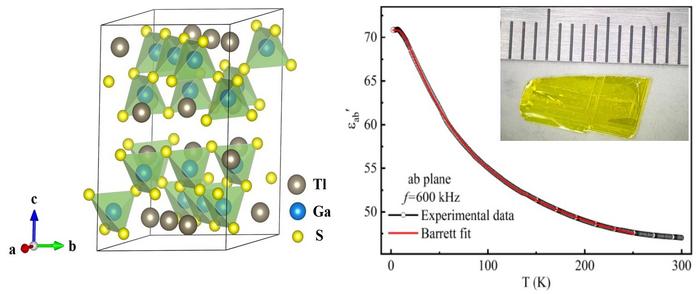
TlGaS2 single crystals show both in-plane and out-of-plane polarization, a rare combination in two-dimensional ferroelectrics that could widen options for ferroelectric transistors and non-volatile memory. Infrared spectroscopy revealed a soft phonon mode below 75 K, a signature tied to quantum ferroelectricity, along with weak structural changes across temperatures that lack clear heat-capacity signals, hinting at local rearrangements rather than conventional phase transitions.
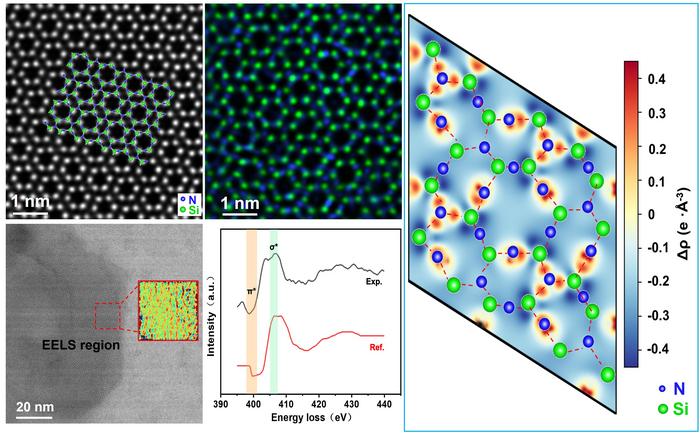
A β-Si3N4 nanolayer about 20 nm thick and continuous over several micrometers has been formed between carbon and silicon carbide without conventional oxide sintering additives, using a porous carbon framework infiltrated with molten silicon. Complementary atomic-resolution imaging resolved both silicon and nitrogen sublattices, confirming the ABAB stacking and corner-sharing tetrahedral network, while electron energy-loss spectroscopy and first-principles calculations linked the spectra to…
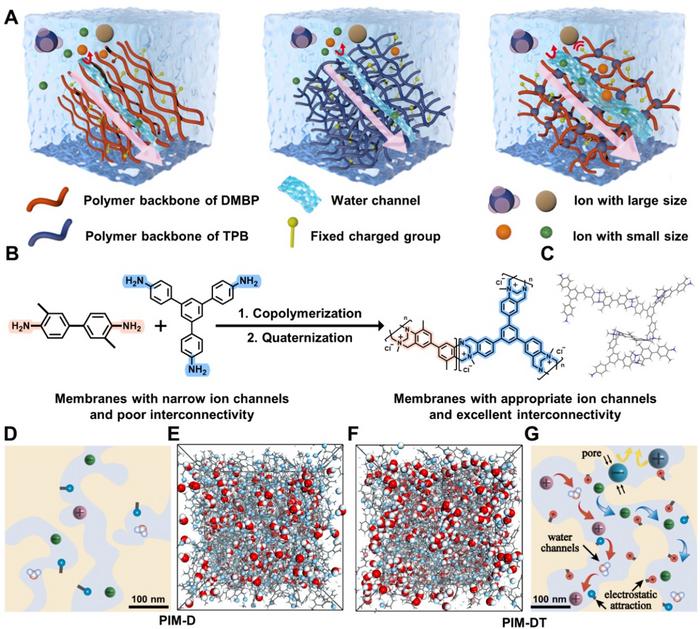
A polymer membrane with interconnected water-filled channels just 0.5 to 0.7 nanometers wide separates singly charged ions from multiply charged ones in both cationic and anionic systems. Built from Tröger's base-derived porous organic polymers, it cut the magnesium-to-lithium ratio in salt-lake brine roughly 500-fold across three electrodialysis stages, yielding 99.5 percent pure lithium carbonate, and enriched sodium chloride to 99.4 percent of ion mass from simulated seawater.
This week in nanotech
$740.7M raised
5 funding rounds · 35 deals tracked
New products
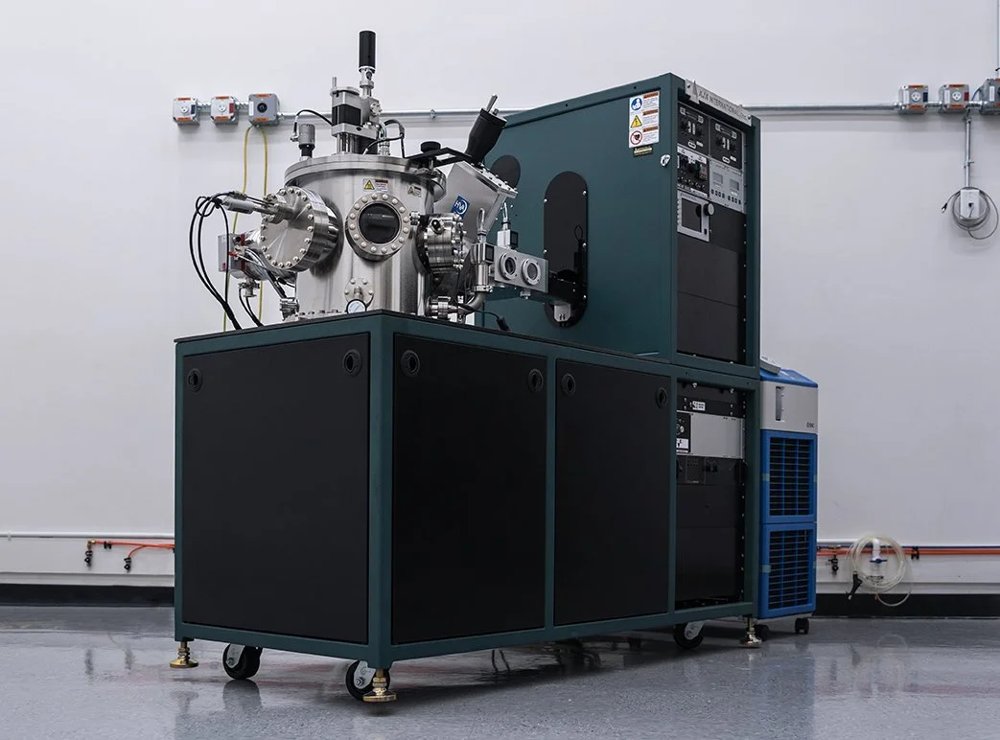 Orion Sputtering Deposition SystemsAJA International Featured
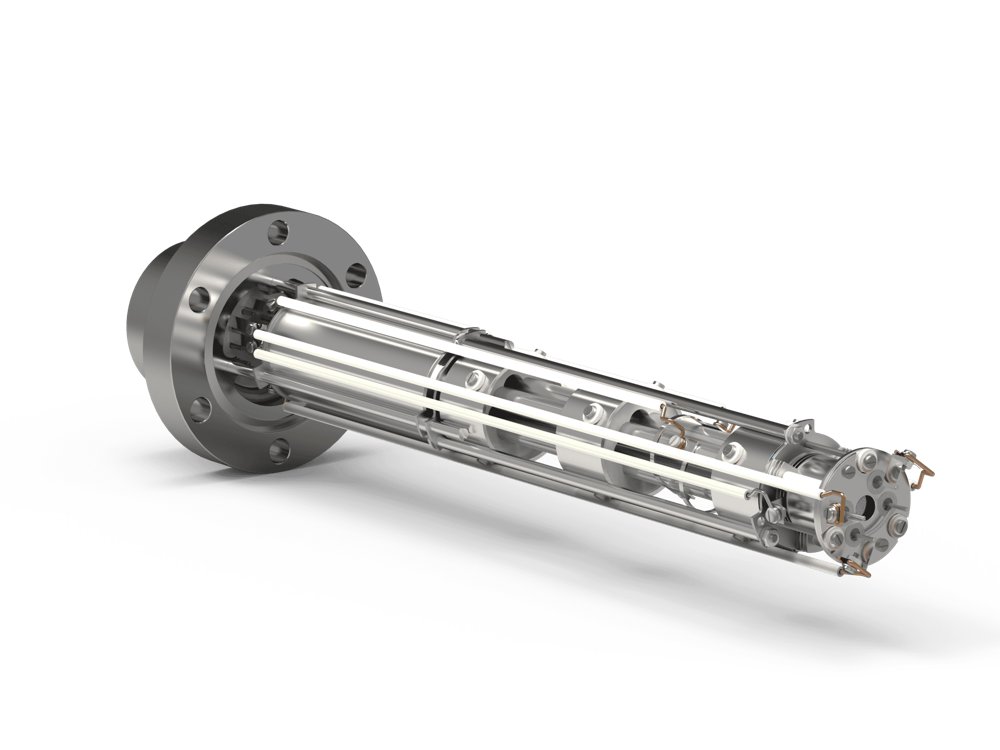 DLS-1 Mass Spectrometer for Fusion Gas AnalysisHiden Analytical Featured
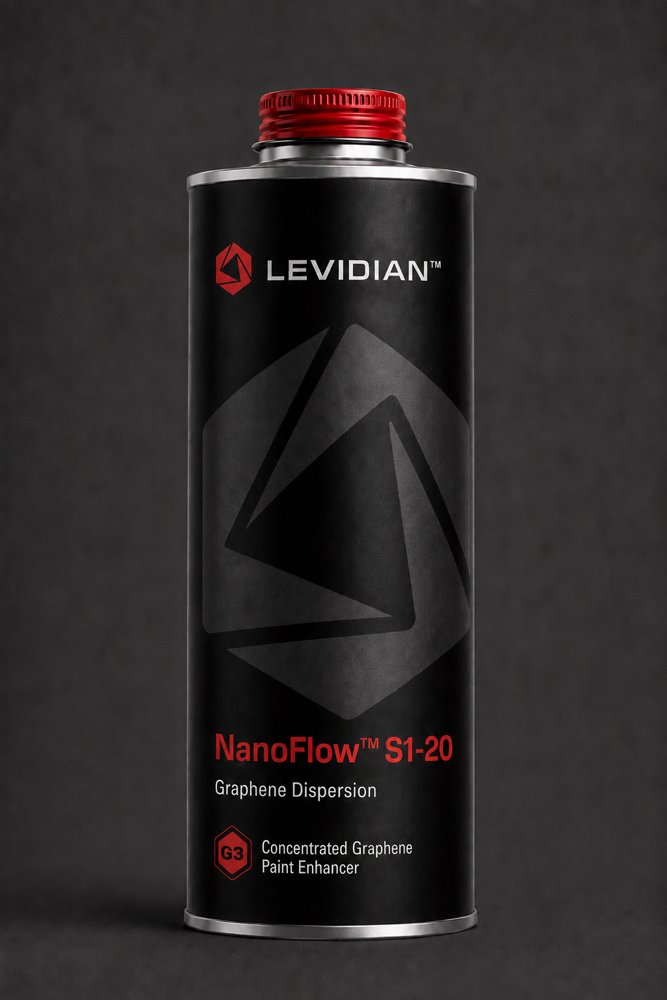 NanoFlow® S1-20Levidian
Market insights
Last 30 days: Quantum Technologies drew the most money: $3.18B.
Money raised per month