Rensselaer Polytechnic Institute
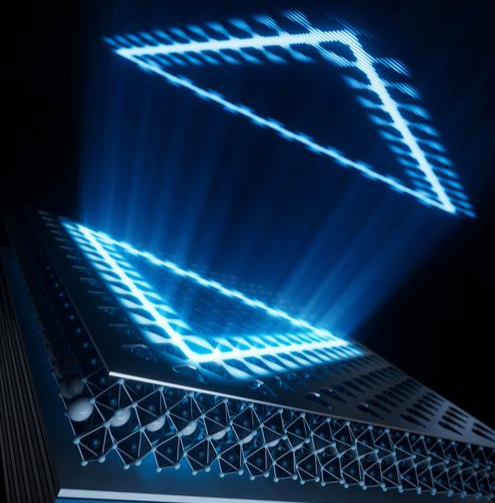
Researchers at Rensselaer Polytechnic Institute have fabricated a device no wider than a human hair that will help physicists investigate the fundamental nature of matter and light. Their findings, published in the journal Nature Nanotechnology, could also support the development of more efficient lasers, which are used in fields ranging from medicine to manufacturing.
The device is made of a special kind of material called a photonic topological insulator. A photonic topological insulator can guide photons, the wave-like particles that make up light, to interfaces specifically designed within the material while also preventing these particles from scattering through the material itself.
Because of this property, topological insulators can make many photons coherently act like one photon. The devices can also be used as topological “quantum simulators,” miniature laboratories where researchers can study quantum phenomenon, the physical laws that govern matter at very small scales.
“The photonic topological insulator we created is unique. It works at room temperature. This is a major advance. Previously, one could only investigate this regime using big, expensive equipment that super cools matter in a vacuum. Many research labs do not have access to this kind of equipment, so our device could allow more people to pursue this kind of basic physics research in the lab,” said Wei Bao, assistant professor in the Department of Materials Science and Engineering at RPI and senior author of the Nature Nanotechnology study.
“It is also a promising step forward in the development of lasers that require less energy to operate, as our room-temperature device threshold — the amount of energy needed to make it work — is seven times lower than previously developed low-temperature devices,” Bao added.
The RPI researchers created their novel device with the same technology used in the semiconductor industry to make microchips, which involves layering different kinds of materials, atom by atom, molecule by molecule, to create a desired structure with specific properties.
To create their device, the researchers grew ultrathin plates of halide perovskite, a crystal made of cesium, lead, and chlorine, and etched a polymer on top of it with a pattern. They sandwiched these crystal plates and polymer between sheets of various oxide materials, eventually forming an object about 2 microns thick and 100 microns in length and width (the average human hair is 100 microns wide).
When the researchers shined a laser light on the device, a glowing triangular pattern appeared at the interfaces designed in the material. This pattern, dictated by the device’s design, is the result of topological characteristic of lasers.
“Being able to study quantum phenomena at room temperature is an exciting prospect. Professor Bao’s innovative work shows how materials engineering can help us answer some of science’s biggest questions,” said Shekhar Garde, dean of the RPI School of Engineering.
Reference
Topological valley Hall polariton condensation
Kai Peng, Wei Li, Meng Sun, Jose D. H. Rivero, Chaoyang Ti, Xu Han, Li Ge, Lan Yang, Xiang Zhang & Wei Bao
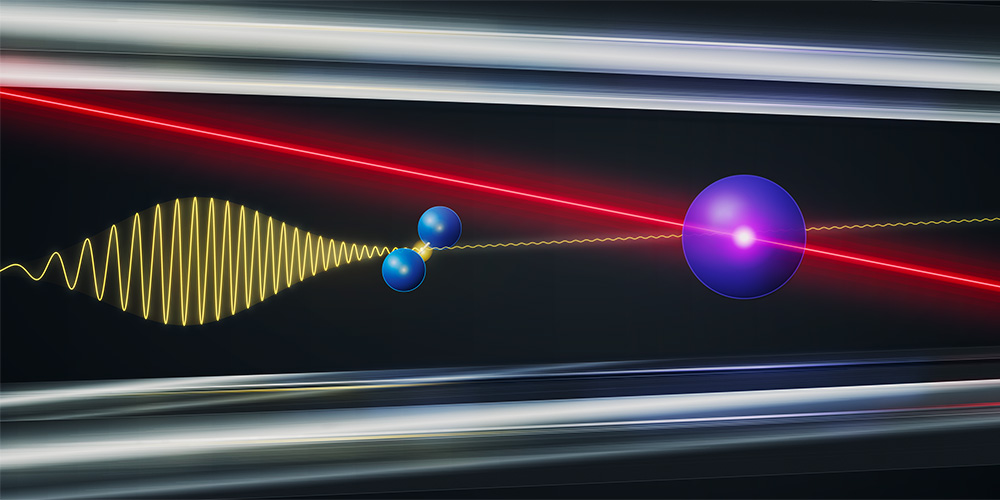
Researchers at the University of Basel have identified and coherently controlled so called forbidden vibrational transitions in individual trapped nitrogen molecular ions without destroying them. Using quantum logic spectroscopy, a single calcium ion served as messenger, letting the team probe the molecule repeatedly and determine its fundamental vibrational frequency ten times more precisely than before.
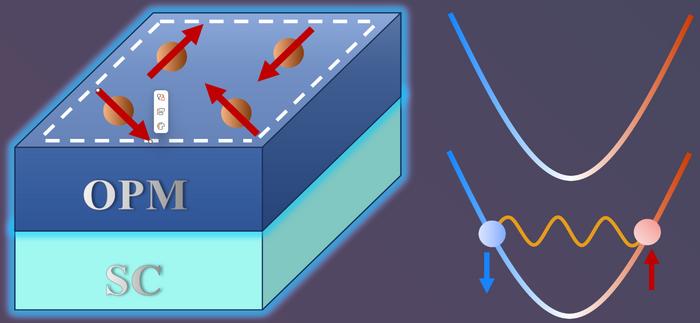
Odd-parity magnets host an intrinsic hidden Zeeman field that lifts Kramers degeneracy without any applied field, researchers report. Using an f-wave magnet model on a triangular lattice, the team shows how non-relativistic spin splitting and this hidden field combine to stabilize s-wave superconductivity far beyond the Pauli limit.
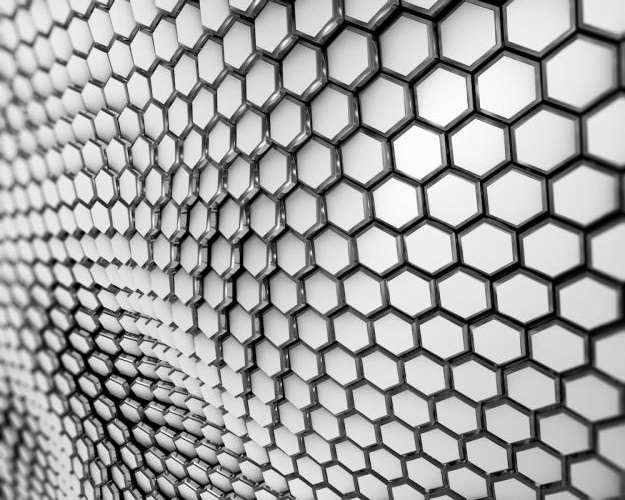
Rhombohedral hexalayer graphene, in which six carbon sheets are stacked with a slight lateral offset like staircase steps, hosts both superconductivity and electrically controllable orbital magnetism, researchers report in Nature Physics. The arrangement yields a rich collection of quantum states in a simple carbon-based material, positioning rhombohedral multilayer graphene as a platform for probing the fundamental mechanisms of superconductivity and magnetism and potentially for new ways of…
This week in nanotech
$109M raised
3 funding rounds · 18 deals tracked
New products
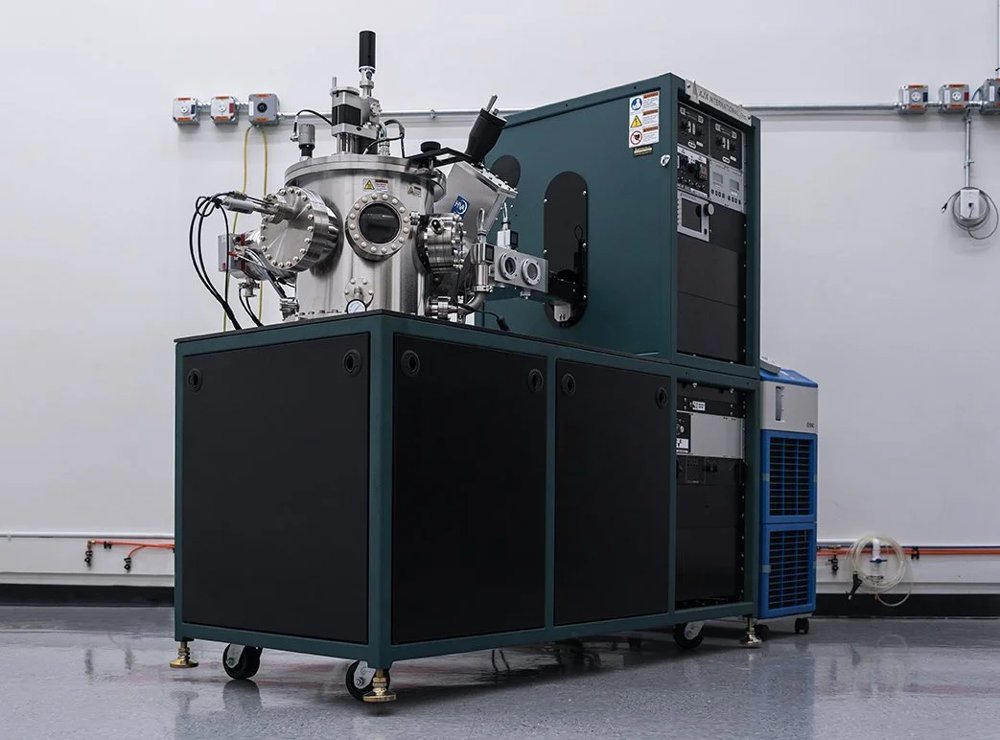 Orion Sputtering Deposition SystemsAJA International Featured
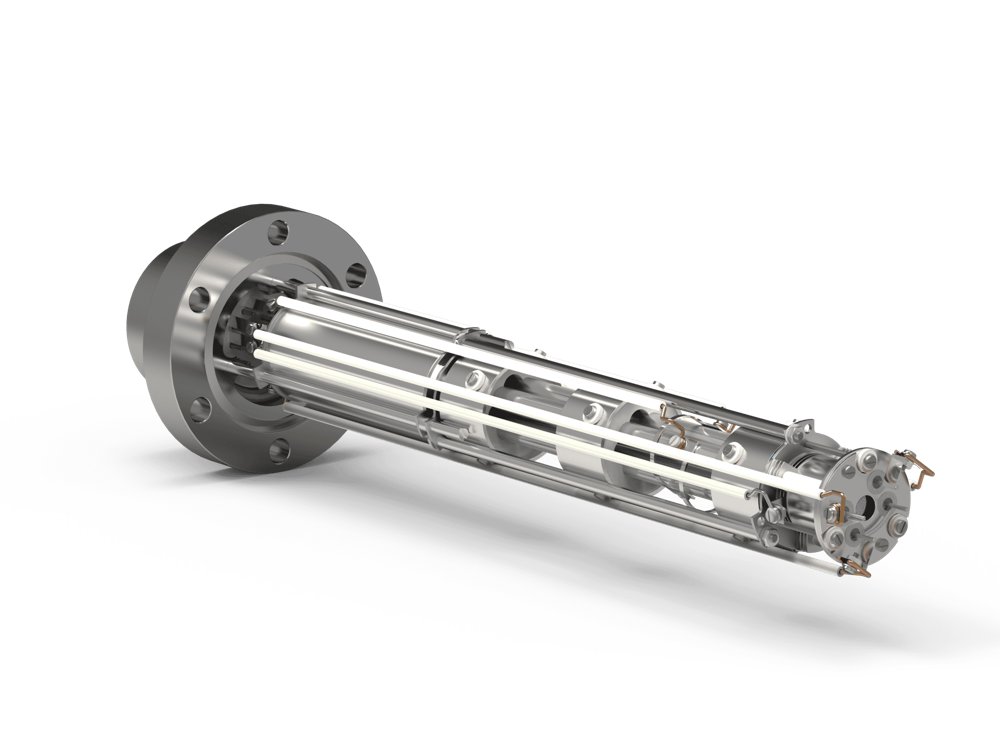 DLS-1 Mass Spectrometer for Fusion Gas AnalysisHiden Analytical Featured
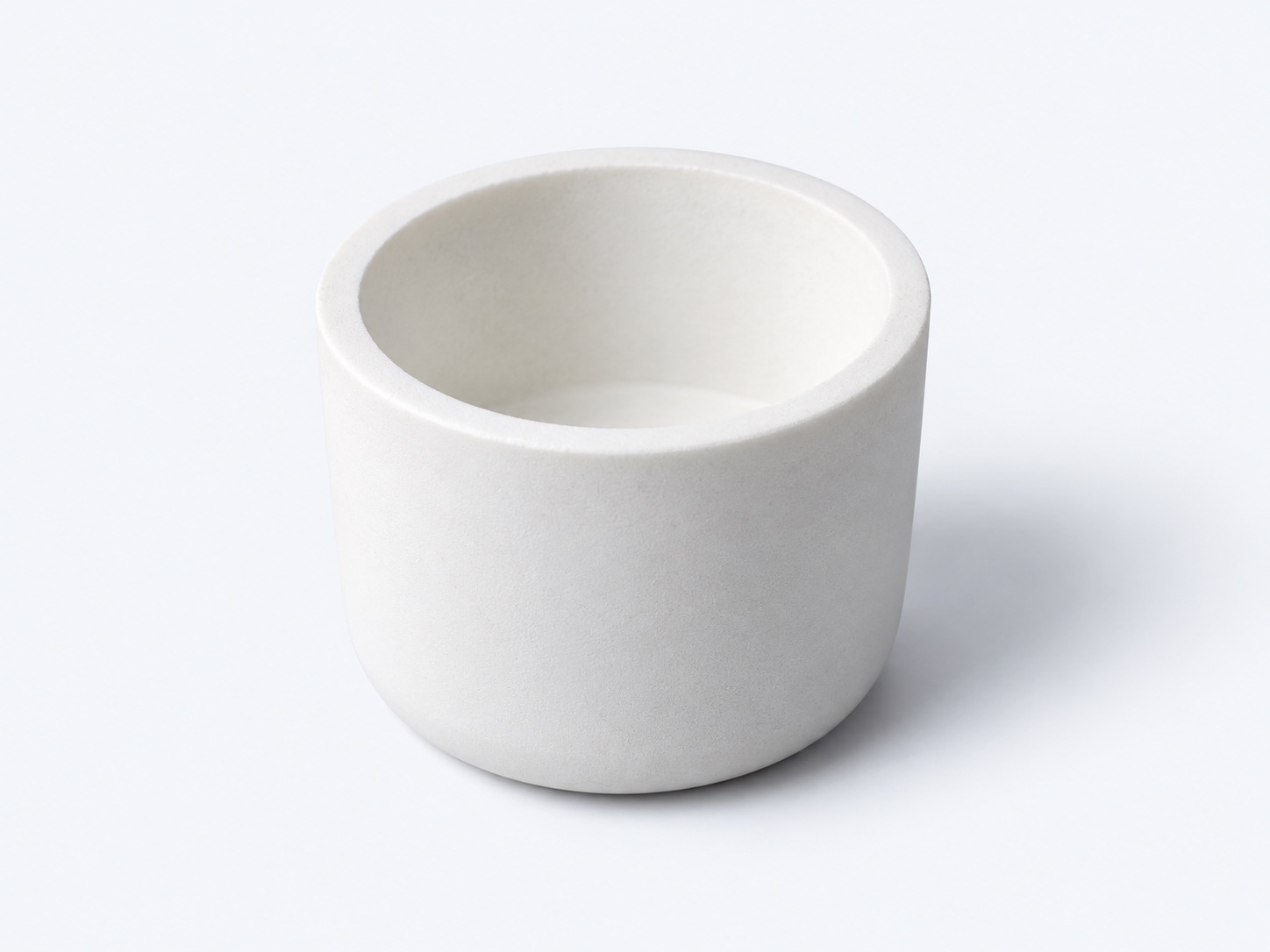 CruciblesBasis Materials
Market insights
Last 30 days: Semiconductors & Electronics drew the most money: $545M.
Money raised per month