
Izon Science Ltd has announced the first major update to its Pulsoid nanoparticle measurement instrument, which the company launched in February 2026. New software takes the lower measurement limit down to 30 nm, and a new chip for larger particles extends the range up to 210 nm.
The software releases, Pulsoid Control Suite (PCS) 1.4.0 and Izon Data Suite 2 (IDS) 2.6.0, give a higher signal-to-noise ratio, so small particles stand out more clearly from background noise. The existing chip now measures particles as small as 30 nm with no change to the chip itself. The company said a 40 nm calibration standard (CPN40), previously at the edge of the range, now sits comfortably within it. IDS 2.6.0 also imports and exports data faster.
The new chip, P5T, measures 45 to 210 nm. It has a larger nanopore than P4T (previously known as SC80), making it easier and faster to run, and it still measures down to 45 nm. Together the two chips cover 30 to 210 nm. P5T chips are available to order through the Izon online store or a local Izon contact, and the company recommends starting with P5T unless particles are smaller than about 45 nm.
The Pulsoid measures particles one at a time as they pass through a fixed nanopore, a method Izon calls Nanopore Pulse Sensing (NPS). It provides size (volume and diameter), concentration and zeta potential data. The company said the update makes the instrument suited to extracellular vesicles, bacteriophages and lipid nanoparticles, and requires only 65 µL of sample.
In data from Professor Wojciech Chrzanowski's lab in Sydney, an unpurified bacteriophage sample gave a sharp peak at about 75 nm, separated from a smaller background population. "Pulsoid has been particularly valuable for analysing complex, non-spherical particle systems such as bacteriophages and hybrid conjugates with extracellular vesicles and nanoparticles," said Professor Wojciech Chrzanowski of Sydney Pharmacy School, The University of Sydney.
Source: Izon Science Ltd news
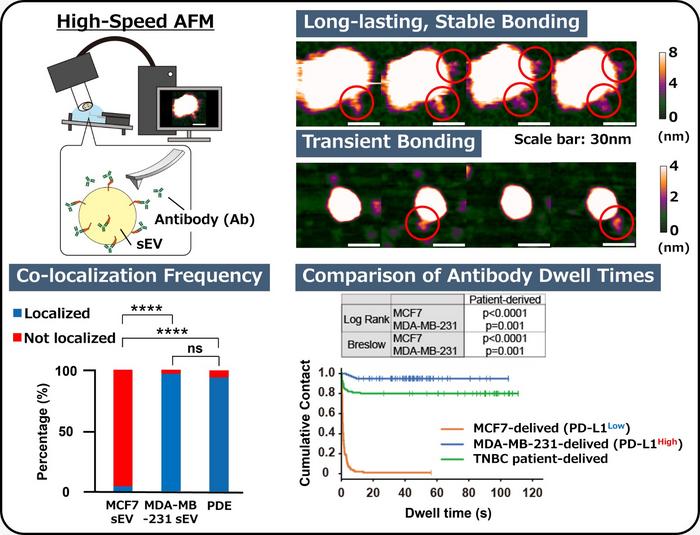
High-speed atomic force microscopy has revealed that the amount of PD-L1 on cancer-derived extracellular vesicles does not indicate how accessible the protein is to antibodies. Researchers at Kanazawa University imaged individual vesicles from two breast cancer cell lines in liquid, finding that over 80 percent of high-PD-L1 vesicles held antibodies persistently, while most low-PD-L1 vesicles showed no stable binding.
NanoFCM has approved RoosterBio to provide contract analytical services worldwide using the NanoAnalyzer platform. RoosterBio is the first US-based service provider approved by NanoFCM for this work.
NanoImages has published a guide to choosing among the five analytical add-ons for its SNE-Alpha benchtop SEM: EDS, Raman, EBSD, CL and EBIC. The guide lists what each technique answers and its limits.
This week in nanotech
$13.6M raised
2 funding rounds · 22 deals tracked
New products
 Ti-WCMBN Nanomaterialia Featured
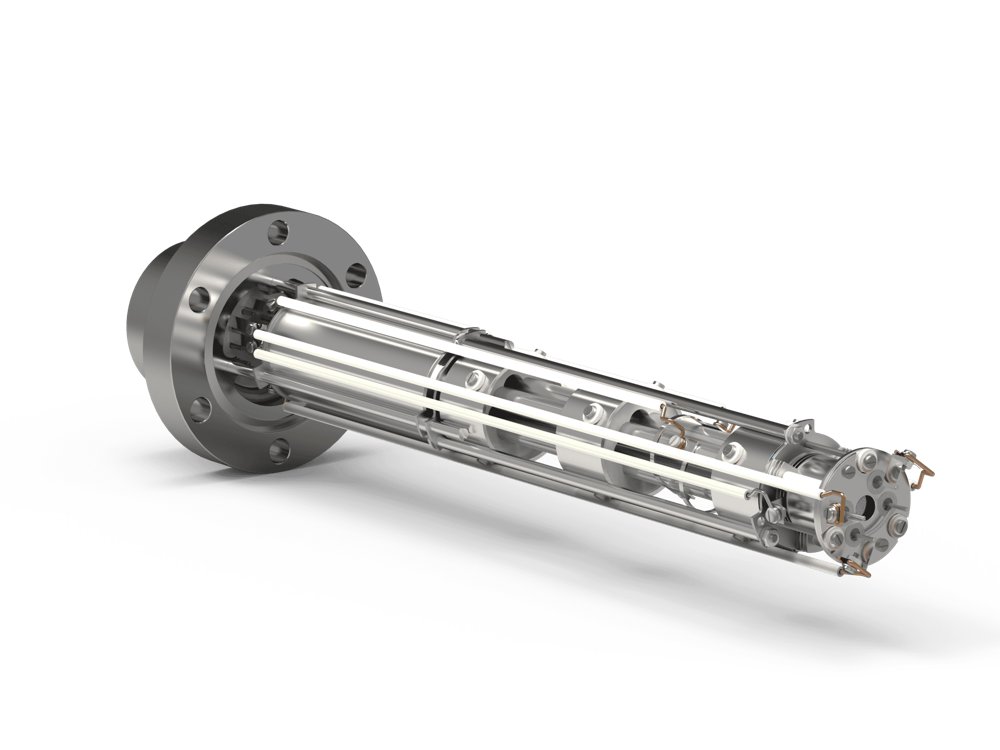 DLS-1 Mass Spectrometer for Fusion Gas AnalysisHiden Analytical Featured
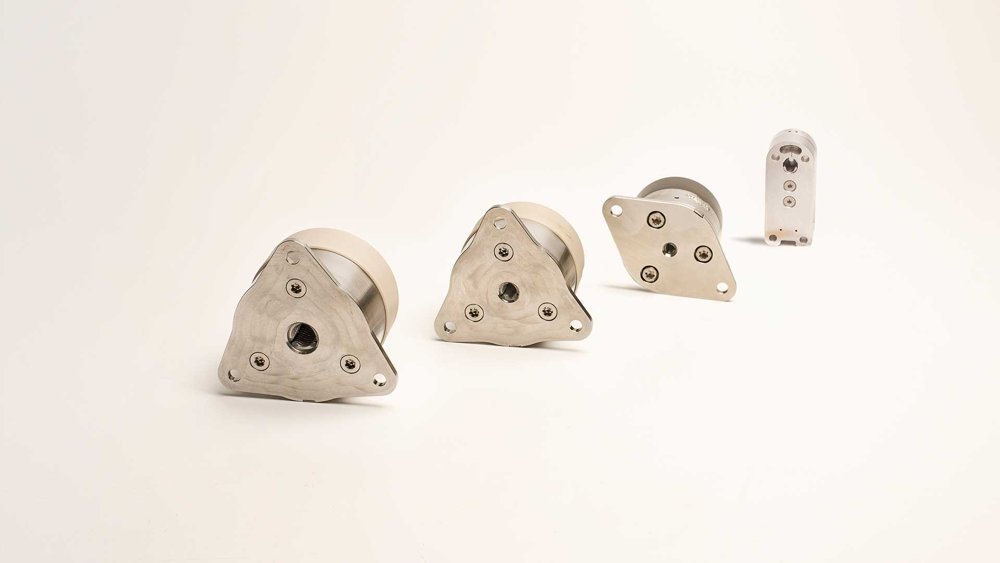 Hold Down & Release Mechanisms (HDRM) REACT – 5KN, 15KN and 35KN space qualified resettable mechanismsARQUIMEA
Market insights
Last 30 days: Quantum Technologies was the busiest vertical: 63 of 197 events (32%).
Money raised per month
Behind the deal
Who led Sandia National Laboratories’s $3.4M Grant?
See the investors with Insights Pro →