The silicon microchips of future quantum computers will be packed with millions, if not billions of qubits – the basic units of quantum information – to solve the greatest problems facing humanity. And with millions of qubits needing millions of wires in the microchip circuitry, it was always going to get cramped in there.
But now engineers at UNSW Sydney have made an important step towards solving a long-standing problem about giving their qubits more breathing space -- and it all revolves around jellybeans.
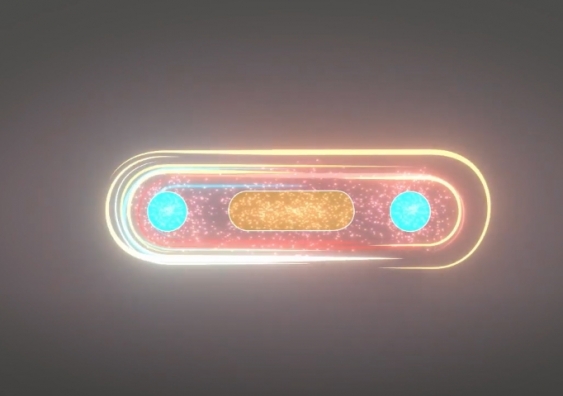
Not the kind we rely on for a sugar hit to get us past the 3pm slump. But jellybean quantum dots –elongated areas between qubit pairs that create more space for wiring without interrupting the way the paired qubits interact with each other.
@ UNSW Sydney
As lead author Associate Professor Arne Laucht explains, the jellybean quantum dot is not a new concept in quantum computing, and has been discussed as a solution to some of the many pathways towards building the world’s first working quantum computer.
“It has been shown in different material systems such as gallium arsenide. But it has not been shown in silicon before,” he says.
Silicon is arguably one of the most important materials in quantum computing, A/Prof. Laucht says, as the infrastructure to produce future quantum computing chips is already available, given we use silicon chips in classical computers. Another benefit is that you can fit so many qubits (in the form of electrons) on the one chip.
“But because the qubits need to be so close together to share information with one another, placing wires between each pair was always going to be a challenge.”
In a study recently published in Advanced Materials, the UNSW team of engineers describe how they showed in the lab that jellybean quantum dots were possible in silicon. This now opens the way for qubits to be spaced apart to ensure that the wires necessary to connect and control the qubits can be fit in between.
How it works
In a normal quantum dot using spin qubits, single electrons are pulled from a pool of electrons in silicon to sit under a ‘quantum gate’ – where the spin of each electron represents the computational state. For example, spin up may represent a 0 and spin down could represent a 1. Each qubit can then be controlled by an oscillating magnetic field of microwave frequency.
But to implement a quantum algorithm, we also need two-qubit gates, where the control of one qubit is conditional on the state of the other. For this to work, both quantum dots need to be placed very closely, just a few 10s of nanometres apart so their spins can interact with one another. (To put this in perspective, a single human hair is about 100,000 nanometres thick.)
But moving them further apart to create more real estate for wiring has always been the challenge facing scientists and engineers. The problem was as the paired qubits move apart, they would then stop interacting.
The jellybean solution represents a way of having both: nicely spaced qubits that continue to influence one another. To make the jellybean, the engineers found a way to create a chain of electrons by trapping more electrons in between the qubits. This acts as the quantum version of a string phone so that the two paired qubit electrons at each end of the jellybean can continue to talk to another. Only the electrons at each end are involved in any computations, while the electrons in the jellybean dot are there to keep them interacting while spread apart.
The lead author of the paper, former PhD student Zeheng Wang says the number of extra electrons pulled into the jellybean quantum dot is key to how they arrange themselves.
“We showed in the paper that if you only load a few electrons in that puddle of electrons that you have underneath, they break into smaller puddles. So it's not one continuous jellybean quantum dot, it's a smaller one here, and a bigger one in the middle and a smaller one there. We’re talking of a total of three to maybe ten electrons.
“It’s only when you go to larger numbers of electrons, say 15 or 20 electrons, that the jellybean becomes more continuous and homogeneous. And that's where you have your well-defined spin and quantum states that you can use to couple qubits to another.”
Post-jellybean quantum world
A/Prof. Laucht stresses that there is still much work to be done. The team’s efforts for this paper focused on proving the jellybean quantum dot is possible. The next step is to insert working qubits at each end of the jellybean quantum dot and make them talk to another.
“It is great to see this work realised. It boosts our confidence that jellybean couplers can be utilised in silicon quantum computers, and we are excited to try implementing them with qubits next.”
Reference
Jellybean Quantum Dots in Silicon for Qubit Coupling and On-Chip Quantum Chemistry
Zeheng Wang, MengKe Feng, Santiago Serrano, William Gilbert, Ross C. C. Leon, Tuomo Tanttu, Philip Mai, Dylan Liang, Jonathan Y. Huang, Yue Su, Wee Han Lim, Fay E. Hudson, Christopher C. Escott, Andrea Morello, Chih Hwan Yang, Andrew S. Dzurak, Andre Saraiva, Arne Laucht
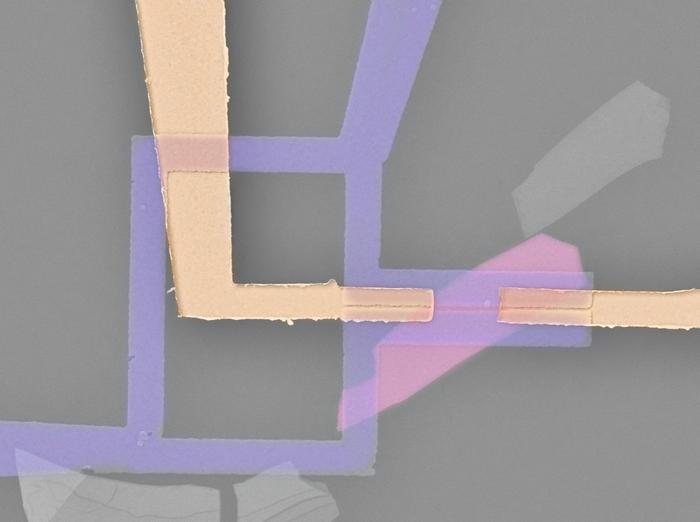
Physicists at the University of Cologne have observed quantum states in a topological insulator Josephson junction that match theoretical predictions, using tunneling spectroscopy to probe highly transmissive Andreev states across a range of charge-carrier densities. The results support a long-standing model of how superconductivity interacts with topological surface states, a key step toward Majorana zero modes and topological qubits.
Infleqtion operated its Tiqker optical atomic clock continuously for two weeks aboard the U.S. Navy's RV Merlin during the Maritime Big Play Pacific exercise, in the Southern California operating area.

IQM Quantum Computers said its cloud-accessible IQM Emerald system fully entangled all 54 qubits simultaneously. The company reported a fidelity of 0.516 at the full 54 qubits with readout error mitigation applied.
This week in nanotech
$548.4M raised
2 funding rounds · 19 deals tracked
New products
 Ti-WCMBN Nanomaterialia Featured
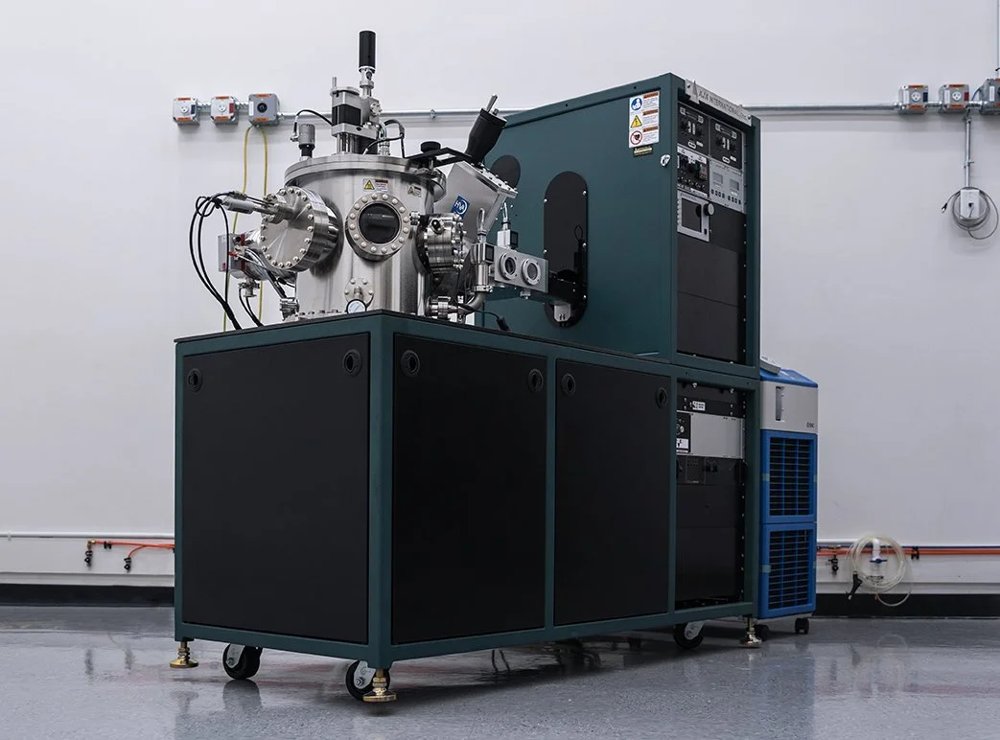 Orion Sputtering Deposition SystemsAJA International Featured
 Aether®Lam Research
Market insights
Last 30 days: Quantum Technologies drew the most money: $2.15B.
Money raised per month
Behind the deal
Who led Qilimanjaro Quantum Tech’s $21.9M Series A?
See the investors with Insights Pro →