Johns Hopkins University
Quantum computers with the ability to perform complex calculations, encrypt data more securely and more quickly predict the spread of viruses, may be within closer reach thanks to a new discovery by Johns Hopkins researchers.
"We've found that a certain superconducting material contains special properties that could be the building blocks for technology of the future," says Yufan Li, a postdoctoral fellow in the Department of Physics & Astronomy at The Johns Hopkins University and the paper's first author.
The findings will be published October 11 in Science.
Today's computers use bits, represented by an electrical voltage or current pulse, to store information. Bits exist in two states, either "0" or "1." Quantum computers, based on the laws of quantum mechanics, use quantum bits, or qubits, which do not only use two states, but a superposition of two states.
This ability to use such qubits makes quantum computers much more powerful than existing computers when solving certain types of problems, such as those relating to artificial intelligence, drug development, cryptography, financial modeling and weather forcasting.
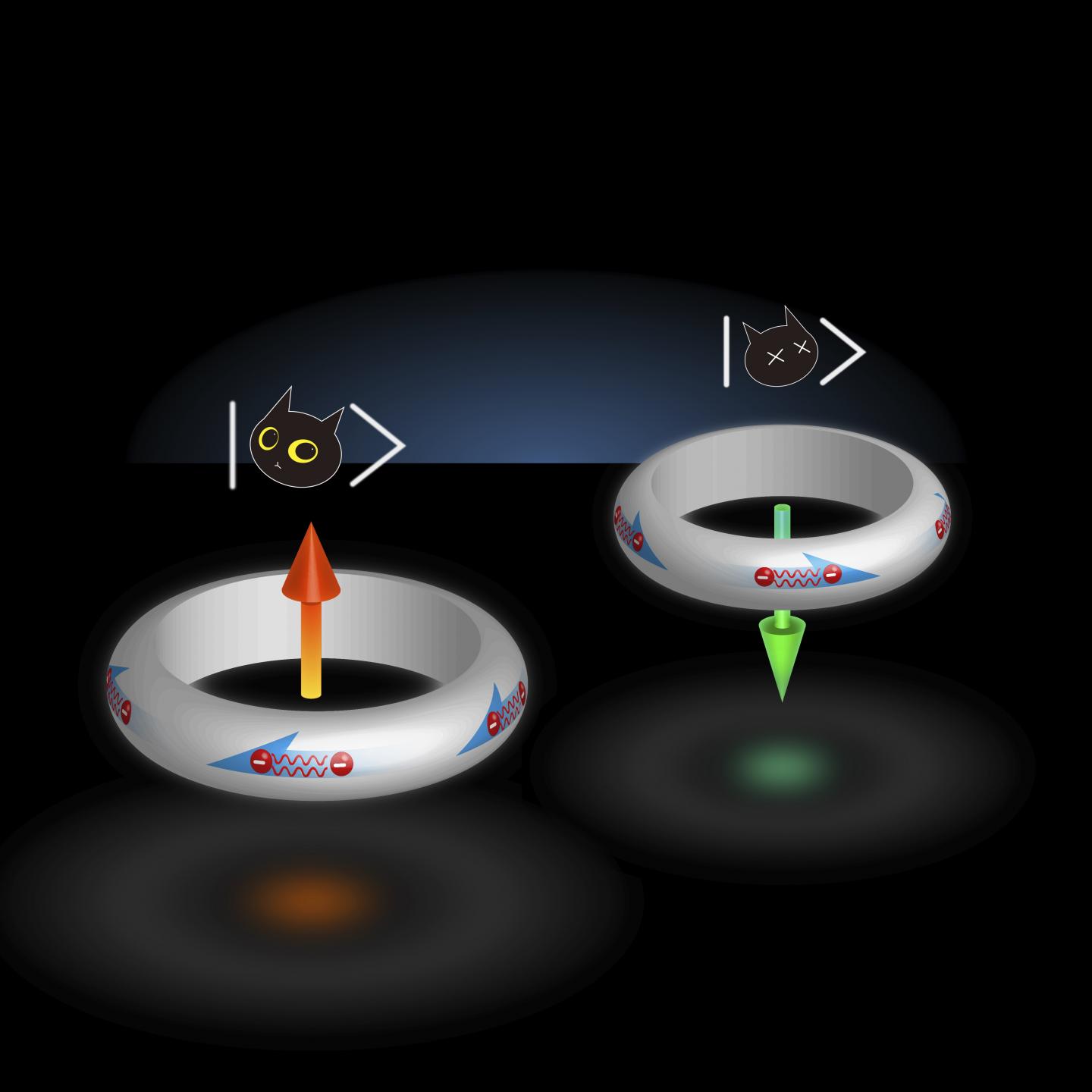
A famous example of qubit is Schrodinger's cat, a hypothetical cat that may be simultaneously dead and alive.
"A more realistic, tangible implementation of qubit can be a ring made of superconducting material, known as flux qubit, where two states with clockwise- and counterclockwise-flowing electric currents may exist simultaneously," says Chia-Ling Chien, Professor of Physics at The Johns Hopkins University and another author on the paper. In order to exist between two states, qubits using traditional superconductors require a very precise external magnetic field be applied on each qubit, thus making them difficult to operate in a practical manner.
In the new study, Li and colleagues found that a ring of β-Bi2Pd already naturally exists between two states in the absence of an external magnetic field. Current can inherently circulate both clockwise and counterclockwise, simultaneously, through a ring of β-Bi2Pd.
Adds Li: "A ring of β-Bi2Pd already exists in the ideal state and doesn't require any additional modifications to work. This could be a game changer."
The next step, says Li, is to look for Majorana fermions within β-Bi2Pd; Majorana fermions are particles that are also anti-particles of themselves and are needed for the next level of disruption-resistant quantum computers: topological quantum computers.
Majorana fermions depend on a special type of superconducting material--a so-called spin-triplet superconductor with two electrons in each pair aligning their spins in a parallel fashion--that has thus far been elusive to scientists. Now, through a series of experiments, Li and colleagues found that thin films of β-Bi2Pd have the special properties necessary for the future of quantum computing.
Scientists have yet to discover the intrinsic spin-triplet superconductor needed to advance quantum computing forward, but Li is hopeful that the discovery of β-Bi2Pd's special properties, will lead to finding Majorana fermions in the material next.
"Ultimately, the goal is to find and then manipulate Majorana fermions, which is key to achieving fault-tolerant quantum computing for truly unleashing the power of quantum mechanics," says Li.
Observation of half-quantum flux in the unconventional superconductor β-Bi2Pd
Yufan Li, Xiaoying Xu, M.-H. Lee, M.-W. Chu, C. L. Chien
Science, 2019
Contact information:
Chia-Ling Chien
Professor of Physics at The Johns Hopkins University
clchien@jhu.edu
Phone: 410-516-8092
AMD and IQM demonstrated a hybrid chemistry workflow that splits a problem between an IQM quantum computer and an AMD GPU powered by ROCm. The full QSCI pipeline ran on hydrogen on real hardware.
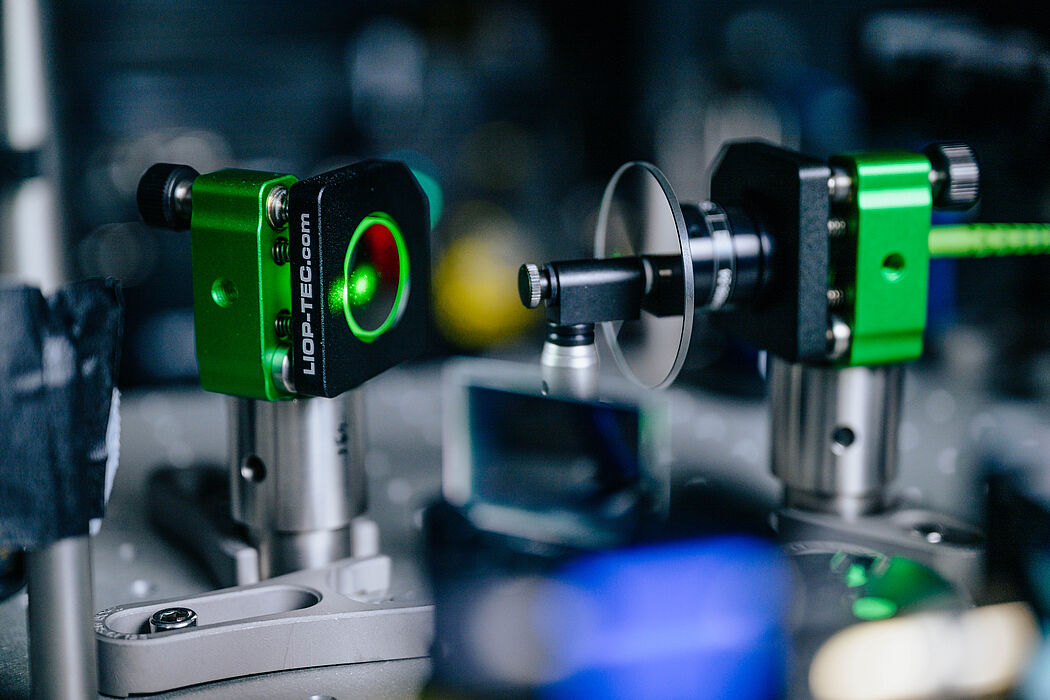
An international team has demonstrated photonic entanglement swapping between entangled photon pairs from two separate gallium arsenide quantum dots, teleporting entanglement between photons that never interacted. Reported in Science Advances, the work reached a fidelity of up to 0.71, well above the classical limit, using on-demand quantum emitters integrated into circular Bragg resonators and tuned with piezoelectric actuators.
IonQ and Carahsoft Technology Corp. announced a strategic partnership. Carahsoft will serve as IonQ's Public Sector distributor, enabling Government agencies to purchase IonQ technology through its reseller partners.
This week in nanotech
9 deals tracked
New products
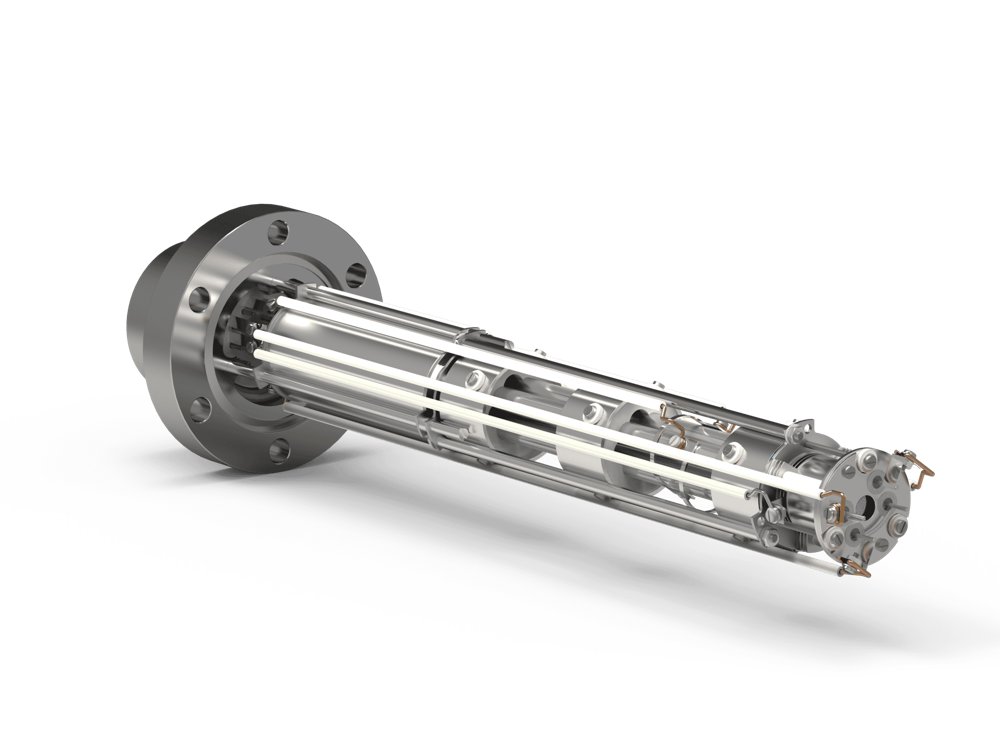 DLS-1 Mass Spectrometer for Fusion Gas AnalysisHiden Analytical Featured
 Ti-WCMBN Nanomaterialia Featured
 NanoFlow® S1-20Levidian
Market insights
Last 30 days: Semiconductors & Electronics was the busiest vertical: 39 of 130 events (30%).
Money raised per month
Behind the deal
Who led Sandia National Laboratories’s $3.4M Grant?
See the investors with Insights Pro →