International research team demonstrates key component for quantum repeaters
In future, quantum communication networks are set to enable the exchange of quantum states between widely separated locations. So-called quantum repeaters are a key component of this. They are designed to establish entanglement – a special quantum-physical connection between particles – across several links. The necessary linking of individual connections is achieved through a complex process known as ‘entanglement swapping’. An international research team, including researchers from Paderborn University, has now reached an important milestone: For the first time, ‘photonics entanglement swapping’ has been demonstrated using entangled photon pairs from two separate semiconductor quantum dots. In this process, two photons are entangled with one another, even though they were not previously entangled. The results have now been published in the journal ‘Science Advances’.
Entangling two photons that have never encountered each other
In the experiment, two separate gallium arsenide quantum dots each generate an entangled pair of photons: photons 1 and 2 form one pair, whilst photons 3 and 4 form the other. The photons 2 and 3 are then made to interfere and are subjected together to a so-called Bell-state measurement. A corresponding measurement result leads to the remaining photons 1 and 4 becoming entangled with one another – even though they have never directly interacted with one another.
“In this process, the entanglement between two originally separate pairs of photons is re-linked,” explains Dr. Klaus Jöns from Paderborn University. “It is precisely this capability that we need to combine individual quantum connections into larger networks.” The team achieved a match with the desired entangled state – known as ‘fidelity’ – of up to 0.71 ± 0.02. This result lies more than ten statistical standard deviations above the classical limit of 0.5 and clearly demonstrates the successful transmission of entanglement. The protocol was implemented at event rates in the hertz range.
Light on demand instead of random pair generation
Previous demonstrations of purely photonic entanglement swapping between spatially separated systems relied on probabilistic light sources. These generate photon pairs according to a random process. If their excitation is increased to obtain more pairs, unwanted multiple pairs are also generated more frequently, which can impair the quality of the entanglement. Quantum dots offer a decisive advantage here: as quantum emitters that can be selectively excited, they can generate entangled photon pairs on demand without being subject to the same fundamental trade-off between pair generation rate and entanglement quality. This makes them particularly interesting for larger quantum networks. The entire entanglement-swapping operation still only succeeds if the measurement results are suitable. However, the on-demand generation of photon pairs is an important prerequisite for their future scaling.
A milestone with a history stretching back more than ten years
For Prof. Jöns, this result builds on a long-standing joint research agenda. As early as 2014, he developed a roadmap for the use of quantum dots in quantum repeaters together with Prof. Dr Rinaldo Trotta (Rome) and Prof. Dr Armando Rastelli (Linz). The transmission of entanglement between photons from two separate quantum dots, which has now been demonstrated, was one of the key milestones. “Since our initial considerations, quantum dot light sources have advanced enormously,” says Prof. Jöns. “Today, we can control their properties so precisely that photons from two different quantum dots become virtually indistinguishable. This is essential for them to interfere with one another and for us to be able to transmit entanglement.”
Precise nanofabrication as the basis
Stress-free gallium arsenide quantum dots are used in circular Bragg resonators. These structures enable the emitted light to be collected efficiently. The quantum dots are specifically integrated into hybrid semiconductor-piezo devices. With the aid of triaxial piezoelectric actuators, their properties can be tuned so that the photons from the two different emitters become virtually identical. The necessary development and nanofabrication were made possible through collaboration between Sapienza University of Rome, the University of Würzburg, Vorarlberg University of Applied Sciences and Johannes Kepler University Linz. It was only the interplay of high-quality quantum dots, efficient light extraction and precise tuning that created the conditions for this complex quantum-optical experiment.
The results open up a way to utilise on-demand excitable sources of entangled photons based on quantum dots for quantum repeater networks. A complete quantum repeater has not yet been realised – but a key component for this has now been demonstrated.
Reference
Photonic entanglement swapping with remote quantum dots
Mattia Beccaceci, Giuseppe Ronco, Fabrizio Cienzo, Pierpaolo Bassetti, Alessandro Laneve, Francesco Basso Basset, Tobias M. Krieger, Thomas Oberleitner, Quirin Buchinger, Francesco Salusti, Barbara Souza Damasceno, Silke Kuhn, Saimon F. Covre da Silva, Sandra Stroj, Klaus D. Jöns, Sven Höfling, Tobias Huber-Loyola, Armando Rastelli, Michele B. Rota, and Rinaldo Trotta
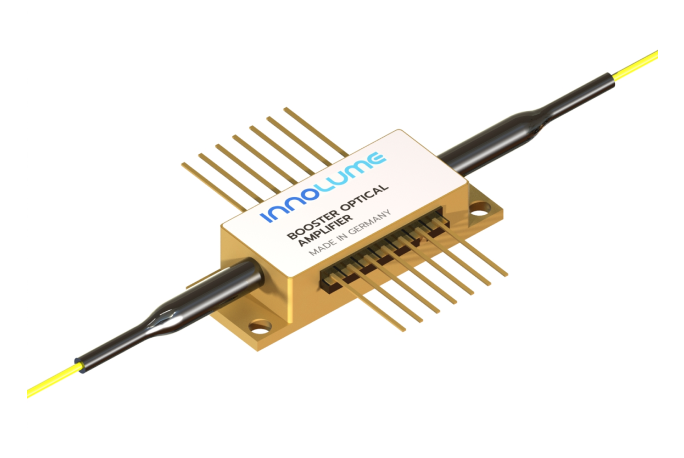
Innolume has introduced the BOA1260050YY950MXXXX, a commercially available booster optical amplifier delivering 950 mW CW fiber-coupled output power at 1260 nm on a GaAs quantum-dot platform.
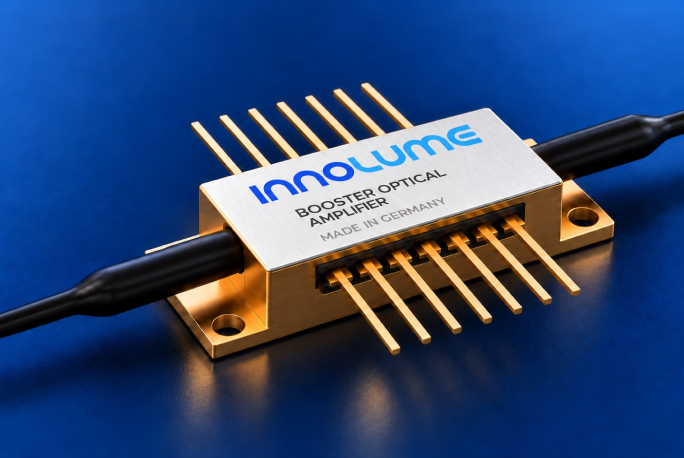
Innolume has introduced the BOA1310070YY850MXXXX, an O-band booster optical amplifier delivering 850 mW CW ex-fiber at 1310 nm with a 70 nm 3-dB gain bandwidth in a 14-pin butterfly package.
IonQ has received $7.5 million in follow-on funding from the Air Force Research Laboratory. The Phase 2 contract expands the first-generation quantum network IonQ delivered in Rome, New York.
This week in nanotech
$9M raised
1 funding round · 22 deals tracked
New products
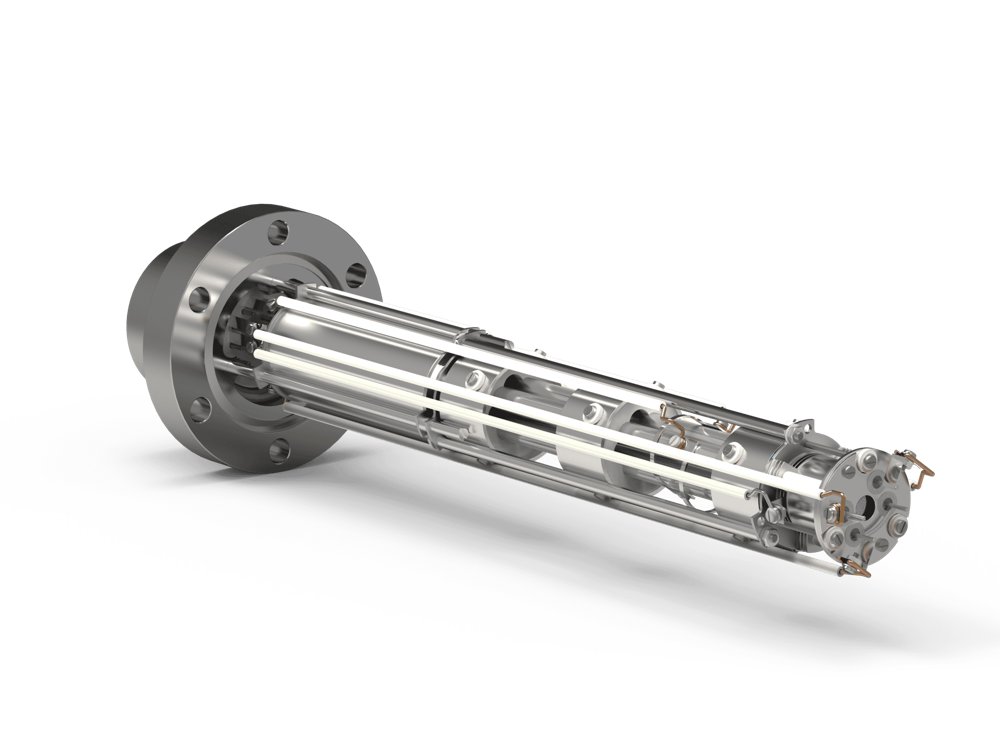 DLS-1 Mass Spectrometer for Fusion Gas AnalysisHiden Analytical Featured
 Ti-WCMBN Nanomaterialia Featured
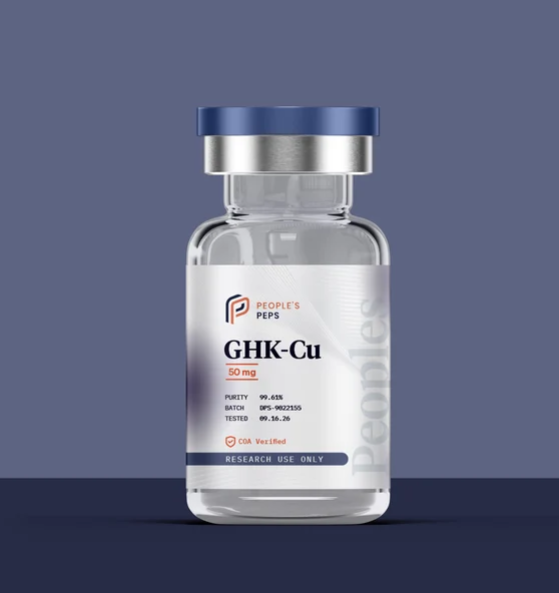 GHK-CuPeoples Peps
Market insights
Last 30 days: Quantum Technologies was the busiest vertical: 59 of 192 events (31%).
Money raised per month