The Korea Advanced Institute of Science and Technology (KAIST)
When using electric vehicles or smartphones, users often experience inconvenience from long charging times and gradually shortening battery life. To increase charging speed and extend usage time, next-generation batteries with high energy density are essential. However, fast charging has had limitations because deposits can accumulate inside batteries, degrading performance and even increasing the risk of fire. A Korean research team has developed a new foundational technology to address this problem by creating a “highway” through which lithium ions can move rapidly inside a battery.
KAIST (President Choongsik Bae) announced on November 9 that a joint research team led by Professors Dong Ki Yoon and Hye Ryung Byon from the Department of Chemistry developed a next-generation battery separator technology that precisely controls lithium-ion transport pathways by regulating the molecular alignment of liquid-crystalline polymers.
Lithium metal batteries can store more energy than conventional batteries. However, during charging, lithium can accumulate in sharp, branch-like structures known as “dendrites.” This phenomenon has been a major cause of reduced battery life and can damage the internal separator, potentially leading to explosions.
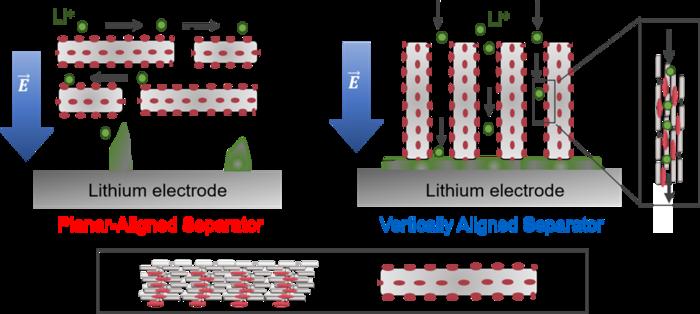
The research team sought to solve this problem using liquid crystal materials, which combine the ordered characteristics of solids with the fluidity of liquids. Because the orientation of liquid crystal molecules can be altered through surface treatment and other methods, the researchers used this property to regularly align the pathways through which lithium ions travel.
Based on this liquid-crystal alignment control technology, the team also created a porous liquid-crystalline polymer separator containing nanoscale pores. Polyethylene glycol (PEG) chains, which facilitate lithium-ion transport, were incorporated into the separator. In particular, the researchers freely controlled the alignment direction of the liquid-crystal molecules either vertically or horizontally and compared the resulting lithium-ion transport characteristics.
The results showed that the liquid-crystalline polymer separator with vertically aligned molecules formed a kind of “highway” that allowed lithium ions to move directly toward the electrodes. Compared with a horizontally aligned separator, it reduced the tortuosity of the ion transport pathway by approximately 2.5-fold, enabling lithium ions to move much faster and more uniformly. This effectively suppressed dendrite formation and significantly improved stability.
The research team applied the newly developed separator to an actual lithium metal battery and verified its fast-charging performance. Even under demanding fast-charging conditions at a high charging rate of 4 C*, the battery retained 94% of its initial capacity after 100 charge-discharge cycles. This demonstrates that controlling the molecular alignment of liquid-crystalline polymers can be a highly effective strategy for improving both the charging speed and lifespan of next-generation batteries.
*4C charging rate: A rate at which a battery can theoretically be fully charged in approximately 15 minutes based on its rated capacity. C is a unit indicating the charging and discharging rate of a battery: 1C corresponds to 1 hour, 2C to 30 minutes, and 4C to 15 minutes.
Professor Dong Ki Yoon said, “This study demonstrates that controlling the molecular alignment of liquid-crystalline polymers can be used to efficiently design lithium-ion transport pathways and thereby improve battery performance and stability,” adding, “We expect this approach to contribute to the development of high-energy-density next-generation battery technologies, for which long driving ranges and rapid charging are essential.”
Reference
Directional Li+ Flux Control via Liquid-Crystalline Polymer Separators for Fast-Charging Lithium Metal Batteries
Geunjung Lee†, Rak Hyeon Choi†, Geonhyeong Park, Juri Kim, Younwoo Kim, Hye Ryung Byon*, Dong Ki Yoon*
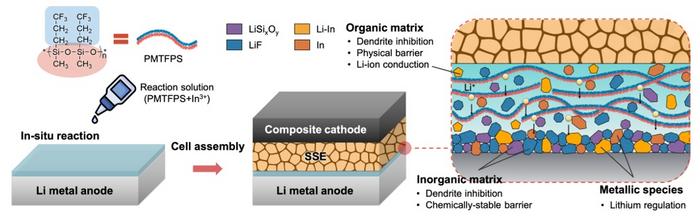
A one-step liquid coating that converts into a 12-micrometer hybrid film on lithium metal could bring solid-state batteries closer to practical use. The polysiloxane and indium chloride layer forms lithium fluoride and lithium-indium alloy nanoparticles in situ, suppressing dendrite growth. Protected anodes reached 3.5 mA cm-2 critical current density and retained 82.3% capacity after 300 cycles in full cells with a sulfide electrolyte and NCM cathode, versus 43.0% for bare lithium.
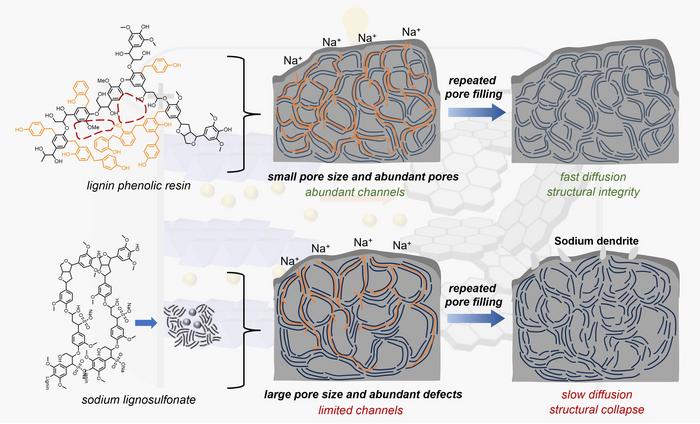
Lignin-derived hard carbon anodes could make sodium-ion batteries charge faster and last longer, according to work from Guangdong University of Technology. By tuning precursor chemistry, researchers produced hard carbons with pore diameters near 1.5 to 2 nm and mapped how pore geometry governs sodium storage. Smaller, denser closed pores lower the energy needed to form sodium clusters and speed ion diffusion, while large defective pores degrade cycling and raise dendrite risk.
Researchers at the University of Córdoba have used vitamin B12, or cobalamin, as a catalyst in a zinc-air battery for the first time, anchoring the biomolecule to single-walled carbon nanotubes to keep it stable in an aqueous electrolyte. The cobalt at its core drives oxygen reduction on discharge and oxygen production on recharge, enabling up to 250 cycles.
This week in nanotech
9 deals tracked
New products
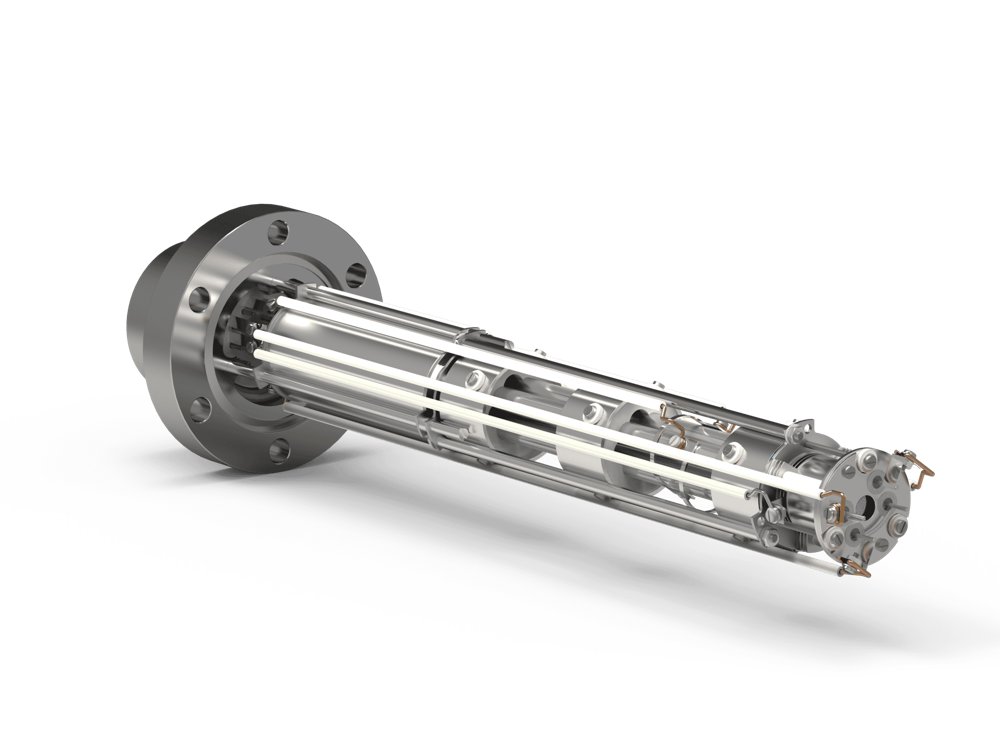 DLS-1 Mass Spectrometer for Fusion Gas AnalysisHiden Analytical Featured
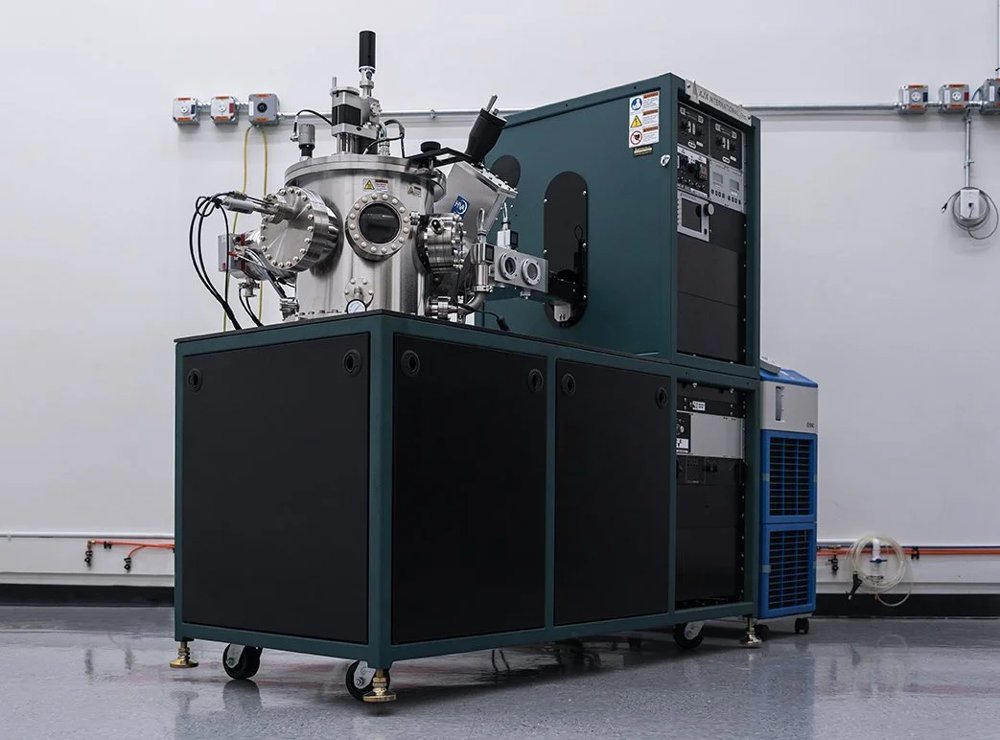 Orion Sputtering Deposition SystemsAJA International Featured
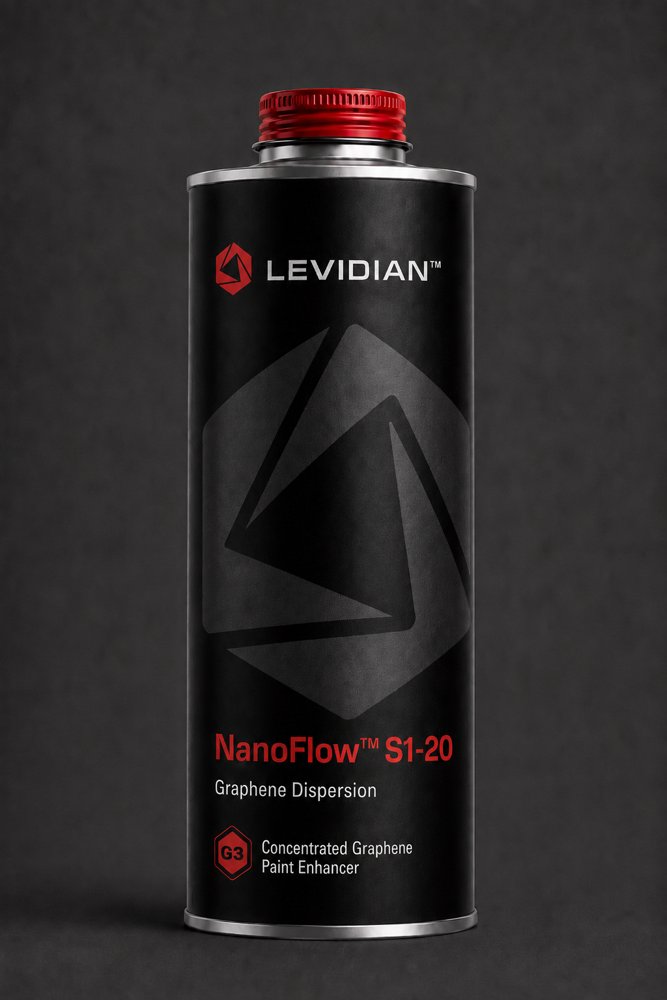 NanoFlow® S1-20Levidian
Market insights
Last 30 days: Semiconductors & Electronics was the busiest vertical: 39 of 130 events (30%).
Money raised per month