University of Córdoba
Vitamin B12 is a vitamin essential for the body's proper functioning and is found in foods of animal origin. It is produced by certain bacteria that, in addition to being found in nature, are cultivated at industrial facilities for commercial use, primarily by the food and pharmaceutical industries. It is beneficial when certain nutritional deficiencies are present, and in recent times it has become popular, along with other B vitamins, as a remedy for hangovers, as it can help reduce fatigue. An unusual application may now be added to its established uses in medicine, food, and veterinary science: a team from the University of Córdoba has, for the first time, employed it as a catalyst in the development of a rechargeable battery.
The prototype was designed by researchers with the Physical Chemistry research group (FQM-204) at the Chemical Institute for Energy and the Environment (IQUEMA) of the University of Córdoba. It consists of a zinc-air battery that incorporates vitamin B12, also known as cobalamin, which is anchored to single-walled carbon nanotubes. This configuration facilitates the electrochemical reaction because the vitamin contains cobalt (III) at its core. This is the third time that this group has used a biomolecule as a catalyst, following their previous work on batteries made with haemoglobin and catalase, which contain iron (II) and iron (III), respectively. The major breakthrough is that, in the case of B12, the team has succeeded in making the battery they developed rechargeable, achieving up to 250 charge and discharge cycles.
When selecting the material, "we looked at the properties we can find in naturally occurring materials to use them in new batteries," explained Manuel Cano Luna, author of the study, along with researchers Valentín García Caballero, Miguel López León, Pablo Gómez Argudo, Luis Camacho Delgado, José Miguel Rodríguez Mellado, María Teresa Martín Romero, José Abad López, and Antonio Jesús Fernández Romero. Because it is a highly soluble vitamin, the challenge was to find a way to retain it inside a battery that operates with aqueous electrolytes. The solution was to fix it to carbon nanotubes, simulating "the process by which amino acids bind together in proteins".
Light weight, safe, and sustainable
The study, published in the Journal of Materials Chemistry A, marks another step forward in the search for alternatives to conventional lithium-ion batteries, which rely on raw materials whose extraction poses economic, social, and environmental challenges. In this regard, zinc-air batteries are a promising alternative due to their high energy density and their use of materials such as zinc – which is abundant and recyclable – and oxygen itself. In addition, as they do not need to store all the reactive material inside the battery because they get oxygen from the environment, these batteries are lighter, which is why their use is becoming increasingly widespread in small devices, such as hearing aids. The use of non-flammable aqueous electrolytes also makes them safer.
However, to facilitate the reaction that converts chemical energy into electrical energy, an effective catalyst is needed; in the case of rechargeable batteries, this catalyst must also be capable of performing its function in both directions: charging and discharging. In this case, researcher Antonio Jesús Fernández Romero explained that vitamin B12 "has proven to meet the necessary conditions to act as a good catalyst because, during discharge, it catalyses the reduction of oxygen to water and, during recharging, it promotes the production of oxygen".
This breakthrough paves the way for the development of cheaper and more sustainable energy storage systems that could play key roles in addressing some of the challenges posed by the energy transition, such as creating batteries capable of storing the surplus energy generated by renewable sources.
Reference
A vitamin B12-based air electrode for high-performance rechargeable zinc–air batteries
Valentín García-Caballero, Miguel López-León, Pablo G. Argudo, Luis Camacho, José M. Rodríguez Mellado, Maria T. Martín-Romero, José Abad, Antonio J. Fernández Romero, and Manuel Cano
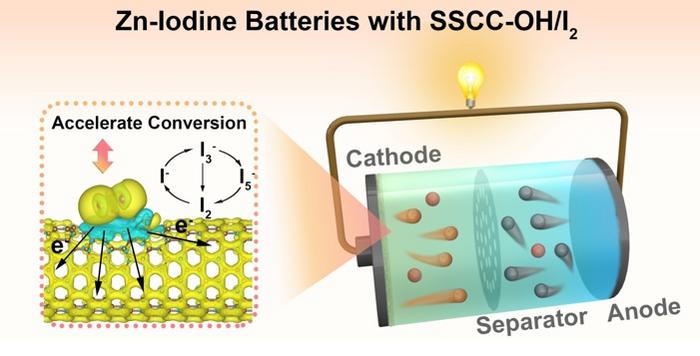
Researchers at Jilin University and the Changchun Institute of Applied Chemistry have shown that hydroxyl functional groups on self-supporting carbon nanotube cathodes stabilize aqueous zinc-iodine batteries. Density functional theory guided the choice of surface groups, and the hydroxyl-modified cathode confined iodine species within its porous nanotube channels. It retained 89.34% of capacity after more than 10,000 cycles and suppressed the iodine shuttle effect.
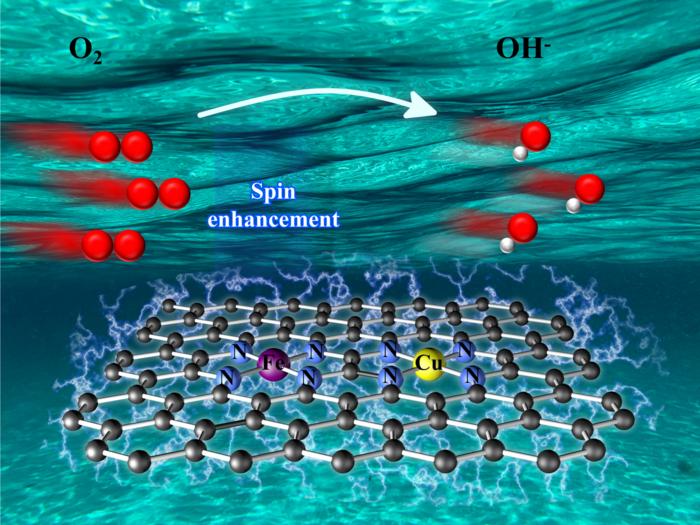
Researchers have developed an FeCu dual-single-atom catalyst in which spatially adjacent CuN4 sites tune the spin state of neighboring FeN4 centers, boosting oxygen adsorption and activation for the oxygen reduction reaction. The catalyst achieved a half-wave potential of 0.88 V versus RHE and outperformed commercial Pt/C in zinc-air battery tests.
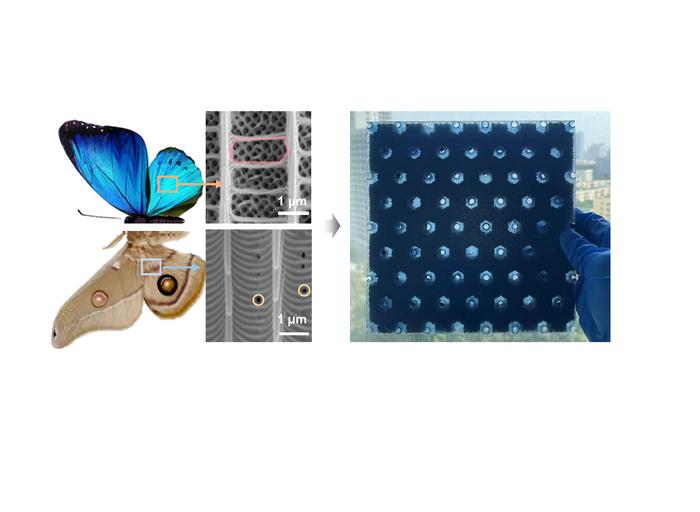
Researchers at Harbin Institute of Technology have printed a 24 mm metamaterial that absorbs impact, shields microwaves and damps low-frequency noise at once. Inspired by butterfly wing scales, it nests a gyroid lattice inside a hexagonal honeycomb, absorbing 21.9 times more impact energy than an equal-weight honeycomb and capturing over 90% of 2-40 GHz radiation and 600-900 Hz sound.
This week in nanotech
$13.6M raised
3 funding rounds · 20 deals tracked
New products
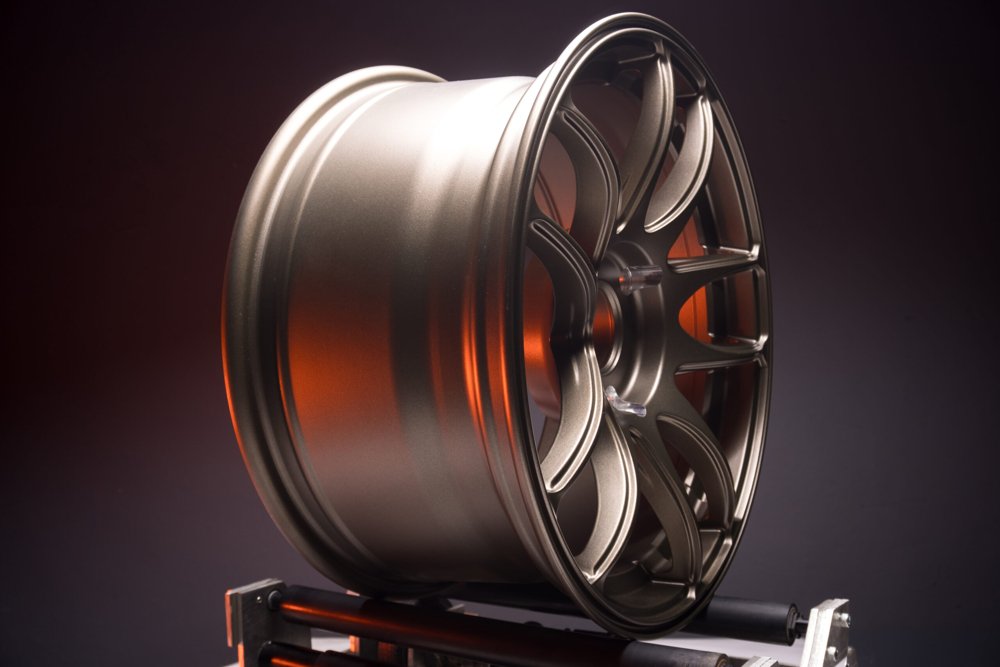 Ti-WCMBN Nanomaterialia Featured
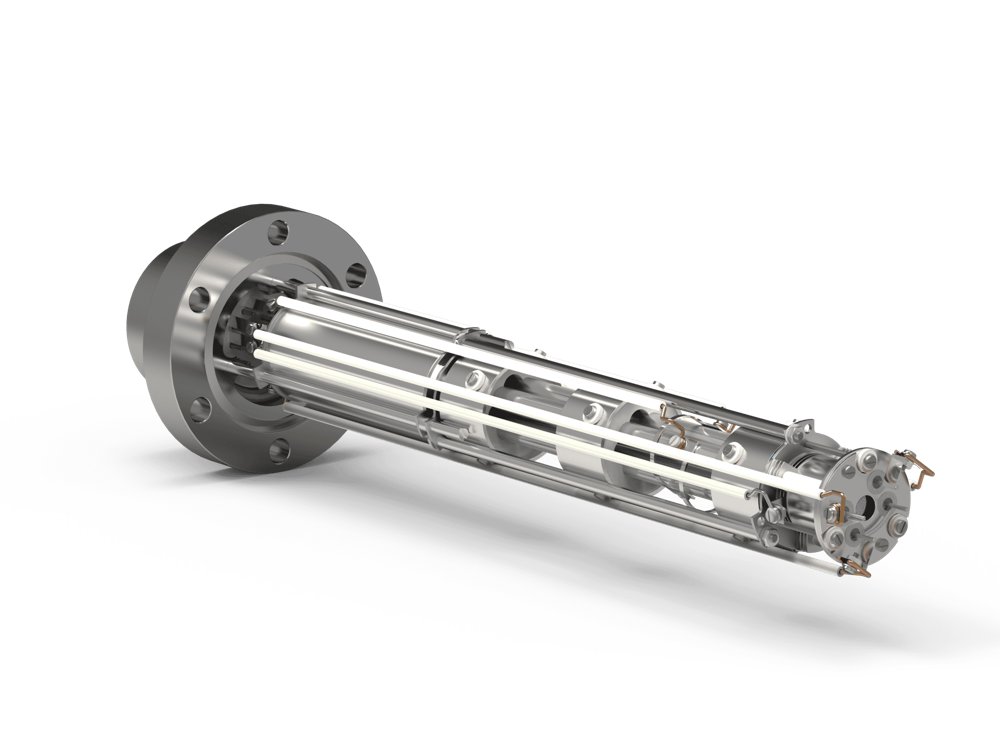 DLS-1 Mass Spectrometer for Fusion Gas AnalysisHiden Analytical Featured
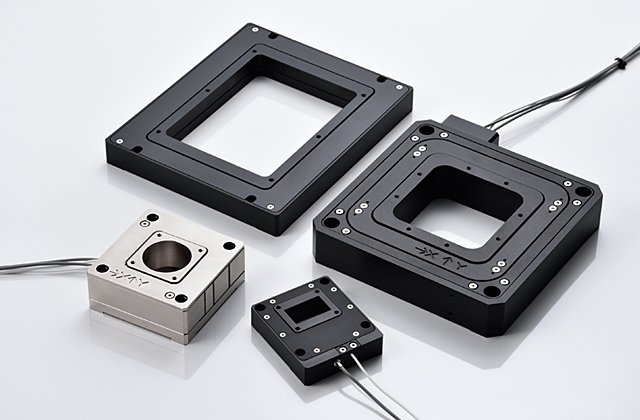 PKVH / PKVL ZAxis With an opening modelTHK PRECISION CO.,LTD.
Market insights
Last 30 days: Quantum Technologies was the busiest vertical: 61 of 192 events (32%).
Money raised per month