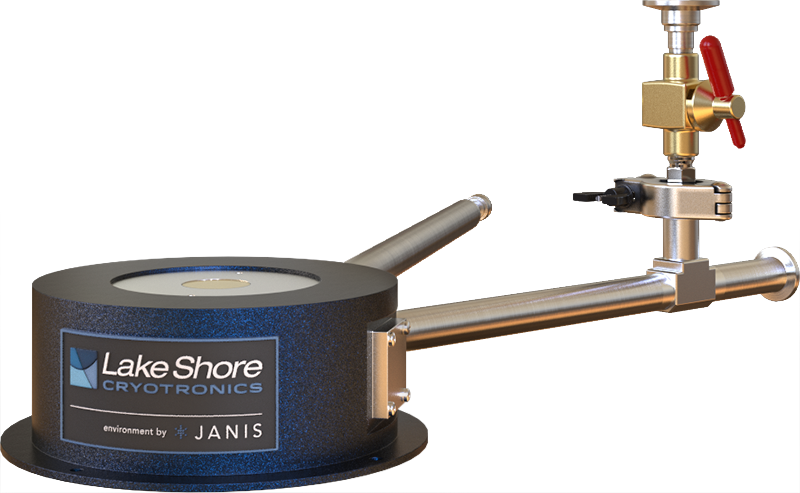
Lake Shore Cryotronics Inc. has published an overview of its Environment by Janis cryostats for spectroscopy applications. The overview covers models for FTIR, Raman, photoluminescence, NMR, Mössbauer, and magneto-optical spectroscopy.
For FTIR, the ST-FTIR, STVP-FTIR, and VPF-FTIR models are used in transmission and reflectance studies of vibrational modes, optical properties, electronic excitations, and temperature-dependent material behavior across infrared spectral regions. These models include rapid cooldown, optimized window materials, compact vacuum housings, and interface hardware for many commercial FTIR spectrometers.
For Raman and micro-Raman spectroscopy, the ST-500 and CCS-XG are available with a variety of window materials. The continuous-flow ST-500 offers nanometer-scale vibration and drift levels, and the cryogen-free CCS-XG provides low-vibration operation for highly sensitive measurements.
For photoluminescence, the CCS-100, CCS-900, SHI-950-LT, and ST-100 provide optical access while maintaining precise temperature control. The STVP-NMR is a continuous-flow cryostat for low-temperature magnetic resonance measurements.
The CCS-800-205 is used for variable-temperature Mössbauer studies from 4.5 K to 300 K. Its sample-in-exchange-gas design helps provide uniform cooling of powders and irregularly shaped solid samples. A fully integrated Mössbauer spectroscopy system, the CryoComplete Mössbauer, is also available. The ST-300 and CCS-300S are compact optical cryostats for magneto-photoluminescence and other magneto-optical measurements in magnetic fields.
Source: Lake Shore Cryotronics Inc. news
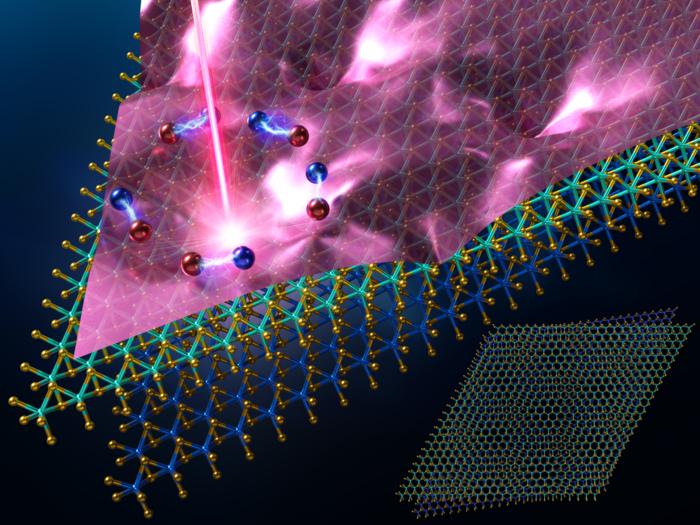
Researchers at MANA have introduced a theoretical framework that extracts hidden disorder from complex photoluminescence spectra in twisted MoSe2/WSe2 moiré heterostructures, bypassing unreliable peak-by-peak analysis. By tracking how simple descriptors like peak and average energy vary spatially, the work reveals a hierarchy of disorder, from micrometer-scale background variations to localized exciton-trapping defects.
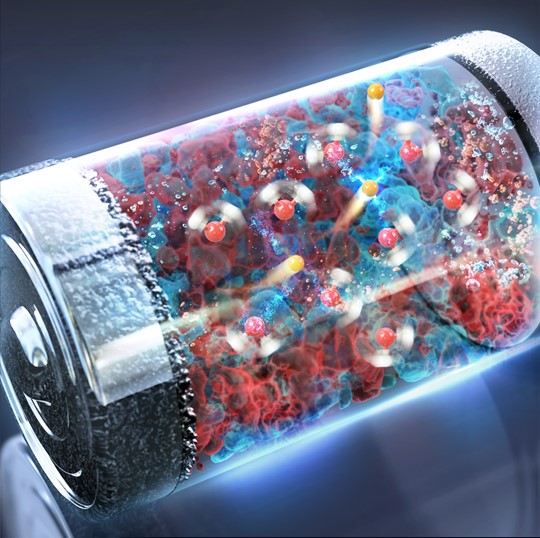
Microscopic understanding of solvation structure reveals heterogeneity in the superconcentrated water-in-salt electrolytes - Lithium-ion...
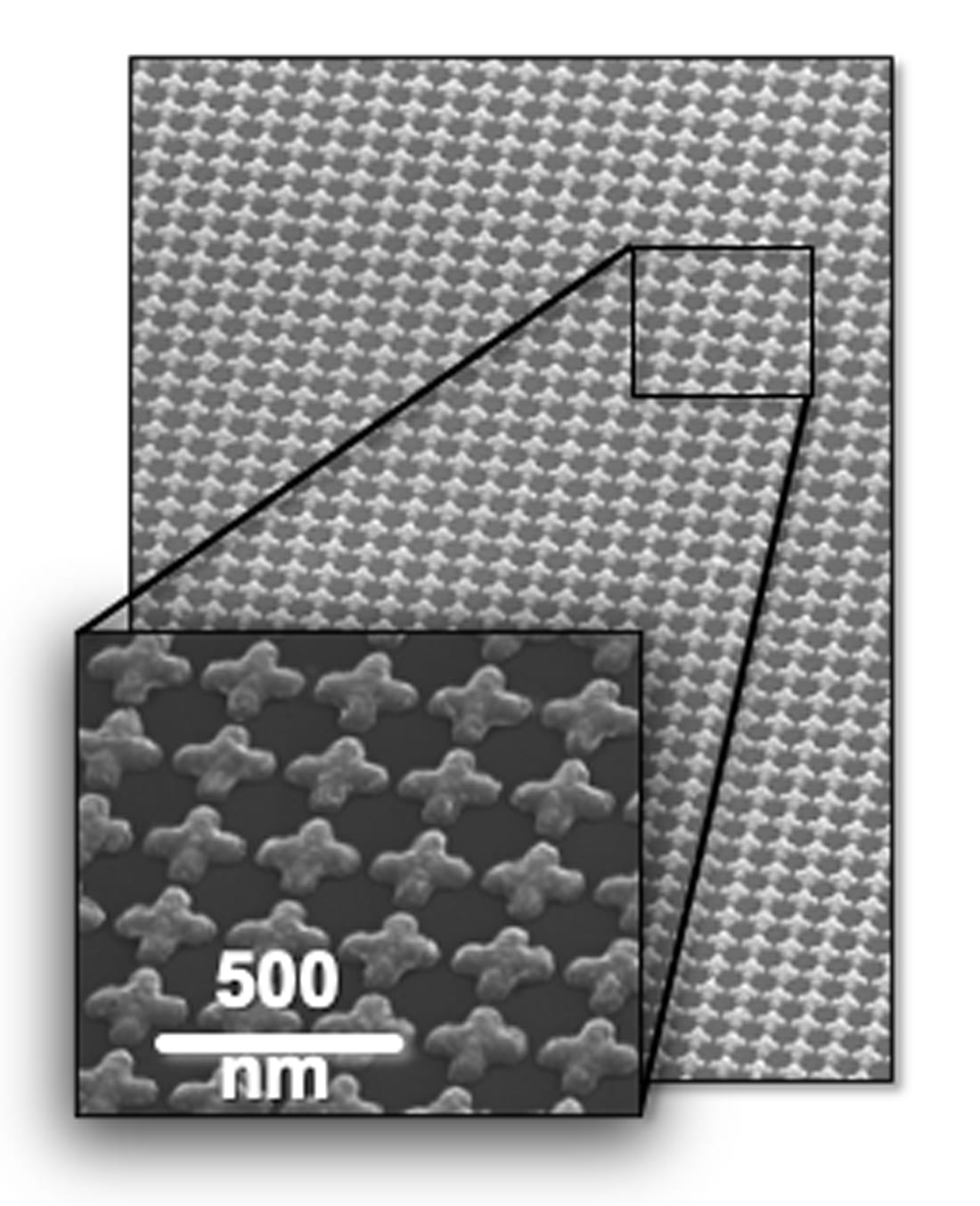
U.S. and Italian engineers have demonstrated the first nanophotonic platform capable of manipulating polarized light 1 trillion times per...