Dalian Institute of Chemical Physics, Chinese Academy Sciences
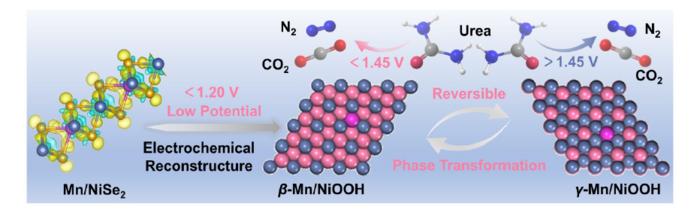
Hydrogen is recognized as a key clean energy carrier for achieving carbon neutrality. Conventional water electrolysis is energy-intensive because of the sluggish oxygen evolution reaction at the anode. Urea oxidation offers an attractive alternative by requiring a lower thermodynamic potential for hydrogen production while enabling the treatment of urea-laden wastewater from industrial and agricultural sources. However, low-cost Ni-based electrocatalysts undergo continuous structural reconstruction under operating conditions, which can alter their active surfaces and compromise catalytic performance. Therefore, controlling catalyst evolution during UOR is essential for achieving efficient and durable urea electrolysis.
Recently, a research team led by Prof. Yuekun Lai and Prof. Jianying Huang from Fuzhou University, China, reported that Mn can act as a dynamic phase-transition trigger in a NiSe2 urea oxidation catalyst. Departing from conventional static electronic modulation, the key innovation introduces manganese as a dynamic phase‑transition trigger into nickel selenide. Mn drives reversible crystal‑phase cycling under working conditions so catalytic sites can self‑regenerate, substantially boosting hydrogen output from urea electrolysis. The results were published in Chinese Journal of Catalysis (DOI: 10.1016/S1872-2067(26)65138-8).
The Mn/NiSe2 catalyst exhibited substantially enhanced UOR activity compared with pristine NiSe2. The optimized catalyst showed an onset potential of 1.26 V vs. RHE and maintained stable electrochemical performance during prolonged operation. When paired with hydrogen evolution at the cathode, the catalyst also enabled efficient urea-assisted electrolysis for hydrogen production, demonstrating the potential of this approach for coupling urea oxidation with clean hydrogen generation.
In‑situ characterizations and theoretical calculations uncover the underlying mechanism. Manganese doping tunes local electronic environments of nickel sites, strengthens urea adsorption on catalyst surfaces and lowers energy barriers for critical bond‑cleavage steps. Most importantly, Mn enables reversible cycling between highly‑active γ‑NiOOH and β‑NiOOH phases. This prevents irreversible over‑oxidation of active components and continuously regenerates functional catalytic sites. Moving beyond static catalyst design philosophies, this work establishes a paradigm of dopant‑controlled dynamic phase regulation. The “dynamic phase‑transition trigger” concept opens new avenues for developing adaptive electrocatalysts for diverse complex energy‑conversion reactions.
About the journal
Chinese Journal of Catalysis is co-sponsored by Dalian Institute of Chemical Physics, Chinese Academy of Sciences and Chinese Chemical Society, and it is currently published by Elsevier group. This monthly journal publishes in English timely contributions of original and rigorously reviewed manuscripts covering all areas of catalysis. The journal publishes Reviews, Accounts, Communications, Articles, Highlights, Perspectives, and Viewpoints of highly scientific values that help understanding and defining of new concepts in both fundamental issues and practical applications of catalysis. Chinese Journal of Catalysis ranks among the top six journals in Applied Chemistry with a current SCI impact factor of 17.2.
At Elsevier http://www.journals.elsevier.com/chinese-journal-of-catalysis
Manuscript submissionhttps://mc03.manuscriptcentral.com/cjcatal
Reference
Mn-triggered dynamic phase transition in NiSe2 catalyst via doping engineering for boosted urea electrolysis
Yingzhen Zhang, Wei Zhang, Zhangzheng Huang, Weilong Cai, Yun Hau Ng, Jianying Huang, and Yuekun Lai
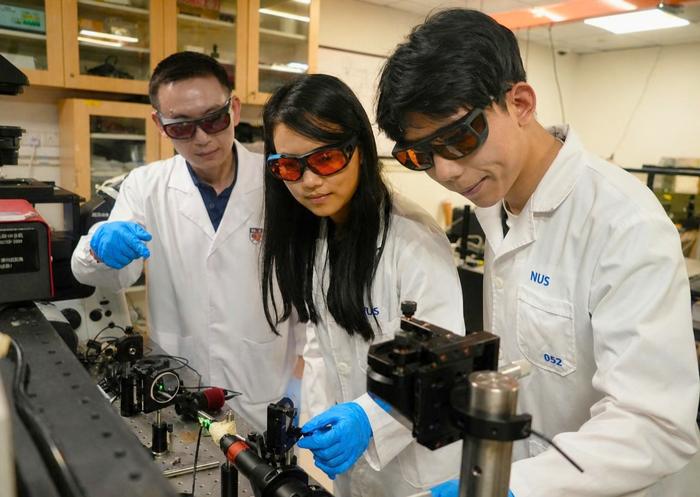
Researchers at NUS CDE have introduced DELINE, a fluorescence-based imaging method that maps individual reaction events across working electrocatalyst surfaces, revealing differences that conventional averaged measurements hide. Applied to gold and copper during water dissociation and nitrate reduction, the technique exposed a kinetic compensation trade-off: regions responding more strongly to applied voltage often have slower baseline rates.
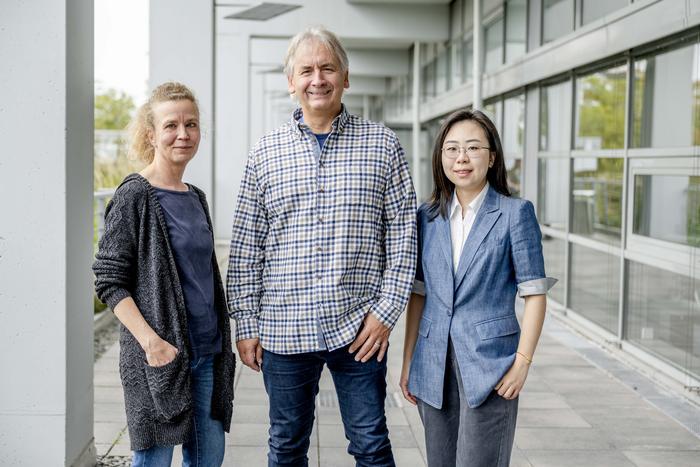
Researchers at Ruhr University Bochum have shown how zinc inhibits [FeFe]-hydrogenases, enzymes that produce hydrogen, by binding two surface histidines near a known proton transport pathway. One histidine acts as a molecular pendulum, receiving a proton at the enzyme surface and delivering it inward. Replacing it slowed hydrogen production; replacing the other left the enzyme active but zinc insensitive.
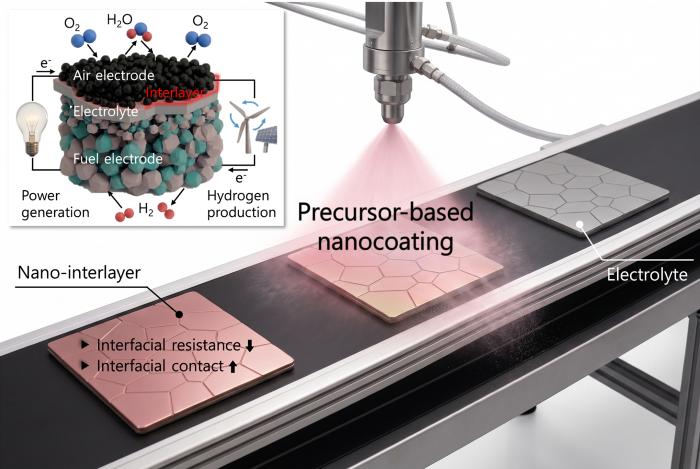
A Sungkyunkwan University team led by Professor Wonyoung Lee has tackled interfacial contact resistance in protonic ceramic electrochemical cells by quantifying how contact coverage between electrolyte and electrode governs performance. Using electrostatic spray deposition to add a dense nanometer-scale interlayer, the cells achieved higher efficiency and durability in both power generation and hydrogen production, remained stable under rapid temperature changes, and operated directly on…
This week in nanotech
$558.4M raised
6 funding rounds · 36 deals tracked
New products
 Nion-compatible In Situ STEM Holders for Electrical BiasingHummingbird Scientific Featured
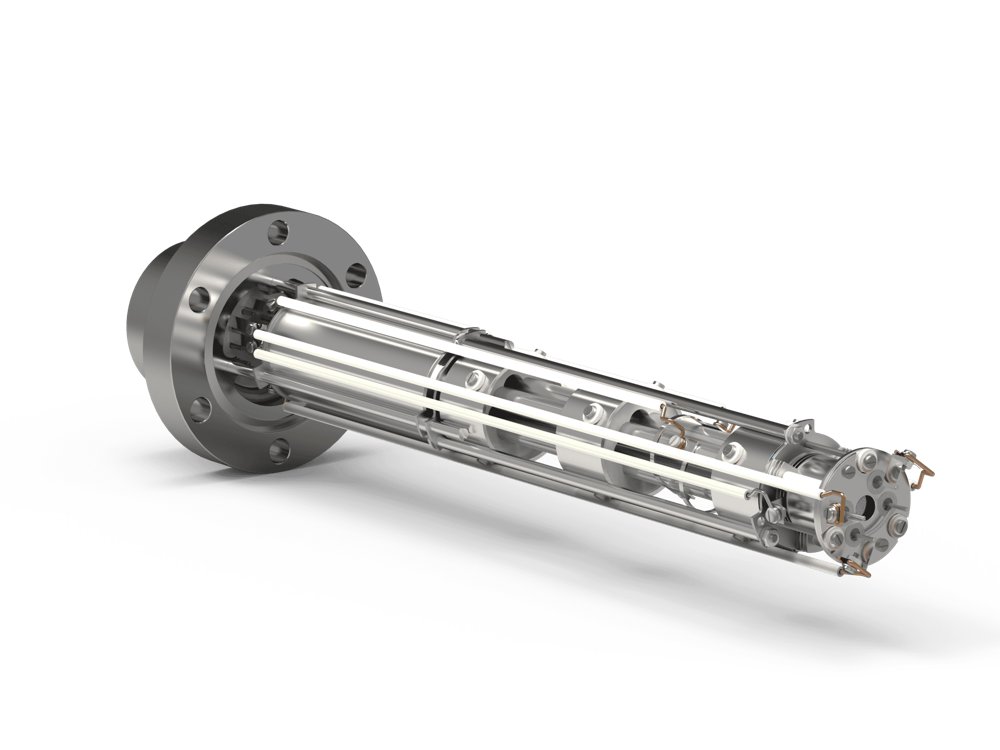 DLS-1 Mass Spectrometer for Fusion Gas AnalysisHiden Analytical Featured
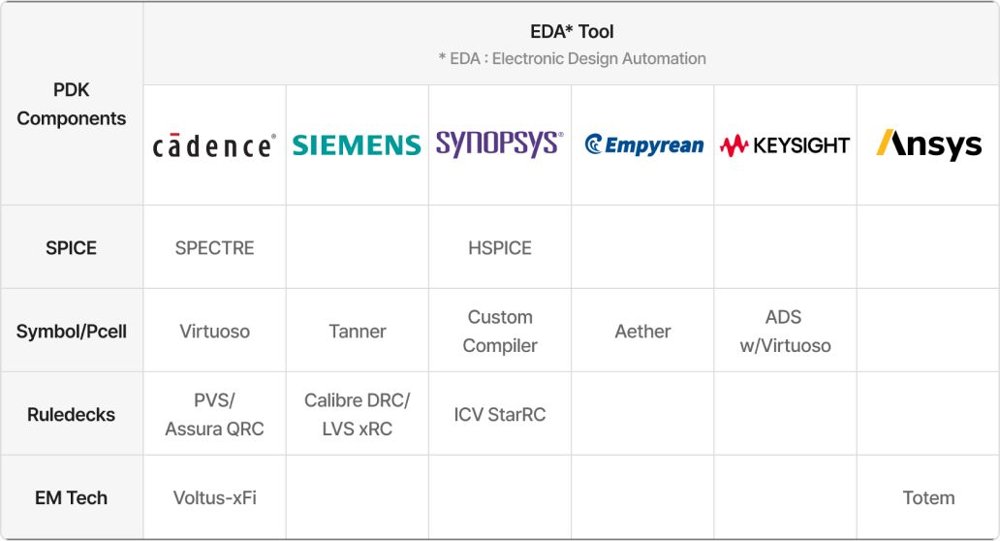 PDK (Process Design Kit)DB HiTek
Market insights
Last 30 days: Quantum Technologies drew the most money: $2.15B.
Money raised per month
Behind the deal
Who led Qilimanjaro Quantum Tech’s $21.9M Series A?
See the investors with Insights Pro →