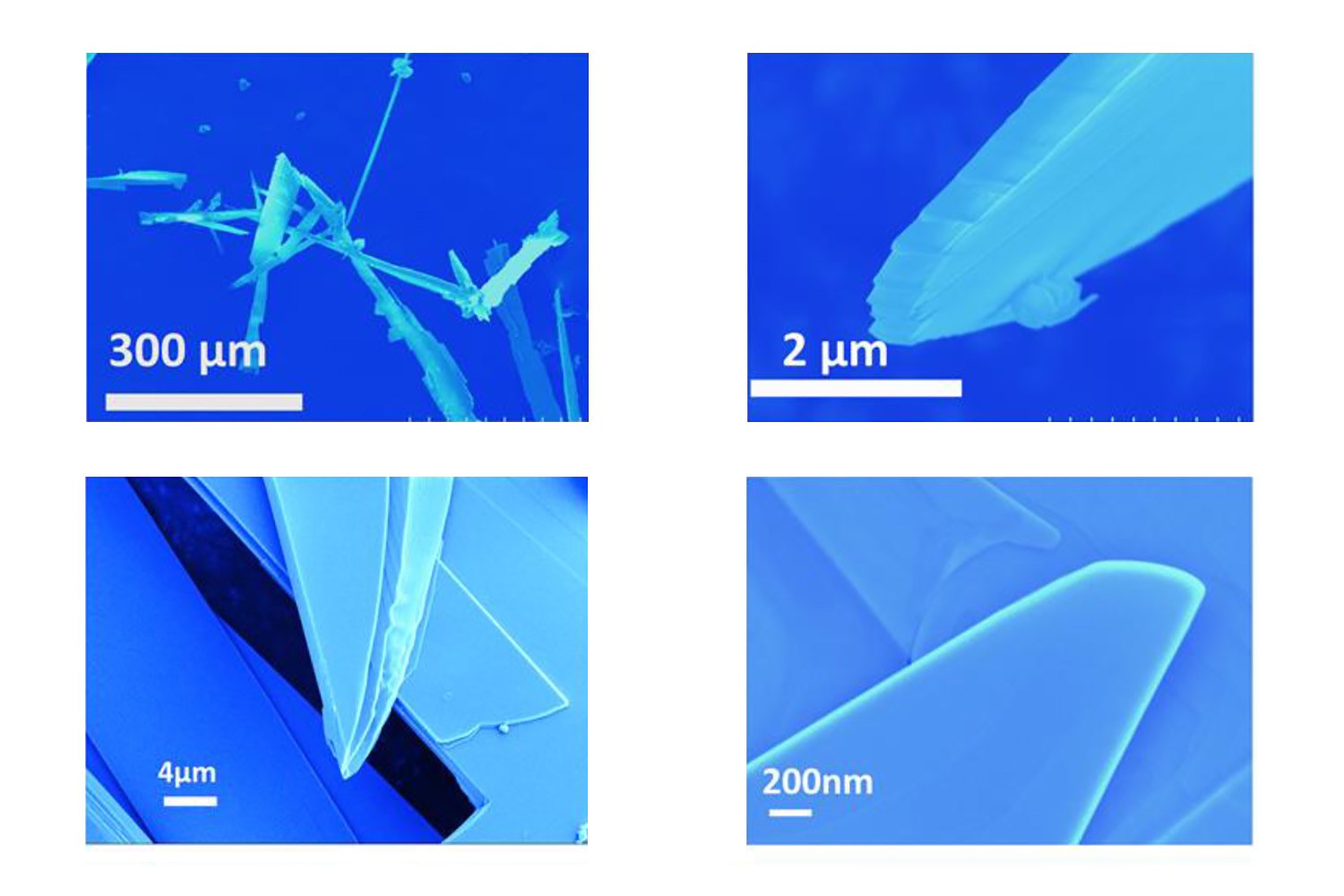
Two-dimensional materials like graphene show fascinating properties such as superconductivity, extraordinary strength and exotic quantum phenomena. Scientists at Forschungszentrum Jülich, together with partners from the Indian Institute of Technology in Patna and the Australian University of Newcastle, have now created a special material of this kind that exhibits a metallic character. It consists of just one atomic layer of molybdenum atoms and is also referred to as "molybdenene".
The scientists succeeded in producing a thin sheet of the metal molybdenum, which is just one atomic layer thick. The new material is thus similarly thin as graphene, probably the best-known 2D material. The latter consists of carbon and was first isolated in 2004. The discovery aroused great attention because graphene conducts electricity and heat far better than copper and is a hundred times more stable than steel. At the same time, it is exceptionally light and flexible. Due to its special 2D structure, graphene also exhibits some unusual electromagnetic effects that could enable groundbreaking innovations in the field of quantum technology.
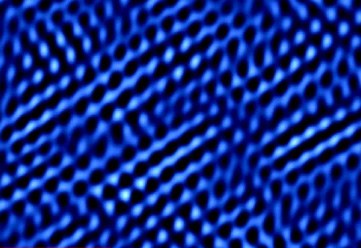
In recent years, other 2D materials such as phosphorene or germanene have been introduced. Like molybdenene, they exhibit some impressive properties, while the latter still differs from other 2D materials in some aspects. "Many 2D materials are sensitive to heat, but molybdenene is not. Moreover, this is the first metallic 2D material where free-standing layers could be prepared" explains Prof. Ilia Valov from the Peter Grünberg Institute (PGI-7) at Forschungszentrum Jülich.
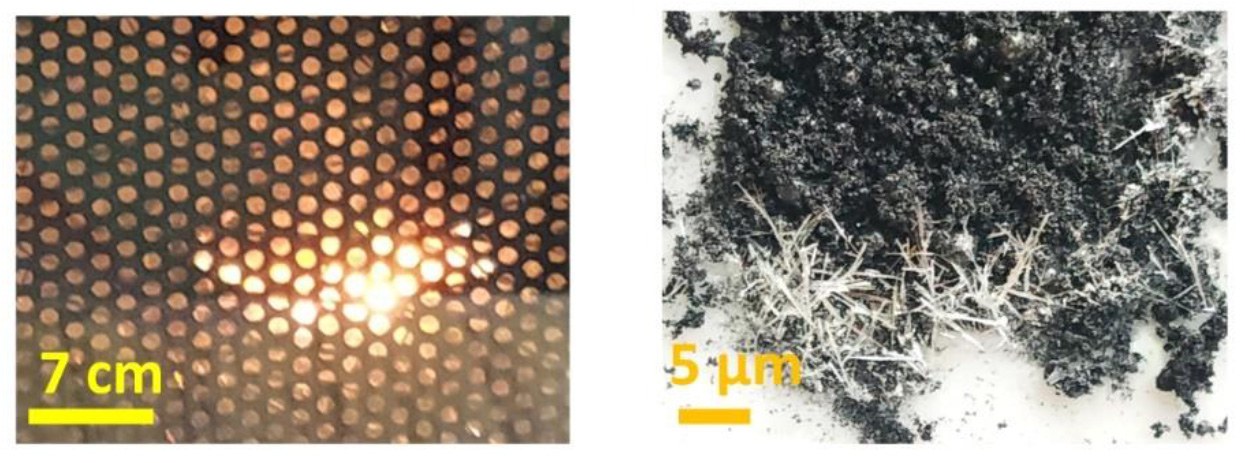
The researchers created the new 2D material using a microwave, in which they heated a mixture of molybdenum sulphide (MoS2) and graphene to incandescence at a temperature of around 3000 degrees Celsius. In a reaction driven by the microwave electric field, finely branched hair structures were formed in which the tapered molybdenum layers can be found. These are also called "whiskers", which means "whiskers"., also known as “whiskers”, were formed in which the tapered molybdenene layers can be found.
In first tests, the scientists could already observe a variety of useful properties. "Molybdenene is mechanically extremely stable. It could be used, for example, as a coating for electrodes to make batteries even more powerful and robust," explains Ilia Valov. The researchers expect that the material has further exotic electronic properties, similar to graphene, because of its special 2D structure. Due to its metallic character, it also has freely moving electrons. These accumulate on the two side sides of the molybdenene, which makes the material an interesting candidate for catalysts to accelerate chemical reactions.
In collaboration with the Indian Institute of Technology in Patna and the Australian University of Newcastle, the researchers have already been able to develop a practical scientific application for molybdenene. Thanks to its stability and excellent electrical and thermal conductivity, it is ideally suited as a measuring tip for atomic force microscopy (AFM) and surface-enhanced RAMAN spectroscopy (SERS). Initial sample recordings show that molybdenene offers various advantages over established tip materials and, because of its thin, flat shape, is capable of providing particularly good protection against unwanted interference signals.
Reference
Microwave synthesis of molybdenene from MoS2
Tumesh Kumar Sahu, Nishant Kumar, Sumit Chahal, Rajkumar Jana, Sumana Paul, Moumita Mukherjee, Amir H. Tavabi, Ayan Datta, Rafal E. Dunin-Borkowski, Ilia Valov, Alpana Nayak & Prashant Kumar
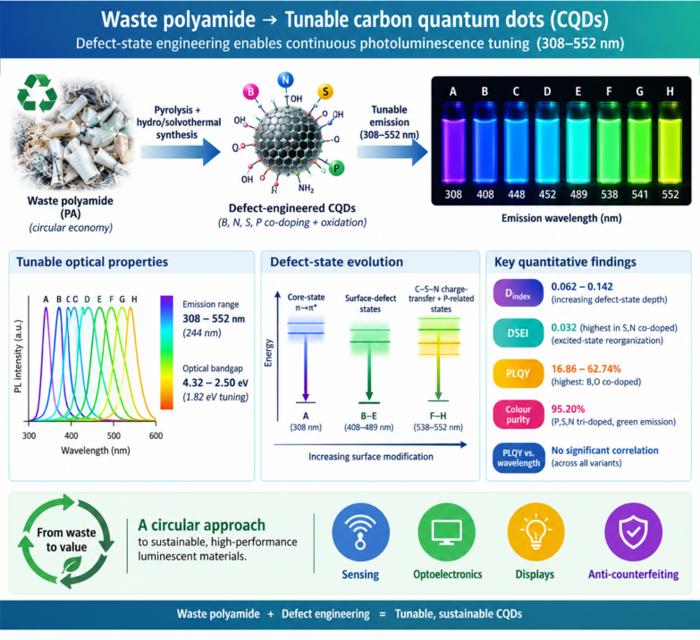
Waste polyamide-derived CQDs show continuous photoluminescence tuning from 308 to 552 nm through sequential defect-state engineering, with optical transition energies decreasing from 4.32 to 2.50 eV. @Christian Ebere Enyoh from Saitama University Carbon quantum dots (CQDs) are fluorescent carbon nanomaterials with potential applications in sensing, optoelectronics, displays, anti-counterfeiting, and environmental technologies. Their optical properties can be adjusted by modifying the carbon...
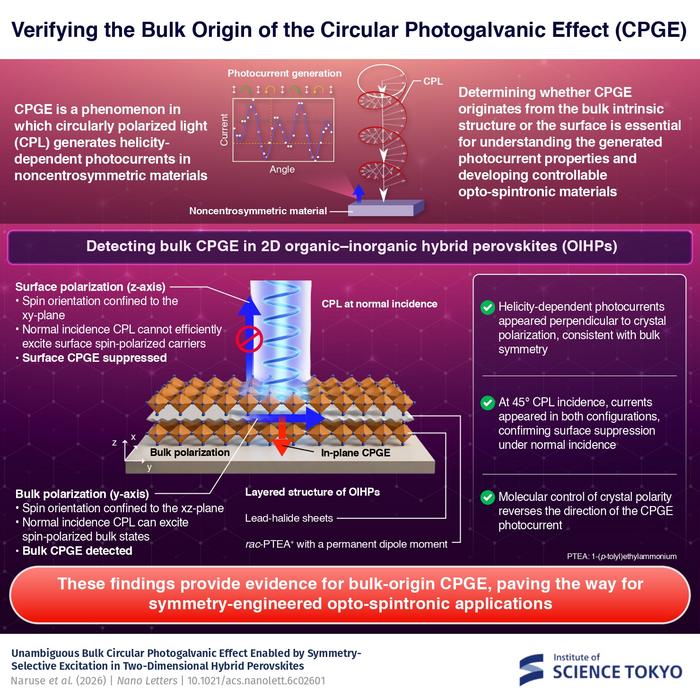
The researchers used circularly polarized light at normal incidence and found that helicity-dependent photocurrents appeared perpendicular to the crystal’s polarization but vanished when measured parallel to it, supporting a bulk origin of CPGE. @Institute of Science Tokyo The circular photogalvanic effect (CPGE), a phenomenon that generates helicity-dependent photocurrents in noncentrosymmetric materials, can originate purely from a crystal's internal structure without contribution from the...
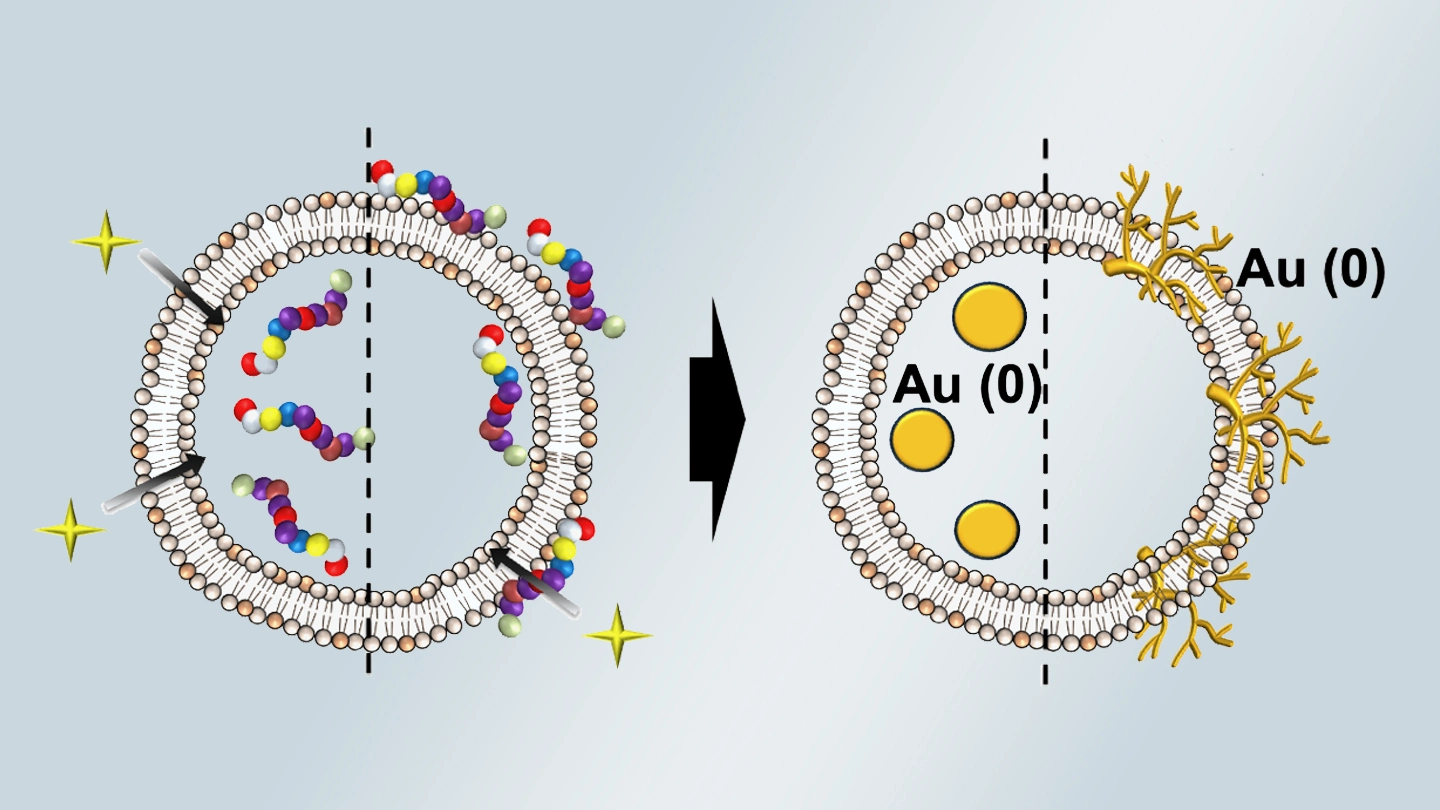
Summary of gold nanoparticle growth programming in liposome based on localization of biomineralization peptide The position of biomineralization peptides within liposomes can influence how gold nanoparticles grow, reports a research team from Institute of Science Tokyo. Peptides localized at the membrane interface promote branched structures, while those confined to the liposome interior favor spherical nanoparticles. The findings offer a new strategy for controlling nanoscale reaction...
