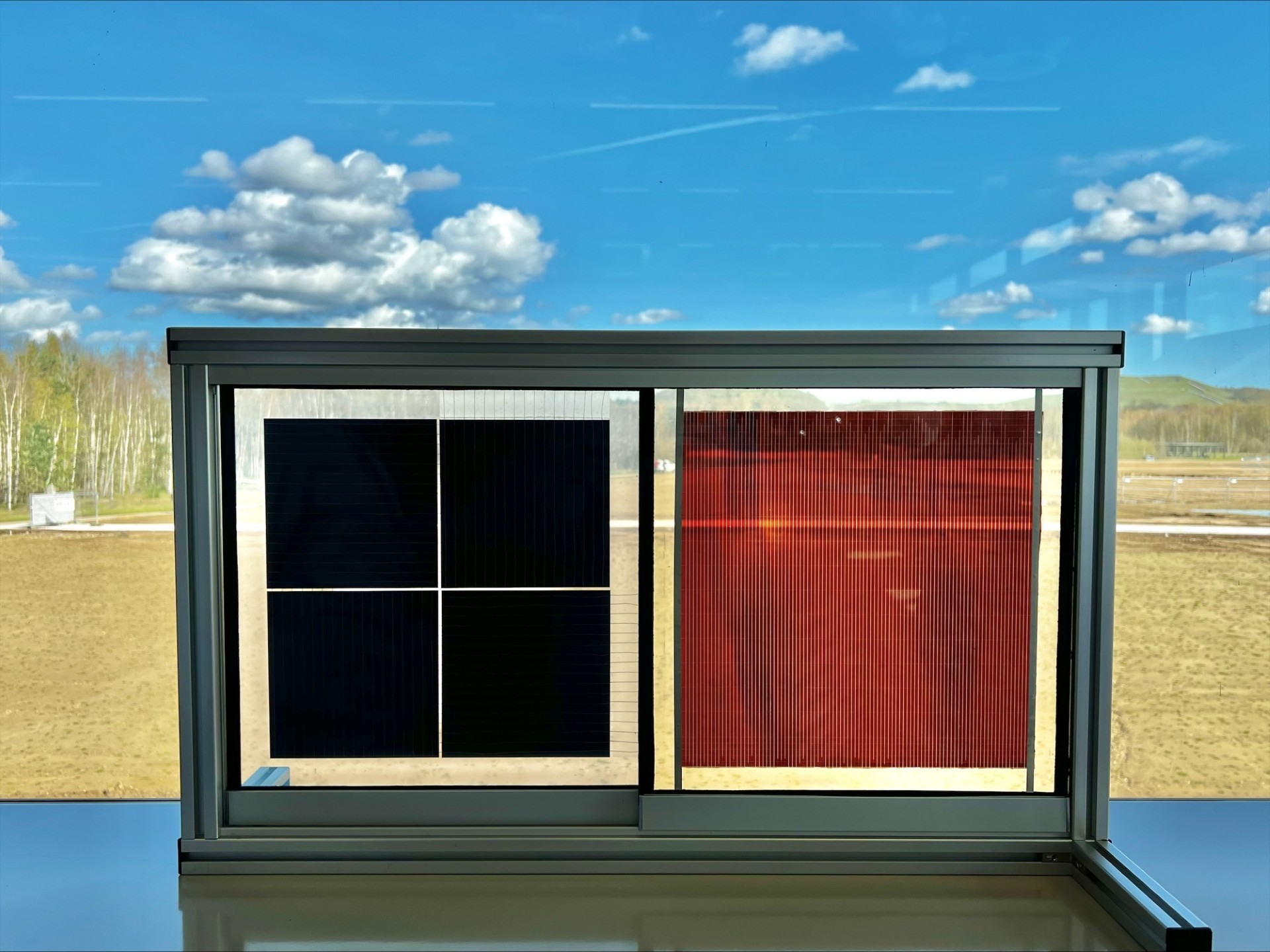
October 30, 2026 -- Noak, a new spin-off of imec and UHasselt, has raised €5 million to scale and industrialize the development of the next generation of solar: perovskite–silicon tandem PV. The seed investment, provided by the Helios Foundation, Nuhma and V2HFin, marks an important next step in bringing this promising technology closer to European manufacturing.
Solar photovoltaics (PV) have become the fastest-growing renewable energy source, driven by rapidly falling technology costs. Yet despite Europe’s historic leadership in PV research, the continent manufactures a negligible fraction of the solar capacity it installs each year. This imbalance has created a structural dependency on imported PV technologies.
Reaching global climate targets requires an extraordinary expansion of solar PV to approximately 50 terawatts by 2050, and potentially 100 terawatts by the end of the century from the currently installed 3 terawatts. The question is no longer whether solar PV will scale. The challenge is enabling that scale with the highest possible efficiency and resource productivity.
At the same time, conventional silicon-based solar cells are steadily approaching their efficiency limits. Conventional silicon technology has driven impressive solar growth until today, but it is approaching its practical energy conversion efficiency limit of around 27-28%.
Breaking the silicon efficiency ceiling
Perovskite-based tandem solar technologies are well positioned to address these challenges. When paired with silicon in a tandem cell configuration, perovskites can harness a broader portion of the solar spectrum, offering conversion efficiencies of 30 - 35%.
Noak, a start-up based on imec’s and UHasselt’s IP portfolio on perovskite-silicon tandem technology, builds on this potential. At the core lies a high-performance perovskite layer stack, developed through proprietary chemical compositions and scalable deposition techniques. The technology is underpinned by more than a decade of research within IUMAT (the Institute for Materials Research of UHasselt and imec) and within the framework of EnergyVille.
Long-term stability
Long-term stability under real-world conditions is a key challenge for perovskite-silicon tandem technology. While most stability claims rely on accelerated laboratory testing, imec and UHasselt have accumulated five years of outdoor operation across over 10 test sites on three continents, withstanding intense sunlight, heavy rain, extreme heat, and sub-zero temperatures across Asia, Europe and North America. This extensive real-world dataset provides a strong foundation for Noak. Building on it, the next phase will focus on demonstrating long-term stability and performance at scale, key requirements for bankability and commercial success.
Designed for circularity and resilience
Complementing the tandem cell architecture is Noak’s proprietary 3D woven back-contact foil, which integrates the electrical connections at the rear of the cell. This eliminates the need for front-side metallization, reducing shading losses while supporting more efficient material use and easier recycling at the end of the module’s life.
Furthermore, Noak’s tandem can be subdivided into smaller sub-cells connected in series and parallel, allowing for design flexibility and enabling reductions in metal usage. The 3D foil and tile architecture make it possible to drastically reduce the use of expensive and rare metals. These innovations address both cost and critical raw material dependency, key concerns for future solar scalability.
Noak embeds circularity in every new cell architecture, guided by the core principles of design for disassembly and debonding on demand. To translate this vision into practice, Noak partners with its supply chain to work towards the use of certified recycled metals, ensuring that sustainability is embedded from its very first commercial products. Noak’s platform aims to create regional industrial resilience by lowering critical material usage by its novel cell and module architecture.
The €5 million investment from the Helios Foundation, Nuhma and V2HFin will now be used to accelerate development using the existing infrastructure at EnergyVille in Genk and to prepare scaling with gigawatt manufacturing partnerships.
Geert Palmers, CEO Noak:“Noak's innovation goes beyond technology. We aim to design a value chain through global industrial partnerships without relying on vulnerable critical dominant dependencies. This will enable to navigate between expensive protectionism and volatile globalism”
Jef Poortmans, program director PV at imec and R&D Coordinator of Energyville:“Over the past decade, imec and UHasselt within their labs at EnergyVille, have helped push perovskite photovoltaics from a promising research concept to a technology with real industrial potential. With Noak, we now have the opportunity to translate that expertise into industrial manufacturing”.
Marlies Van Bael, director of IUMAT:“Noak is the result of years of dedicated research, long before a spin-off was envisioned. This fundamental research, supported by European, Flemish and Belgian funding programs, is essential for creating innovative companies. Equally important is entrepreneurship that turns research into market-ready products. Noak shows how both go hand in hand."

NanoImages, LLC has published details of its EBIC imaging technique for semiconductor failure analysis. The SNE-Alpha carries a factory EBIC port alongside its EDS, EBSD, Raman, and CL ports, with a 1-30 kV range.
An approximately 3 nm ALD aluminium oxide buffer protected perovskite-silicon tandem devices during ITO sputtering, allowing tandem efficiencies above 26%. The layers were deposited on a Kurt J. Lesker inert-atmosphere platform.
onsemi announced that Sungrow has adopted its latest EliteSiC SiC hybrid power module technology for the PowerTitan 3.0 energy storage platform. The architecture improves inverter-level efficiency by 0.4% versus the previous generation.
This week in nanotech
$751.8M raised
6 funding rounds · 37 deals tracked
New products
 Nion-compatible In Situ STEM Holders for Electrical BiasingHummingbird Scientific Featured
 Ti-WCMBN Nanomaterialia Featured
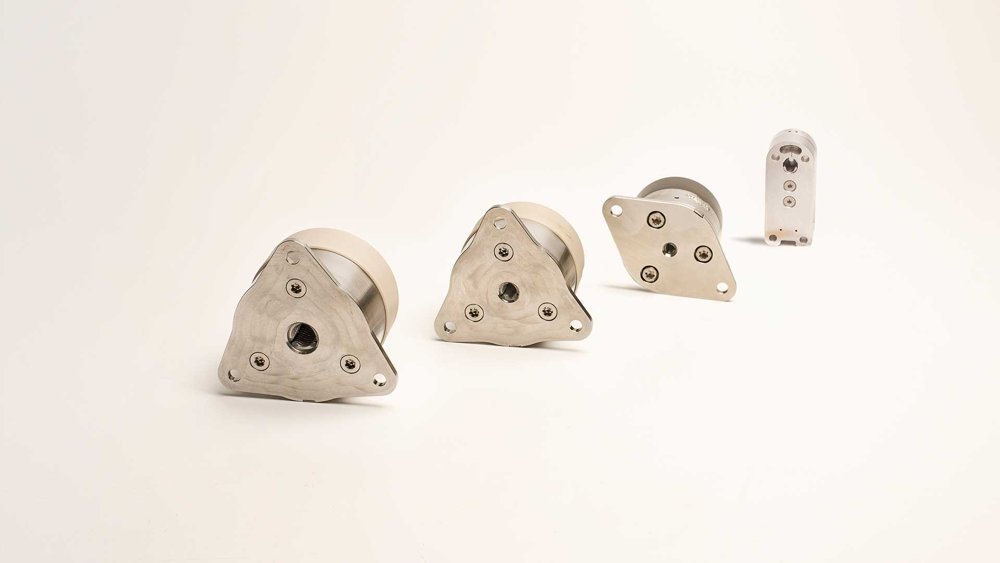 Hold Down & Release Mechanisms (HDRM) REACT – 5KN, 15KN and 35KN space qualified resettable mechanismsARQUIMEA
Market insights
Last 30 days: Quantum Technologies drew the most money: $3.18B.
Money raised per month