University of Missouri-Columbia
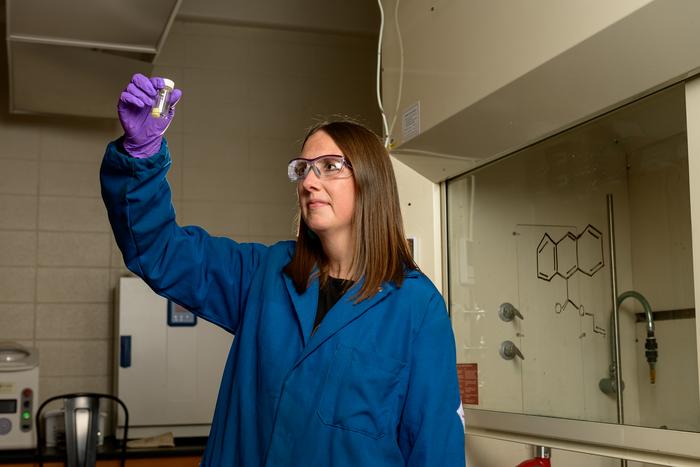
University of Missouri researchers have created a single solid material that responds differently depending on what it’s exposed to. Shine light on it, and it changes from yellow to white, an indication of a chemical reaction. Heat it, and it undergoes a different chemical reaction. Scratch the surface, and it flashes blue.
The discovery shows how researchers can build multiple behaviors into a single material by controlling how its molecules are arranged.
“When you look at a solid, you might assume there’s not much going on,” said Kristin Hutchins, an associate professor of chemistry in Mizzou’s College of Arts and Science and a researcher with the MU Materials Science and Engineering Institute. “But at the molecular level, we can build in possibilities that aren’t obvious from the outside.”
Unlike molecules floating freely in a liquid, molecules packed inside a solid have very little room to move. For a chemical reaction to occur, researchers must position them with extraordinary precision.
Hutchins and her team used that challenge to their advantage, designing a material to respond to two triggers: light and heat.
Light turned the material from yellow to white by joining nearby molecules together. Heat then caused the molecules to separate and rearrange, triggering a second reaction. This is the first demonstration of these two back-to-back reactions in a solid material, Hutchins said.
What happened next was even more surprising.
Liulei Ma, the study’s lead author who is now a postdoctoral researcher at Colorado State University, scratched the surface of the material while handling it, causing a brief flash of blue light. Further testing confirmed that applying physical force could trigger this response.
“That was one of those moments where the material told us there was more going on than we expected,” Hutchins said. “We were seeing a material with several different ways to change, depending on how we interacted with it.”
The findings point to a broader possibility in materials science: Rather than designing a material for just one purpose, researchers can explore ways to build several potential behaviors into the same molecular structure.
“What’s exciting is that we can start thinking about materials less as static objects and more as systems with different possibilities built into them,” Hutchins said. “The way the molecules are organized can determine what happens when you shine light on it, heat it or apply force.”
The ability to build several responses into a single material could eventually lead to new kinds of sensors, smart coatings, wearable technologies or light-emitting materials that react differently to heat, light or physical force.
Those applications will require further research, but the study gives scientists a new blueprint for designing materials that do more than one thing.
The research was funded by the U.S. National Science Foundation through grants from programs that support materials research, chemistry and computer science.
Reference
Heat- and light-directed cycloadditions enable a pericyclic cascade reaction from a molecular precursor
Liulei Ma, Gary C. George III, Bella Albano, Steven A. Lopez, Kristin Hutchins
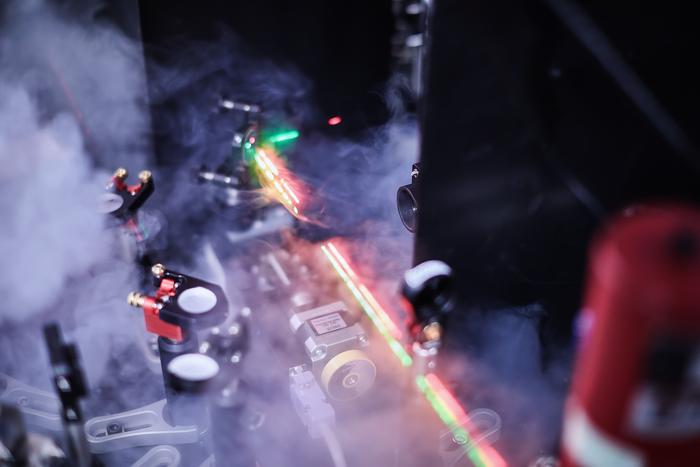
Researchers at MLU Halle-Wittenberg and the Max Planck Institute of Microstructure Physics have identified an unintended ferromagnetic interlayer that forms between ultrashort-pulse-excited Mn3Sn films and platinum, masking the chiral antiferromagnet's true properties. Curing the Mn3Sn layer before platinum deposition avoids the artefact, revealing spin-to-charge conversion at roughly 10% of platinum's efficiency.
University of Nottingham researchers and industry collaborators used SiMPore nanoporous silicon nitride TEM windows to capture and analyze exhaust particles from hydrogen and ammonia engines in a three-paper series.
Levidian has launched NanoFlow R1-10, a 10 wt.% G3 graphene concentrate pre-dispersed in bisphenol A-based epoxy resin for two-part epoxy systems. It is available for customer evaluation and product development.
This week in nanotech
$111.7M raised
4 funding rounds · 18 deals tracked
New products
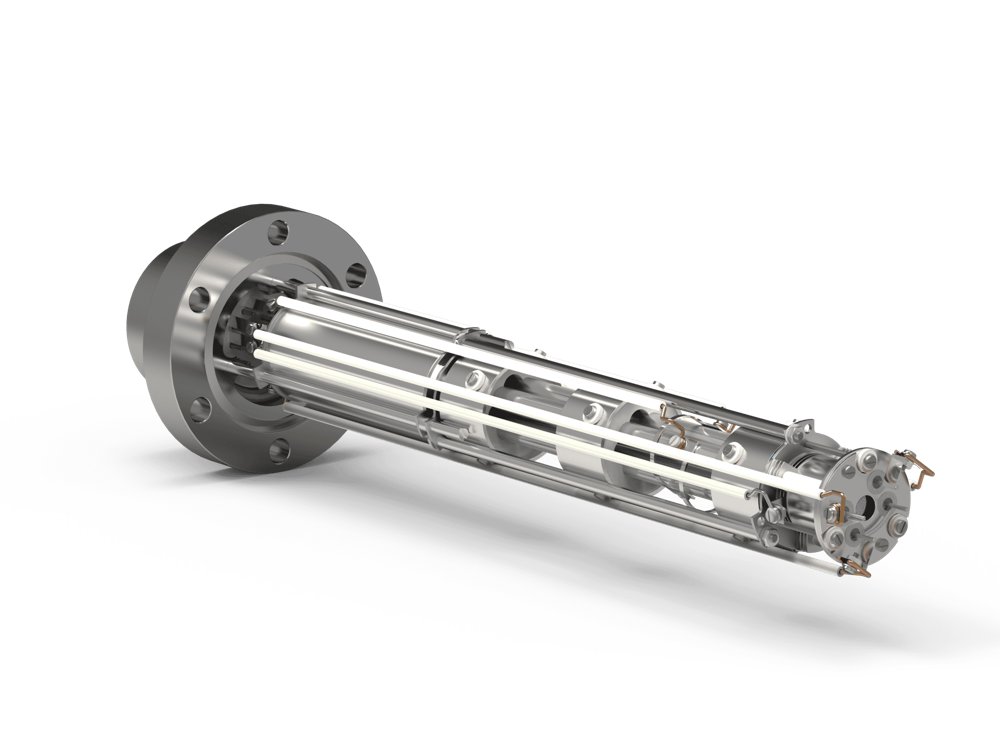 DLS-1 Mass Spectrometer for Fusion Gas AnalysisHiden Analytical Featured
 Nion-compatible In Situ STEM Holders for Electrical BiasingHummingbird Scientific Featured
 Aether®Lam Research
Market insights
Last 30 days: Semiconductors & Electronics drew the most money: $547.7M.
Money raised per month