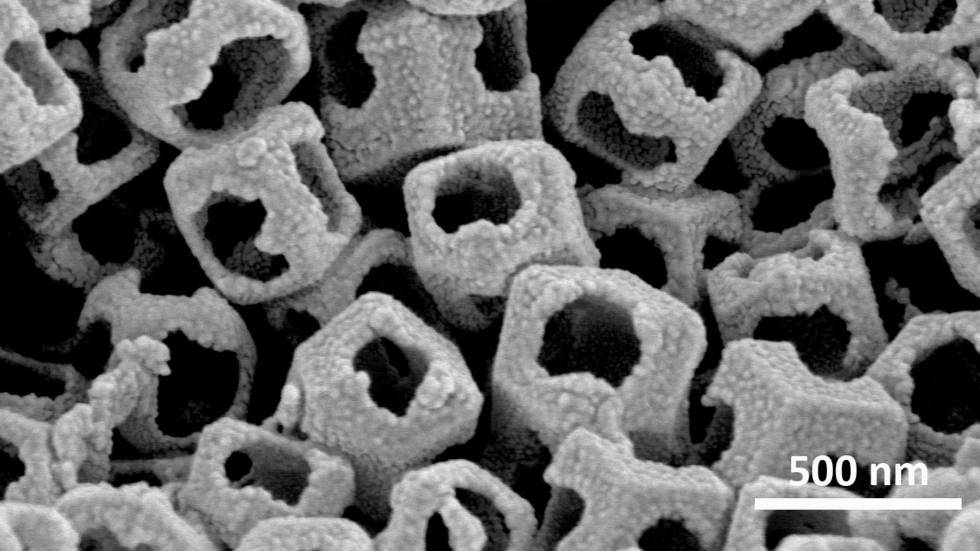
A chemical etching method for widening the pores of metal-organic frameworks (MOFs) could improve various applications of MOFs, including in fuel cells and as catalysts. Researchers at Nagoya University in Japan and East China Normal University in China developed the new method with collaborators elsewhere in Japan, Australia, and China, and their work was published in the Journal of the American Chemical Society.
MOFs are porous materials composed of metal clusters or ions interconnected by carbon-based (organic) linker groups. Varying the metallic and organic components generates a variety of MOFs suitable for a wide range of applications, including catalysis, chemical separation, and gas storage.
Some MOFs have clear potential for catalysing the chemical reactions inside fuel cells, which are being explored as the basis of renewable energy systems. Because they don’t use fossil fuels, fuel cells could play a key role in the transition to a low- or zero-emissions economy to combat climate change.
“However, there has been a problem in using MOFs, because the catalyst layer is too thick and their pore structure is insufficiently open to allow the necessary transfer of chemicals. This exacerbates the sluggish mass-transport properties of the catalyst layer, and limits the application of MOFs in many renewable energy systems, particularly for proton-exchange membrane fuel cell (PEMFC) applications. So, a growing interest has been in constructing hollow MOFs with open pore structures to boost reactant penetration and shorten mass diffusion paths. This makes it possible for us to elaborate unprecedented morphologies and hollow structures with open pore structures in a single MOF nanoparticle as a precursor for PEMFC catalysts, unlocking the potential of advanced materials for PEMFC applications,” explains Yusuke Yamauchi of the Nagoya team. The chemical instability of existing MOFs has also been a barrier to their use.
The researchers used chemical mixtures to etch a more open structure throughout a MOF. After an initial cycle of etching, the interior of the MOF became more porous, meaning it could be loaded with iron ions that are crucial for catalysis. This MOF has individual iron ions anchored throughout its open structure, allowing each ion to be individually catalytically active. The final catalysts, known as OP-Fe-NC, were obtained by subjecting the final MOF to calcination treatment in an inert atmosphere.
Preliminary simulations suggest that this structure will greatly improve the movement of oxygen through the material, which should significantly enhance its activity and stability. “Our promising results highlight the potential of OP-Fe-NC as an effective electrocatalyst for various energy storage and conversion devices.
For this work using OP-Fe-NC as a cathode catalyst delivered extraordinary Oxygen Reduction Reaction (ORR) activity and excellent stability in acidic media, which is even better than the commercial Platinum/Carbon catalyst. In the fuel cell, OP-Fe-NC showed the high current density which was close to the US Department of Energy (DOE) 2025 target. This work provides a new approach for designing and optimizing high-efficiency catalysts for ORR by simultaneously increasing the intrinsic catalytic activities of the active sites and effectively utilizing the active sites in the catalyst layer,” says Wei Xia at East China Normal University, China.
Having demonstrated the potential of their method in principle, the researchers now plan to explore how other chemical modifications could optimise the approach to produce materials suited to different real-world situations. “We intend to bridge the gap between experimental work and practical applications, hopefully making a real contribution to the drive towards sustainable energy solutions,” says Yamauchi.
Reference
Selective Etching of Metal–Organic Frameworks for Open Porous Structures: Mass-Efficient Catalysts with Enhanced Oxygen Reduction Reaction for Fuel Cells
Jingjing Li, Wei Xia, Xingtao Xu, Dong Jiang, Ze-Xing Cai, Jing Tang, Yanna Guo, Xianli Huang, Tao Wang, Jianping He, Buxing Han, and Yusuke Yamauchi
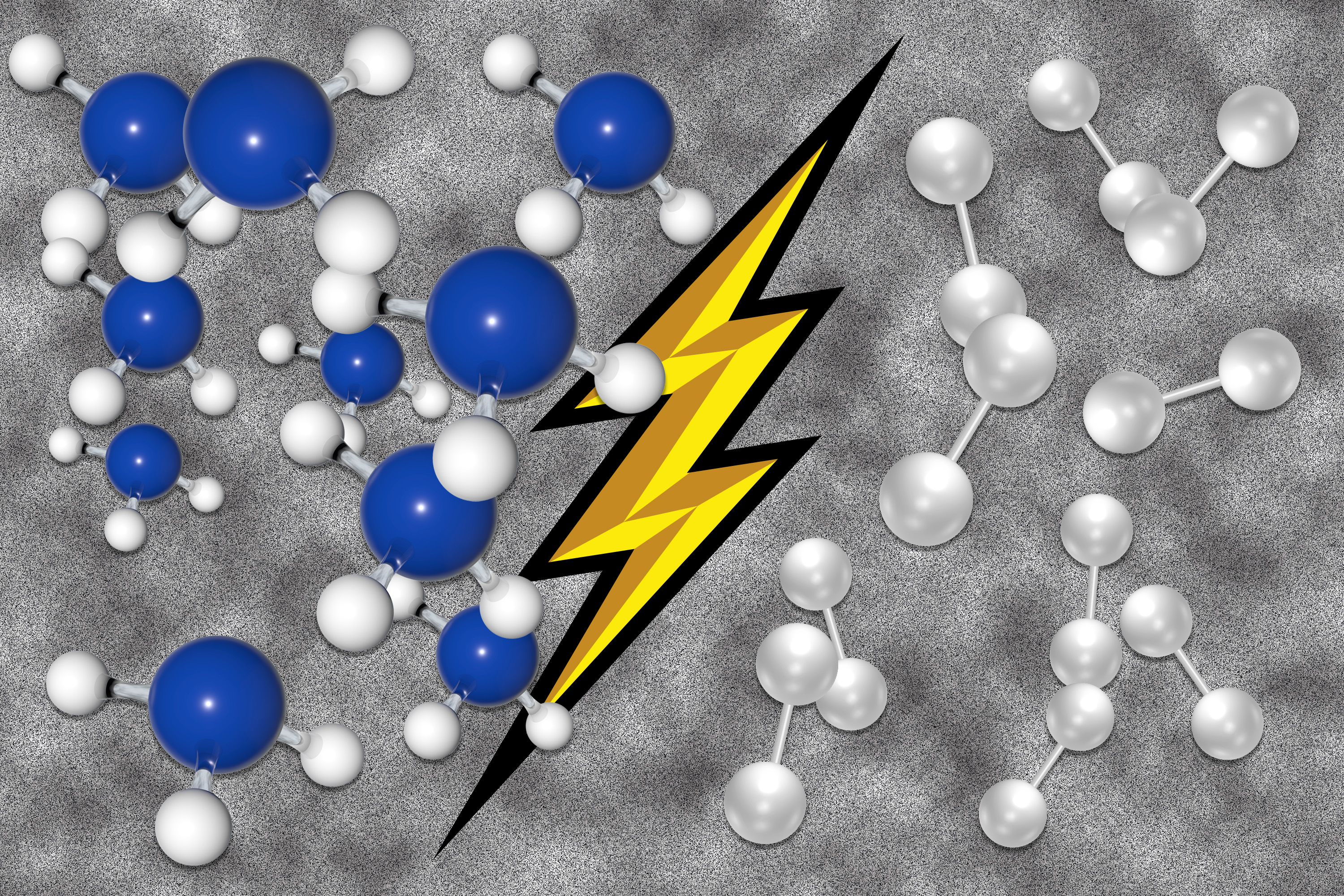
MIT researchers have developed a new way to extract pure hydrogen gas from ammonia and other hydrogen carrier molecules. Their strategy, which uses electricity to speed up the extraction, reduces the temperature and energy required to recover hydrogen from these molecules. As a liquid that is easily stored and transported, ammonia (NH3) is an attractive carrier for hydrogen, which is used in fuel cells, semiconductor manufacturing, chemical processing, and other applications. However,...
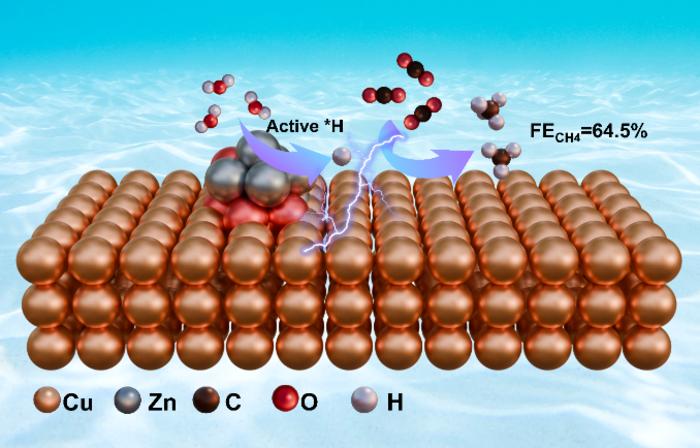
image: CuZn800@C was constructed via solvothermal method and utilizes the high-temperature volatility of zinc to prepare through calcination at different temperatures, which displays a high methane Faradaic efficiency of 64.5% and a remarkable partial current density of -551.3 mA/cm2 at -1.7 V vs. RHE, along with excellent stability. Zn and Cu form a tandem reaction system. Zn sites promote water splitting to provide protons, while Cu sites reduce the energy barrier for *CO hydrogenation....
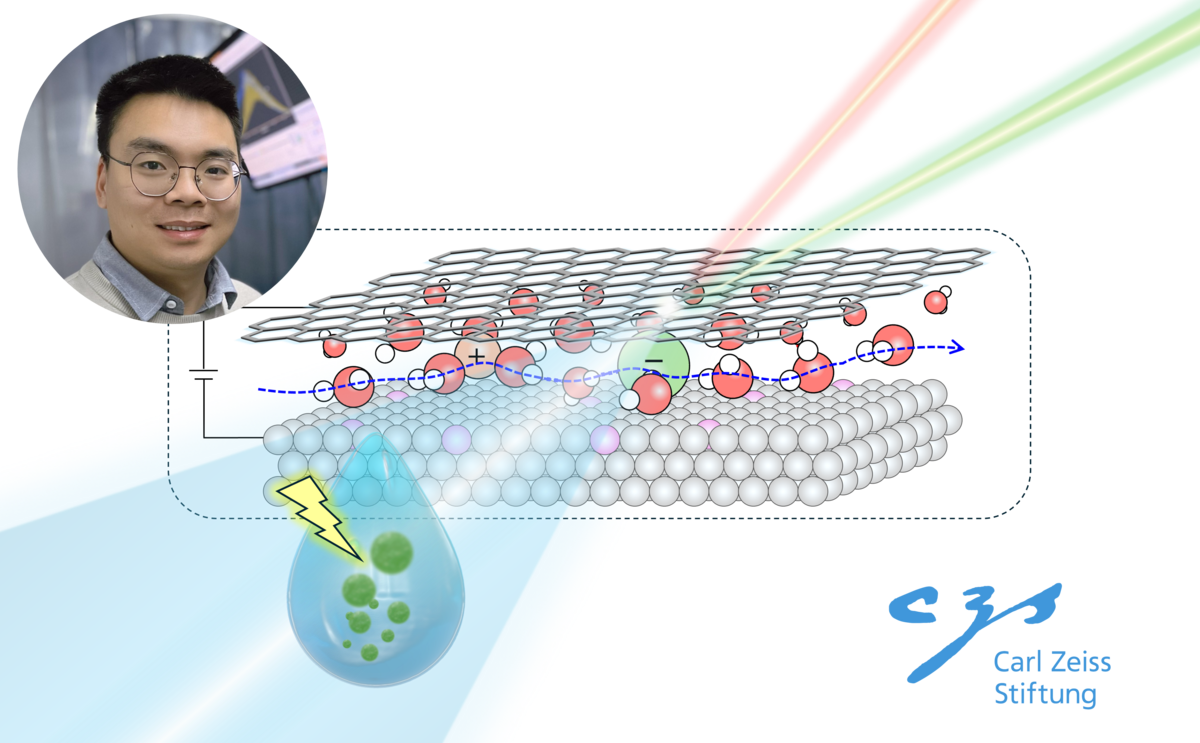
Electrochemical water splitting powered by renewable electricity is a promising pathway to sustainable hydrogen production, but its efficiency and scalability remain limited by costly catalysts and slow reaction kinetics. With €1.5 million in funding from the Carl-Zeiss-Stiftung for five years, Dr. Yongkang Wang and his team will pursue a new approach by visualizing and controlling water at the molecular level, using nanoscale confinement to shape its structure and dynamics at catalytic...
