
Three nano glass spheres cling to one another. They form a tower-like cluster, similar to when you pile three scoops of ice cream on top of one another – only much smaller. The diameter of the nano cluster is ten times smaller than that of a human hair. With the help of an optical device and laser beams, researchers at ETH Zurich have succeeded in keeping such objects almost completely motionless in levitation. This is significant when it comes to the future development of quantum sensors, which, together with quantum computers, constitute the most promising applications of quantum research.
As part of their levitation experiment, the researchers, led by adjunct professor of photonics Martin Frimmer, were able to eliminate the gravitational force acting on the glass spheres. However, the elongated nano object still trembled, similar to how the needle on a compass moves when settling into position. In the case of the nano cluster, the trembling motion was very fast but weak: the object made around one million deflections per second, each measuring only a few thousandths of a degree. This tiny rotational oscillation is a fundamental quantum motion exhibited by all objects and which physicists call zero-point fluctuation. “According to the principles of quantum mechanics, no object can ever remain perfectly still,” explains Lorenzo Dania, a postdoc in Frimmer’s group and first author of the study. “The larger an object is, the smaller these zero-point fluctuations are and the more difficult it is to observe them.”
Multiple records
To date, no one has been successful in detecting these tiny movements for an object of this size as precisely as the ETH researchers have now done. They achieved this because they were able to largely eliminate all motions that originate from the field of classical physics and obscure the observation of quantum movements. The ETH researchers attribute 92 percent of the cluster’s movements in their experiment to quantum physics and 8 percent to classical physics; they therefore refer to a high level of quantum purity. “Beforehand, we didn’t expect to achieve such a high level of quantum purity,” explains Dania.
And the records do not stop there: the researchers accomplished all of this at room temperature. Quantum researchers usually have to cool their objects to a temperature close to absolute zero (-273 degrees Celsius) using special equipment. This was not required here. Frimmer draws an analogy: “It’s like we’ve built a new vehicle that transports more cargo than traditional lorries and at the same time consumes less fuel.”
Tiny and enormous at the same time
While many researchers investigate quantum effects in individual or small groups of atoms, Frimmer and his group are among those working with relatively large objects. Their nanosphere cluster may be tiny in everyday terms, but it consists of several hundred million atoms, making it enormous from a quantum physicist’s perspective. The interest in objects of this size is partly driven by hopes for future quantum technology applications, for example. Such applications require larger systems to be controlled using the principles of quantum mechanics.
The researchers were able to levitate their nano particles using what is known as an optical tweezer. In this process, the particle is placed in a vacuum in a transparent container. A lens is used to focus polarised laser light at a point inside this container. At this focal point, the particle aligns with the electric field of the polarised laser and thus remains stable.
“A perfect start”
“What we’ve achieved is a perfect start for further research that one day could feed into applications,” says Frimmer. For such applications, you first need a system with high quantum purity in which all external interference can be successfully suppressed and movements controlled in the manner desired, he states, adding that this has now been achieved. It would then be possible to detect quantum mechanical effects, to measure these and to use the system for quantum technological applications.
Possible applications include basic research in physics to design experiments to investigate the relationship between gravity and quantum mechanics. The development of sensors to measure tiny forces such as those of gas molecules or even elementary particles that act on the sensor is also conceivable. This would be useful in the search for dark matter. “We now have a system that is relatively simple, cost-effective and well-suited for this purpose,” says Frimmer.
Applications in navigation and medicine
In the distant future, quantum sensors could also be used in medical imaging. It is hoped that they will be able to detect weak signals in environments where measuring devices otherwise mainly pick up background noise. Another potential application could be motion sensors that could facilitate vehicle navigation even when there is no contact with a GPS satellite.
For the majority of these applications, the quantum system would need to be miniaturised. According to the ETH researchers, this is possible in principle. In any case, they have found a way to achieve the desired controllable quantum state without time-consuming, costly and energy-intensive cooling.
Reference
High-purity quantum optomechanics at room temperature
Lorenzo Dania, Oscar Schmitt Kremer, Johannes Piotrowski, Davide Candoli, Jayadev Vijayan, Oriol Romero-Isart, Carlos Gonzalez-Ballestero, Lukas Novotny & Martin Frimmer
https://www.nature.com/articles/s41567-025-02976-9
ETH Zurich
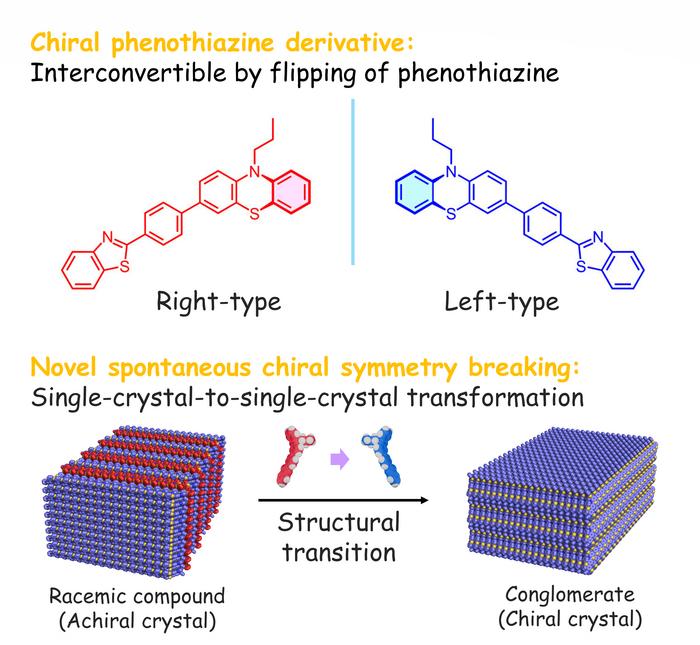
Chirality, or "handedness," is a fundamental property of objects, from galaxies to molecules, and plays a crucial role in biological systems. However, chiral compounds in living organisms such as sugars and amino acids, exist almost exclusively in a single form. This phenomenon, known as "biological homochirality," has long puzzled scientists, and its underlying mechanism remains elusive. Understanding how a preference for one chiral form over the other arises is crucial for comprehending the...
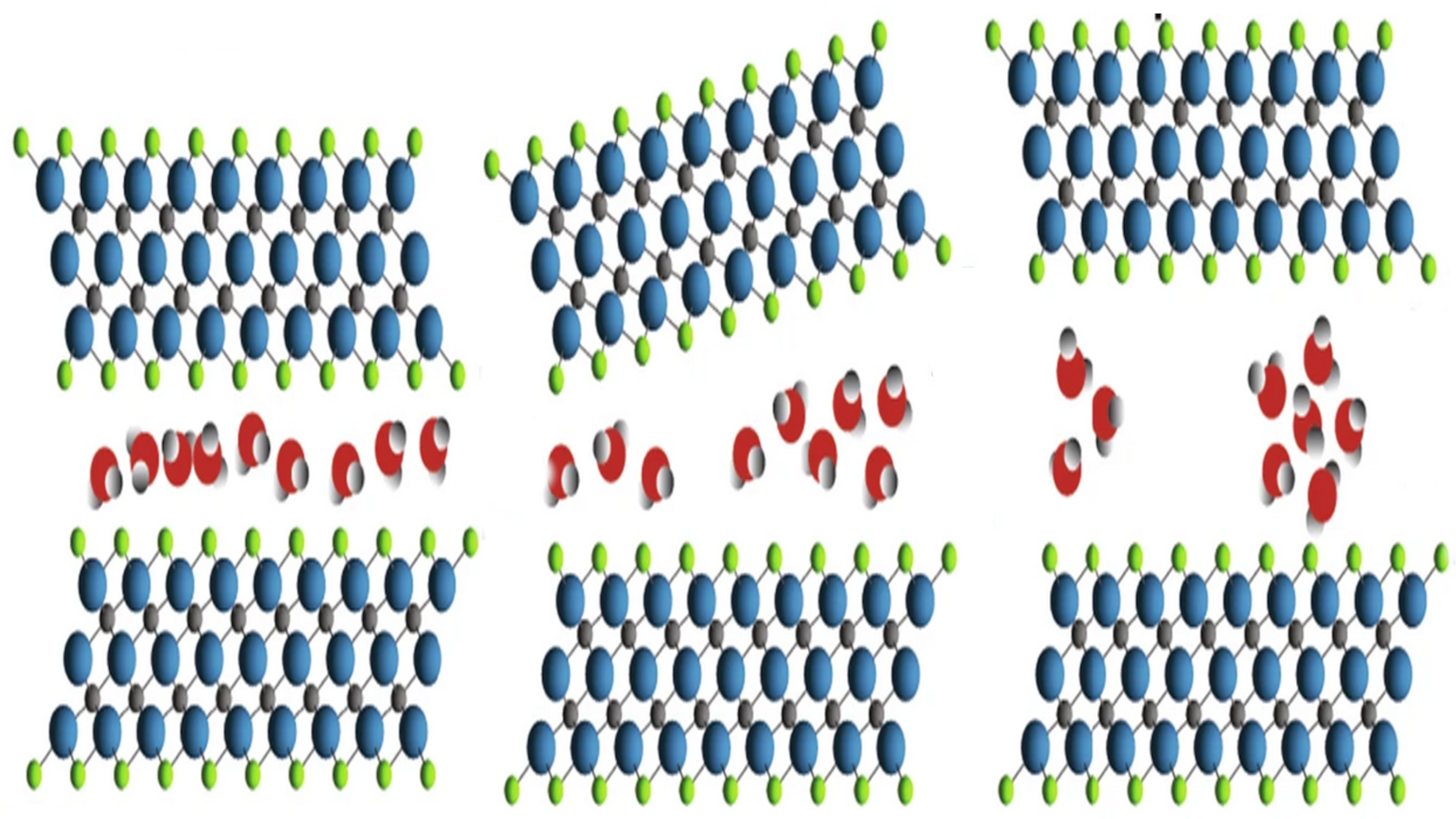
An international team led by Dr. Tristan Petit and Prof. Yury Gogotsi has investigated MXene with confined water and ions at BESSY II. In the MXene samples, a transition between localised ice clusters to quasi-two-dimensional water films was identified by increasing temperature. The team also discovered that the intercalated water structure drives a reversible transition from metallic to semiconducting behaviour of the MXene film. This could enable the development of novel devices or sensors...

New research uncovered a link between properties of graphite and how the material behaves in response to radiation. It seems like after graphite is irradiated for so long, it starts recovering.
This week in nanotech
$10.2M raised
2 funding rounds · 18 deals tracked
New products
 Nion-compatible In Situ STEM Holders for Electrical BiasingHummingbird Scientific Featured
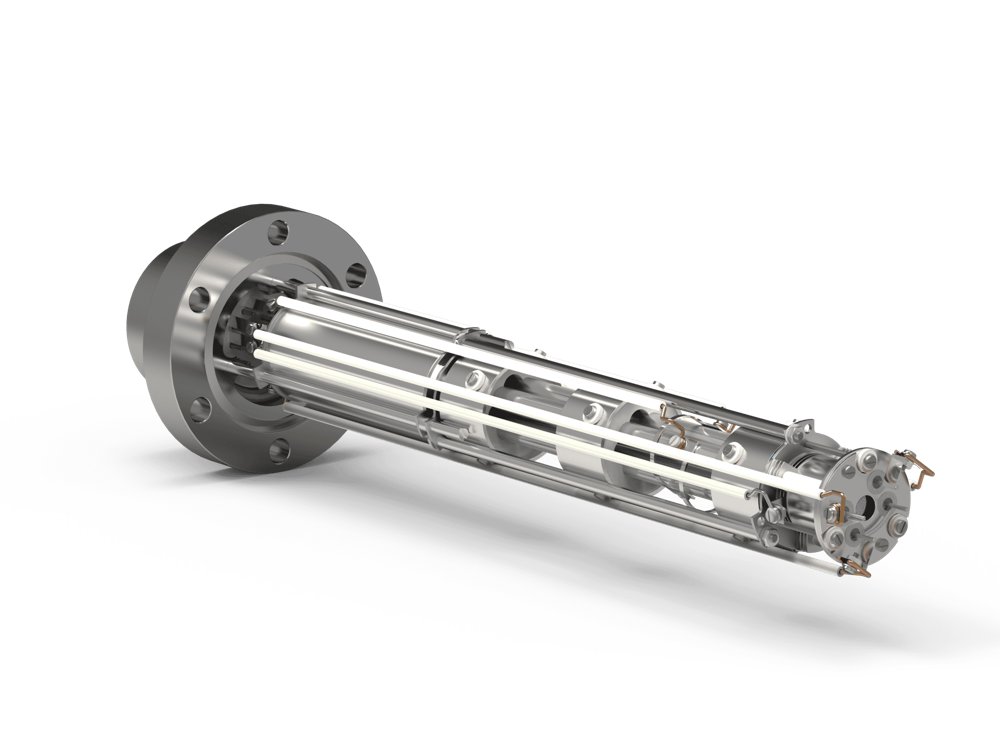 DLS-1 Mass Spectrometer for Fusion Gas AnalysisHiden Analytical Featured
 GHK-CuPeoples Peps
Market insights
Last 30 days: Quantum Technologies was the busiest vertical: 52 of 175 events (30%).
Money raised per month