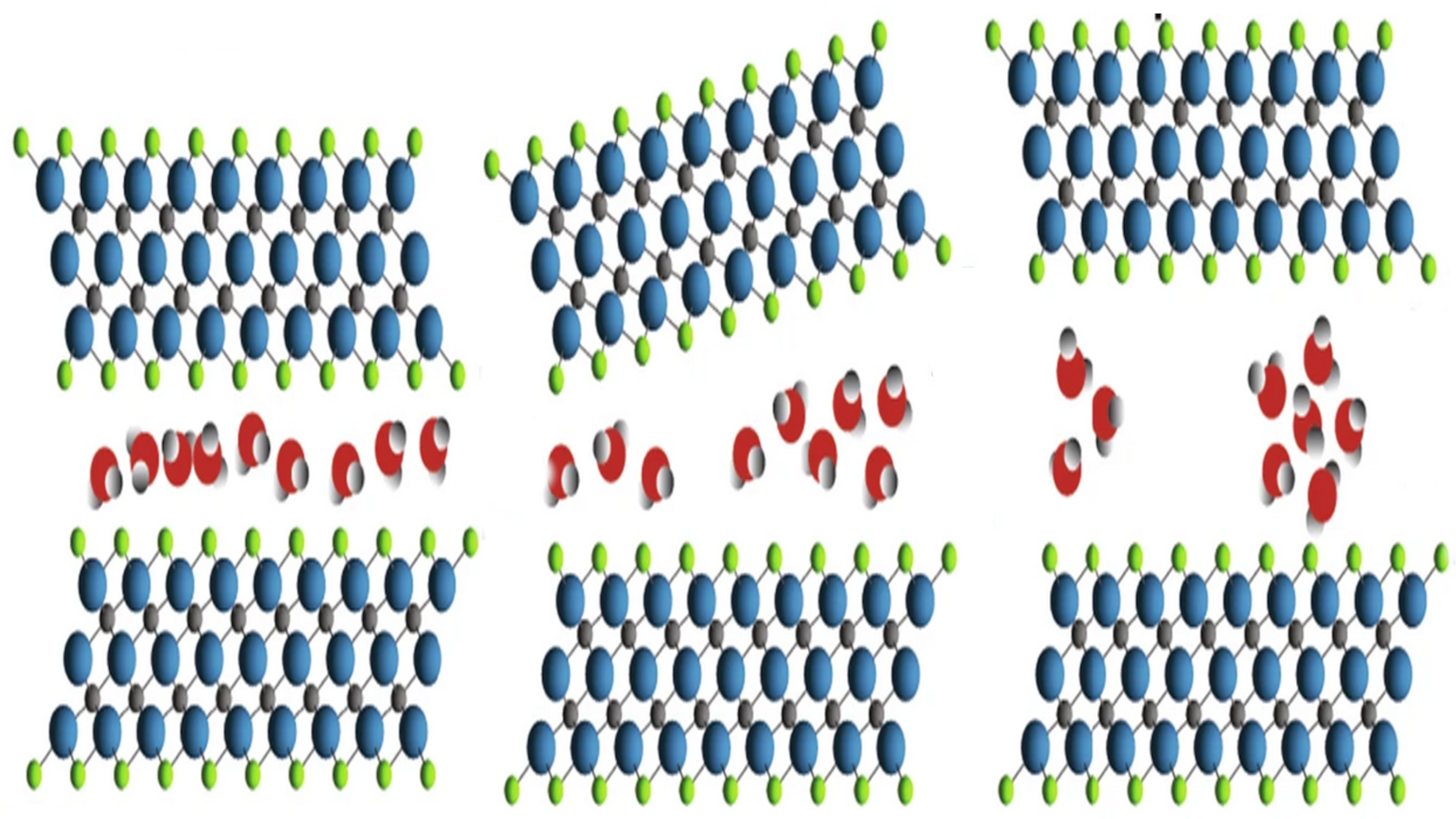
An international team led by Dr. Tristan Petit and Prof. Yury Gogotsi has investigated MXene with confined water and ions at BESSY II. In the MXene samples, a transition between localised ice clusters to quasi-two-dimensional water films was identified by increasing temperature. The team also discovered that the intercalated water structure drives a reversible transition from metallic to semiconducting behaviour of the MXene film. This could enable the development of novel devices or sensors based on MXenes.
Water still has unknown sides. When water is forced into two dimensions by enclosing it in appropriate materials, new properties, phase transitions, and structures emerge. MXenes as a class of materials offer a unique platform for exploring these types of phenomena: MXenes consist of transition metal carbides and nitrides with a layered structure whose surfaces can help them absorb water easily. The water forms an extremely thin film between the individual layers.
A team led by Dr Tristan Petit, HZB, and Yury Gogotsi, Drexel University, USA, has investigated a series of MXene samples containing enclosed water and different ions at BESSY II using various analytical methods.
X-ray structural analysis revealed the formation of amorphous ice clusters in the enclosed water, which increases the distance between the MXene layers. The previously metallic MXene film then becomes a semiconductor. “When heated above 300 K, the clusters dissolve again, restoring the distance between the layers and their metallic behaviour,” says Petit. This metal-semiconductor transition is therefore reversible, unless the water layer is removed. Further X-ray investigations using different techniques revealed unique characteristics in the water hydrogen bond networks.
‘In the next step, we need computer-aided modelling to improve our understanding of the formation of amorphous ice and its impact on electronic transport,’ says Katherine Mazzio, who is co-first author of the study. She concludes that MXene is ideal for investigating the phase changes of confined water, providing new insights into how water behaves at the nanoscale. The use of MXene as a material for energy storage and catalysis is already being discussed, and the role of confined water on the unique MXene properties for these applications is currently being investigated.
Reference
Conductivity hysteresis in MXene driven by structural dynamics of nanoconfined water
Teng Zhang, Katherine A. Mazzio, Ruocun John Wang, Mailis Lounasvuori, Ameer Al-Temimy, Faidra Amargianou, Mohamad-Assaad Mawass, Florian Kronast, Daniel M. Többens, Klaus Lips, Tristan Petit & Yury Gogotsi
https://www.nature.com/articles/s41467-025-62892-7
Helmholtz-Zentrum Berlin
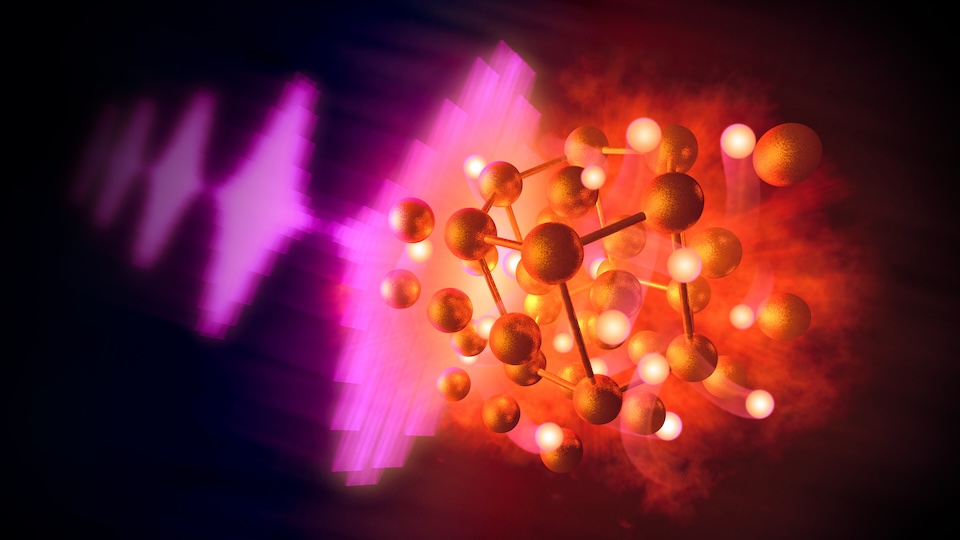
Gold is considered one of the most unreactive metals. However, under pressure conditions such as those found in the Earth's interior, something happens to the precious metal. Researchers at the High Energy Density (HED) experimental station at European XFEL compressed gold to over 40 gigapascals (GPa) using a diamond stamp cell and heated it to around 2,500 degrees Celsius with ultra-short flashes from the European XFEL X-ray laser. Under these conditions, the gold reacted with hydrogen, whic...
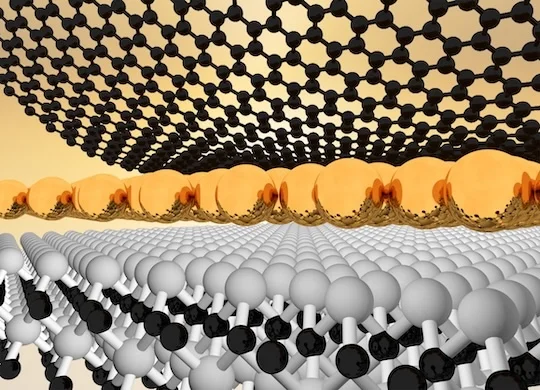
The research team studied how phonons interfere with each other by looking at the shape of their signal in Raman spectroscopy, a technique that measures the vibrational modes of a material. The spectrum revealed a sharply asymmetric line shape and in some cases showed a complete dip, forming an antiresonance pattern characteristic of intense interference. The effect proved highly sensitive to the specificities of the silicon carbide surface. The comparison between three different surface term...
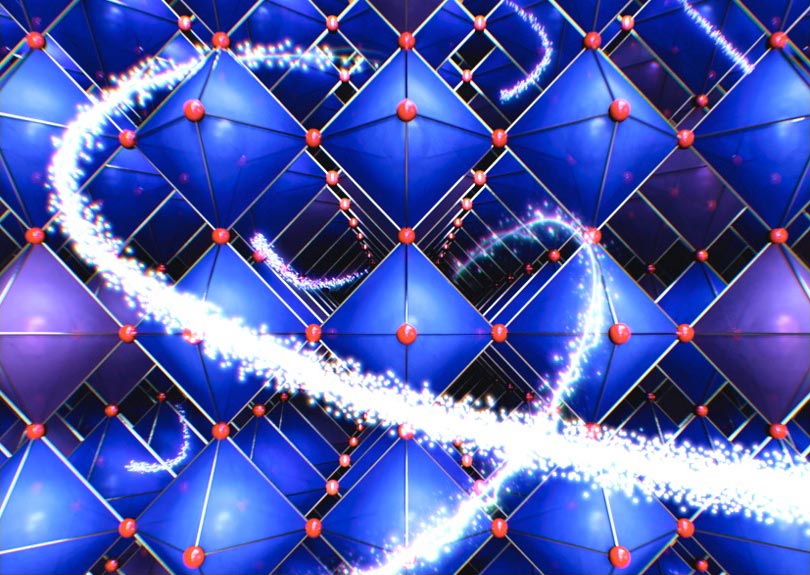
Publishing in Nature Materials, researchers at Kyushu University report that they have succeeded in developing a new SOFC with an efficient operating temperature of 300℃. The team expects that their new findings will lead to the development of low-cost, low-temperature SOFCs and greatly accelerate the practical application of these devices. The heart of an SOFC is the electrolyte, a ceramic layer that carries charged particles between two electrodes. In hydrogen fuel cells, the electrolyte tr...
This week in nanotech
$10.2M raised
2 funding rounds · 19 deals tracked
New products
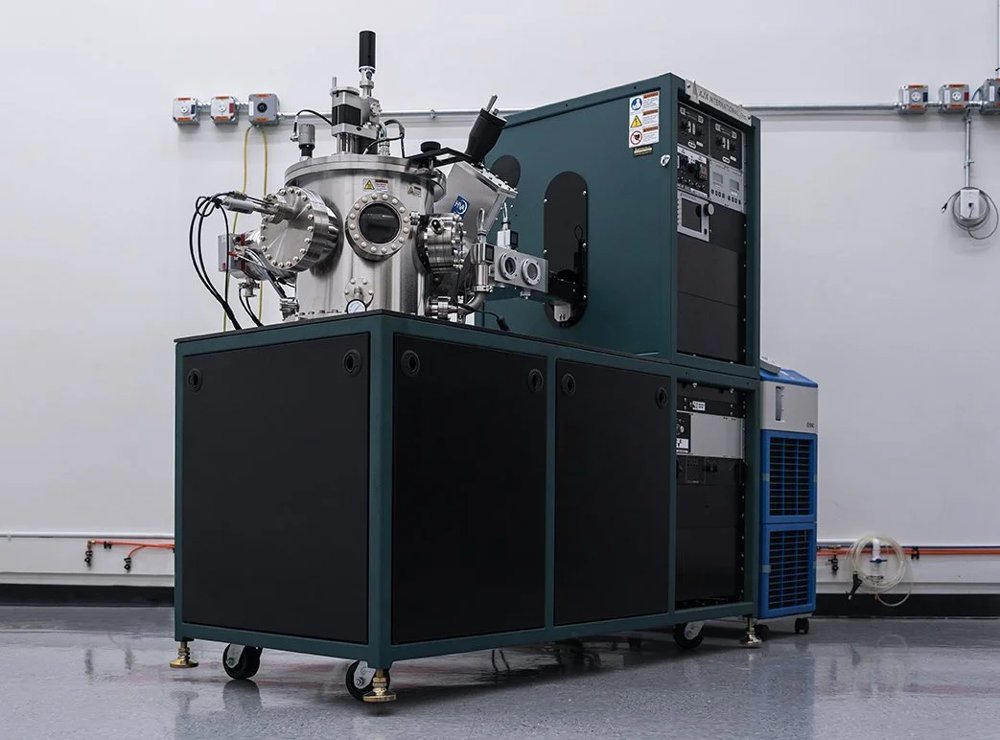 Orion Sputtering Deposition SystemsAJA International Featured
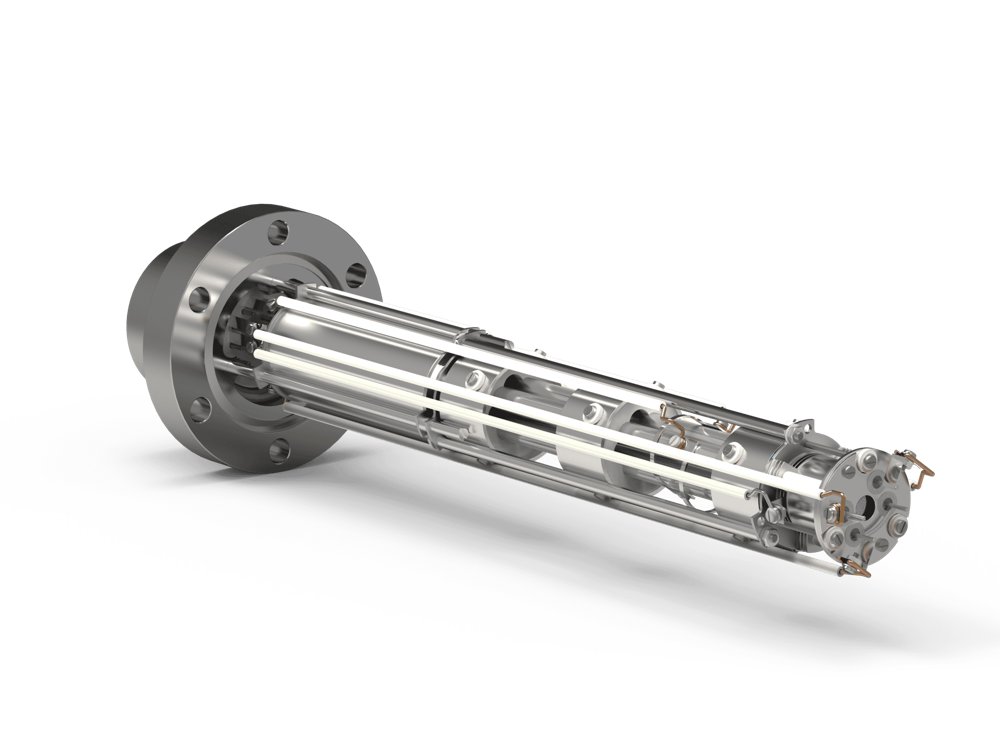 DLS-1 Mass Spectrometer for Fusion Gas AnalysisHiden Analytical Featured
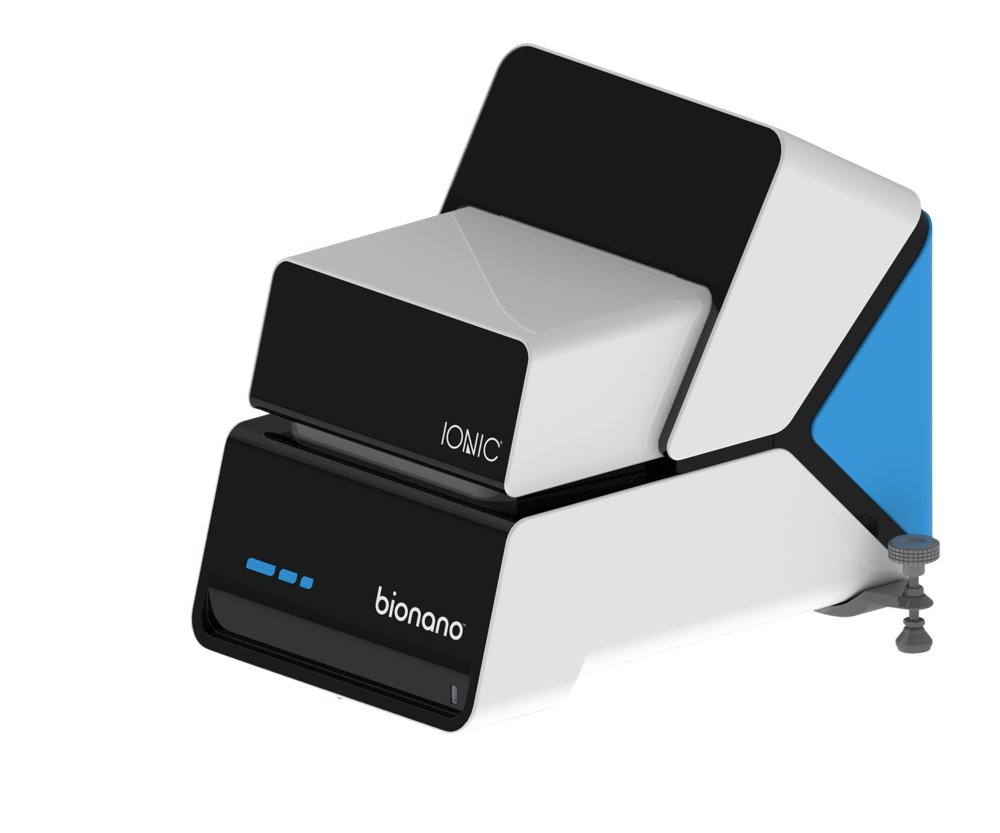 Ionic® Purification SystemBionano Genomics, Inc.
Market insights
Last 30 days: Quantum Technologies was the busiest vertical: 53 of 180 events (29%).
Money raised per month
Behind the deal
Who led Sandia National Laboratories’s $3.4M Grant?
See the investors with Insights Pro →