Los Angeles, 28 October 2026. Quantum Elements and Qarakal Quantum have been selected by the Israel-U.S. Binational Industrial Research and Development (BIRD) Foundation to jointly develop a quantum simulation platform for understanding and designing the chemical reactions that occur on material surfaces. The project, one of seven approved by the BIRD Foundation, has a budget of $2.4 million.
The project will combine Qarakal Quantum's modular superconducting quantum hardware and hardware-software co-design approach with Quantum Elements' software for advancing fault-tolerant quantum computing, using AI-driven co-design, error suppression, error correction and decoders. The companies will work toward a validated prototype capable of taking industrially relevant catalyst problems and turning them into quantum-ready computational workflows.
The project targets heterogeneous catalysis, with catalytic processes involved in the manufacture of an estimated 80-90% of chemical products. According to a MarketLine study cited in the release, the global chemical processing industry generates between $5 and $6 trillion annually. Surface reactions on catalysts play a central role in clean hydrogen production, CO2 conversion, nitrogen-fixation chemistry, hydrocarbon processing, and the performance and degradation of advanced coatings.
Today these systems are studied using high-performance computing and methods such as density functional theory. The release states that problems involving strong electronic correlation, surface defects, transition-metal active sites and complex bond-breaking pathways can require significant computational approximation. The project will investigate how quantum computing can complement existing tools.
"Our architecture is modular by design and tailorable for real-world workloads that s what makes this collaboration work," said Dr. Nissan Maskil, CEO and co-founder of Qarakal Quantum. "Useful quantum applications cannot be developed in isolation from the hardware that has to run them," said Izhar Medalsy, Co-Founder and CEO of Quantum Elements.
Quantum Elements' digital-twin technology will model the behavior and noise environment of Qarakal's superconducting system, supporting decisions around compilation, calibration, pulse-level execution, error suppression and algorithm design before quantum hardware time is used. The collaboration is designed to produce benchmark chemistry models and quantum algorithms with demonstrations and API outputs intended for chemists and materials engineers.
Source: Qarakal Quantum news
Quint Computing has raised €9.1 million in Germany's largest initial funding round for a quantum computing company, plus a €2.2 million EIC Pathfinder grant. The funds will support team growth and its superconducting chip development.

IQM Quantum Computers said its cloud-accessible IQM Emerald system fully entangled all 54 qubits simultaneously. The company reported a fidelity of 0.516 at the full 54 qubits with readout error mitigation applied.
Pasqal used a 256-qubit Rydberg-atom processor to study relaxation in a two-dimensional quantum magnet. The system showed rapid thermalization, prethermalization and a slow relaxation regime where tensor-network calculations stopped agreeing.
This week in nanotech
$13.6M raised
2 funding rounds · 22 deals tracked
New products
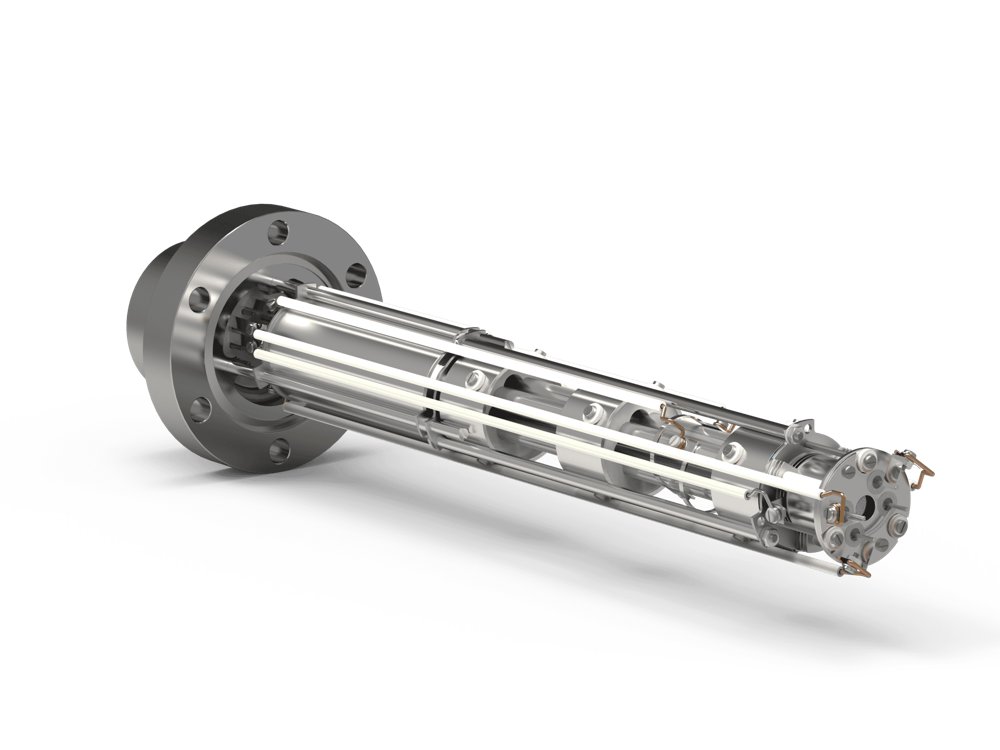 DLS-1 Mass Spectrometer for Fusion Gas AnalysisHiden Analytical Featured
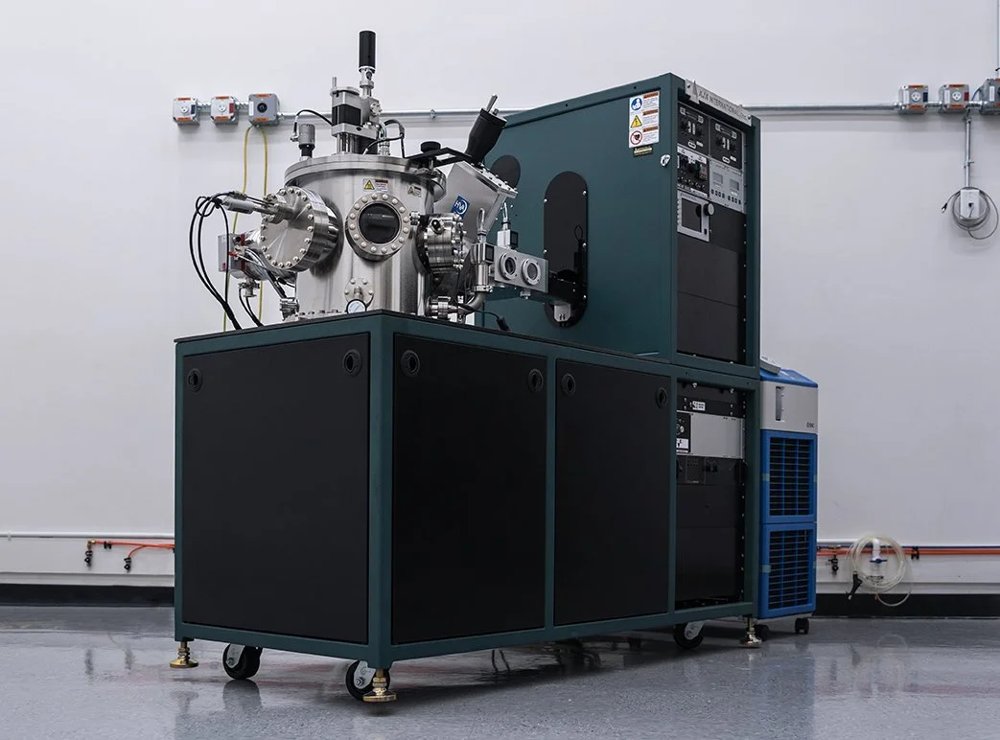 Orion Sputtering Deposition SystemsAJA International Featured
 Aether®Lam Research
Market insights
Last 30 days: Quantum Technologies was the busiest vertical: 63 of 197 events (32%).
Money raised per month