Quantinuum and GE Vernova's Advanced Research Center are launching a collaboration to apply quantum computing to the study of high-temperature superconductivity. The research will focus on Fermi-Hubbard modeling, a framework for studying how interacting electrons give rise to complex material properties.
The collaboration combines Quantinuum's full-stack quantum computing capabilities, including access to its Helios computer and the Nexus developer platform, with GE Vernova's expertise in material science and engineering simulation for industrial applications. Quantinuum said its researchers have already measured superconducting pairing correlations, including s-wave and d-wave pairing, in Fermi-Hubbard models simulated on Helios.
GE Vernova said high-temperature superconductors could address limits on the size, weight and efficiency of electrical equipment. Potential applications cited include superconducting generators, windings for utility generators and marine propulsion motors, cables that carry more power through constrained spaces, and fault current limiters for short circuits. The companies noted that wider use depends on overcoming challenges in cooling, material performance, manufacturing and cost.
"High-temperature superconductors could help us overcome important limits on the size, weight, and efficiency of electrical equipment, but understanding and improving these materials remains a significant scientific challenge," said Jonathan Owens, PhD, Senior Scientist, Computational Materials Physics at GE Vernova. "By combining our materials simulation and industrial expertise with Quantinuum's quantum computing capabilities, we can explore new approaches to these difficult problems while building the expertise to assess where quantum computing can make a meaningful contribution."
The collaboration extends GE Vernova's quantum research into a new area of materials work and supports development of its internal quantum talent. Its previous published work includes investigations of quantum algorithms for carbon-capture materials using simulated quantum processors.
Source: Quantinuum news
Quantinuum and GE Vernova's Advanced Research Center are collaborating on quantum computing research into high-temperature superconductivity, focusing on Fermi-Hubbard modeling with access to Quantinuum's Helios computer.
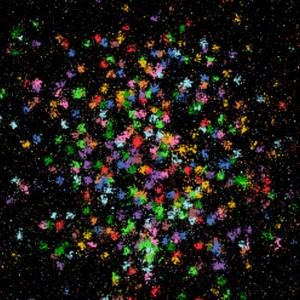
Researchers at ICFO have extended their quantum-gas microscope to image strontium-87, a fermion with ten distinct spin states, resolving every spin in a single experimental run. By tuning a laser to strontium's narrow red transition, they excite one spin state at a time and assign each a color, producing multicolored images of the full spin population.
Pasqal has created AtomIQ-Lab, a joint laboratory with CNRS and Institut d'Optique Graduate School, inaugurated in November 2025. The lab formalizes a long-standing research relationship.
This week in nanotech
$18.9M raised
4 funding rounds · 38 deals tracked
New products
 DLS-1 Mass Spectrometer for Fusion Gas AnalysisHiden Analytical Featured
 Ti-WCMBN Nanomaterialia Featured
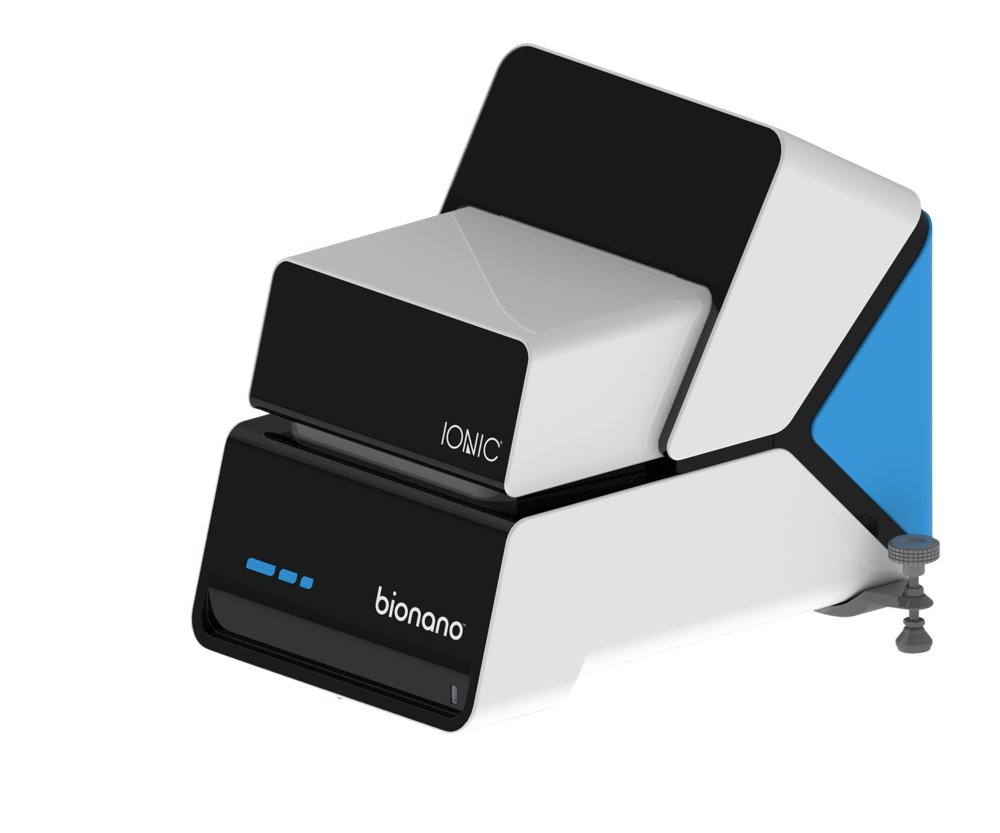 Ionic® Purification SystemBionano Genomics, Inc.
Market insights
Last 30 days: Semiconductors & Electronics drew the most money: $547.7M.
Money raised per month