ICFO-The Institute of Photonic Sciences
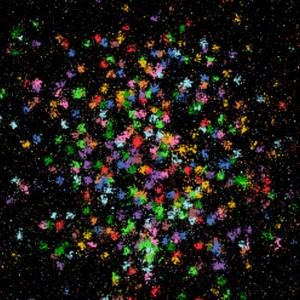
In 2024, researchers at the Ultracold Quantum Gases group at ICFO built a quantum-gas microscope capable of imaging individual atoms in strontium quantum gases for the first time, marking a key enabling step for quantum simulation. At that time, the researchers imaged strontium-84, a boson that has no spin. Now, Carlos Gas-Ferrer, Dr. Antonio Rubio-Abadal, Dr. Sandra Buob, Leonardo Bezzo, and Dr. Jonatan Höschele, led by ICREA Prof. Leticia Tarruell, have used their apparatus to image strontium-87. This fermion features ten different spin states, producing colorful pictures in which each individual state can be distinguished. Reported in Physical Review X, this marks the first realization of a quantum-gas microscope that can detect individual atoms with so many available spins in a single shot.
This capability opens new possibilities for the quantum simulation of materials, where fermionic atoms take the role of electrons and the crystalline structure of a solid is replaced by an optical lattice created with interfering laser beams. Such systems are traditionally used to investigate the Hubbard model, a cornerstone in the understanding of high critical temperature superconductors. Remarkably, strontium-87 will allow ICFO researchers to go beyond the two spin states of electrons, creating artificial materials that feature three or more spin states. This multi-spin freedom is especially powerful for realizing exotic quantum magnetism, where the spins align in complex magnetic configurations. It could also result in spin liquid behavior, a mysterious phase of matter where they cannot decide how to order and remain suspended in a superposition of many quantum states.
The technique also holds promise for quantum computing, where researchers are exploring neutral alkaline-earth atoms like strontium as qudits (a generalization of qubits that can encode more than two possible values). Strontium-87 atoms could make an ideal qudit platform, and this imaging protocol offers a reliable readout method that remains fully compatible with the strict requirements of qudit quantum computing.
Imaging individual atoms in full color
“The key ingredient for making this experiment was the red narrow-line transition of strontium,” says Carlos Gas-Ferrer, first author of the article. Thanks to this extremely well-defined transition, a laser beam tuned to the appropriate frequency only excites the atoms in a specific spin state. These atoms absorb the laser light, become excited and, when they are subsequently de-excited, emit fluorescence photons that the microscope can detect; all the other spin states remain unaffected and stay ‘dark’ to the laser. “The transition is gentle enough to allow us to resolve the spin, while being strong enough to induce a fluorescence signal”, clarifies the researcher.
By exploiting this property, ICFO researchers found a way to distinguish the many spins of strontium-87 atoms in a single experimental run. First, a laser excites the atoms in the first spin state, which emit fluorescence and yield a first image with a specific color assigned to it. The atoms in the next spin state are then transferred to that same addressable state, allowing the laser to excite them, emit fluorescence, and produce a second image with a new color assigned.
The protocol thus consists of sequentially transferring the atoms from each remaining spin state to the addressable state and inducing them to fluoresce. In this way, ICFO researchers can image and resolve the population of all ten spin states of strontium-87 in a single experimental realization, obtaining images that look like multicolored confetti, with each color representing a distinct spin state. Beyond their visual appeal, these images mark a crucial experimental milestone and open exciting new avenues for quantum technologies.
Reference
Spin-resolved microscopy of 87Sr SU(N) Fermi-Hubbard systems
Carlos Gas-Ferrer, Antonio Rubio-Abadal, Sandra Buob, Leonardo Bezzo, Jonatan Höschele, and Leticia Tarruell
Pasqal has created AtomIQ-Lab, a joint laboratory with CNRS and Institut d'Optique Graduate School, inaugurated in November 2025. The lab formalizes a long-standing research relationship.
Pasqal used a 256-qubit Rydberg-atom processor to study relaxation in a two-dimensional quantum magnet. The system showed rapid thermalization, prethermalization and a slow relaxation regime where tensor-network calculations stopped agreeing.
Quantum Elements and Qarakal Quantum have been selected by the BIRD Foundation to jointly develop a quantum simulation platform for chemical reactions on material surfaces. The project has a budget of $2.4 million.
This week in nanotech
$111.7M raised
4 funding rounds · 18 deals tracked
New products
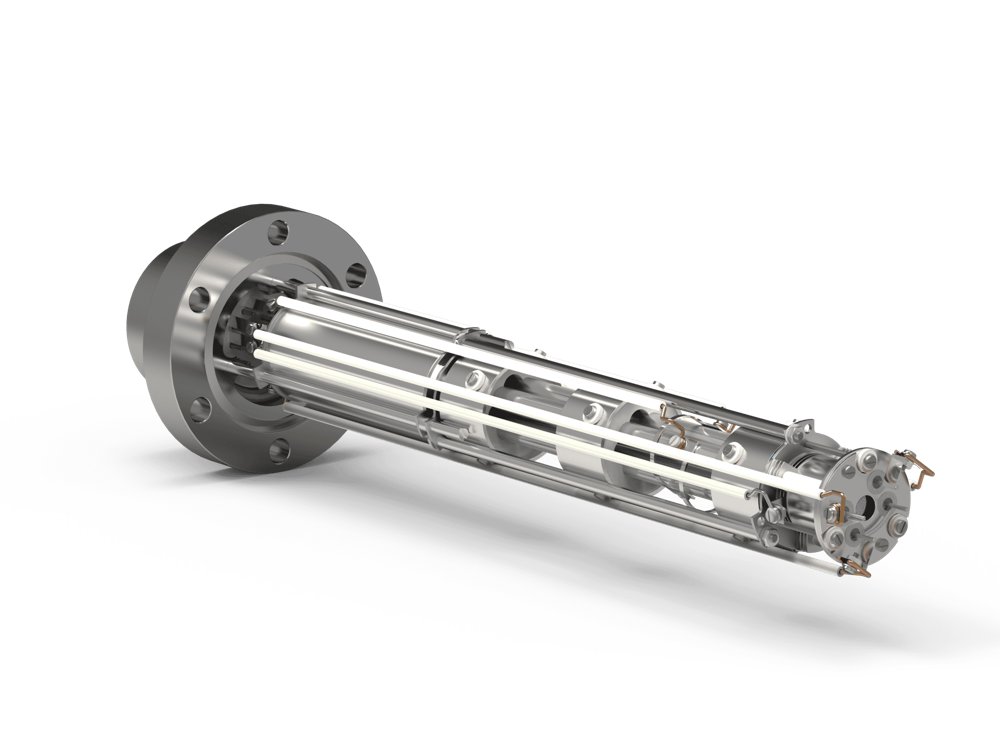 DLS-1 Mass Spectrometer for Fusion Gas AnalysisHiden Analytical Featured
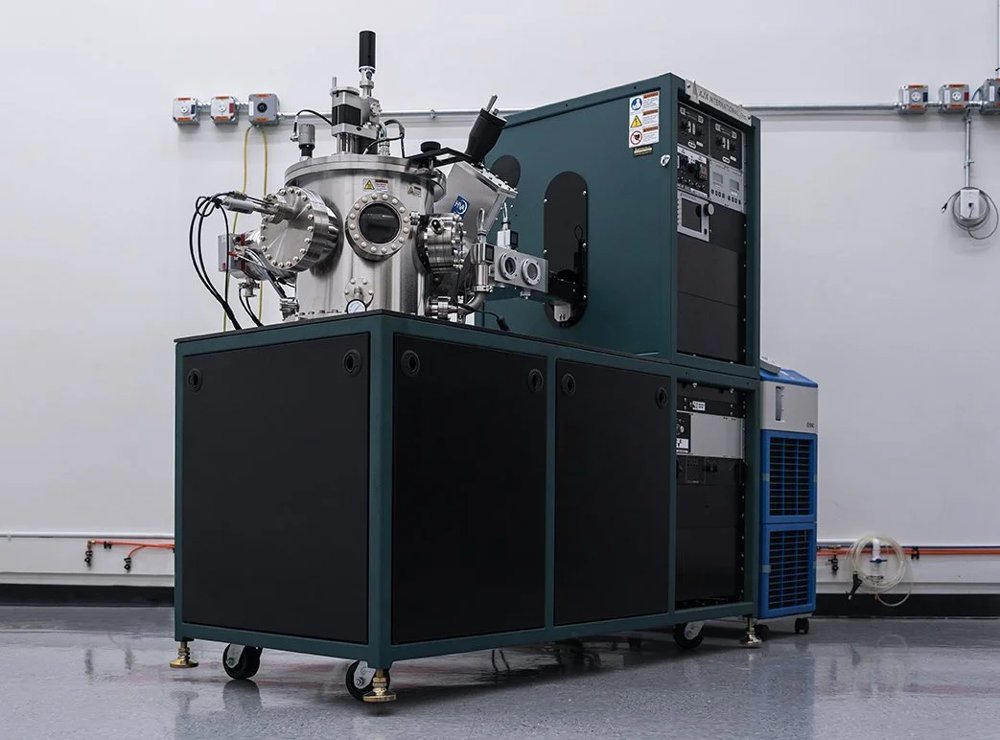 Orion Sputtering Deposition SystemsAJA International Featured
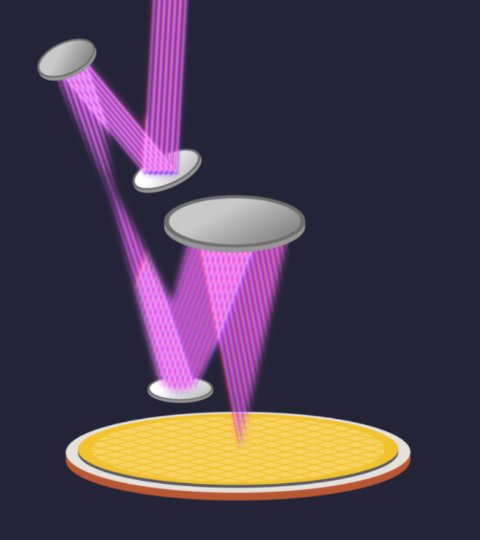 Aether®Lam Research
Market insights
Last 30 days: Semiconductors & Electronics drew the most money: $547.7M.
Money raised per month