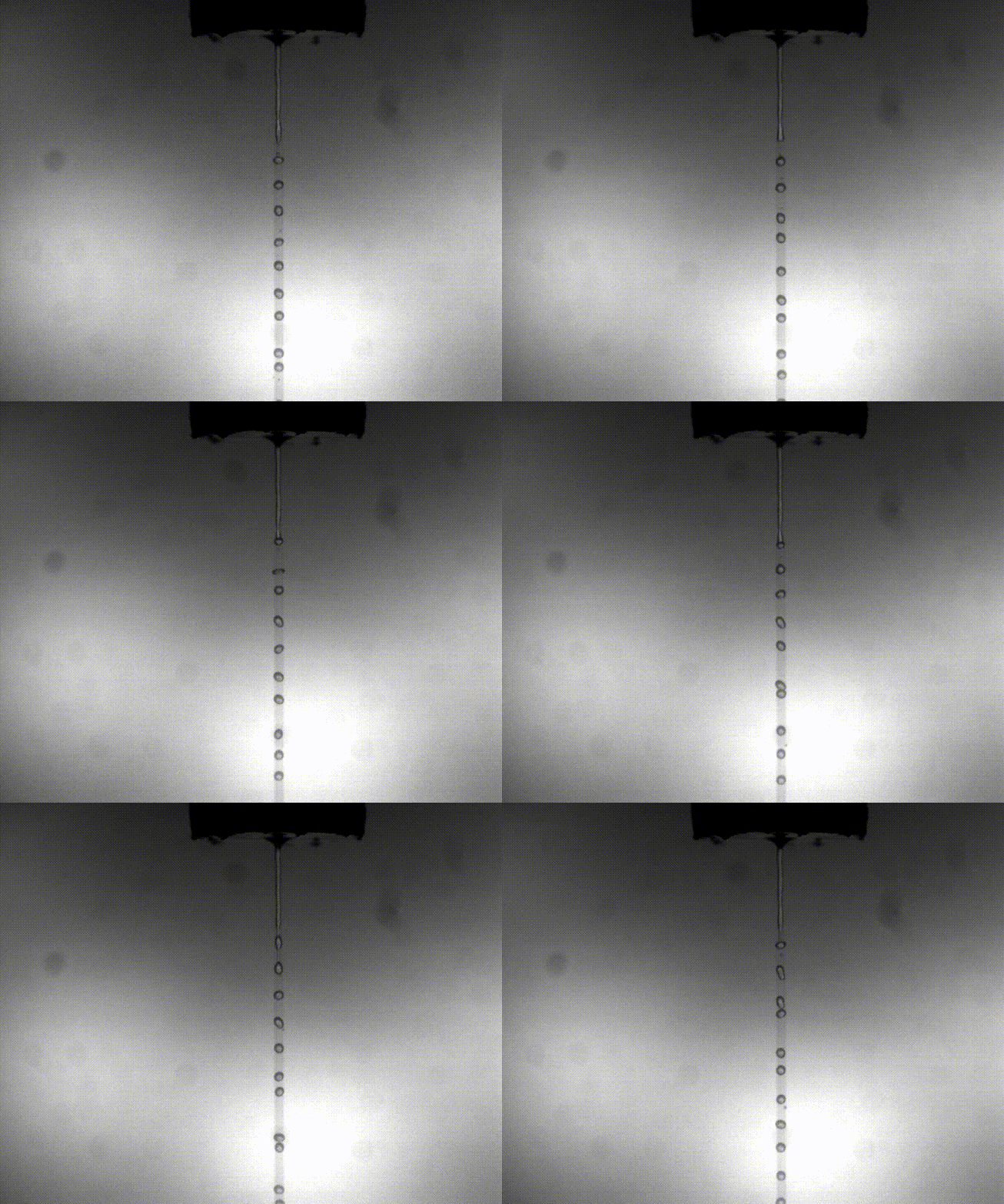
UT researchers succeeded in the rapid fabrication of microscopic ‘antibubbles’. Previous methods to produce these liquid droplets surrounded by an air layer were either lack of controllability or prone to clogging and were much slower. The team of researchers recently published their findings in the scientific journal Advanced Materials.
Antibubbles that are smaller than one millimetre provide many applications in, for example, the food and pharmacy industry. Their hydrophobic – but porous – shell gives the antibubbles an outside air layer for extra protection. Together, both layers can keep the antibubble intact for several days. “With ultrasound, we can break the hydrophobic shell at a specific moment, after which the antibubble releases its content. This is for example useful for the controlled release of medicines, at specific locations within the body”, explains first author Jieke Jiang.
Jetting through a liquid layer
To create these useful microparticles, the researchers developed a new concept in which a nozzle is jetting through a liquid layer (JetALL). Jiang explains: “We designed and 3D-printed a small, cone-shaped reservoir that holds the liquid layer. The cone is big enough to prevent clogging but small enough to hold the layer together by its surface tension. The liquid layer is a suspension with silica nanoparticles which forms the outside hydrophobic shell. This shell stabilizes the air layer that forms the antibubbles.”
Fast and consistent
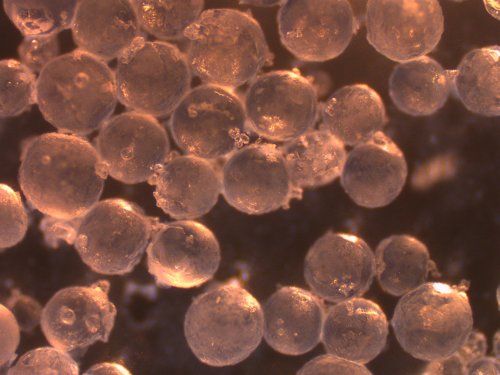
The new method is rapid; it generates microcapsules at flow rates up to 3000 capsules per second. The capsules are very similar in size. Jiang: “We measured them to be all between 100 to 150 micrometers for one of the samples.” Other bio-degradable materials, such as polylactic acid (PLA) could also be used as a protective shell, instead of the air layer. This tunability provides great opportunities for the use of drug delivery, where you want to determine the optimal dose of medicine precisely.
Reference
High-Throughput Fabrication of Size-Controlled Pickering Emulsions, Colloidosomes and Air-Coated Particles via Clog-Free Jetting of Suspensions
Jieke Jiang, Albert T. Poortinga, Yuanyuan Liao, Tom Kamperman, Cornelis H. Venner, Claas Willem Visser
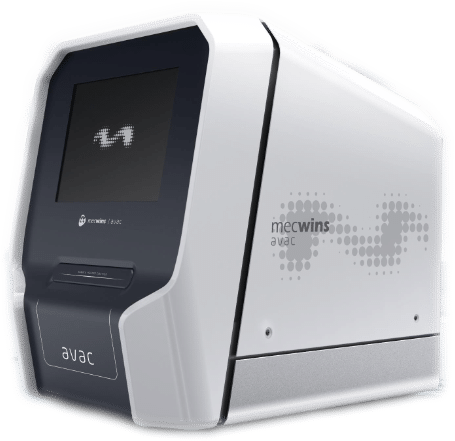
Mecwins has described its AVAC technology, which labels target proteins with plasmonic nanoparticles and counts each one individually by dark-field micro-spectrophotometry. The AVAC Analyzer reaches femtogram-range sensitivity.
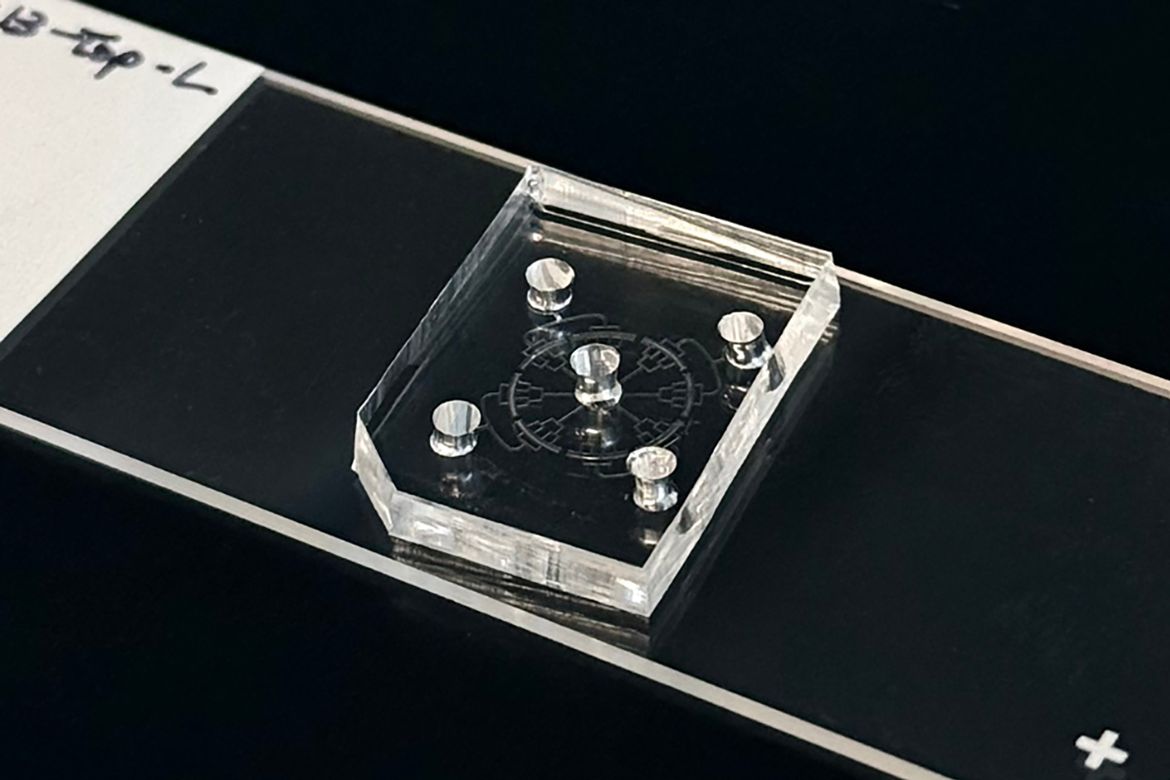
Hesperos has received an SBIR Phase II grant (R44AI197758) from NIAID to expand its Malaria-on-a-Chip platform, adding support for viable, replicating parasite strains and predictive PK/PD modeling.
UCLA researchers have shown that briefly squeezing a cell's nucleus for milliseconds can loosen tightly packed DNA and make CRISPR activation far more effective at reprogramming cell identity. After mapping which genomic regions opened, they aimed guide RNAs at those sites, raising the share of mouse skin cells converted to neurons from about 3% to 10%. Adding a priming step that activated Oct4 pushed conversion to roughly 40%.
This week in nanotech
$271M raised
7 funding rounds · 31 deals tracked
New products
 Nion-compatible In Situ STEM Holders for Electrical BiasingHummingbird Scientific Featured
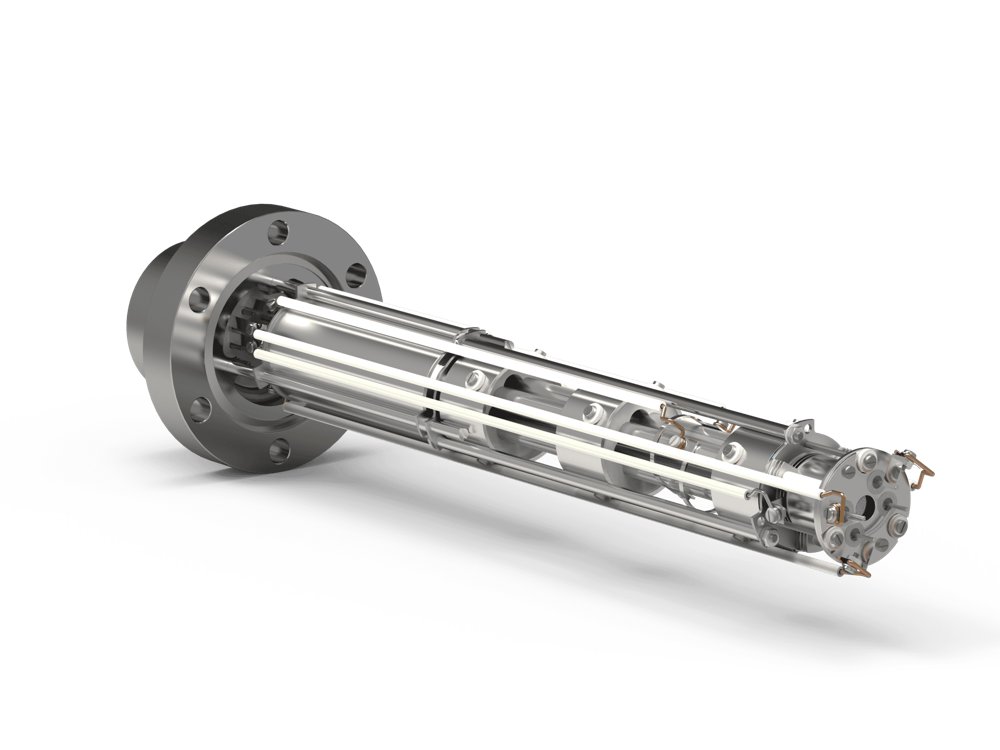 DLS-1 Mass Spectrometer for Fusion Gas AnalysisHiden Analytical Featured
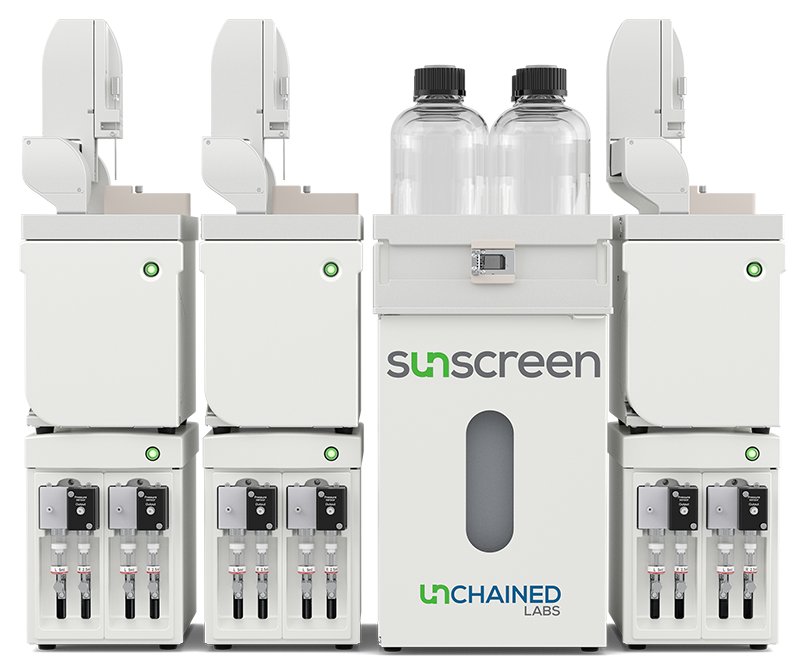 SunscreenUnchained Labs
Market insights
Last 30 days: Quantum Technologies drew the most money: $3.17B.
Money raised per month
Behind the deal
Who led Xanadu Quantum Technologies Limited’s $10M Grant?
See the investors with Insights Pro →