Aalto University
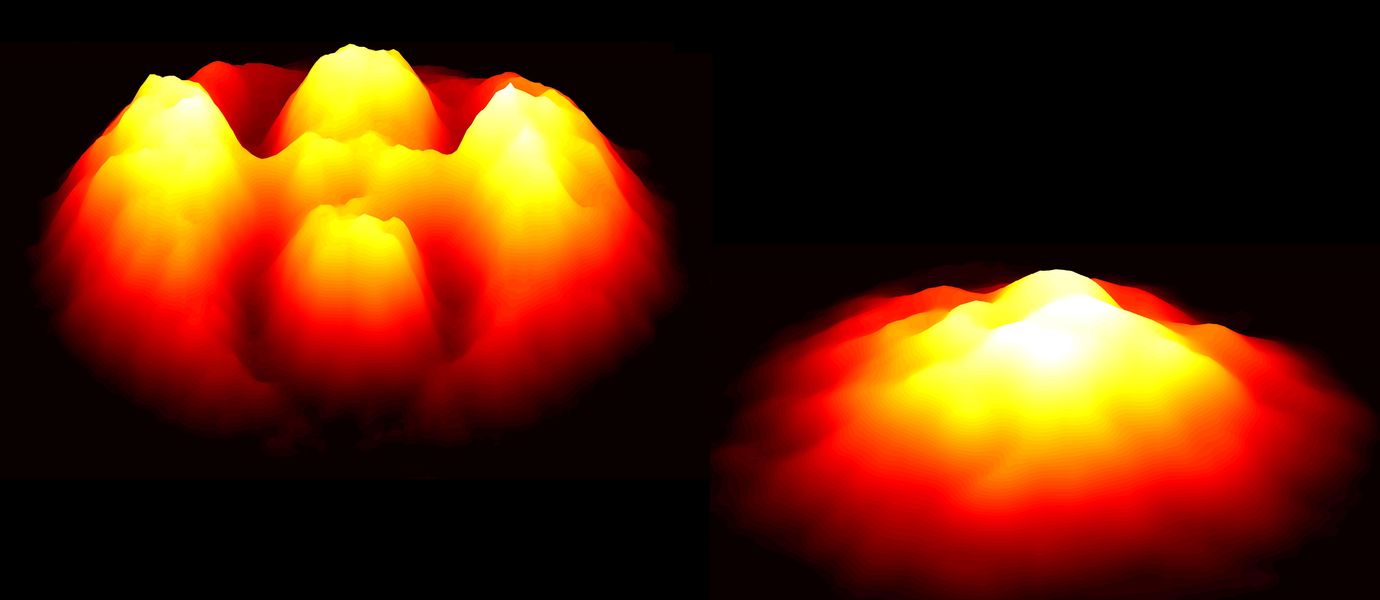
A quantum gas can be tied into knots using magnetic fields. Our researchers were the first to produce these knots as part of a collaboration between Aalto University and Amherst College, USA, and they have now studied how the knots behave over time. The surprising result is that the knots untie themselves over a short period of time, before turning into a vortex.
The research was mainly carried out by Tuomas Ollikainen, a PhD student at Aalto university who split his time between carrying out experimental work in Amherst in Massachusetts, and analyzing the data and developing his theories at Aalto.
"We hadn't been able to study the dynamics of these sorts of three-dimensional structures experimentally before, so this is the first step to this direction." says Ollikainen. "The fact that the knot decays is surprising, since topological structures like quantum knots are typically exceptionally stable. It's also exciting for the field because our observation that a three-dimensional quantum defect decays into a one-dimensional defect hasn't been seen before in these quantum gas systems"
The researchers hope their new study opens up new avenues in experimental research. One of the key breakthroughs in the study was being able to have better control over the state of the quantum gas, which allowed them to detect changes in its structure, like the decay of the knots and the formation of the vortex.

"Of course one can simulate these things but actually making quantum knots is not that easy. By being able to control the environment better we can explore different effects and get to understand more about these exciting quantum systems." tells Ollikainen.
"When we tied quantum knots in 2016, it was the first realization of three-dimensionally winding topological structures. That was like breathing air another planet for the first time. Amazing." says Prof. Mikko Möttönen, head of Quantum Computing and Devices group where Ollikainen works.
"I know that many researchers have paid attention to our work and got inspiration to try this out in completely different type of systems. It would be great to see this technology being used some day in a practical application, which may well happen. Our latest results show that while quantum knots in atomic gases are exciting, you need to be quick to use them before they untie themselves. Thus the first applications are likely to be found in other systems." Möttönen continues.
Decay of a Quantum Knot
T. Ollikainen, A. Blinova, M. Möttönen, and D. S. Hall
Physical Review Letters Vol. 123, Iss. 16 (2019)
DOI: 10.1103/PhysRevLett.123.163003
Contact information:
Mikko Möttönen
Professor of Applied Physics at Aalto
mikko.mottonen@aalto.fi
Phone: +358505940950
Physicists at Auburn University used laser pulses to bring order to polar nanoregions in a modified strontium titanate crystal, resolving a decades-old debate over whether these charged islands pre-exist or form as atoms shift together. Sensitive optical measurements show the regions are already present before aligning on cooling. Brief light pulses aligned them for about a picosecond, showing light can both create and read the pattern.
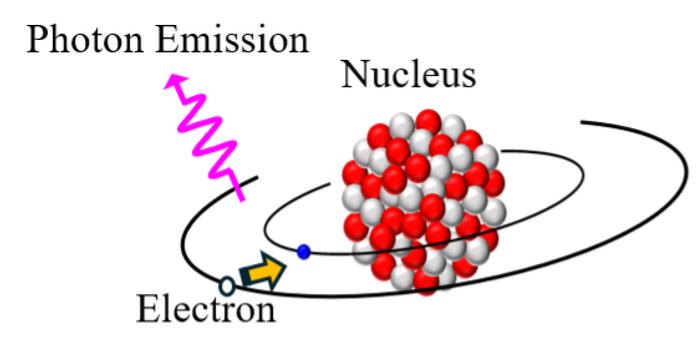
Extreme ultraviolet spectroscopy of highly charged lutetium and ytterbium ions, generated in an electron beam ion trap, has resolved a long-standing anomaly in rare-earth nuclear charge radii. Converting emission line energy shifts into radius differences shows the lutetium nucleus is slightly smaller than ytterbium's, restoring the expected odd-even staggering.
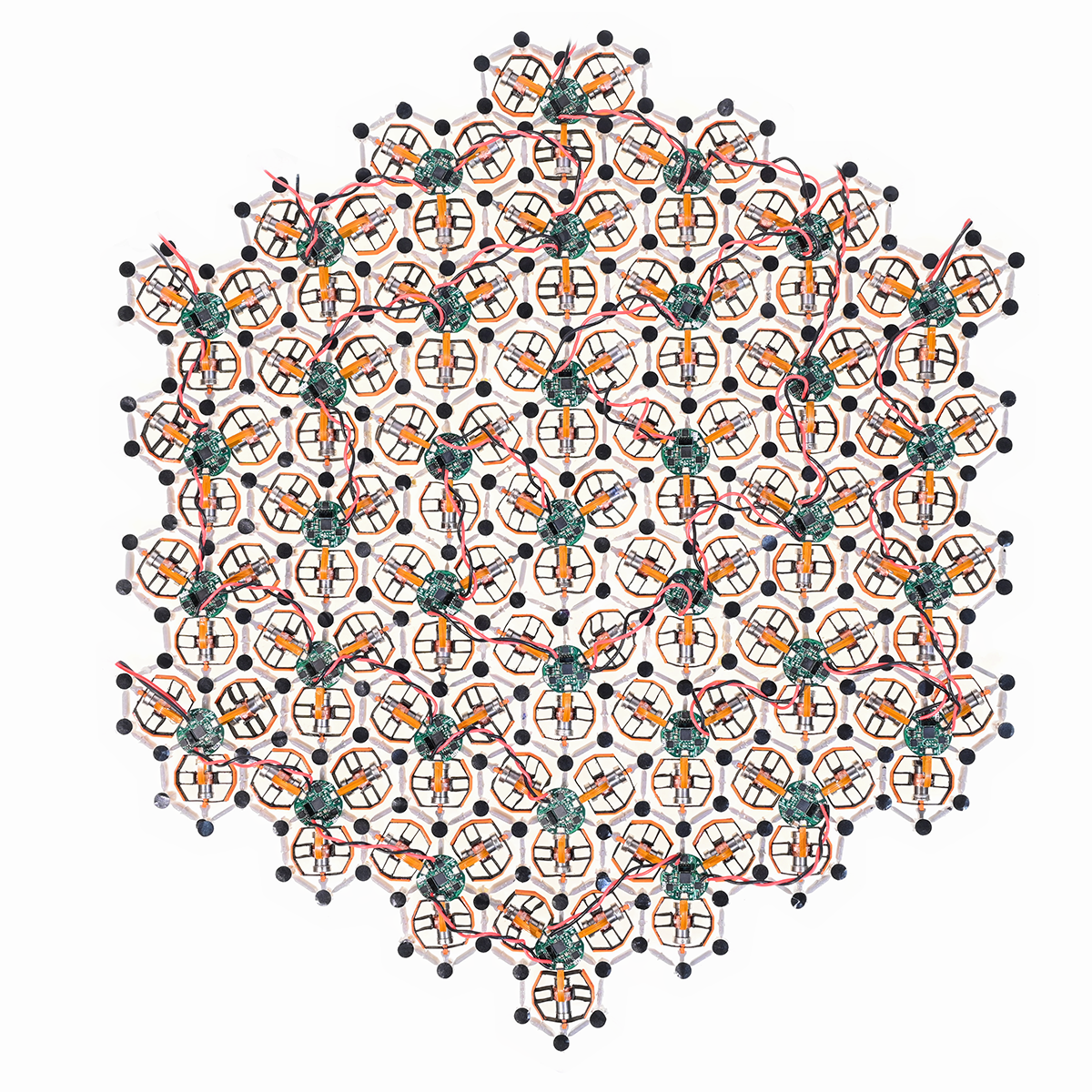
Physicists have built mechatronic metamaterials whose connected robotic elements oscillate autonomously, forming time crystals that repeat patterns in both space and time. Fabricated as a one-dimensional ring and a two-dimensional surface, the active elastic structures show wave coarsening that drives spontaneous time-crystallization, and their order survives small random perturbations.






