Politecnico di Milano
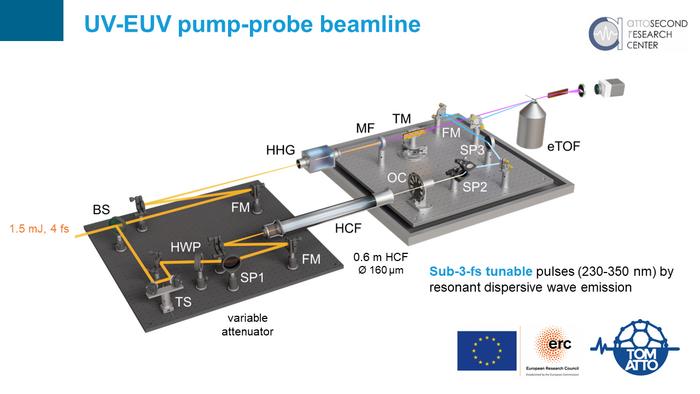
Observing a molecule in the very first instants after it has absorbed light and tracking the coordinated motion of electrons and nuclei with a temporal resolution of just three femtoseconds. This is the result achieved by an international research group led by the Politecnico di Milano, which has developed a new apparatus for studying ultrafast photochemical processes.
The experimental platform achieves a temporal resolution of approximately 3 femtoseconds - one femtosecond is one millionth of one billionth of a second - placing it among the world leaders in time-resolved photoelectron spectroscopy.
The result, published in Nature Communications, was obtained as part of the European ERC Synergy TOMATTO project.
To demonstrate the capabilities of the new method, the researchers studied acetylacetone, a molecule used as a model to understand how light can trigger ultrafast transformations. Thanks to the precision achieved, it was possible to distinguish two successive passages through a conical intersection, a crucial junction at which the molecule changes electronic state and is directed towards a specific transformation pathway. These are phenomena that previously available instruments were unable to separate in time.
“With this apparatus, we can follow a molecule in the very first instants after it absorbs light, with a level of detail that was not previously accessible. It is like vastly increasing the number of frames in a film: a seemingly single transformation finally reveals all its intermediate stages,” says Mauro Nisoli, professor at the Department of Physics of the Politecnico di Milano and coordinator of the ERC Synergy TOMATTO project.
The new apparatus uses two extremely short light pulses synchronised with exceptionally high precision. The first pulse, in the ultraviolet, is absorbed by the molecule and initiates its evolution. The second, in the extreme ultraviolet and lasting a few attoseconds, reaches the molecule after a controllable time interval and makes it possible to reconstruct its state at that precise moment.
By repeating the measurement at successive intervals, the researchers can track the redistribution of energy and the joint motion of electrons and nuclei. In the case of acetylacetone, the experiment made it possible to reconstruct the initial stages of the transformation triggered by light in unprecedented detail.
“What we observe is the moment when light sets the molecule in motion and reorganises its internal energy,” explains Maurizio Reduzzi, Associate Professor at the Department of Physics of the Politecnico di Milano. “Being able to follow these stages directly means getting closer to the heart of photochemical processes, where a transformation truly takes shape.”
The ability to change the wavelength of the ultraviolet pulse makes the apparatus suitable for studying different molecules and electronic states. The method may therefore be applied to more complex systems, from molecules of biological interest to photoactive materials and processes linked to energy conversion.
The platform also opens up new prospects for attochemistry, the field of research that studies the possibility of observing and, in the future, controlling chemical transformations by acting on the motion of electrons before the slower motion of atoms begins.
The study was carried out by researchers from the Politecnico di Milano, the Institute for Photonics and Nanotechnologies of the CNR, Heriot-Watt University in Edinburgh and the University of Bologna, with the support of the European Research Council through the ERC Synergy TOMATTO project.
Reference
3-fs-resolved UV/XUV photoelectron spectroscopy in the gas phase
Marta Pini, Stefano Severino, Lorenzo Mai, Marta Ortolan, Daniele Mocci, Lorenzo Colaizzi, Nikoleta Kotsina, Joleik Nordmann, Christian Brahms, John C. Travers, Matteo Lucchini, Rocío Borrego-Varillas, Flavia Aleotti, Artur Nenov, Maurizio Reduzzi, and Mauro Nisoli
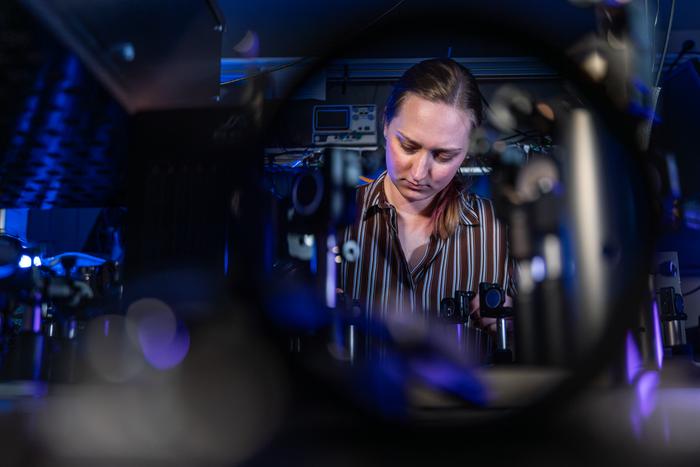
Researchers at Jena and Regensburg have demonstrated a new optical method to quantitatively determine the Berry curvature of tungsten diselenide, an atomically thin semiconductor. By firing two ultrashort laser pulses at the sample and analysing the polarisation of the emitted second-harmonic light, they extracted the local Berry curvature within hundreds of femtoseconds, matching theoretical predictions.
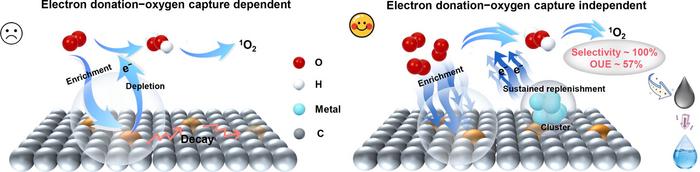
A nitrogen-doped carbon cathode with cobalt clusters and oxygen vacancies decouples oxygen capture from electron donation, enabling a self-aeration system that generates oxygen in situ and converts it into singlet oxygen. The approach removed 98% of sulfamethazine and over 90% of total organic carbon, cutting treatment costs to $0.25 per cubic meter, a 95-98% reduction versus conventional advanced oxidation, with 82% lower indirect emissions.
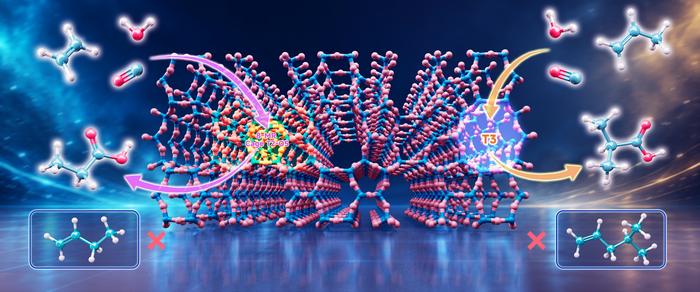
Zeolite pore architecture can drive olefin carbonylation without precious metals or organic ligands, researchers report in Nature. Propene converts to isobutyric acid and ethene to propionic acid in the presence of water, with pore size and active-site location determining which olefin reacts selectively. Confined pores also suppress competing polymerization, and the solid catalyst is easily separated from products.
This week in nanotech
$108.5M raised
8 funding rounds · 46 deals tracked
New products
 Ti-WCMBN Nanomaterialia Featured
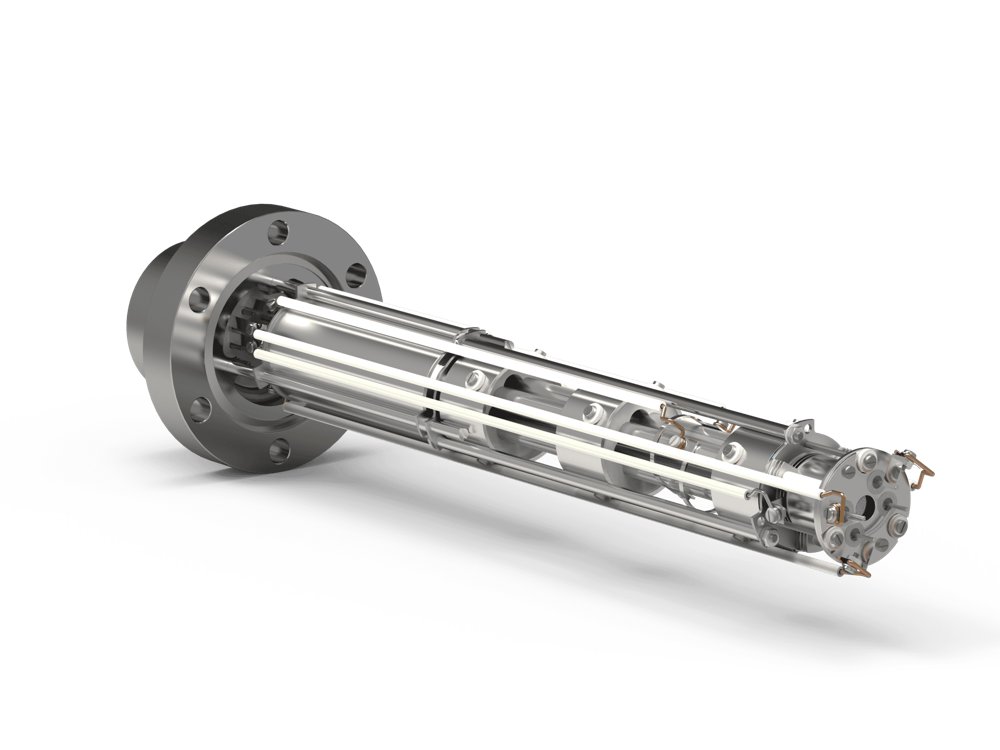 DLS-1 Mass Spectrometer for Fusion Gas AnalysisHiden Analytical Featured
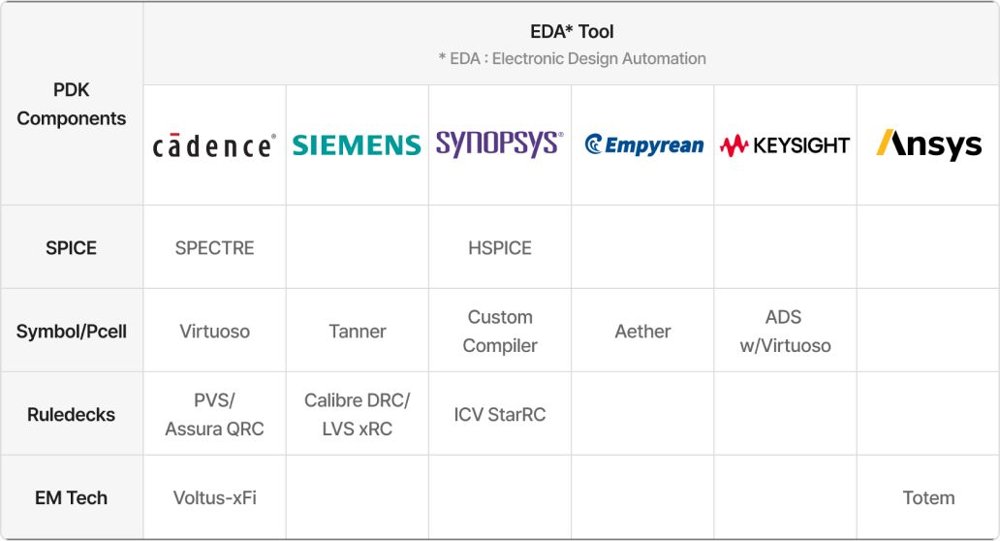 PDK (Process Design Kit)DB HiTek
Market insights
Last 30 days: Quantum Technologies drew the most money: $3.17B.
Money raised per month