Dalian Institute of Chemical Physics, Chinese Academy Sciences
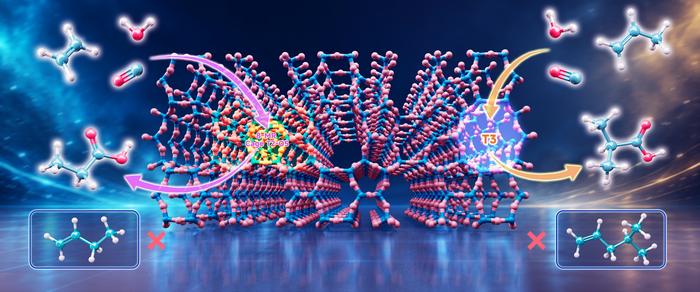
Zeolites have long been valued for their ability to separate molecules by size and shape. Now, researchers have demonstrated that these porous materials can do much more: they can catalyze new olefin carbonylation reactions without relying on precious metals or organic ligands. By utilizing the precisely defined pore environments of zeolites, researchers have successfully realized the carbonylation of propene to isobutyric acid and ethene to propionic acid in the presence of water, opening up new possibilities for the selective and more sustainable production of important chemical building blocks.
The study, led by Prof. LIU Zhongmin's team from the Dalian Institute of Chemical Physics (DICP) of the Chinese Academy of Sciences (CAS), was published in Nature on Oct. 21. Beyond establishing two new carbonylation processes, the researchers uncovered a key design principle: the location and size of zeolite pores determine which olefin molecules can be selectively carbonylated.
Carbonylation is a cornerstone of the modern chemical industry, underpinning the production of chemicals ranging from acetic acid and plasticizer alcohols to fragrance and pharmaceutical intermediates. Yet, conventional industrial carbonylation processes often rely on precious-metal catalysts, such as rhodium and iridium, combined with organic ligands to regulate catalytic activity and selectivity. These systems can involve complex processes and high costs, while separating catalysts from products remains a challenge.
Zeolites offer a different approach. These crystalline materials contain precisely defined pores and channels that can selectively accommodate molecules, influence reaction pathways, and regulate catalytic activity. They are already widely used in petroleum refining, gas separation, and chemical production.
In 2017, Prof. LIU's team applied zeolites to the carbonylation of dimethyl ether, enabling the large-scale industrial production of anhydrous ethanol. This achievement demonstrated that zeolites could serve not only as molecular sieves but also as effective catalysts for important chemical transformations.
Inspired by this work, the team explored whether zeolites could catalyze additional carbonylation reactions and whether general principles could be established to guide the discovery and design of new catalytic processes.
After nearly three years of research, the team established two new zeolite-catalyzed processes: the carbonylation of propene to produce isobutyric acid and the carbonylation of ethene to produce propionic acid. Both reactions proceed without the precious metal catalysts and organic ligands commonly used in conventional carbonylation systems.
The researchers found that the confined pore environment not only promotes the desired carbonylation reactions but also suppresses competing olefin polymerization. Moreover, as a solid catalyst, zeolite can be separated from the reaction products, potentially simplifying catalyst recovery and product purification compared with homogeneous liquid-phase systems.
More importantly, the team uncovered a relationship between pore architecture and reaction selectivity. Active sites near the opening of ten-membered rings can catalyze propene, while active sites associated with eight-membered-ring cages can catalyze ethene. This precise matching of pore structure and reactants reveals that the zeolite microenvironment plays an active role in determining which molecules can react and which pathways are favored.
The findings challenge the conventional reliance on metals and organic ligands to regulate catalytic behavior. Instead, they show that the geometry of zeolite pores can serve as a key design parameter for controlling reaction pathways and achieving selective catalysis. This insight provides a foundation for developing a broader framework for zeolite-catalyzed carbonylation, potentially enabling new reactions to be predicted and catalysts to be rationally designed.
"Our study provides a foundation for the rational design of zeolite catalysts for a broader range of olefin carbonylation reactions," said Prof. LIU.
Reference
Zeolite-catalysed olefin carbonylation based on tuning spatial confinement
Liang Qi, Yingying Sheng, Wenna Zhang, Youming Ni, Linhai He, Bin Li, Anjie Wang, Wenliang Zhu, Alexis T. Bell, and Zhongmin Liu
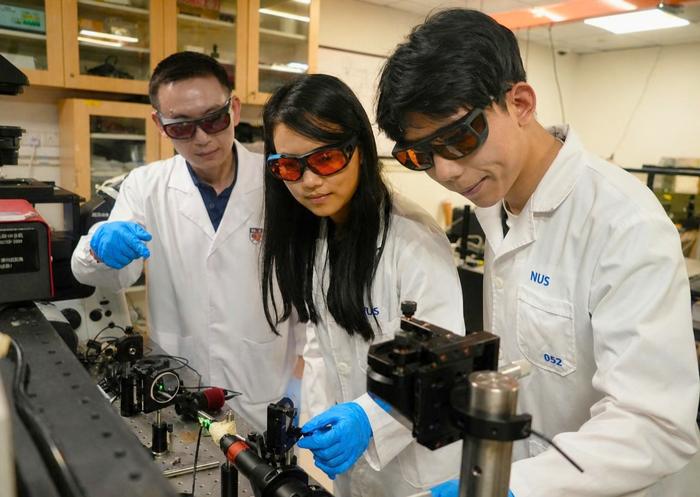
Researchers at NUS CDE have introduced DELINE, a fluorescence-based imaging method that maps individual reaction events across working electrocatalyst surfaces, revealing differences that conventional averaged measurements hide. Applied to gold and copper during water dissociation and nitrate reduction, the technique exposed a kinetic compensation trade-off: regions responding more strongly to applied voltage often have slower baseline rates.
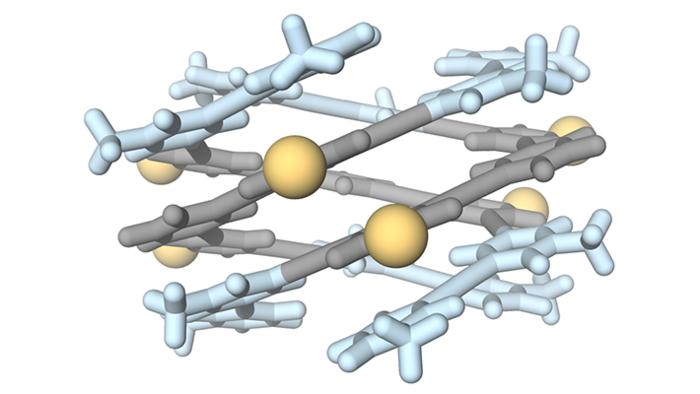
Researchers at the University of Jyväskylä have encoded multiple layers of information into synthetic molecules to direct their self-assembly. Through a strategy called hierarchical sequence control, an initial selection narrows possible outcomes to four helix types, while a second layer favors one specific anticlockwise triple helix and suppresses competing structures. Careful sequence optimization proved essential for this structural control.
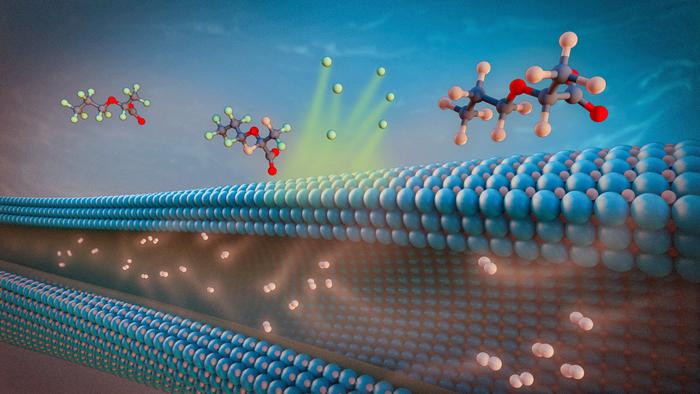
Palladium nanoparticles coated onto membrane fibers, fed with hydrogen gas from the inside, can strip fluorine from PFAS instead of merely filtering it out. In a 58 day continuous test the system removed more than 90 percent of six regulated forever chemicals and eliminated about 83 percent of the fluorine, showing the carbon-fluorine bonds were broken rather than transferred to spent filters or brines.
This week in nanotech
$91M raised
8 funding rounds · 55 deals tracked
New products
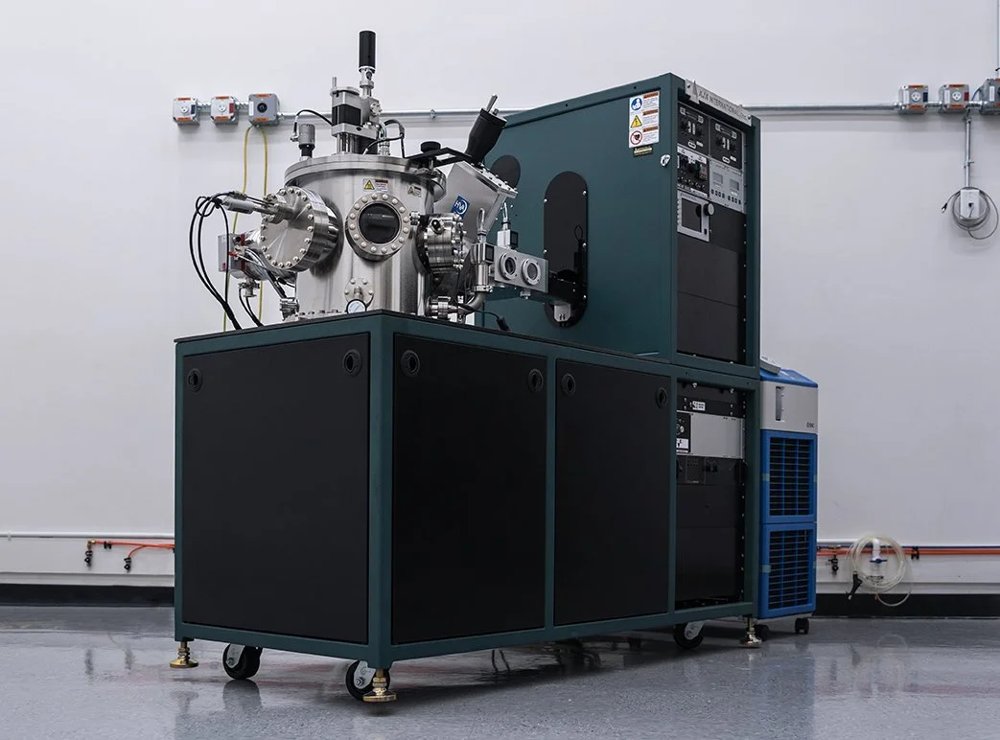 Orion Sputtering Deposition SystemsAJA International Featured
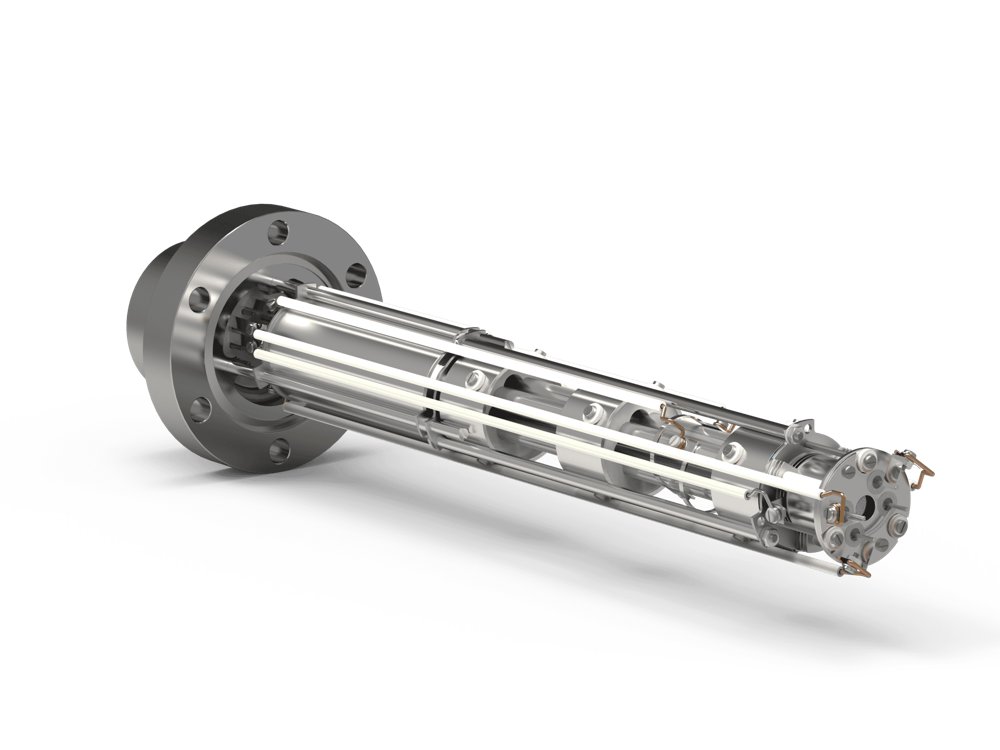 DLS-1 Mass Spectrometer for Fusion Gas AnalysisHiden Analytical Featured
 GiiiGii
Market insights
Last 30 days: Quantum Technologies drew the most money: $3.17B.
Money raised per month
Behind the deal
Who led Qilimanjaro Quantum Tech’s $21.9M Series A?
See the investors with Insights Pro →