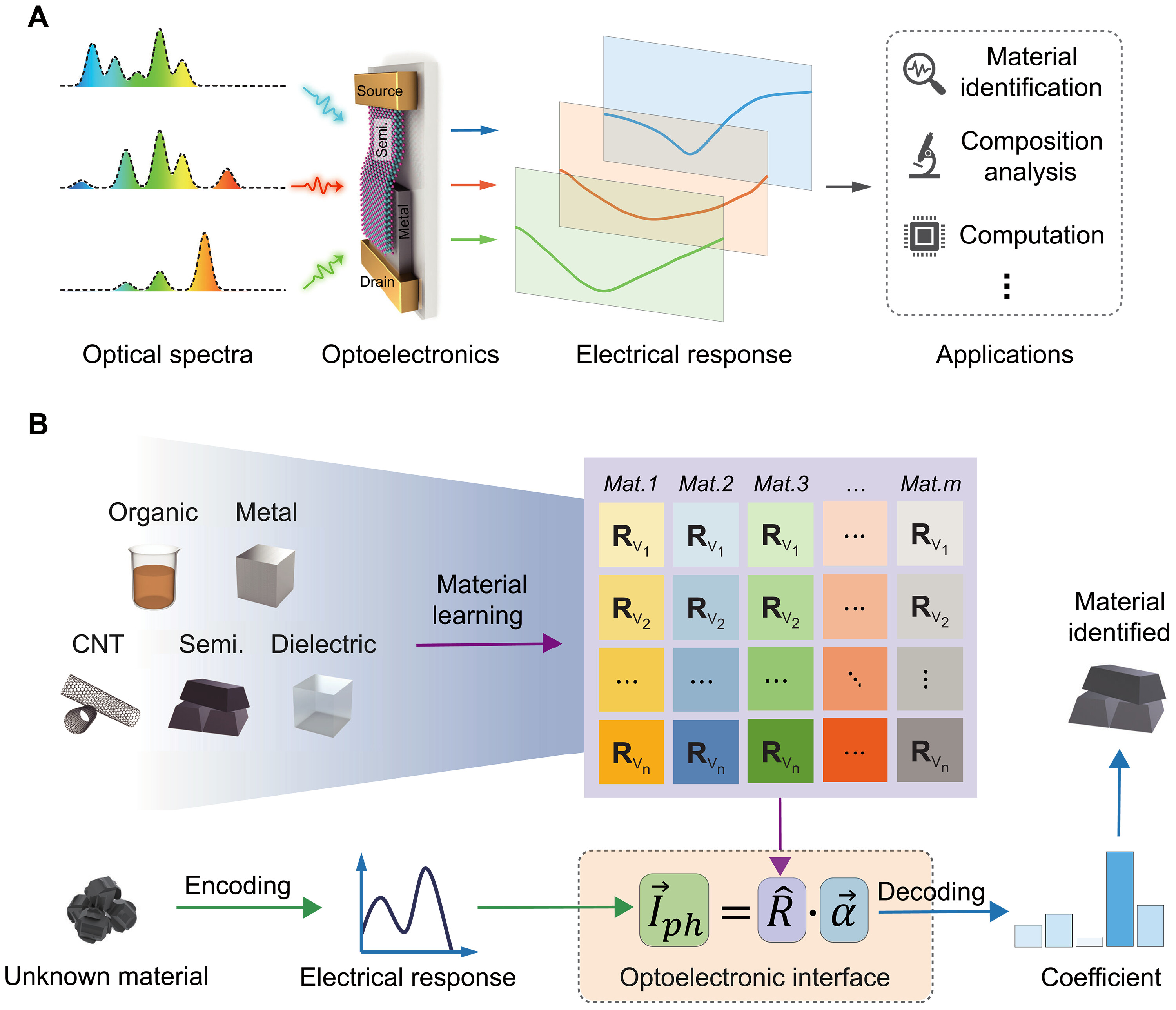
Imagine smartphones that can diagnose diseases, detect counterfeit drugs or warn of spoiled food. Spectral sensing is a powerful technique that identifies materials by analysing how they interact with light, revealing details far beyond what the human eye can see.
Traditionally, this technology required bulky, expensive systems confined to laboratories and industrial applications. But what if this capability could be miniaturised to fit inside a smartphone or wearable device?
Researchers at Aalto University in Finland have combined miniaturised hardware and intelligent algorithms to create a powerful tool that is compact, cost-effective, and capable of solving real-world problems in areas like healthcare, food safety and autonomous driving.
‘It’s similar to how artists train their eyes to distinguish hundreds of subtle colours,’ explains professor and lead researcher, Zhipei Sun. ‘Our device is ‘trained’ to recognise complex light signatures that are imperceptible to the human eye, achieving a level of precision comparable to the bulky sensors typically found in laboratories.’
Unlike traditional spectral sensors, which require large optical components like prisms or gratings, this sensor achieves spectral differentiation through its electrical responses to light, making it ideal for integration into small devices. The researchers demonstrated its capability to identify materials directly from their luminescence, including organic dyes, metals, semiconductors and dielectrics.
‘Our innovative spectral sensing approach simplifies challenges in material identification and composition analysis,’ says Xiaoqi Cui, the study’s lead author, who recently defended his doctoral thesis at Aalto University. The remarkable innovation combines tunable optoelectronic interfaces with advanced algorithms, unlocking new possibilities for applications in integrated photonics and beyond.
During its training, the device was exposed to a wide range of light colours, enabling it to "learn" and generate unique electrical fingerprints for each light type. These fingerprints are then decoded by an intelligent algorithm, empowering the sensor to accurately identify materials and analyse their properties based on their interaction with light.
Measuring just 5 micrometres by 5 micrometres –– an area 200 times smaller than the cross-section of a human hair –– the device achieves an extraordinary peak wavelength identification accuracy of ~0.2 nanometers, enabling it to distinguish thousands of colours. At the core of this sensor is a carefully designed optoelectronic interface that enables precise control of electrical flow through voltage adjustments. This exceptional tunability allows the sensor to interact with light in multiple distinct ways, producing a “multi-dimensional photoresponse”.
‘This work is a major step forward in bringing spectroscopic identification to everyone’s fingertips,’ explains doctoral researcher and joint first author, Fedor Nigmatulin. “By integrating this ultra-compact hardware with intelligent algorithms, we’ve taken a significant step toward miniature, portable spectrometers that could one day transform consumer electronics.”
With its groundbreaking performance, tunable design and versatility, the research team hopes that this tiny sensor will soon bring the power of advanced spectroscopy into the devices we use every day.
Reference
Miniaturized spectral sensing with a tunable optoelectronic interface
Xiaoqi Cui, Fedor Nigmatulin, Lei Wang, Igor Reduto, Andreas C. Liapis, Mingde Du, Md Gius Uddin, Shafi Abde Mayeen, Faisal Ahmed, Yi Zhang, Hoon Hahn Yoon, Harri Lipsanen, Seppo Honkanen, Timo Aalto, Zongyin Yang, Tawfique Hasan, Weiwei Cai, Zhipei Sun
https://www.science.org/doi/10.1126/sciadv.ado6886
Aalto University
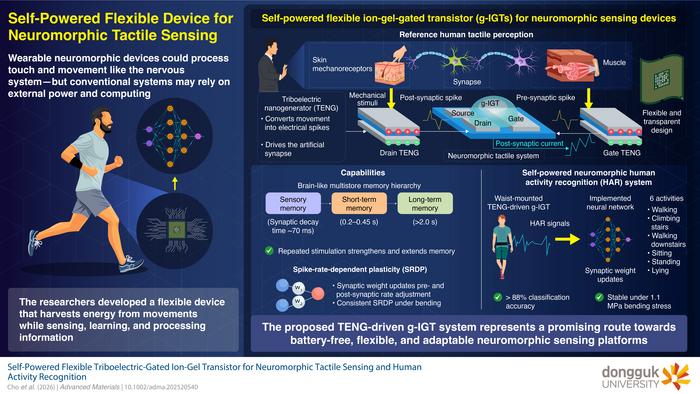
The proposed TENG-driven g-IGT is a flexible, self-powered neuromorphic device capable of reproducing multiple memory states and spike-rate-dependent learning Neuromorphic devices, which are designed to emulate aspects of biological neural networks, are promising candidates for developing low-power and intelligent sensing technologies, including wearable applications. Among the device architectures explored for neuromorphic computing, graphene-channel ion-gel-gated transistors (g-IGTs) are...

Rice University researchers have shown that sub-nanometer wrinkles in graphene generate flexoelectric charge separation, reshaping local electrical behavior through curvature alone. Extreme bending produces polarization far stronger than in larger systems and may enable geometry-controlled electronics without chemical doping. Published in Advanced Materials.
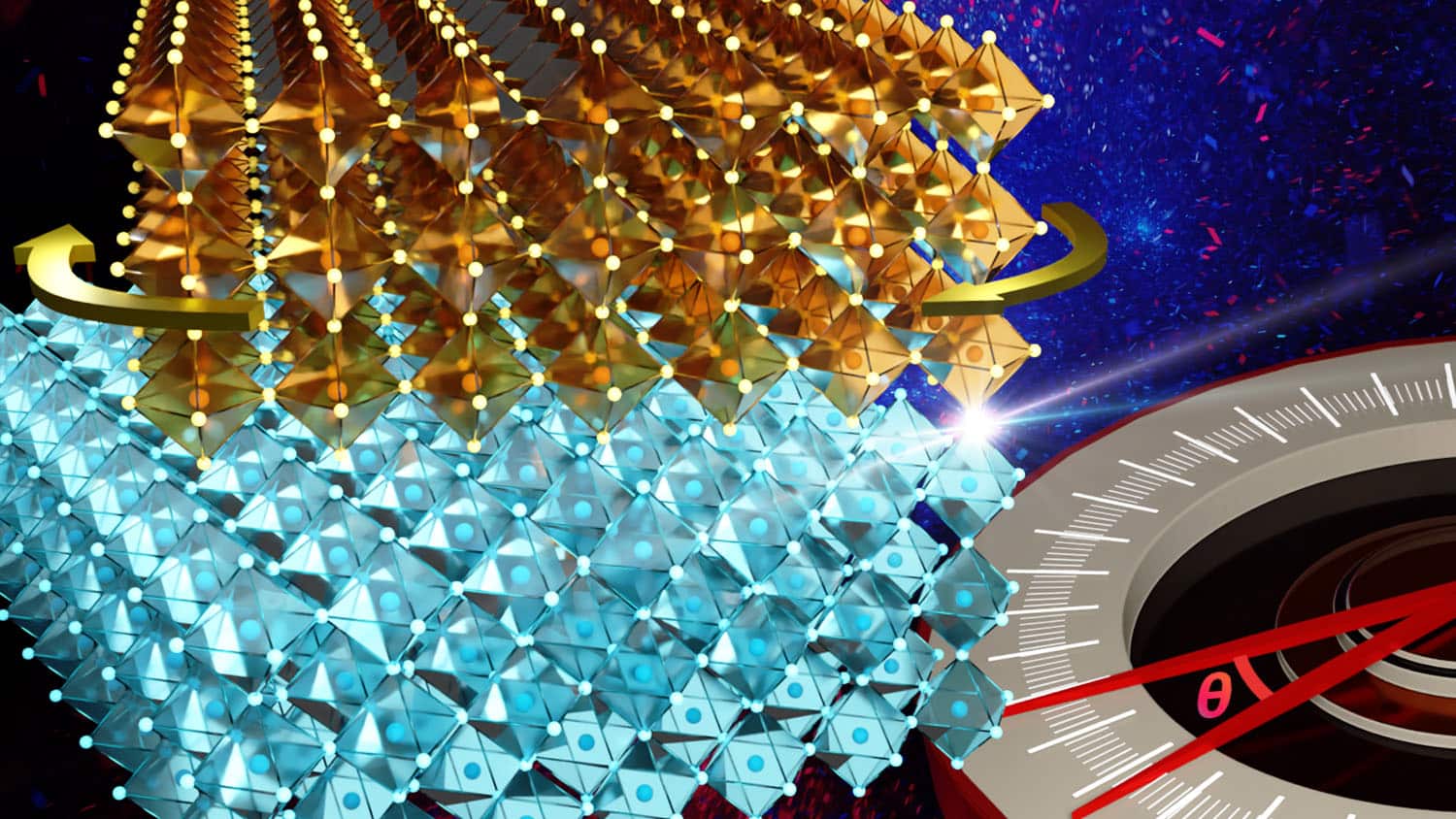
Researchers at NC State have extended twistronics beyond van der Waals materials into strongly bonded crystalline oxides. By stacking sodium niobate membranes with twist angles controlled down to 0.1 degrees, and confirming results via synchrotron X-ray diffraction, the team found interlayer bonds distort the atomic lattice, shifting phase structure and domain configuration. The technique works at near-millimeter scale, far larger than typical twistronic devices, marking a real step toward pract
