A new, multi-node FLEET review investigates the search for Majorana fermions in iron-based superconductors.
The elusive Majorana fermion, or ‘angel particle’ proposed by Ettore Majorana in 1937, simultaneously behaves like a particle and an antiparticle – and surprisingly remains stable rather than being self-destructive.
Majorana fermions promise information and communications technology with zero resistance, addressing the rising energy consumption of modern electronics (already 8% of global electricity consumption), and promising a sustainable future for computing.
Additionally, it is the presence of Majorana zero-energy modes in topological superconductors that have made those exotic quantum materials the main candidate materials for realizing topological quantum computing.
The existence of Majorana fermions in condensed-matter systems will help in FLEET’s search for future low-energy electronic technologies.
The angel particle: both matter and antimatter
Fundamental particles such as electrons, protons, neutrons, quarks and neutrinos (called fermions) each have their distinct antiparticles. An antiparticle has the same mass as it’s ordinary partner, but opposite electric charge and magnetic moment.
Conventional fermion and anti-fermions constitute matter and antimatter, and annihilate each other when combined.
“The Majorana fermion is the only exception to this rule, a composite particle that is its own antiparticle,” says corresponding author Prof Xiaolin Wang (UOW).
However, despite the intensive searching for Majorana particles, the clue of its existence has been elusive for many decades, as the two conflicting properties (ie, it’s positive and negative charge) render it neutral and its interactions with the environment are very weak.
Topological superconductors: fertile ground for the angel particle
While the existence of the Majorana particle has yet to be discovered, despite extensive searches in high-energy physics facilities such as CERN, it may exist as a single-particle excitation in condensed-matter systems where band topology and superconductivity coexist.
“In the last two decades, Majorana particles have been reported in many superconductor heterostructures and have been demonstrated with strong potential in quantum computing applications” according to Dr Muhammad Nadeem, a FLEET postdoc at UOW.
A few years ago, a new type of material called iron-based topological superconductors were reported hosting Majorana particles without fabrication of heterostructures, which is significant for application in real devices.
“Our article reviews the most recent experimental achievements in these materials: how to obtain topological superconductor materials, experimental observation of the topological state, and detection of Majorana zero modes,” says first author UOW PhD candidate Lina Sang.
In these systems, quasiparticles may impersonate a particular type of Majorana fermion such as ‘chiral’ Majorana fermion, one that moves along a one-dimensional path and Majorana ‘zero mode’, one that remains bounded in a zero-dimensional space.
Applications of the majorana zero mode
If such condensed-matter systems, hosting Majorana fermions, are experimentally accessible and can be characterized by a simple technique, it would help researchers to steer the engineering of low-energy technologies whose functionalities are enabled by exploiting unique physical characteristics of Majorana fermions, such as fault-tolerant topological quantum computing and ultra-low energy electronics.
The hosting of Majorana fermions in topological states of matter, topological insulators and Weyl semimetals will be covered in this month’s major international conference on the physics of semiconductors (ICPS), being held in Sydney Australia.
The IOP 2021 Quantum materials roadmap investigates the role of intrinsic spin–orbit coupling (SOC) based quantum materials for topological devices based on Majorana modes, laying out evidence at the boundary between strong SOC materials and superconductors, as well as in an iron-based superconductor.
Reference
Majorana zero modes in iron-based superconductors
Lina Sang, Zhi Li, Guangsai Yang, Muhammad Nadeem, Lan Wang, Qikun Xue, Alexander R. Hamilton, Xiaolin Wang
https://www.sciencedirect.com/science/article/abs/pii/S2590238522001734?dgcid=author
Kopin Corporation has secured an $18.6 million sole source award from the Office of the Secretary of War through the U.S. Army Contracting Command under the IBAS program. The award brings Kopin's total IBAS funding to $34 million.
Emerson has integrated NevadaNano's MPS 6.0 technology into the Rosemount 628MP Combustible Gas Sensor for use with the Rosemount 928 Wireless Gas Monitor. MPS 6.0 consumes 1.35 mW and needs no field calibration.
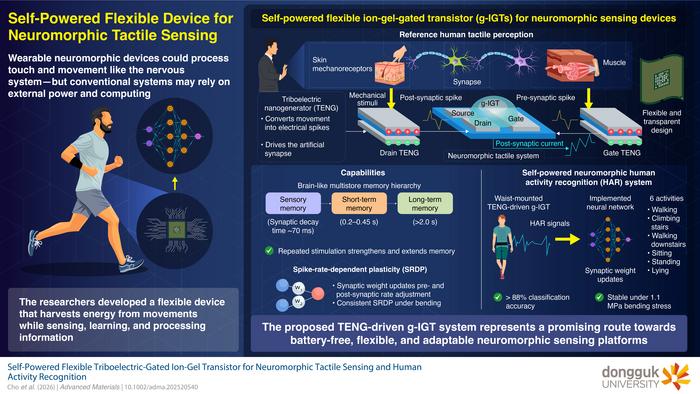
The proposed TENG-driven g-IGT is a flexible, self-powered neuromorphic device capable of reproducing multiple memory states and spike-rate-dependent learning Neuromorphic devices, which are designed to emulate aspects of biological neural networks, are promising candidates for developing low-power and intelligent sensing technologies, including wearable applications. Among the device architectures explored for neuromorphic computing, graphene-channel ion-gel-gated transistors (g-IGTs) are...
This week in nanotech
$10.2M raised
2 funding rounds · 19 deals tracked
New products
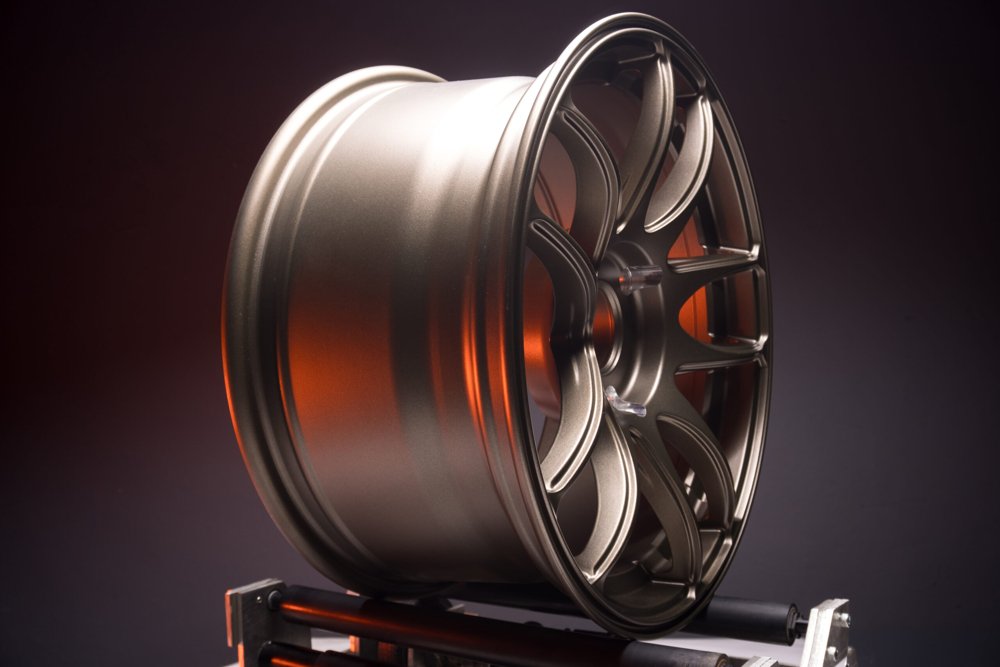 Ti-WCMBN Nanomaterialia Featured
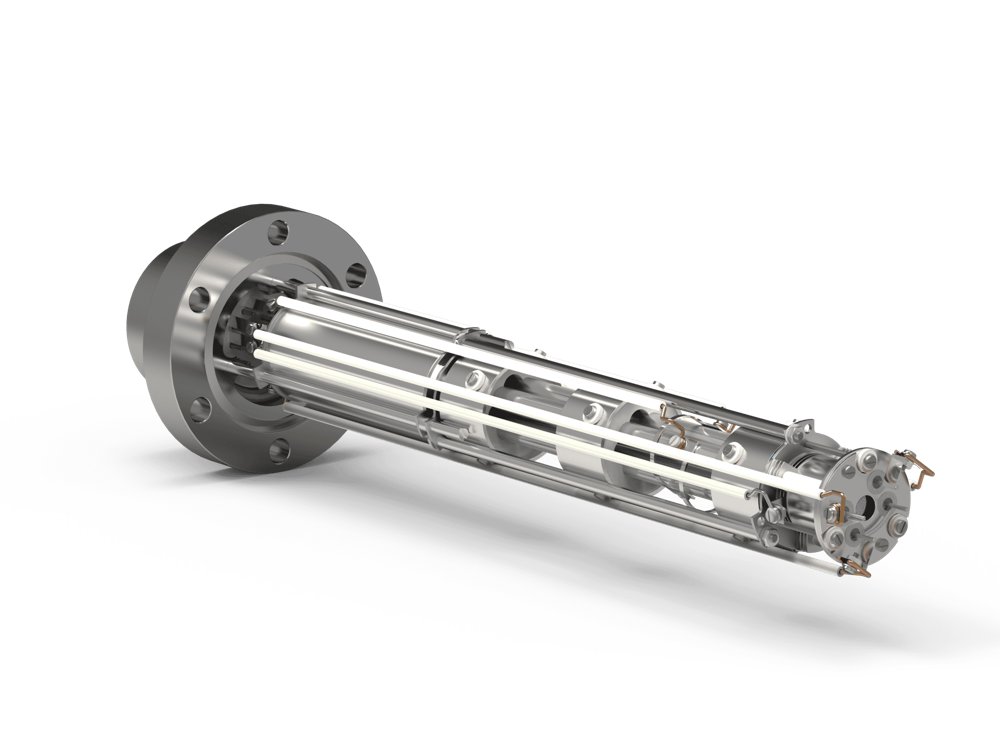 DLS-1 Mass Spectrometer for Fusion Gas AnalysisHiden Analytical Featured
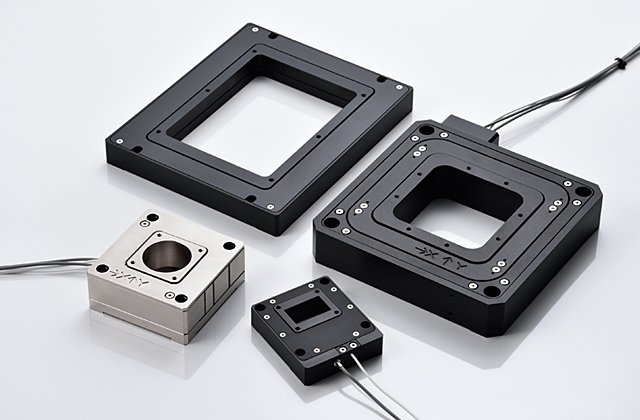 PKVH / PKVL ZAxis With an opening modelTHK PRECISION CO.,LTD.
Market insights
Last 30 days: Quantum Technologies was the busiest vertical: 55 of 182 events (30%).
Money raised per month
Behind the deal
Who led Sandia National Laboratories’s $3.4M Grant?
See the investors with Insights Pro →