University of Science and Technology of China
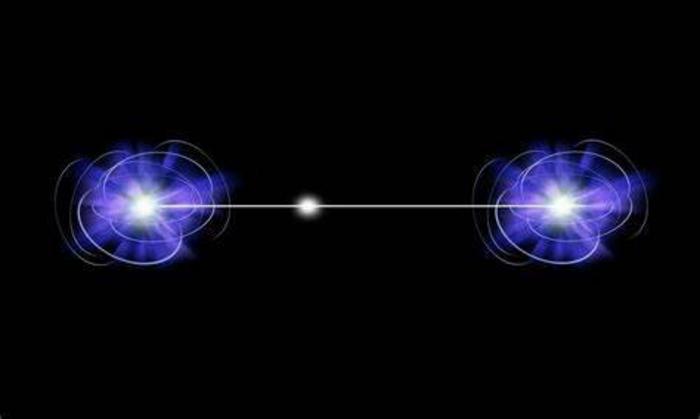
A point-to-point long-distance quantum key distribution (QKD) over a distance of 1,002 km has been achieved by scientists from the University of Science and Technology of China (USTC) of the Chinese Academy of Sciences (CAS), and their collaborators from Tsinghua University, Jinan Institute of Quantum Technology, and Shanghai Institute of Microsystem and Information Technology (SIMIT), CAS. This milestone not only sets a new world record for non-relay QKD but also provides a solution for high-speed intercity quantum communication. The result was published in Physical Review Letters on May 25th.
QKD is based on the principles of quantum mechanics and enables secure key distribution between two remote parties. When combined with the "one-time pad" encryption method, it can achieve the highest level of security for confidential communication. However, the distance of QKD has been limited by factors such as the channel loss and system noise.
The twin-field QKD (TF-QKD) using sending-or-not-sending (SNS) protocol was demonstrated in the experiment, improving the relation between the key rate and channel transmittance from a linear η to its square root η. Therefore, it can achieve a much longer secure distance than traditional QKD protocols.
To achieve long-distance QKD, the research team collaborated with Yangtze Optical Fibre and Cable Joint Stock Limited Company (YOFC) and used ultra-low-loss fiber based on pure silica core technology, which achieved a maximum attenuation of 0.16 dB/km. SIMIT developed ultra-low-noise superconducting single-photon detectors. By implementing multiple filters at temperatures of 40 K and 2.2 K to suppress dark counts caused by thermal radiation, the noise of the single-photon detectors was reduced to around 0.02 cps. Furthermore, the team also developed a dual-band phase estimation scheme to avoid the spontaneous Raman scattering noise, reducing the system noise to below 0.01 Hz.
Based on the aforementioned technological developments, the team achieved TF-QKD over a record distance of 1002 km, with a key rate of 0.0034 bps. This work not only verifies the feasibility of the SNS-TF-QKD scheme at extremely long distances but also demonstrates that this protocol can achieve high key rates in many practical scenarios.
The success of this study holds significant implications for the advancement of secure quantum communication. It opens up new possibilities for long-distance quantum key distribution and paves the way for the realization of high-speed intercity quantum communication networks.
Reference
Experimental Twin-Field Quantum Key Distribution over 1000 km Fiber Distance
Yang Liu, Wei-Jun Zhang, Cong Jiang, Jiu-Peng Chen, Chi Zhang, Wen-Xin Pan, Di Ma, Hao Dong, Jia-Min Xiong, Cheng-Jun Zhang, Hao Li, Rui-Chun Wang, Jun Wu, Teng-Yun Chen, Lixing You, Xiang-Bin Wang, Qiang Zhang, and Jian-Wei Pan
https://journals.aps.org/prl/abstract/10.1103/PhysRevLett.130.210801
Quantinuum and GE Vernova's Advanced Research Center are collaborating on Fermi-Hubbard modeling of high-temperature superconductivity using Quantinuum's Helios quantum computer and Nexus platform.
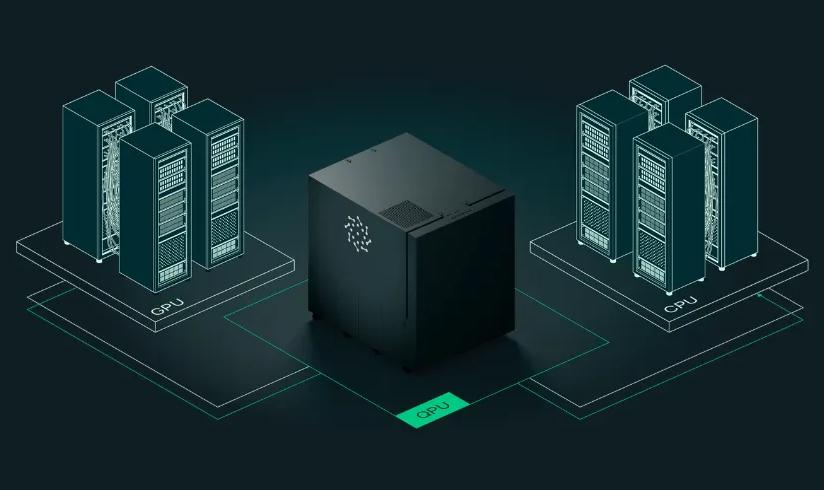
Pasqal has integrated its neutral-atom QPUs with the Hierarchical Resources capability in Slurm 26.11, so HPC centers can schedule quantum jobs natively alongside CPUs and GPUs with less external code to maintain.
Alice & Bob has updated its modular roadmap to target 200 logical qubits by 2030, built from 3,600 physical cat qubits, double its previous goal. The plan sets milestones up to 2034.
This week in nanotech
21 deals tracked
New products
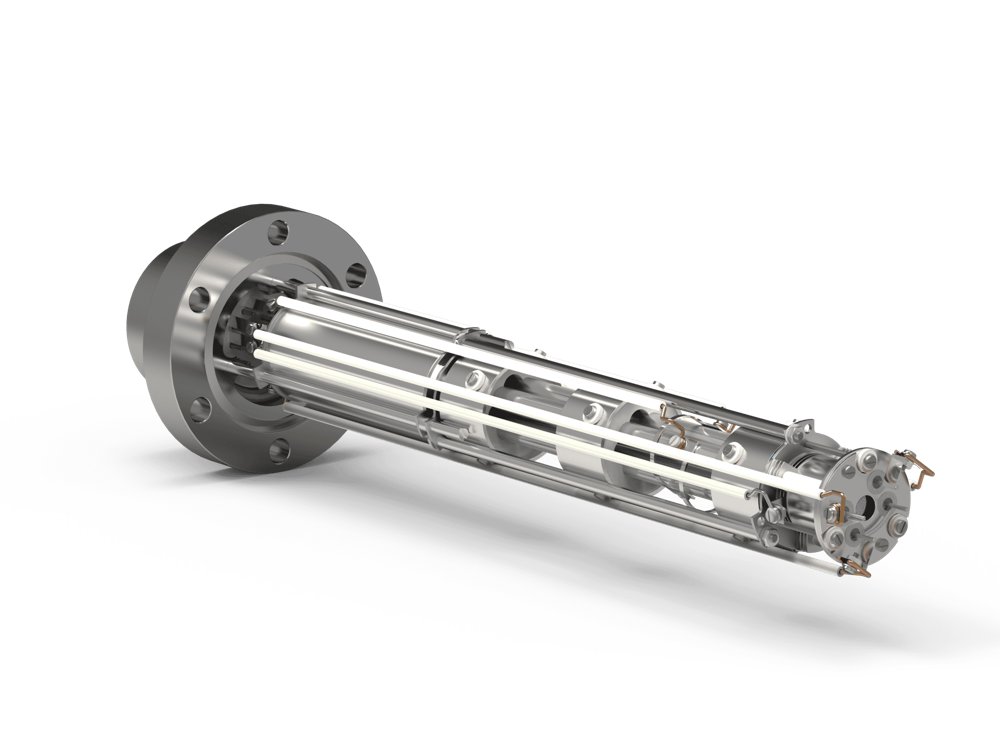 DLS-1 Mass Spectrometer for Fusion Gas AnalysisHiden Analytical Featured
 Orion Sputtering Deposition SystemsAJA International Featured
 NanoFlow® S1-20Levidian
Market insights
Last 30 days: Semiconductors & Electronics was the busiest vertical: 52 of 169 events (31%).
Money raised per month
Behind the deal
Who led Eindhoven University of Technology’s $1.1M Grant?
See the investors with Insights Pro →