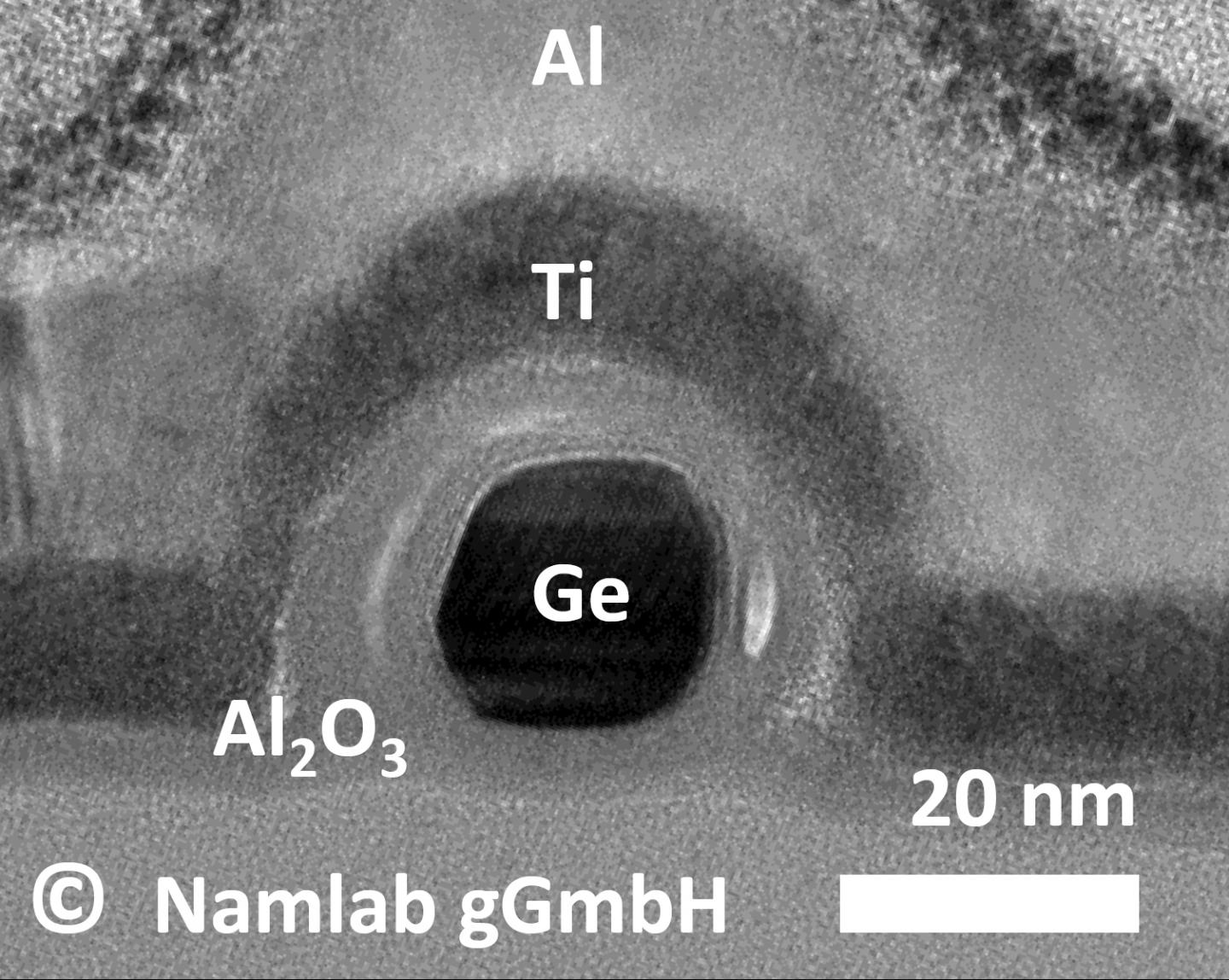
A team of scientists from the Nanoelectronic Materials Laboratory (NaMLab gGmbH) and the Cluster of Excellence Center for Advancing Electronics Dresden (cfaed) at the Dresden University of Technology have demonstrated the world-wide first transistor based on germanium that can be programmed between electron- (n) and hole- (p) conduction. Transistors based on germanium can be operated at low supply voltages and reduced power consumption, due to the low band gap compared to silicon. Additionally, the realized germanium based transistors can be reconfigured between electron and hole conduction based on the voltage applied to one of the gate electrodes. This enables to realize circuits with lower transistor count compared to state-of-the-art CMOS technologies.
Today´s digital electronics are dominated by integrated circuits built by transistors. For more than four decades transistors have been miniaturized to enhance computational power and speed. Recent developments aim to maintain this trend by employing materials having higher mobility than silicon in the transistor channel, like germanium and indium-arsenide. One of the limitations in using those materials is the higher static power loss in the transistor´s off-state, also originating from their small band gaps. The scientist team around Jens Trommer and Dr. Walter Weber from NaMLab in cooperation with cfaed succeeded in solving this issue by conceiving the germanium-nanowire transistor with independent gating regions. Dr. Weber who leads cfaed's Nanowire Research Group points out: "For the first time the results demonstrate the combination of low operation voltages with reduced off-state leakage. The results are a key enabler for novel energy efficient circuits."
The work has been published in the journal ACS Nano.
The work has been supported by the German Research Foundation (DFG) in the project ReproNano and has been performed in close cooperation with the DFG Cluster of Excellence Center for Advancing Electronics Dresden (cfaed). NaMLab will strive for further implementation in future products as well as further advancement in R&D with its industrial partners.
Enabling Energy Efficiency and Polarity Control in Germanium Nanowire Transistors by Individually Gated Nanojunctions
Jens Trommer, André Heinzig, Uwe Mühle, Markus Löffler, Annett Winzer, Paul M. Jordan, Jürgen Beister, Tim Baldauf, Marion Geidel, Barbara Adolphi, Ehrenfried Zschech, Thomas Mikolajick , and Walter M. Weber
NaMLab gGmbH, Noethnitzer Straße 64, D-01187 Dresden, Germany
Center for Advancing Electronics Dresden (CfAED), TU Dresden, D-01062 Dresden, Germany
Institute of Semiconductor and Microsystems (IHM), TU Dresden, D-01062 Dresden, Germany
Dresden Center for Nanoanalysis (DCN), TU Dresden, D-01062 Dresden, Germany
Fraunhofer Institute for Ceramic Technologies and Systems (IKTS), D-01277 Dresden, Germany
ACS Nano, Article ASAP
DOI: 10.1021/acsnano.6b07531
Dresden University
#Transistors #MaterialScience #Silicon
IMB-CNM-CSIC is a partner in POLARIS, an EIC Pathfinder Open 2026 project led by ICN2 to develop graphene-based brain implants. Researcher Anton Guimerà leads the institute's contribution.
California Nanotechnologies Corp. has received purchase orders totaling US$147,000 from a Texas-based aerospace company for components used in commercial satellite systems, following about US$170,000 in R&D orders in 2026.
SPECS reports on work at the LMA microscopy lab, where Dr. David Serrate's team used the JT-STM to study graphene nanoribbons on MgO/Ag(001) and the Aarhus 150 to monitor nanostructure growth.
This week in nanotech
$291.1M raised
7 funding rounds · 42 deals tracked
New products
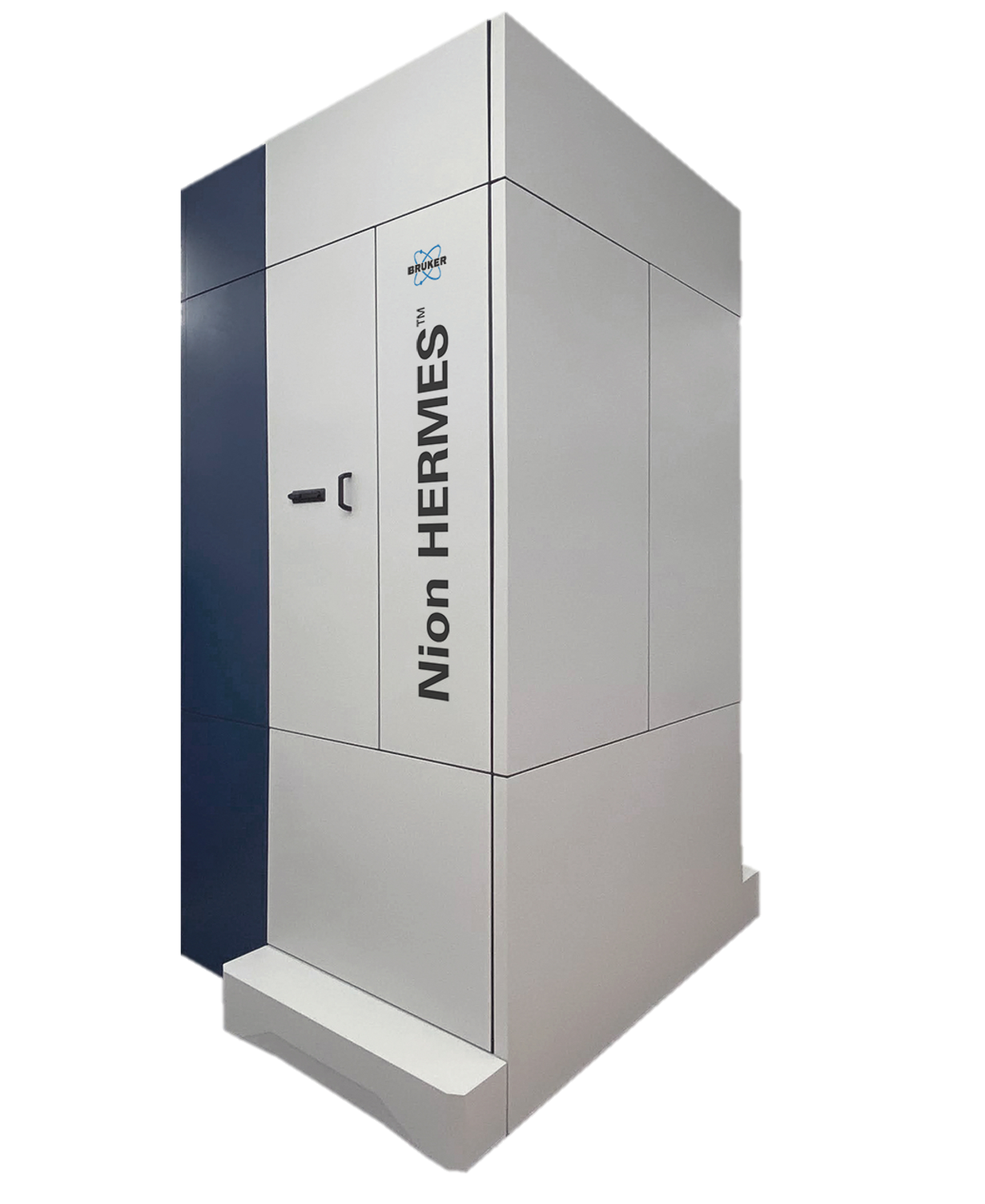 Nion-compatible In Situ STEM Holders for Electrical BiasingHummingbird Scientific Featured
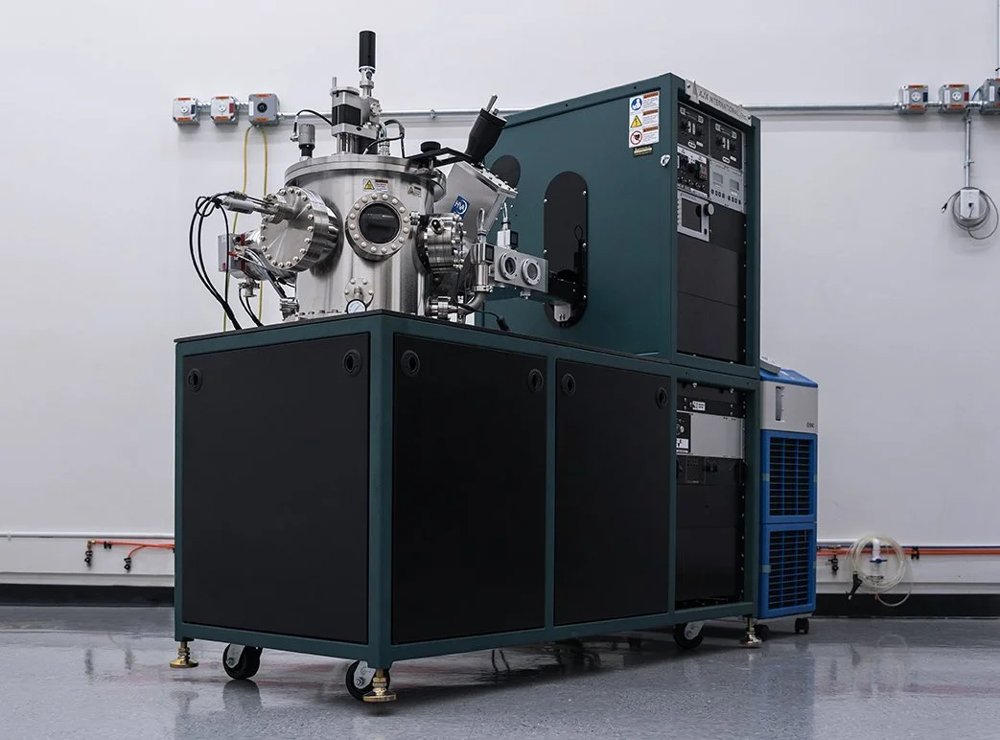 Orion Sputtering Deposition SystemsAJA International Featured
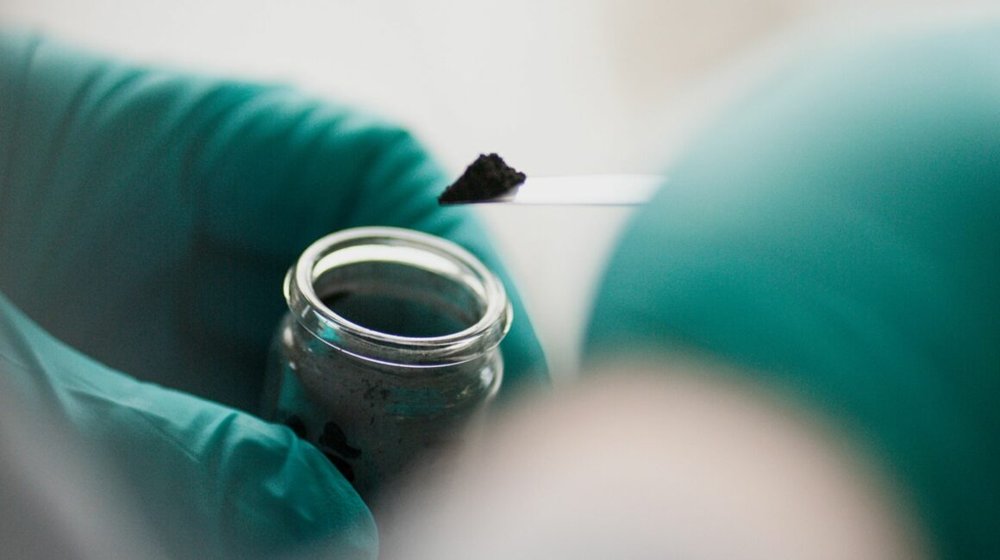 Talphene™ Graphene AdditivesTalga Group
Market insights
Last 30 days: Quantum Technologies drew the most money: $3.17B.
Money raised per month
Behind the deal
Who invested in Photon Bridge’s $11.2M Series A?
See the investors with Insights Pro →