VTT Technical Research Centre of Finland, together with Tampere University of Technology (TUT), accelerates the development and commercialisation of silicon photonics products as part of the renewal of the Finnish electronics industry. With the help of silicon photonics, companies can develop increasingly compact, more efficient and more affordable products, where optical signals are used for such purposes as precise measuring, laser imaging and rapid data transfer.
"Soon we will be using silicon photonics in the same manner as we use electronic microcircuits that have been replacing discrete transistors and electron tubes since the 1960s," notes Timo Aalto, who leads the project.
"With the help of silicon photonics, we can replace modules built of separate components with photonic integrated circuits. They can be used for such applications as intelligent sensors identifying multiple gases, small silicon chips capable of medical imaging, navigation devices for autonomous systems, energy-efficient data transfer in date centres and optical quantum computing and encryption systems," Aalto explains.
The VTT-led RAPSI project, RAPSI standing for "Ramping up silicon photonics business in Finland", develops silicon photonics and its introduction into different applications. The aim is to generate additional revenues for the Finnish economy from silicon photonics amounting to more than EUR 15 million by 2020 and more than EUR 100 million by 2030. Photonics integration is a global trend where Finland has excellent chances of success on the worldwide markets.
The RAPSI co-innovation project, co-financed by Business Finland, consists of a public research project, which is carried out by VTT and Tampere University of Technology (TUT), and a number of industrial projects led by Finnish companies. VTT coordinates the development of an open silicon photonics technology platform. The benefits of this technology include low optical losses, dual-polarization operation, ultra-dense integration and low-cost volume manufacturing. TUT focuses on the development of compound semiconductor light sources and their integration on silicon chips.
As part of RAPSI, Rockley Photonics, Vaisala, Okmetic and VTT Memsfab have their own industrial projects. The RAPSI consortium also includes Beneq, TTM Technologies and Noptel. As part of the project, the companies develop new manufacturing methods for silicon photonics and their own silicon photonics products.
Clean rooms are the prerequisite of research and business within the field
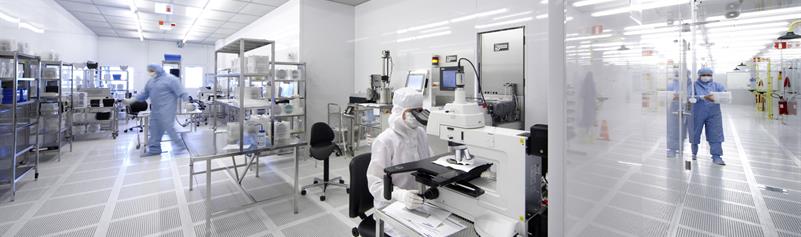
Electronic and optical integrated circuits are developed and manufactured in clean room facilities. In Finland, silicon photonics R&D mostly takes place in the Micronova clean room facility that serves the needs of not only basic and applied research, but also commercial manufacturing. Silicon photonics has arisen as the technology driver of Micronova's business, but the same clean room facilities in Espoo are also used by multiple other technologies and several Finnish companies. Therefore, also Micronova plays a key role in the renewal of the Finnish electronics industry.
Contact information:
Timo Aalto
VTT Project Leader
timo.aalto@vtt.fi
Tel: +358 40 848 5037
VTT Technical Research Centre of Finland
#Photonics #Nanoelectronics
Kopin Corporation has secured an $18.6 million sole source award from the Office of the Secretary of War through the U.S. Army Contracting Command under the IBAS program. The award brings Kopin's total IBAS funding to $34 million.
Emerson has integrated NevadaNano's MPS 6.0 technology into the Rosemount 628MP Combustible Gas Sensor for use with the Rosemount 928 Wireless Gas Monitor. MPS 6.0 consumes 1.35 mW and needs no field calibration.
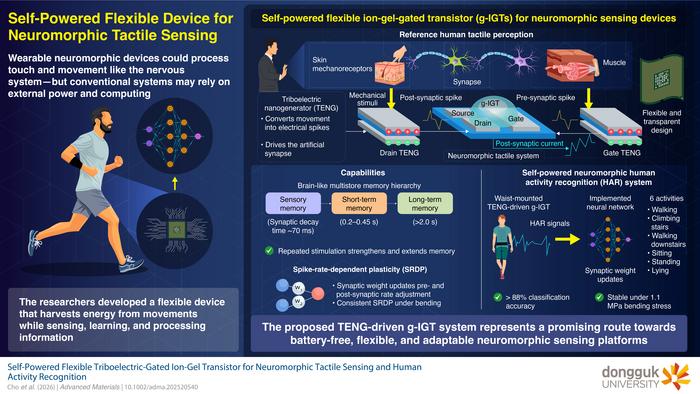
The proposed TENG-driven g-IGT is a flexible, self-powered neuromorphic device capable of reproducing multiple memory states and spike-rate-dependent learning Neuromorphic devices, which are designed to emulate aspects of biological neural networks, are promising candidates for developing low-power and intelligent sensing technologies, including wearable applications. Among the device architectures explored for neuromorphic computing, graphene-channel ion-gel-gated transistors (g-IGTs) are...
This week in nanotech
$548.4M raised
3 funding rounds · 32 deals tracked
New products
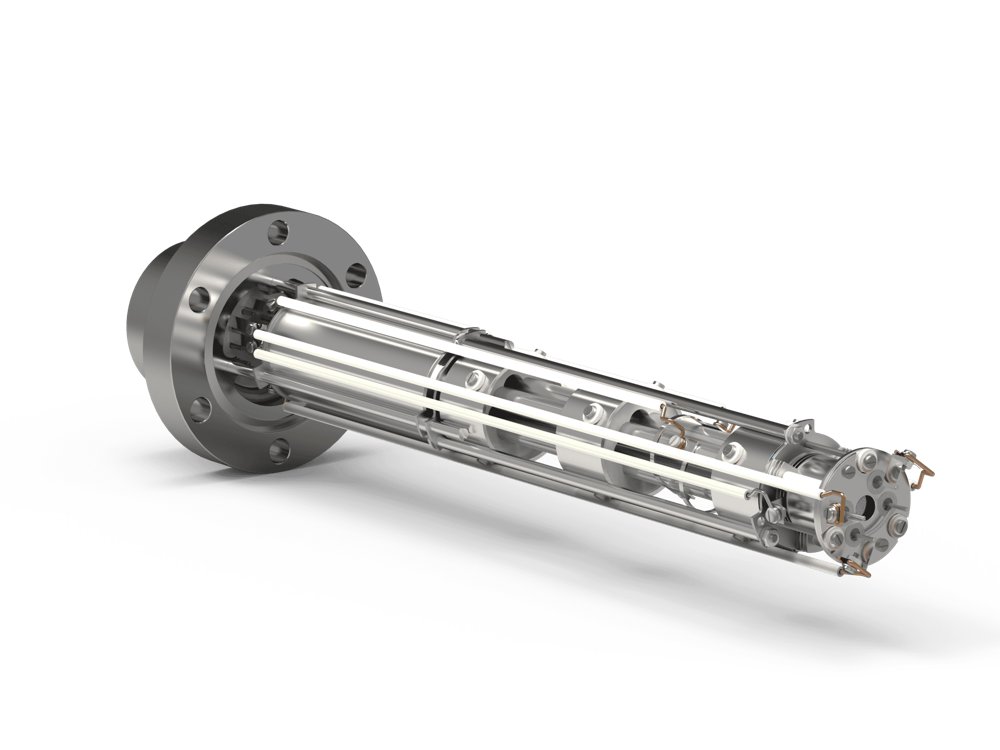 DLS-1 Mass Spectrometer for Fusion Gas AnalysisHiden Analytical Featured
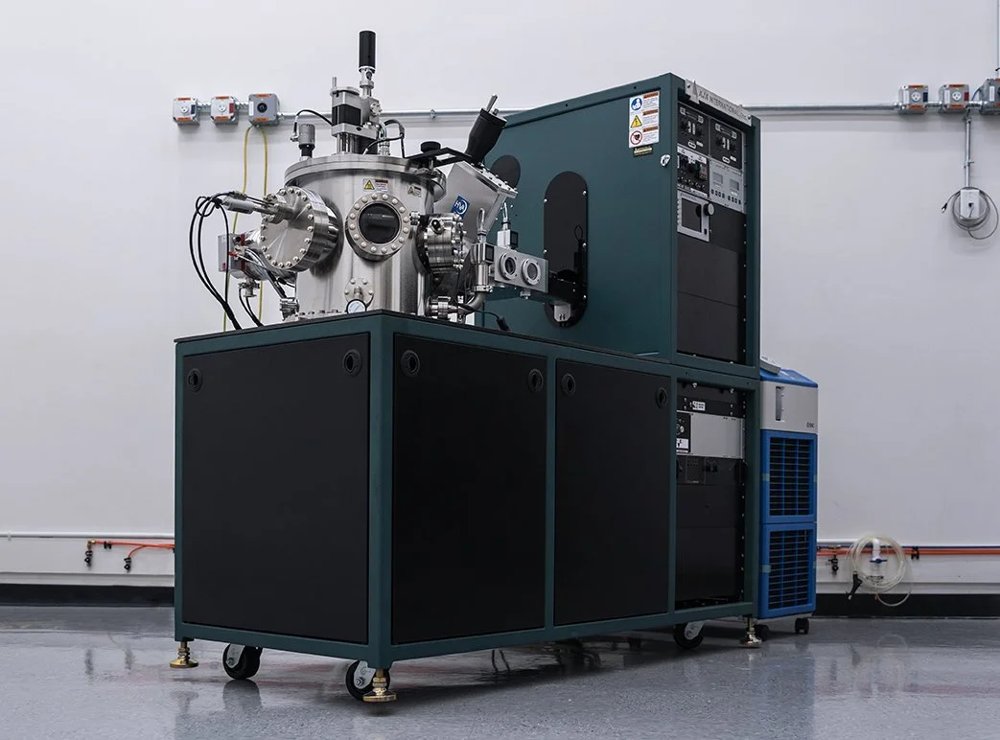 Orion Sputtering Deposition SystemsAJA International Featured
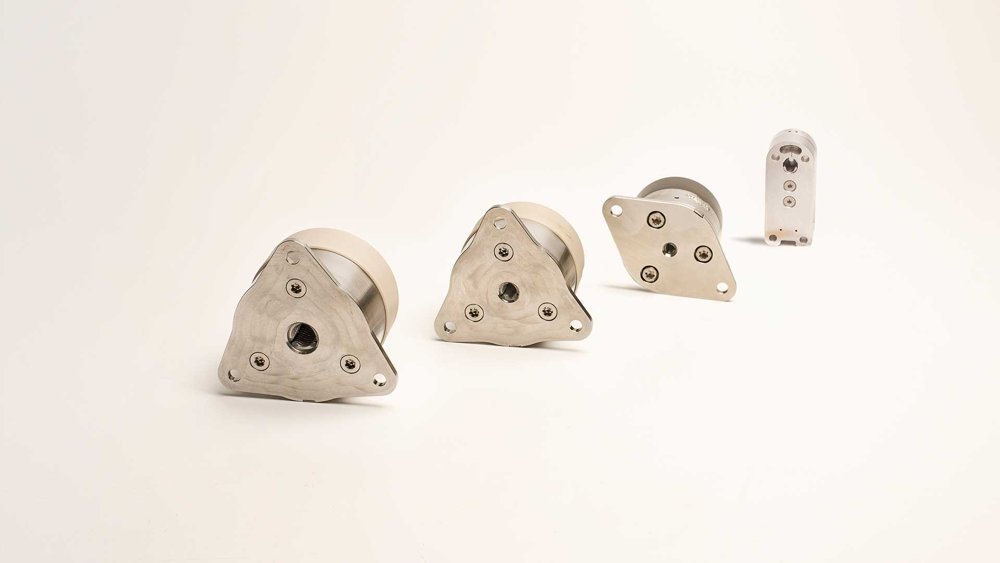 Hold Down & Release Mechanisms (HDRM) REACT – 5KN, 15KN and 35KN space qualified resettable mechanismsARQUIMEA
Market insights
Last 30 days: Quantum Technologies drew the most money: $2.15B.
Money raised per month
Behind the deal
Who led Sandia National Laboratories’s $3.4M Grant?
See the investors with Insights Pro →