Aalto University
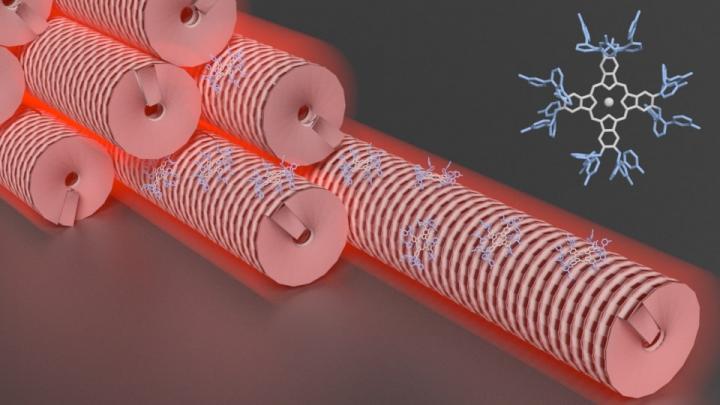
A research team from Aalto University has developed a novel strategy to create virus-based materials for catalysis. The project, which is framed within the Horizon 2020 Marie Sklodowska-Curie actions, aims to pave the way towards the application of optically active biohybrid materials - a combination of biomolecules and synthetic moieties - in topics ranging from nanomedicine to green organic synthesis or environmental sciences.
'Our first challenge was to select the right photosensitizer,' says Eduardo Anaya, Postdoctoral Researcher at Aalto University, 'We decided to employ phthalocyanines, a synthetic derivative of hematoporphyrin (the dye responsible for the colour of blood), due to their outstanding properties as a reactive oxygen species generator. However, the use of this kind of dyes in aqueous media presents several challenges that affect their performance. Therefore, careful design was necessary to maintain their properties`.
In collaboration with Professor Tomas Torres' research group from the Universidad Autonoma de Madrid, a new phthalocyanine derivative was synthesised, resulting in a molecule with resilient properties in different ionic strength media. The design ensured the photoactivity of the dye even in an aqueous environment.
'One of the focuses of our research group lies in the design of new protein assemblies and their potential application as new materials' adds Professor Mauri Kostiainen, leader of the Biohybrid Materials group. 'Our approach is based on supramolecular interactions, such as electrostatic binding so, in this project, we decided to combine the positively charged dye with a negatively charged tobacco mosaic virus (a 300 nm long rod-like virus), resulting in a photoactive fibrous material. This approach led to highly ordered threads, which were thoroughly characterised by X-ray scattering and several microscopy techniques in the Nanomicroscopy Center at Aalto', Kostiainen says.
In addition to the structural characterisation, Anaya points out that the most crucial feature is that the dye remains active despite being immobilised in the fibres. ´We can fix the reaction site in solid support and pass the solution we want to react through it, being visible light the only "fuel" we use for it to happen. This allows us to create a continuous flow set-up that enable the scaling up of the oxidation process', he concludes.
The research team designed a proof-of-concept device where immobilising the fibres within a glass capillary; an incoming flow was oxidised in several cycles. The resilience of the fibres was assessed, concluding that both their structural stability and photoactivity remain constant over time. One additional advantage is that, once the oxidation process is completed, a light pulse can disassemble the fibres, making them easy to dispose of. The reported approach represents the first step towards the use of biohybrids in continuous flow reactions, which represent an environmentally friendly approach to this type of industrial process.
Phthalocyanine–Virus Nanofibers as Heterogeneous Catalysts for Continuous‐Flow Photo‐Oxidation Processes
Eduardo Anaya‐Plaza, Ana Aljarilla, Grégory Beaune, Nonappa, Jaakko V. I. Timonen, Andrés de la Escosura, Tomás Torres, Mauri A. Kostiainen
Advanced Materials, 08 August 2019
Contact information:
Mauri Kostiainen
Associate Professor of Polymer Technology at Aalto University
mauri.kostiainen@aalto.fi
Biohybrid Materials Group (BiHy)
Tomás Torres
Professor of Organic Chemistry at Autonomous University of Madrid
tomas.torres@uam.es
Phone: 34-91-4974151
Tomás Torres Group: Nanoscience and Molecular Materials
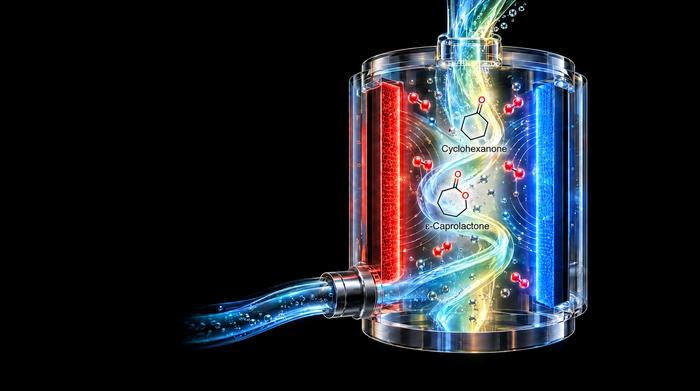
Researchers led by Professor Jaeyune Ryu at Seoul National University identified local pH near electrodes as a decisive variable in organic electrosynthesis. By designing a reactor that narrows electrode spacing and flows electrolyte to counterbalance acidic and alkaline zones, they raised selectivity for lactones and epoxides, feedstocks for biodegradable plastics, polyurethanes, adhesives, and epoxy resins, from about 16% to 97% using only oxygen and electricity, eliminating added peroxide…
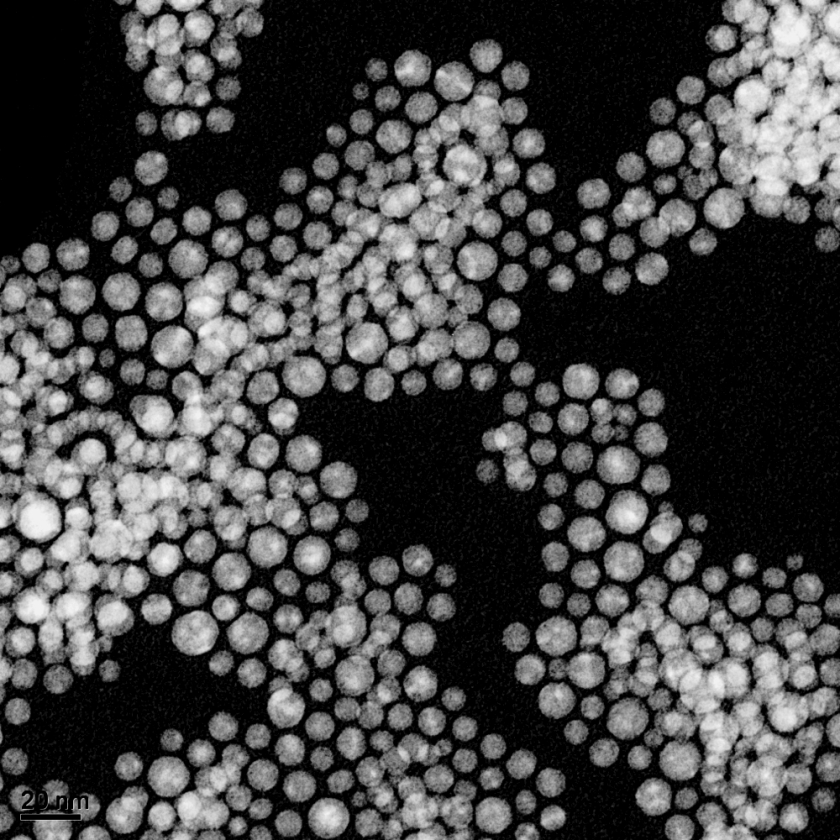
Silver nanoparticles with diameters of ~10 nm deliver the best performance as electrocatalysts. The silver particles are sprayed onto the electrode together with a conductive carbon powder. The ideal mixture consists of 20 per cent by mass silver and 80 per cent by mass carbon powder. This image was taken using a transmission electron microscope (TEM). © HZB Via electrolysis, CO₂ can be reduced to CO, a raw material for further chemical products such as fuels. Within the GreenQuest Project,...
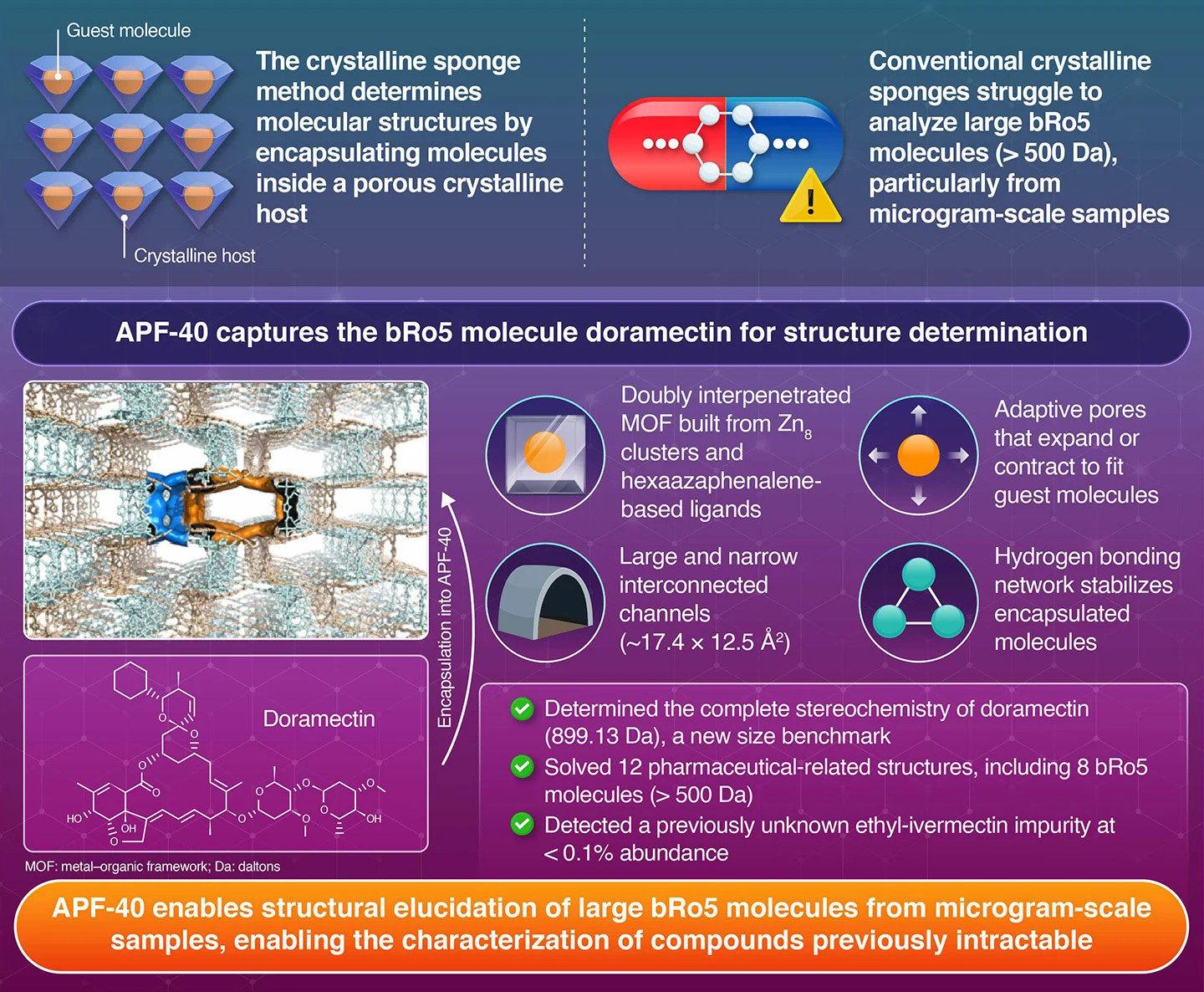
A flexible metal–organic framework developed by researchers from Institute of Science Tokyo enables the structural determination of large "beyond rule of 5" molecules from microgram-scale samples. Using APF-40 as a crystalline sponge, the researchers determined the structures of 12 pharmaceutical-related molecules, including the 899 Da drug molecule doramectin and trace ivermectin derivatives. The method could aid drug discovery, natural products research, and the characterization of rare...